

We may earn a commission when you buy through links on this page, at no extra cost to you. Learn more.
The rabbit electric wine opener is a convenient choice for wine drinkers who want automatic cork removal, rechargeable operation, and less effort opening bottles. Rabbit offers automatic and compact electric corkscrew designs, with different controls and charging arrangements. Its automatic model can open more than 30 bottles per charge according to the manufacturer, although charging reliability, cork ejection, and long-term durability deserve consideration before buying. The right choice depends on how frequently you open wine and which features matter most.
Opening wine should be a simple part of enjoying a bottle, not a struggle with a stubborn cork. Electric corkscrews make that process easier by using a motor to extract the cork rather than requiring the twisting and pulling associated with a traditional opener. Rabbit offers several electric designs aimed at home wine drinkers, frequent hosts, and people looking for a practical bar accessory. This review examines the main features, available configurations, owner feedback, operating considerations, and alternatives to help determine whether a Rabbit electric model deserves a place in your kitchen or home bar.
Specs and Key Features of the Rabbit Electric Wine Opener
Rabbit’s electric corkscrews focus on convenience, with rechargeable power and mechanisms designed to remove corks without the physical effort of a manual corkscrew. The Automatic Electric Corkscrew is the more distinctive option because it detects contact with the bottle and handles cork extraction and ejection automatically.
There are meaningful differences between Rabbit’s automatic and compact designs. The automatic version starts its extraction cycle when positioned against the bottle, while the compact model uses separate up and down controls. Buyers should identify the exact model before purchasing because features, charging connections, and foil-cutter arrangements are not necessarily interchangeable across the product family.
Rabbit specifies that its Automatic Electric Corkscrew opens more than 30 bottles on a full charge. This is a useful capacity for a household that opens wine regularly or hosts occasional gatherings. It is also compatible with natural and synthetic corks, making it suitable for a broad selection of still wines.
The following table separates manufacturer-confirmed specifications from the features of Rabbit’s different compact configuration.
| Feature | Automatic Electric Corkscrew | Compact Electric Corkscrew |
|---|---|---|
| Operating method | Automatic contact activation | Separate up and down buttons |
| Cork compatibility | Natural and synthetic corks | Designed for different cork types |
| Battery | Rechargeable | Rechargeable |
| Claimed capacity | 30+ bottles per charge | Not specified |
| Charging connection | Micro-USB wall charger | Charging cable included |
| Foil cutter | Integrated into the top cap | Integrated into the base |
| Warranty | One year | Confirm model-specific coverage |
| Compact model dimensions | Not specified | 3.25 inches wide; 10.73 inches high |
These specifications come from Rabbit’s product information and the separate compact-model listing. The charging accessories should not be assumed to be identical simply because both products are rechargeable. Buyers should also avoid assuming that the automatic model’s contact-activated mechanism is present in every Rabbit electric corkscrew.
Automatic cork extraction
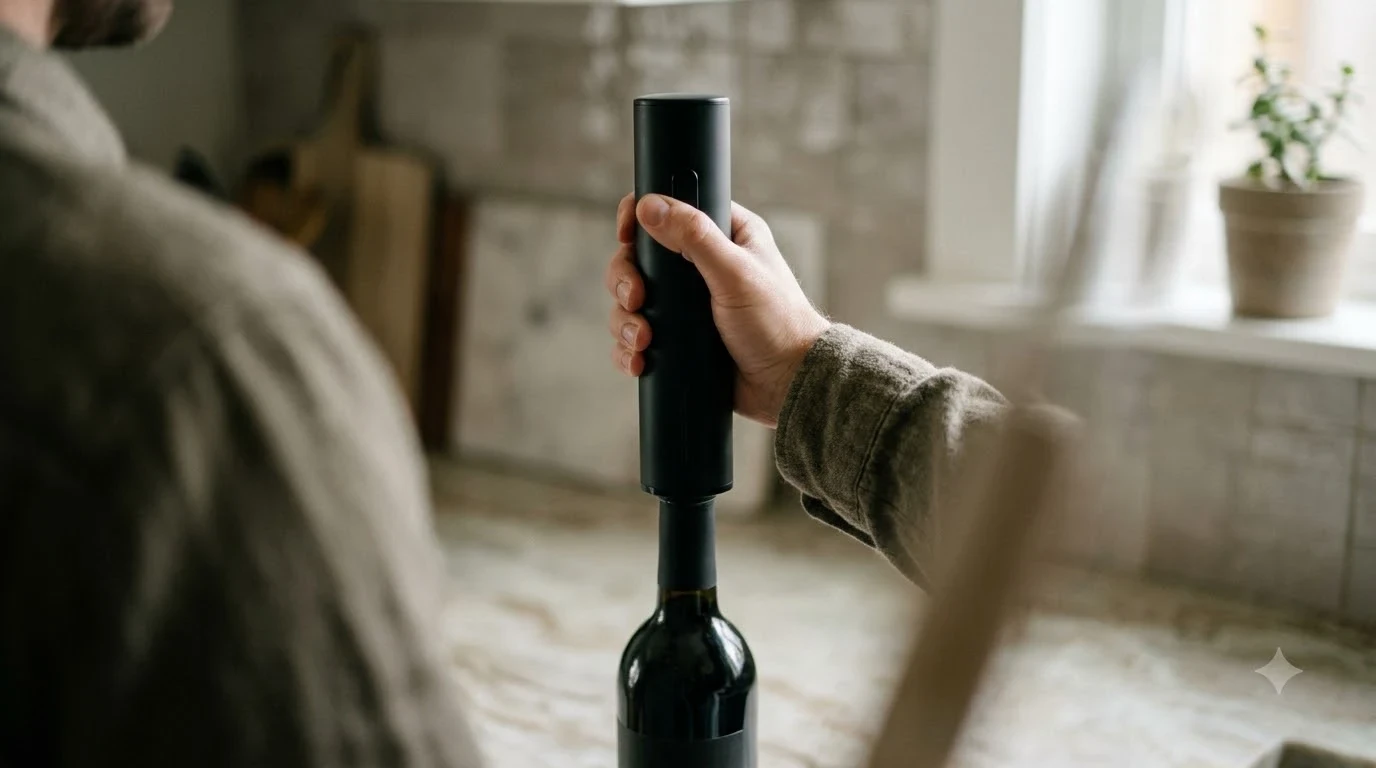
The automatic model removes one of the most noticeable steps in opening a conventional cork-sealed bottle: manually operating the extraction controls. Rabbit describes a mechanism that begins removing the cork when the opener is positioned on the bottle. After extraction, the device also ejects the cork from the mechanism.
This design is particularly useful when opening several bottles during a dinner party. Rather than repeatedly turning a lever or pressing separate extraction buttons, the user positions the device and allows its motor to perform the main task. However, the bottle still needs to remain stable, and the opener must be positioned correctly.
Rechargeable operation
Rabbit’s stated capacity of more than 30 bottles per charge is one of the automatic model’s most appealing features. It means a fully charged opener should accommodate more than a typical small gathering without requiring an immediate recharge.
Actual battery performance can vary with battery condition, charging habits, and frequency of use. The rechargeable format also means the opener eventually needs access to an electrical outlet, unlike a manual corkscrew that works indefinitely without charging.
What Owners Like About Rabbit Electric Corkscrews
The main attraction of a Rabbit electric wine opener is the reduction in physical effort required to remove a cork. Customers also have practical reasons to appreciate rechargeable operation, automatic ejection, and designs that combine cork extraction with foil removal.
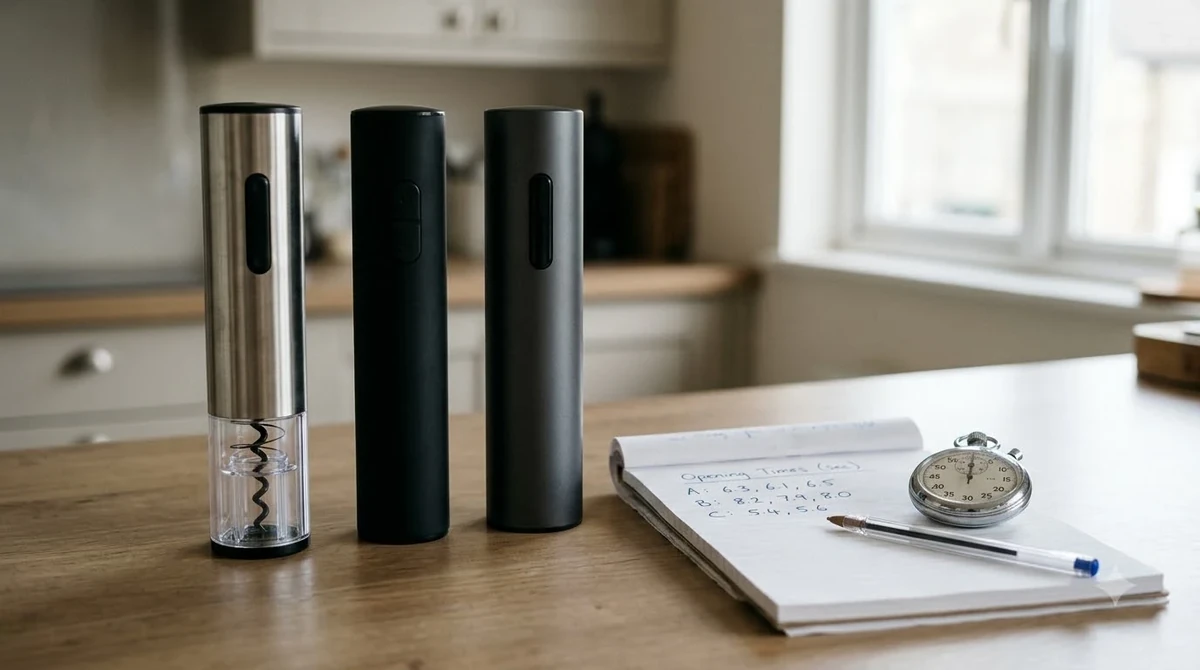
Electric opening is especially appealing to people who regularly serve wine to guests. A manual corkscrew can become tiring when opening multiple bottles in succession, particularly when corks are tightly fitted. A powered mechanism makes repeated openings more consistent and reduces the twisting motion required from the user.
Convenience during entertaining
For a dinner party with six or eight guests, opening several bottles throughout the evening can become a repetitive task. An electric opener reduces the physical work involved and allows the host to concentrate on serving food and pouring wine.
The automatic Rabbit model is particularly convenient because it handles both cork extraction and ejection. The user does not need to operate separate up and down buttons to complete these steps. That makes it attractive to people who prefer uncomplicated kitchen appliances.
Rabbit’s claimed capacity of more than 30 bottles per charge also makes the automatic model suitable for occasional larger gatherings. It offers enough stated capacity for a typical dinner party without requiring the device to be connected to an outlet during each opening.
Compatibility with different cork materials
Natural cork remains common in traditional wine packaging, while synthetic closures are also used by many producers. An opener that supports both materials gives buyers more flexibility when selecting bottles.
Rabbit states that its Automatic Electric Corkscrew works with natural and synthetic corks. This is useful for households that regularly alternate between inexpensive weekday bottles and more traditional cork-sealed wines. It also avoids the need to maintain separate opening tools for different closures.
Nevertheless, cork condition matters. A brittle or damaged natural cork may behave differently from a new synthetic closure. Older bottles deserve particular care because an electric mechanism does not provide the same degree of direct manual feedback as a traditional corkscrew.
Integrated foil-cutting convenience
Rabbit includes a foil cutter in the design of its automatic opener. This keeps an additional small accessory from becoming a separate item that needs to be found before opening a bottle.
The compact model takes a different approach by placing its foil cutter in the base. Sur La Table describes this configuration as a cordless rechargeable opener with vertical or horizontal storage options. That arrangement may appeal to buyers who prefer keeping their wine accessories together on a countertop.
For people who want a coordinated serving station, Rabbit’s electric opener can also be considered alongside accessories such as an Accessory Brands collection. The most useful accessories are those that simplify the complete process of opening, pouring, and preserving wine rather than adding unnecessary equipment.
Common Complaints and Potential Problems
Rabbit’s electric openers offer useful convenience, but owner feedback indicates that reliability and cork ejection are important considerations. A powered opener is only helpful if its motor, battery, and extraction mechanism continue to work consistently.
Rabbit’s own Automatic Electric Corkscrew product page includes feedback about ineffective cork ejection and products that do not operate as expected. These concerns do not mean every unit will experience problems, but they are relevant when evaluating a rechargeable appliance that contains moving mechanical parts.
Cork ejection problems
The automatic model is designed to remove and eject corks without requiring separate button presses. However, customer feedback on Rabbit’s product listing identifies cork ejection as an area of concern.
This matters because removing a cork from the bottle is only half the task. If the cork remains trapped inside the opener, the user may need to intervene manually before the device can be used again. The convenience advantage becomes less convincing when an additional step is required after every opening.
Buyers should distinguish between the extraction mechanism and the ejection mechanism. A device may successfully remove a cork from the bottle but still have difficulty releasing it from its internal spiral.
Battery and charging reliability
Rechargeable wine openers depend on battery condition and proper charging. Some published owner feedback about Rabbit products raises concerns about charging performance and units that stop working after periods of use.
Battery capacity can also decline over time. An opener that initially handles many bottles between charges may eventually need charging more frequently. This is a general consideration for rechargeable appliances, not proof that every Rabbit unit will experience premature battery deterioration.
Rabbit’s charging guidance is important here. Its FAQ advises users not to leave the Automatic Electric Rabbit Corkscrew plugged in continuously. Following the manufacturer’s instructions is preferable to keeping the device permanently connected to power.
Positioning and cork damage
Correct positioning is another important consideration. A powered corkscrew should sit straight over the bottle opening rather than at an angle. If the internal spiral enters the cork diagonally, it may damage the cork or interfere with extraction.
This is particularly relevant when opening older bottles with fragile natural corks. A cork that crumbles during extraction can leave fragments around the bottle opening, making pouring less tidy.
For valuable aged wine, a traditional two-pronged opener or an appropriate manual corkscrew may offer better control. Electric convenience is not necessarily the best solution for every bottle.
Tip: Keep the bottle upright on a stable surface and position the Rabbit opener vertically before starting the extraction cycle. Avoid twisting or tilting the appliance while the motor is operating, particularly when working with older natural corks.
Who Should Buy the Rabbit Electric Wine Opener and Who Should Skip It
A Rabbit electric opener makes the most sense for people who value convenience and open wine regularly enough to appreciate a powered extraction mechanism. It is less compelling for occasional wine drinkers who are satisfied with a simple manual corkscrew.
Good choice for frequent wine drinkers
Households that open wine several times a week can benefit from an electric corkscrew. The convenience becomes more noticeable when opening multiple bottles for dinner parties, family celebrations, or casual gatherings.
The automatic model’s stated capacity of more than 30 bottles per charge makes it especially interesting for people who do not want to recharge their opener after every small gathering. Its contact-activated mechanism also reduces the number of operating steps.
Buyers who prefer a simple countertop appliance may appreciate the compact form of the Rabbit range. The separate compact model can be stored vertically or horizontally, which offers some flexibility for kitchens with limited storage space.
Useful for people who dislike manual corkscrews
Some people find the twisting and pulling motion of a conventional corkscrew uncomfortable or inconvenient. An electric opener reduces the amount of manual effort involved in opening a standard bottle.
However, an electric opener is not entirely hands-free. The bottle still needs to be stabilized, and the appliance must be positioned correctly. People who need a completely effortless solution should understand this distinction before purchasing.
Who should consider a manual alternative?
Occasional wine drinkers may not need a rechargeable device with a motor and charging accessories. A simple waiter’s corkscrew is inexpensive to maintain, takes up little space, and never needs a battery.
People who regularly open older wines may also prefer manual equipment. Older natural corks can become fragile, and careful manual extraction provides greater control over the speed and direction of removal.
Buyers who prioritize long-term simplicity should consider whether the convenience of an electric opener outweighs the possibility of battery deterioration or mechanical failure. A manual tool has fewer electrical components and does not depend on charging.
Consider your wider wine setup
An opener is only one part of a home wine station. People who entertain frequently may also want appropriate glassware, serving accessories, and equipment for keeping bottles at a suitable temperature.
For example, an electric wine chiller addresses serving temperature rather than cork removal. These products solve different problems, so choosing an opener should not be confused with selecting a wine-cooling appliance.
Similarly, someone who wants a compact backup tool for travel may find a wine bottle opener keychain more appropriate than carrying a rechargeable electric appliance. The best choice depends on where and how often wine is opened.
How the Rabbit Compares to Electric Opener Alternatives
Rabbit is not the only manufacturer offering powered wine openers. Alternatives named in published comparisons include the Oster Cordless Electric Wine Bottle Opener, Secura Electric Wine Opener, and Peugeot ELIS Touch Rechargeable Corkscrew.
These products appeal to slightly different buying priorities. Rabbit’s automatic design emphasizes contact-activated operation, while other electric corkscrews may appeal to buyers who prefer a conventional button-controlled approach or a different charging arrangement.
Rabbit versus Oster
The Oster Cordless Electric Wine Bottle Opener is a named alternative for shoppers considering a straightforward rechargeable electric corkscrew. It is worth comparing the control arrangement, battery requirements, and included accessories before selecting between the two.
Rabbit’s automatic model has a distinctive advantage in its advertised contact-activated extraction and automatic cork ejection. Buyers who prefer that operating method may find Rabbit more appealing. Those who prefer familiar controls should compare the exact Oster configuration available to them.
Rabbit versus Secura
The Secura Electric Wine Opener is another alternative identified in published Rabbit opener comparisons. It is relevant for shoppers who want an electric mechanism but are not committed to a particular brand.
When comparing these products, focus on charging convenience, cork compatibility, handling, and warranty coverage. The presence of a rechargeable battery alone does not establish that two products will offer identical performance or long-term reliability.
Rabbit versus Peugeot ELIS Touch
The Peugeot ELIS Touch Rechargeable Corkscrew is another named competitor in the electric wine opener category. It is an option for buyers interested in a rechargeable design from a different wine-accessory manufacturer.
Rabbit’s automatic corkscrew is notable for its contact-based operation and stated capacity of more than 30 bottles per charge. Buyers considering Peugeot should examine the specifications of the particular model available, especially its charging base, battery capacity, and warranty.
There is no universal winner for every household. A buyer who values automatic operation may favor Rabbit, while someone prioritizing a different charging arrangement or handling style may prefer another manufacturer. Comparing the exact model specifications is more useful than relying on brand reputation alone.
Choosing the right electric wine accessory
Electric wine equipment includes more than corkscrews. A chiller, preserver, or serving accessory may be a more useful purchase for someone whose existing opener already works well.
For people comparing cooling equipment alongside opening tools, the best electric wine chiller options serve a separate purpose: bringing wine closer to its preferred serving temperature. Keeping those functions separate makes it easier to choose equipment that addresses an actual need.
For manufacturer-specific operating information, Rabbit’s official product FAQ and troubleshooting instructions are useful before buying or attempting to resolve a charging or operating problem.
Frequently Asked Questions
Does the Rabbit electric wine opener work with sparkling wine bottles?
No conventional corkscrew should be used to remove the pressurized mushroom-shaped closure from a sparkling wine bottle. Champagne, Cava, and Prosecco bottles require careful handling of their natural or agglomerated sparkling-wine closures. Keep a hand over the cork and follow the appropriate sparkling-wine opening method rather than using an electric spiral mechanism.
Can a Rabbit electric corkscrew remove a cork that has broken inside a bottle?
Rabbit’s general compatibility statement does not establish that the electric opener can reliably recover a broken or partially extracted cork. A damaged cork may not provide enough material for the spiral to grip properly. A specialized manual cork retriever or careful traditional corkscrew technique is generally more appropriate for this situation.
Does Rabbit sell replacement batteries for its rechargeable opener?
Rabbit’s published product information identifies rechargeable battery operation but does not establish a universally user-replaceable battery system for every electric model. Buyers should contact Rabbit consumer service for model-specific replacement information. The product’s charging connector and battery construction should be confirmed before attempting any repair.
Can an electric Rabbit opener be taken in checked luggage?
Rechargeable openers contain lithium-ion batteries, so airline battery rules are relevant when traveling. The Federal Aviation Administration generally requires spare lithium batteries to remain in carry-on baggage rather than checked baggage. Travelers should verify the battery’s watt-hour rating and current airline requirements before packing the device.
What should an owner do if the Rabbit opener stops responding after charging?
Rabbit’s troubleshooting instructions specifically recommend unplugging the Automatic Electric Rabbit Corkscrew for five minutes, reconnecting it for a five-hour charge, and then unplugging it before normal operation. If the device remains unresponsive, contact Rabbit consumer service rather than repeatedly attempting to force the mechanism. Keep purchase documentation available when requesting warranty assistance.
The Rabbit electric wine opener is a convenient option for households that regularly open cork-sealed bottles and appreciate automatic or rechargeable operation. Its automatic model has useful features, including claimed capacity exceeding 30 bottles per charge, compatibility with different cork types, and automatic cork ejection, but customer feedback makes reliability and ejection performance important buying considerations. Compare the exact model, charging arrangement, and warranty before choosing, and consider a manual opener if simplicity and long-term mechanical reliability matter more than powered convenience.
More in Wine Accessories
 Coravin Vs Vacu Vin: Choose the Right Wine Saver for Your BottlesUpdated Nov 21, 2026
 Zwilling Wine Stopper Review: Preserve Open Bottles LongerUpdated Nov 21, 2026
 Wine Enthusiast Wine Preserver Review: Features, Benefits and LimitationsUpdated Nov 21, 2026
 Wine Enthusiast Wine Stopper: An Easier Way to Reseal Open BottlesUpdated Nov 21, 2026
 Vintorio Wine Opener: Two-Step Cork RemovalUpdated Nov 21, 2026
 Zwilling Wine Aerator Review: Aerate, Pour, and Seal With One ToolUpdated Nov 21, 2026