

We may earn a commission when you buy through links on this page, at no extra cost to you. Learn more.
A wine enthusiast wine fridge is a worthwhile option for wine drinkers who want dedicated bottle storage, convenient temperature controls, and models ranging from compact coolers to larger dual-zone cellars. The brand offers practical choices for casual drinkers and more serious collectors, including freestanding and built-in configurations. Its strongest appeal is the combination of wine-specific storage features and useful temperature flexibility, although noise, shelf compatibility, and warranty coverage deserve attention before purchasing. Choosing the right model depends on your collection size, installation space, and whether you regularly store reds and whites at different temperatures.
Wine Enthusiast is a recognizable name in wine storage, but its refrigerators are not interchangeable. A compact countertop-style cooler serves a different purpose from a compressor-powered dual-zone cellar or an integrated cabinet designed for a kitchen renovation. Understanding the available product categories, their specifications, and the experiences reported by owners makes it easier to select an appliance that suits your collection.
Brand Overview
Wine Enthusiast focuses on wine-related equipment and storage, with refrigerators designed to help customers organize, preserve, and serve their bottles. Its wine cellar documentation describes products for different storage requirements, including single-zone and dual-zone configurations.
The brand’s range includes smaller freestanding refrigerators as well as larger installations intended for more permanent home wine storage. This variety is important because a household keeping a dozen everyday bottles has different requirements from a collector maintaining separate red and white selections.
One particularly useful example is the 32-bottle Dual Zone MAX Compressor Wine Cooler. Its manufacturer manual identifies a temperature adjustment range of 41°F to 64°F, separate upper and lower temperature controls, and a capacity intended for a growing home collection.
The brand also offers more substantial dual-zone configurations. Its S-series documentation covers 15-inch and 24-inch wine cellars, with front ventilation and specifications for both freestanding and built-in installations. These models provide a different level of integration from smaller freestanding units.
Independent editorial coverage gives the brand additional visibility. Serious Eats selected the 32-bottle Dual Zone MAX as its best overall wine fridge in a comparative evaluation that considered capacity, cooling, usability, shelving, and operating noise. That recognition makes the brand worth considering, although one successful model should not be treated as proof that every refrigerator in the lineup performs equally well.
For shoppers researching competing appliance manufacturers, comparisons involving whether Black and Decker is a good brand can provide another perspective on choosing household refrigeration equipment. The important distinction is that Wine Enthusiast’s product range is specifically oriented toward wine storage rather than general-purpose refrigeration.
Product Lines Explained
Wine Enthusiast wine refrigerators cover several storage formats, with capacities and installation requirements varying considerably between models. The following examples illustrate the differences using specifications documented in manufacturer manuals and independent product evaluations.
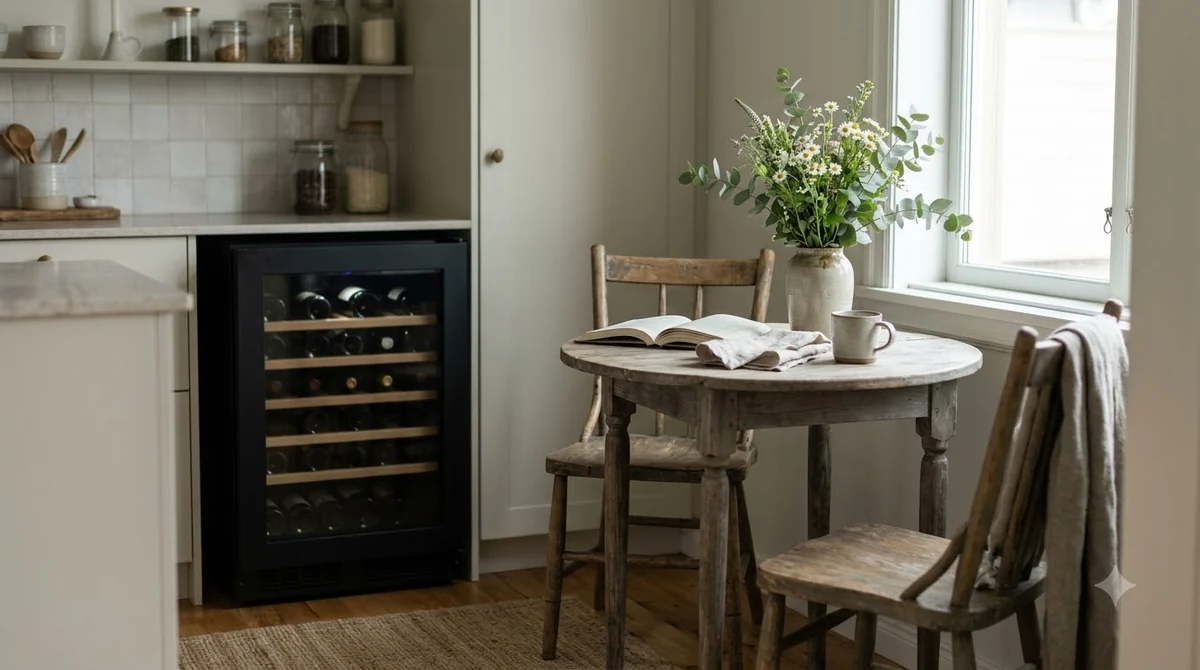
Rather than choosing by bottle capacity alone, compare the number of temperature zones, cooling arrangement, cabinet dimensions, and ventilation requirements. These specifications determine whether a particular cellar will work in your kitchen, dining room, home bar, or dedicated wine-storage area.
| Product category or model | Capacity | Temperature range | Installation or cooling |
|---|---|---|---|
| 32-Bottle Dual Zone MAX | 32 bottles | 41°F–64°F | Compressor, freestanding |
| S 15-inch Dual Zone | 26 bottles maximum | Upper: 41°F–54°F; lower: 46°F–66°F | Compressor, built-in or freestanding |
| S 24-inch Dual Zone | 46 bottles maximum | Upper: 41°F–54°F; lower: 46°F–66°F | Compressor, built-in or freestanding |
Compact and freestanding refrigerators
Smaller wine refrigerators are appropriate for households that want a dedicated location for everyday bottles without sacrificing an entire kitchen cabinet. Their main advantages are straightforward installation, accessible controls, and relatively modest storage requirements.
However, advertised capacity requires careful interpretation. Manufacturers generally calculate capacity using standard Bordeaux-style bottles. Wider Burgundy bottles, sparkling wine bottles, and unusually shaped bottles can occupy more space than expected.
The 32-bottle MAX manual specifically warns that collections containing larger bottles can reduce practical capacity by 20% to 40%. A refrigerator advertised for 32 bottles may therefore accommodate considerably fewer bottles if the collection includes many wide formats.
Dual-zone compressor cellars
Dual-zone refrigerators provide separate temperature settings for different sections of the cabinet. They are especially useful for people who regularly keep red wines and white wines available for serving.
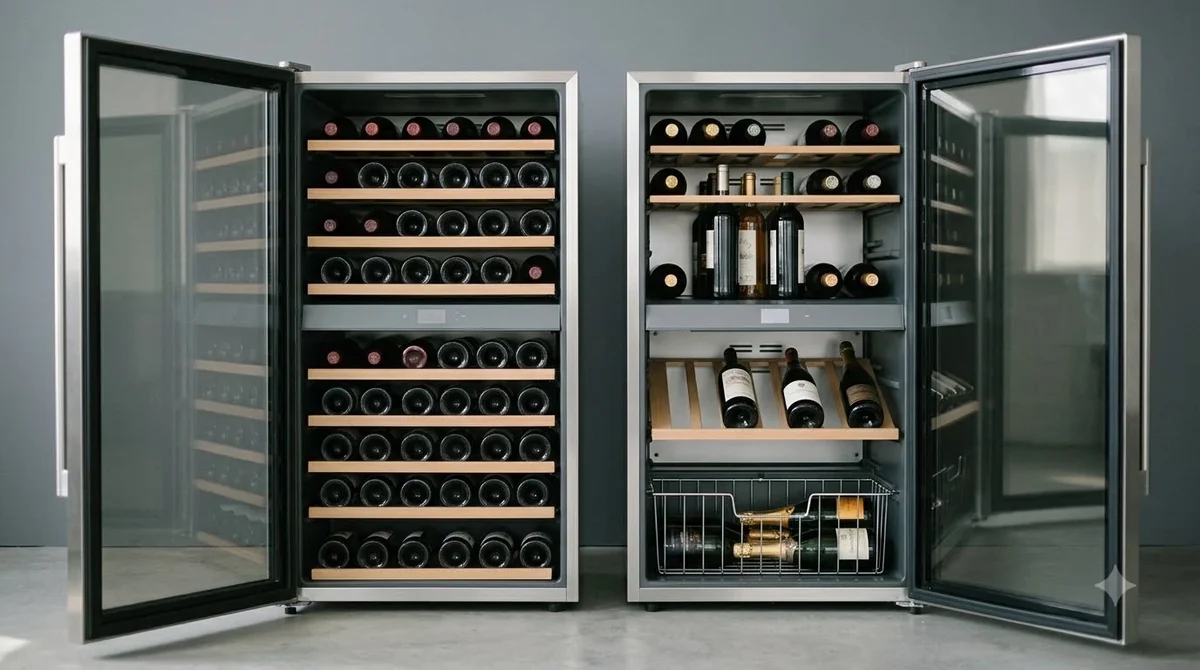
The 32-bottle MAX offers a documented 41°F to 64°F adjustment range. The S-series provides a narrower upper-zone range of 41°F to 54°F and a lower-zone range of 46°F to 66°F.
These configurations are useful because whites and sparkling wines are generally served colder than reds. They also allow a household to maintain different serving temperatures without moving bottles between separate appliances.
Built-in wine cellars
The S 15-inch and S 24-inch cellars are designed for installations where appearance and cabinet integration matter. Their front ventilation allows installation in appropriately sized cabinetry, unlike freestanding appliances that may require open space around their cooling components.
The 15-inch version measures 34 inches high, 15 inches wide, and 23 inches deep. Its minimum installation opening measures 34.5 inches high, 16 inches wide, and 25 inches deep.
The larger S 24-inch version measures 34 inches high, 23.5 inches wide, and 23 inches deep. Its minimum built-in opening measures 34.5 inches high, 24.5 inches wide, and 25 inches deep.
These dimensions demonstrate why installation planning matters. A refrigerator that appears to fit the available cabinet opening may still lack the required clearance for proper ventilation or door movement.
What the Brand Does Well
Wine Enthusiast’s strongest features are its wine-specific temperature arrangements, practical capacity options, and storage-oriented cabinet designs. Independent coverage of the 32-bottle MAX and manufacturer documentation for the S-series support its position as a serious option for home wine storage.
Useful temperature flexibility
Temperature control is one of the most important features of a wine refrigerator. Long-term storage generally benefits from a stable environment around 55°F, while serving temperatures vary according to the wine style.
A dual-zone appliance makes it easier to accommodate different preferences. For example, a household might maintain its white wines around 48°F to 50°F and its red wines around 58°F to 60°F, depending on the varieties and intended serving conditions.
The 32-bottle MAX’s 41°F to 64°F range offers considerable flexibility for this purpose. The S-series adds separate upper and lower temperature ranges, providing more defined storage arrangements for mixed collections.
Practical bottle organization
Horizontal bottle storage is useful because it keeps wine organized and allows cork-finished bottles to remain in contact with their closures. Shelving also makes it easier to access bottles without disturbing the rest of the collection.
The S-series documentation specifies six wire storage racks, consisting of five full racks and one half rack. Natural wood trim provides a more traditional wine-cellar appearance, while the rack arrangement supports everyday bottle organization.
Another useful detail is the 80% shelf-extension specification in the S-series documentation. Pull-out shelving helps users reach bottles, although owners should still avoid pulling several loaded shelves out simultaneously unless the specific model’s instructions permit it.
Installation choices
Not every wine collector wants a large freestanding appliance in a living area. The availability of built-in and freestanding S-series configurations gives shoppers more flexibility when planning a home renovation or dedicated wine-storage space.
Front ventilation is especially useful for built-in installations because the refrigerator can exchange air through its front ventilation area rather than depending on open space behind the cabinet. Correct cabinet dimensions remain essential, however.
Independent editorial recognition
Serious Eats evaluated 12 wine refrigerators and named the Wine Enthusiast 32-bottle Dual Zone MAX its best overall option. The evaluation considered practical factors such as shelf strength, temperature adjustment, bottle access, assembly, and operating noise.
The reviewers appreciated its two independently controlled zones, compact footprint, and relatively quiet operation. They also noted that it was noisier than some competing refrigerators, which is an important qualification for shoppers planning to install it in a quiet living space.
Read the Serious Eats wine refrigerator comparison for additional context about how this model compares with other home storage appliances.
Common Complaints
Wine Enthusiast wine fridge reviews show that temperature flexibility and convenient storage can be attractive features, but potential buyers should also consider noise, bottle fit, door construction, and service experiences. Owner feedback varies by model, so complaints about one refrigerator should not automatically be applied to the entire range.
Operating noise
Compressor refrigerators produce sound as their cooling systems operate. The amount of noise depends on the compressor, ventilation, installation surface, and surrounding room conditions.
Serious Eats described the 32-bottle MAX as fairly quiet but acknowledged that it was noisier than some alternatives. This distinction matters if the appliance will sit in a bedroom-adjacent room, a quiet home office, or an open-plan living area.
A gentle hum is generally expected from an operating compressor refrigerator. Persistent rattling, unusual buzzing, or loud vibration deserves closer inspection, particularly if the appliance is properly leveled and has adequate ventilation.
Shelf fit and advertised capacity
Capacity figures can create unrealistic expectations. Standard Bordeaux bottles fit most wine refrigerators more easily than wide Burgundy bottles, Champagne bottles, and other oversized formats.
Customer feedback for Wine Enthusiast model 272 03 32 on Best Buy mentions difficulty accommodating some wider bottles. The same feedback identifies shelving arrangement as a consideration for buyers who regularly purchase sparkling wine or larger-format reds.
The practical lesson is to evaluate the actual shape of your collection rather than assuming that every advertised bottle position will accommodate every bottle type.
Door hinges and construction
Some customer reviews identify door hinges as a concern. Best Buy’s review summary for model 272 03 32 also mentions hinge sturdiness, alongside generally favorable comments about noise and temperature controls.
Delivery inspection is important because glass doors and their hinges can be vulnerable to damage during transportation. Check the door alignment, handle, shelving, and glass before discarding the original packaging.
Temperature consistency and service
Some owners report satisfactory temperature performance, while other customer feedback across the brand’s products describes problems with controls, cooling, or resolving service issues.
These experiences should be considered carefully rather than treated as a universal reliability verdict. Different models can use different components, and an isolated complaint does not establish a product-wide defect.
Before buying, establish which warranty applies to the exact model and whether repairs are handled directly by the manufacturer or through a separate service provider. Keep purchase documentation and correspondence if a problem develops.
How to Choose a Model
The right Wine Enthusiast wine fridge should match your collection, available installation space, and preferred drinking habits. Capacity, temperature zones, cooling arrangements, and ventilation are more important than choosing the largest cabinet or the most elaborate appearance.
1. Calculate your actual storage requirements
Start by counting the bottles you currently own and estimating how many you expect to keep over the next few years. A refrigerator that is almost full immediately after installation may become inconvenient as your collection grows.
A 32-bottle unit is a reasonable starting point for a developing collection, while the 46-bottle S 24-inch cellar provides more room for regular purchasing and additional storage.
Remember to leave room for oversized bottles. If your collection includes many Champagne or Burgundy bottles, choose a configuration with flexible shelving rather than relying entirely on the advertised capacity.
2. Decide between single-zone and dual-zone storage
A single-zone refrigerator is appropriate if most of your collection consists of one wine style or you prefer to maintain all bottles at a consistent storage temperature.
A dual-zone refrigerator makes more sense if you regularly drink both red and white wines. The ability to adjust the two sections independently helps maintain convenient serving temperatures for different bottles.
For example, you might keep Sauvignon Blanc and Chardonnay in the colder section while storing Cabernet Sauvignon and Merlot in the warmer section.
3. Check installation requirements
Measure the available floor or cabinet space before selecting a refrigerator. Include door-swing clearance, electrical access, ventilation, and room for pulling out the shelves.
For a built-in installation, the S 15-inch model requires a minimum opening of 34.5 inches high, 16 inches wide, and 25 inches deep. The S 24-inch requires a minimum opening of 34.5 inches high, 24.5 inches wide, and 25 inches deep.
Do not assume that every Wine Enthusiast refrigerator can be installed under a countertop. Some models are specifically designed for freestanding use, and installing them inside enclosed cabinetry can interfere with cooling performance.
4. Compare cooling and operating noise
Compressor cooling is a practical choice for larger home wine refrigerators and can provide useful temperature flexibility. However, the compressor creates operating noise and vibration that should be considered when choosing an installation location.
Look at the cooling specifications for the exact model rather than assuming all Wine Enthusiast refrigerators use the same technology. Check the manufacturer’s recommended clearance and ambient operating conditions.
5. Examine warranty coverage
Warranty coverage can differ between product families. The S-series documentation specifies one year of parts-and-labor coverage and three years of sealed-system parts coverage.
That distinction is important because the sealed-system warranty does not necessarily cover every electrical, mechanical, or cosmetic problem. Confirm the applicable terms for the exact model before completing a purchase.
Tip: Download the exact model’s manual before installation. Wine Enthusiast’s 32-bottle Dual Zone MAX manual recommends leaving the appliance upright for approximately 24 hours before plugging it in, then allowing it to run for at least 30 minutes before adjusting the temperature. These instructions are model-specific, so follow the documentation supplied for your refrigerator.
Warranty and Support
Wine Enthusiast provides model-specific operating documentation and warranty instructions, making the manual an important resource for owners. Coverage can include different periods for general parts, labor, and sealed refrigeration components, so the exact terms matter.
Understanding warranty differences
The S 15-inch and S 24-inch manufacturer documentation specifies one year of parts-and-labor coverage and three years of sealed-system parts coverage. These are separate provisions rather than a single comprehensive warranty covering every component for three years.
Other refrigerator models can have different terms. The 32-bottle Dual Zone MAX documentation includes a limited warranty section, but buyers should consult the complete warranty for their specific model and purchase circumstances.
Keep the original purchase receipt, model number, and serial number. The 32-bottle manual specifically instructs owners to retain purchase documentation because it is needed when requesting warranty service.
Finding the correct wine enthusiast wine cooler manual
The model number is the most reliable way to identify the correct instructions. Similar-looking refrigerators may have different control panels, temperature ranges, shelf arrangements, and installation requirements.
The manufacturer’s 32-bottle Dual Zone MAX user manual is a useful reference for owners of model 288 03 24 03.
For other models, locate the identification label on the appliance and match the complete model number to the appropriate documentation. Avoid using instructions for a similar-looking refrigerator because button sequences and operating procedures may differ.
Basic operating and troubleshooting considerations
If a refrigerator does not reach its selected temperature, begin by checking the surrounding conditions. Excessive room heat, direct sunlight, inadequate clearance, and uneven installation can affect performance.
For the 32-bottle MAX, the manufacturer specifies an ambient operating range of 61°F to 90°F. The manual also recommends a hard, even surface and positioning the refrigerator away from direct sunlight and heat-producing appliances.
Check that the door closes fully and that bottles are not obstructing the shelving or rear interior. If cooling problems persist, record the displayed temperature and contact the appropriate service provider rather than attempting electrical or refrigeration repairs yourself.
Owners researching alternative brands can also explore whether ROVSUN is a good brand and whether Galanz is a good brand. Comparing warranty provisions and available support before buying is useful when selecting any refrigeration appliance. Additional manufacturer research is available through our brand hubs.
Frequently Asked Questions
Is Wine Enthusiast considered a premium wine refrigerator brand?
Wine Enthusiast offers products across several storage categories rather than exclusively luxury cellar installations. Its lineup includes accessible freestanding refrigerators and more substantial built-in cabinets. The 32-bottle MAX and S-series demonstrate that the brand serves different levels of home wine storage.
Can a Wine Enthusiast wine cooler store Champagne bottles?
Many models can accommodate some Champagne bottles, but their wider dimensions can reduce the number of bottles that fit. Bottle diameter and shelf spacing are more important than the advertised capacity alone. Check whether the shelves can be repositioned or removed before purchasing.
Does Wine Enthusiast manufacture wine refrigerators for commercial restaurants?
The brand’s documented range includes larger wine-storage cabinets and specialized cooling equipment. However, household capacity specifications should not be confused with commercial cellar requirements. Restaurants should evaluate total storage volume, ventilation, installation requirements, and service arrangements separately.
Can a Wine Enthusiast wine fridge operate in a garage?
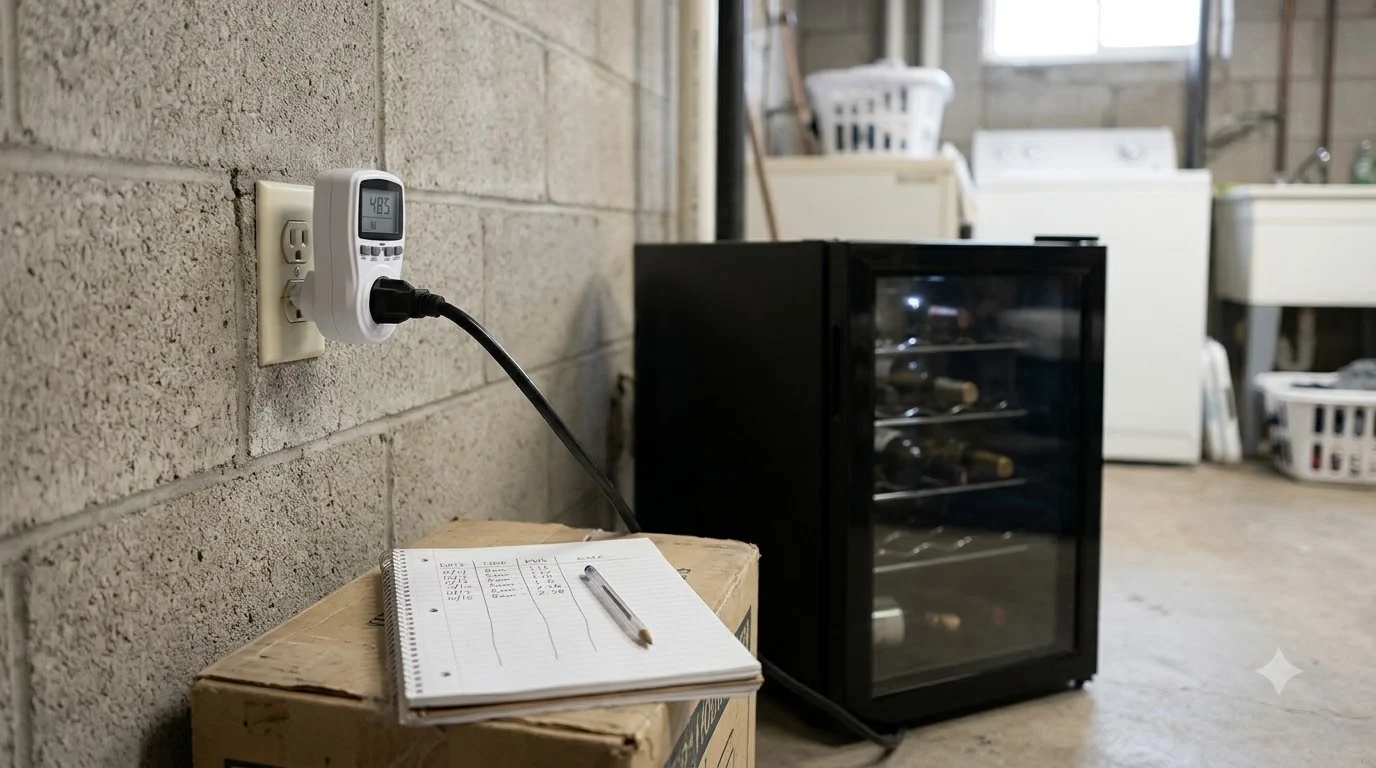
Not every model is appropriate for an unconditioned garage. The 32-bottle MAX manual specifically warns against locations that are not properly insulated or heated and identifies an operating ambient range of 61°F to 90°F. A garage that regularly falls outside the specified range can affect cooling performance.
Do Wine Enthusiast wine coolers have reversible doors?
The S 15-inch and S 24-inch manufacturer documentation identifies reversible doors as a feature. This can help accommodate different kitchen or bar layouts. However, door reversibility should not be assumed across every refrigerator in the brand’s range.
Wine Enthusiast is a credible brand to consider if you want dedicated wine storage, practical dual-zone temperature controls, and several cabinet configurations. The 32-bottle MAX is a particularly interesting choice for a growing collection, while the S-series offers more substantial built-in and freestanding options. Compare the exact specifications, installation requirements, bottle compatibility, and warranty terms before choosing, and select the refrigerator that fits your collection rather than simply buying the largest available model.
More in Brand Hubs
 Icyglee Wine Fridge: Compare Capacities, Features and ModelsUpdated Nov 20, 2026
 Fomup Wine Fridge: Explore Models, Features, and Buying TipsUpdated Nov 20, 2026
 Aaobosi Wine Fridge: Compare Models and Choose the Right CoolerUpdated Nov 20, 2026
 Orymuse Wine Fridge Reviews: Compare Capacities, Features and WarrantyUpdated Nov 20, 2026
 Tylza Wine Fridge: Find the Right Cooler for Your CollectionUpdated Nov 20, 2026
 Vintec Wine Fridge: Features, Warranty, and Buying AdviceUpdated Nov 20, 2026