

We may earn a commission when you buy through links on this page, at no extra cost to you. Learn more.
Comparing pinot noir vs rose comes down to grape variety versus winemaking style: Pinot Noir is a thin-skinned red grape typically vinified into a light-to-medium-bodied red wine, whereas rosé is a pink wine category made from any red grape using brief skin contact. Red Pinot Noir spends days or weeks fermenting with its skins and often ages in oak, producing silky tannins alongside cherry, raspberry, and earthy forest-floor notes. Rosé separates the juice from the grape skins after just a few hours to a couple of days, locking in crisp acidity, negligible tannin, and bright strawberry, citrus, and melon flavors.
Because winemakers frequently use Pinot Noir grapes to craft dry pink wines, shoppers often see both styles side by side on wine lists and retail shelves. Understanding how skin maceration, fermentation vessels, serving temperatures, and regional traditions separate a classic red Pinot Noir from a bottle of rosé makes it straightforward to choose the right bottle for dinner or warm-weather sipping.
Pinot Noir vs Rose: Core Definitions and Winemaking
The fundamental distinction between Pinot Noir and rosé rests on the difference between a single grape cultivar and a production category. Pinot Noir is a specific dark-skinned grape variety, while rosé is a winemaking approach that limits pigment and tannin extraction from red grape skins.
According to Decanter’s Pinot Noir grape profile, Pinot Noir is the signature red variety of France’s Burgundy region and grows in tightly packed clusters of thin-skinned, blue-black berries. When vinified as a traditional still red wine, the crushed grapes ferment together with their skins and seeds for several days to multiple weeks. Warm fermentation temperatures extract anthocyanins (color pigments) and gentle tannins from the skins, followed by maturation in French oak barrels that soften the texture and add subtle spice and toast.
Rosé starts with red grapes—which may be Pinot Noir, Grenache, Syrah, Cinsault, Mourvèdre, or Sangiovese—but interrupts skin contact early. As detailed in Wine Enthusiast’s guide to rosé winemaking, producers rely on three primary methods to achieve a pink hue:
- Direct pressing: Grapes harvested early for high acidity are loaded into a press and squeezed gently. The clear juice picks up a faint blush from the split skins before draining immediately into a fermentation tank, creating very pale, citrus-driven wines.
- Limited maceration: Crushed grapes soak together in a chilled tank for two to 48 hours (and occasionally up to a week) until the juice reaches the desired shade of salmon or coral, after which the skins are pressed off.
- Saignée (bleeding): Winemakers drain off a portion of pink juice from a red wine tank after several hours of contact. The remaining juice becomes a darker, more concentrated red wine, while the bled-off juice ferments separately into a richer, fuller-bodied rosé.
Unlike red Pinot Noir, almost all still rosés ferment at cool temperatures in stainless steel tanks to preserve fresh aromatics, skipping new oak barrels and malolactic fermentation. Blending finished red and white wine to create pink wine is avoided for still bottles, though Champagne permits adding still Pinot Noir or Pinot Meunier to Chardonnay before secondary bottle fermentation.
Tip: A bottle labeled “Rosé of Pinot Noir” bridges both worlds. It uses 100% Pinot Noir grapes harvested early and pressed after only a few hours on the skins, combining Pinot Noir’s natural red-berry perfume with the crisp chillability of a dry rosé.
Side-by-Side Comparison of Structure, Alcohol, and Aging
Comparing red Pinot Noir and dry rosé across measurable traits highlights how a few extra days of skin contact transform texture, alcohol level, and cellar lifespan. While both wines sit on the lighter, higher-acid end of the spectrum compared to full-bodied reds, their structural profiles serve different occasions.
| Attribute | Red Pinot Noir | Dry Rosé |
|---|---|---|
| Grape Variety | 100% Pinot Noir (single varietal) | Any red grape or blend (Grenache, Pinot Noir, Syrah, Cinsault) |
| Skin Contact Time | Days to several weeks during fermentation | 0 hours (direct press) to 48 hours typical |
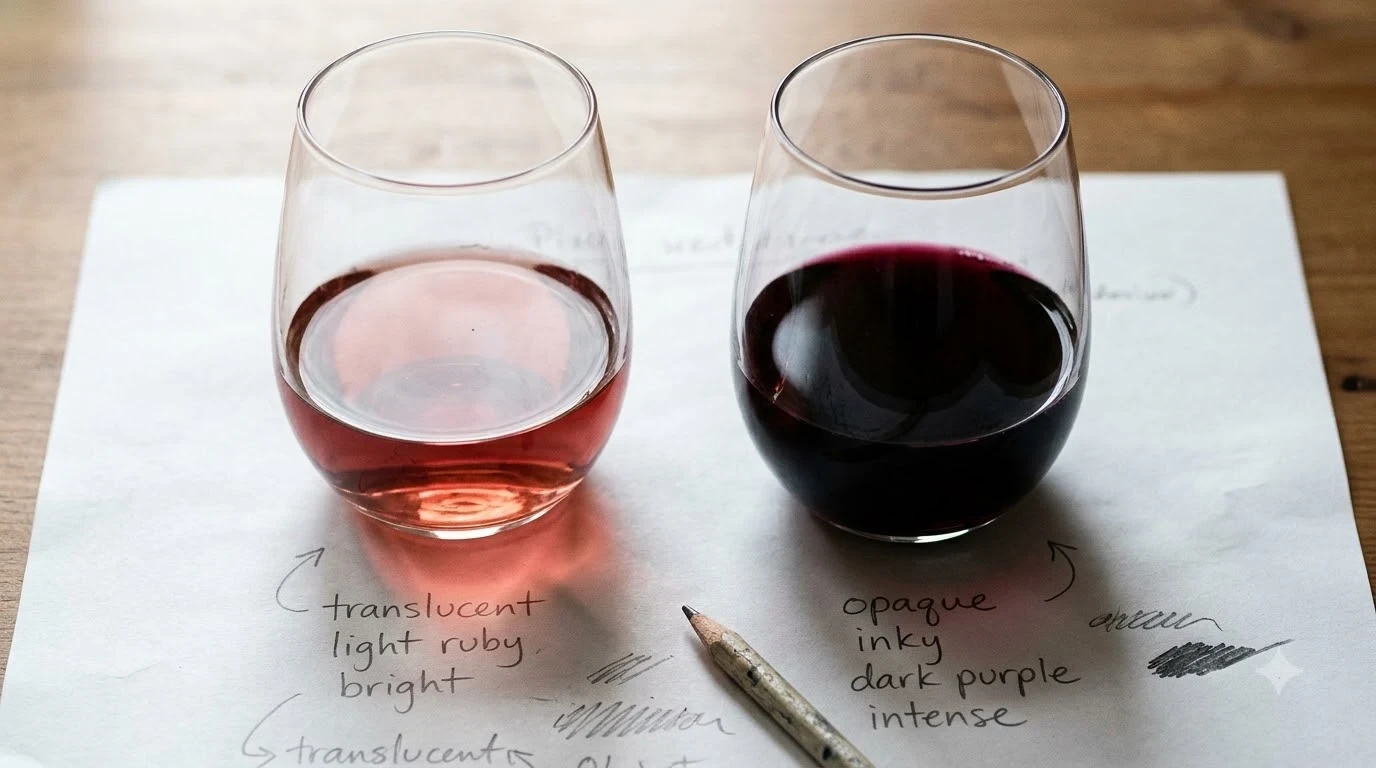
| Color | Translucent ruby to garnet | Pale onion skin, salmon, coral, or bright pink |
| Body & Tannin | Light-to-medium body; low-to-medium silky tannins | Light-to-medium body; negligible to very low tannins |
| Acidity | High | High (often sharper due to earlier harvest) |
| Typical ABV | 12.5%–14.5% | 11.5%–13.5% |
| Oak Aging | Common (French oak barrels for 8–18 months) | Rare (mostly stainless steel; exceptions in Bandol and Rioja) |
| Serving Temperature | 55°F–60°F (light cellar chill) | 45°F–50°F (refrigerator chill) |
| Drinking Window | 2–15 years depending on region and tier | 1–2 years from vintage (3–5+ years for Bandol or Tavel) |
The biggest structural divide lies in tannin and oak influence. Even though Pinot Noir is thinner-skinned and softer than Cabernet Sauvignon, extended fermentation on skins and stems extracts enough polyphenolic grip to give red Pinot Noir a velvety mid-palate framework. Rosé keeps tannins near zero, relying instead on snappy malic and tartaric acidity for refreshment.
Alcohol levels also diverge slightly because of harvest timing. Growers pick grapes intended for rosé earlier in the season when sugar accumulation (Brix) is lower and natural acidity is higher, resulting in finished wines frequently landing between 11.5% and 13% ABV. Grapes destined for red Pinot Noir hang longer on the vine to achieve full phenolic ripeness in the skins and seeds, commonly producing 13% to 14.5% ABV.
Flavor Profiles and Aromatics in the Glass
Both red Pinot Noir and rosé lean heavily into red-fruit aromas, yet oak maturation and warmer fermentation give red Pinot Noir savory depth while cool stainless-steel fermentation keeps rosé bright and zesty. Tasting them side by side reveals distinct aromatic layers.
Red Pinot Noir Tasting Notes
According to Wine Enthusiast’s varietal database, young red Pinot Noir leads with fresh red and dark berries—specifically wild strawberry, raspberry, red cherry, and black cherry. Cool-climate examples from Burgundy, Oregon’s Willamette Valley, or coastal California often layer floral rose petal, cranberry, and hibiscus notes over subtle herbal hints of mint, pine, or black tea.
As red Pinot Noir spends time in French oak barrels and matures in bottle, secondary and tertiary flavors emerge. Warm baking spices like clove and cinnamon appear from barrel aging, while bottle development introduces earthy undertones of damp forest floor, wild mushroom, leather, and game. Warmer-climate bottles from inland California valleys tend to emphasize riper black cherry and subtle cola spice.
Dry Rosé Tasting Notes
Dry rosé strips away oak spice and earthy complexity in favor of immediate, high-toned fruit and mineral crispness. Pale direct-press rosés—whether made from Provençal blends or Pinot Noir—deliver delicate aromas of crushed strawberry, white peach, ruby grapefruit, lemon zest, and wet stone.
Darker macerated or saignée rosés lean toward riper summer fruit, including watermelon, tart pomegranate, red currant, and blood orange, sometimes accented by dried Mediterranean herbs like thyme and garrigue. Because sugar is fermented to dryness in almost all modern European and American dry rosés, the perception of sweetness comes entirely from ripe fruit aromas rather than residual sugar.
Key Wine Regions Behind Each Style
Geography plays a major role in how each wine tastes, because Pinot Noir demands cool growing conditions while rosé thrives across both cool coastal zones and sun-drenched Mediterranean vineyards. Exploring classic regions clarifies what to expect from the label.
Pinot Noir struggles in intense heat, where its thin skins can sunburn and lose natural acidity. Its benchmark home is Burgundy, France—specifically the east- and southeast-facing limestone slopes of the Côte d’Or—where villages like Volnay, Pommard, and Vosne-Romanée produce translucent, perfumed reds. Outside France, Oregon’s Willamette Valley sits at a comparable northern latitude and benefits from Pacific Ocean breezes, while California’s Russian River Valley, Sonoma Coast, and Sta. Rita Hills rely on coastal fog to preserve bright berry acidity. Germany (where the grape is called Spätburgunder) and New Zealand’s Marlborough and Central Otago regions also rank among leading producers.
Food Pairing Strategies for Pinot Noir and Rosé
Both wines rank among the most versatile partners at the dinner table because high acidity refreshes the palate without overwhelming delicate ingredients. Choosing between them depends primarily on cooking method, dish richness, and whether subtle tannin or brisk chill complements the plate.
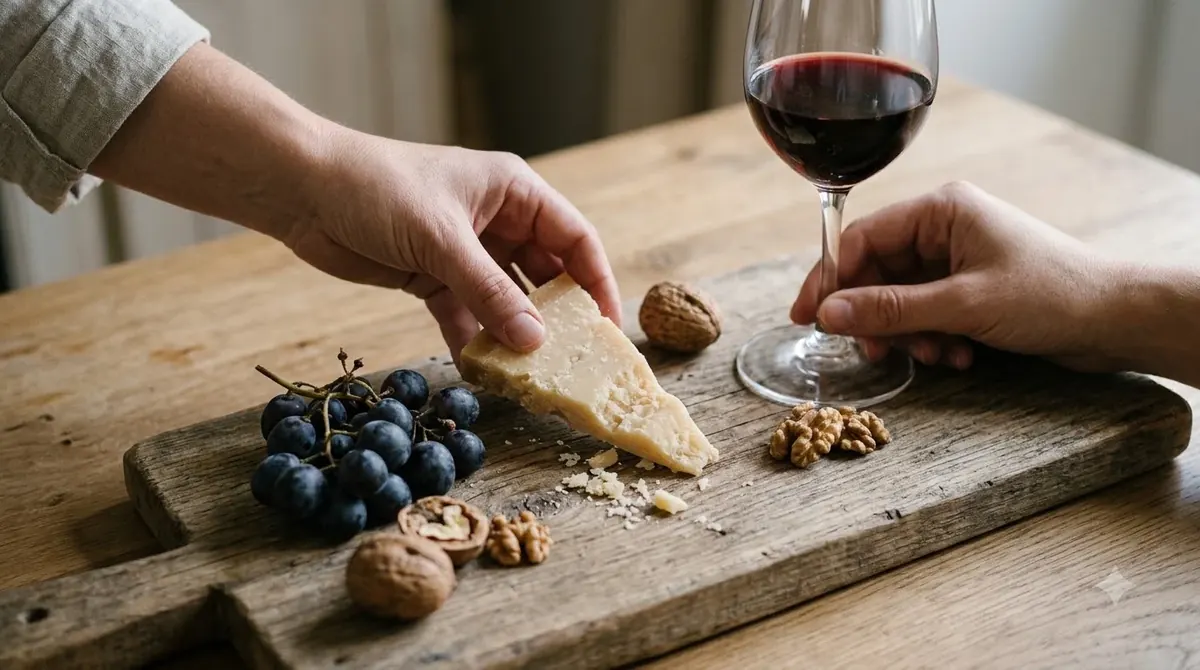
Red Pinot Noir excels alongside savory, umami-rich dishes where light-to-medium tannins cut through moderate fat without clashing with delicate flavors. Classic pairings include roasted duck breast, herb-crusted pork tenderloin, grilled salmon, braised chicken with mushrooms, and soft-ripened cheeses like Brie or Camembert. Because oily fish clashes with heavy tannins, Pinot Noir is one of the few red wines that pairs reliably with cedar-plank salmon or seared tuna, while earthy mushroom risottos echo the wine’s natural forest-floor aromatics.
Dry rosé shines with lighter, brighter, and warm-weather fare where red wine tannins or room-temperature warmth would feel too heavy. Its crisp acidity matches tangy vinaigrettes, goat cheese salads, grilled shrimp, Mediterranean mezze, caprese platters, and lightly spiced dishes. For meals featuring mild chili heat, a lower-alcohol dry rosé served cold avoids the fiery amplification that higher-alcohol reds can trigger.
- Choose red Pinot Noir for: Roast turkey, duck, pork chops, mushroom pasta, grilled salmon, and cool-evening comfort dishes.
- Choose dry rosé for: Shellfish, summer salads, charcuterie boards, grilled vegetables, fried chicken, and patio lunches.
Serving Temperature, Glassware, and Storage
Serving each wine at its proper temperature dramatically improves aroma and balance, as serving red Pinot Noir too warm flattens its fruit while serving rosé ice-cold mutes its aromatics. Proper glassware and post-opening storage further protect each bottle’s character.
Dry rosé should be poured between 45°F and 50°F—roughly 90 minutes to two hours in a standard kitchen refrigerator, or 15 to 20 minutes in an ice-and-water bucket. Red Pinot Noir tastes best with a light cellar chill between 55°F and 60°F. Placing a room-temperature bottle of Pinot Noir in the refrigerator for 20 to 30 minutes before serving brings it into the ideal window, keeping alcohol integrated and red-berry acidity lively.
Glassware choice also highlights their structural differences. A wide-bowled Burgundy glass directs red Pinot Noir toward the tip of the tongue and gathers subtle floral and earthy aromas. Dry rosé performs well in a standard tulip-shaped white wine glass, which preserves cold temperatures while focusing crisp citrus and berry notes. Standard pours yield five glasses per 750-milliliter bottle.
For storage, unopened bottles of both styles belong on their sides near 55°F away from direct sunlight. Most dry rosés are crafted for youthful enjoyment soon after harvest, whereas quality red Pinot Noir can evolve in the cellar for years. Once opened and recorked in the refrigerator, still red Pinot Noir and dry rosé maintain freshness for several days.
How to Choose Between Pinot Noir and Rosé
When standing in a wine shop or scanning a restaurant list, matching the bottle to the occasion, season, and meal quickly narrows the choice. Both styles reward drinkers who prioritize vibrancy and finesse over heavy oak and high tannin.
Reach for red Pinot Noir when the meal centers on roasted meats, mushrooms, or richer sauces, when dining indoors during cooler months, or when guests want a red wine with silky texture and earthy complexity. Shoppers exploring other aromatic, high-acid red grapes can also compare nebbiolo vs pinot noir to see how Italian Nebbiolo trades Pinot Noir’s soft tannins for much firmer structure.
Reach for dry rosé when serving chilled appetizers, seafood, or mixed-plate spreads where red, white, and vegetarian dishes share the table. If you enjoy rosé’s zesty acidity and want to compare it against a crisp white wine, check out pinot noir vs sauvignon blanc or browse more side-by-side comparisons in the Wine vs Wine guide collection.
Frequently Asked Questions
Is White Zinfandel the same style as dry rosé?
No—White Zinfandel is a sweet blush wine made by halting fermentation early so noticeable residual sugar remains, whereas modern dry rosés ferment nearly all grape sugar into alcohol. Dry rosés from regions such as Provence, Sancerre, and Oregon ferment nearly all grape sugar out, leaving minimal residual sugar so the wine tastes crisp rather than sweet.
Why are some rosés aged in oak barrels like red Pinot Noir?
While most rosés ferment in stainless steel for freshness, traditional producers in regions like Spain’s Rioja and France’s Bandol age select rosés in oak to build creamy texture and aging potential. According to Wine Enthusiast, Rioja rosado crianza spends 12 months aging with at least six months in barrel, while reserva ages for two years with six months in barrel.
Does Pinot Noir ever get made into a white wine without any pink color?
Yes—when Pinot Noir grapes are pressed gently with zero skin contact, the clear juice produces white sparkling wine labeled Blanc de Noirs (“white from blacks”), a classic style in Champagne. A handful of still producers in Oregon and California also bottle still white Pinot Noir using immediate whole-cluster pressing.
How many clones of Pinot Noir exist, and do they affect rosé?
According to Wine Enthusiast, Pinot Noir has roughly 1,000 recognized clones worldwide, far more than most commercial wine grapes. Winemakers often choose higher-yielding, high-acid clones for crisp rosé production while reserving low-yielding, thicker-skinned Dijon clones for concentrated red Pinot Noir.
Should you decant red Pinot Noir or rosé before serving?
Young dry rosé typically requires no decanting and goes straight from the refrigerator to the glass to preserve its chill and fresh aromatics. Older red Pinot Noir may benefit from brief, gentle aeration in a wide-bottomed decanter to open up savory aromas, though vigorous decanting can dissipate delicate floral notes in fragile vintages.
Pinot Noir and rosé share a natural affinity for bright acidity and expressive red fruit, yet skin contact time and cellar aging steer them toward distinct roles at the table. Keeping a bottle of dry rosé chilled in the fridge alongside a cellar-temperature red Pinot Noir ensures readiness for everything from sunlit patio lunches to roasted weeknight dinners.
More in Wine vs Wine
 Chenin Blanc vs Pinot Gris: Acidity, Body, and Pairing DifferencesUpdated Nov 20, 2026
 Chianti vs Lambrusco: How Tuscany and Emilia-Romagna Reds CompareUpdated Nov 20, 2026
 Chianti vs Primitivo: Key Differences in Taste, Body, and PairingUpdated Nov 20, 2026
 Chianti vs Rioja: Key Differences in Taste, Aging, and PairingUpdated Nov 20, 2026
 Chianti vs Shiraz: How Acidity, Body, and Food Pairings CompareUpdated Nov 20, 2026
 Chianti vs Syrah: Key Differences in Taste, Body, and Food PairingUpdated Nov 20, 2026