

We may earn a commission when you buy through links on this page, at no extra cost to you. Learn more.
The ideal carmenere serving temperature is 60–65°F, which allows the wine’s dark fruit, fresh acidity, and characteristic peppery aromas to show without making the alcohol feel overly warm. This Chilean red is generally more enjoyable slightly cooler than typical room temperature. A short period in the refrigerator before pouring helps maintain its balance throughout dinner.
Carménère is a distinctive red grape with roots in Bordeaux and a strong modern identity in Chile. Its combination of ripe plum, blackberry, green pepper, and savory herbs makes it an appealing choice for people who enjoy flavorful reds without the particularly firm tannins of Cabernet Sauvignon. Temperature matters because excessive warmth can make the alcohol feel prominent, while excessive chilling can suppress the aromas that make the variety interesting. A few practical adjustments are enough to serve most bottles confidently.
The Ideal Temperature for Serving Carménère
Serve most Carménère between 60°F and 65°F (16–18°C). This moderately cool temperature preserves freshness while allowing the wine’s fruit, spice, and herbal character to develop in the glass.
Different producers recommend slightly different temperatures, but their guidance generally overlaps. Halliday Wine Companion identifies 15–18°C (59–64°F) as a suitable range for this medium-bodied red. Ventisquero recommends 16–18°C (61–64°F) for its Clásico Carménère, while Montes suggests 17–19°C (62–66°F) for its Alpha bottling.
These recommendations point toward a useful practical target: approximately 62–63°F. It is a comfortable starting temperature for everyday Chilean Carménère, including bottles with ripe black fruit, moderate tannins, and noticeable peppery aromas.
The slightly cooler temperature also helps keep the wine refreshing when served alongside a substantial meal. Carménère often has enough body to accompany grilled meat, roasted vegetables, and rich sauces, but it does not need to be as warm as a traditional room-temperature red to express those characteristics.
For comparison, a wine served at 70°F may feel considerably warmer and more alcoholic than the same bottle served at 62°F. The difference is particularly noticeable in wines with alcohol levels around 14–15% ABV. Cooling the wine moderately can make its fruit and savory qualities easier to appreciate without making it taste cold.
Think of 60–65°F as a working range rather than a rigid rule. A lighter, fresher Carménère may be most appealing near 60°F, while a fuller, oak-aged example may show more complexity around 64–65°F.
How Temperature Changes Carménère’s Flavor and Aroma
Serving temperature influences how quickly aromatic compounds reach the nose and how the wine feels on the palate. Carménère is especially sensitive to this balance because its ripe fruit, green herbal notes, moderate tannins, and relatively substantial alcohol all contribute to its character.
At approximately 60–65°F, the wine can show several complementary characteristics. Blackberry, raspberry, and plum provide the fruit foundation, while green bell pepper, peppercorn, and leafy herbs contribute savory complexity. Oak-aged examples may also reveal vanilla, smoke, cocoa, and other warming spice notes.
When Carménère becomes too warm, the alcohol can seem more prominent. A wine containing 14.5% ABV, for example, may feel heavier and less refreshing when poured at 72°F than when served at 62°F. The fruit can seem less defined, and the overall impression may become dominated by warmth rather than balance.
Excessive chilling creates the opposite problem. Cold temperatures reduce the release of aromatic compounds, making the wine seem muted. Raspberry and blackberry may become harder to distinguish, while herbal and peppery details can lose some of their definition. The tannins can also feel more pronounced, especially in structured examples.
Understanding the temperature differences
The following guide shows how Carménère generally behaves at different temperatures. These are practical serving observations rather than strict chemical thresholds.
| Temperature | General impression | Serving recommendation |
|---|---|---|
| 50–55°F | Muted fruit and aromas; firmer impression | Too cold for most bottles |
| 56–59°F | Fresh, restrained, and relatively tight | Allow some warming |
| 60–62°F | Fresh fruit and lively herbal aromas | Excellent for lighter styles |
| 63–65°F | Balanced fruit, spice, and alcohol | Ideal for most bottles |
| 66–68°F | More expressive, with increasing warmth | Suitable for some fuller styles |
| 69–72°F | Alcohol may become more noticeable | Cool before serving |
These differences explain why the familiar instruction to serve red wine at room temperature can be misleading. Modern indoor temperatures frequently exceed the conditions under which traditional red wine serving advice developed. A living room at 72°F is not necessarily the best environment for Carménère.
The best approach is to start near 62°F and let the wine gradually warm in the glass. This gives the drinker an opportunity to notice how its fruit, herbs, and spice change during the meal.
How to Chill Carménère Before Serving
The easiest way to reach the recommended temperature is to place the bottle in the refrigerator before dinner. Most bottles need approximately 20–30 minutes of refrigeration when starting at a typical 68–72°F indoor temperature, although the exact time depends on the bottle and refrigerator.
For a bottle stored in a relatively cool cellar or wine refrigerator, the adjustment may be much shorter. If it is already close to 60–65°F, there is no reason to refrigerate it for another half hour. The goal is to reach the serving range, not to make the bottle cold.
Three practical cooling methods
1. Refrigerator method: Place the unopened bottle upright in the refrigerator for approximately 20–30 minutes if it starts at ordinary indoor temperature. Check the wine before serving, particularly if the refrigerator is very cold. If it feels too cool, leave the bottle on the counter for several minutes.
2. Ice-water bath: For a faster adjustment, place the bottle in an ice bucket containing a mixture of ice and water. The water improves contact between the cooling surface and the bottle, helping it cool more evenly than ice alone. Begin checking after approximately 10 minutes and continue in short intervals until the wine approaches the desired temperature.
3. Wine refrigerator: If you regularly drink red wine, a wine refrigerator makes temperature management more convenient. Set the storage environment close to 55°F and allow the bottle to warm slightly before pouring. This is particularly useful for collecting several Carménère bottles from different Chilean regions.
A wine thermometer provides the most reliable measurement. You can use a bottle thermometer around the outside of the glass or a suitable wine thermometer designed for measuring the wine itself. Without a thermometer, a simple touch test can provide a rough indication, although it cannot replace an actual temperature measurement.
Tip: If your Carménère has been sitting in a 72°F room, start with 20 minutes in the refrigerator. Pour a small sample and allow it to warm naturally. This is easier than trying to rescue a bottle that has become excessively cold.
Once opened, Carménère should generally remain in the refrigerator if you plan to drink it later. Replace the cork or use a suitable wine stopper, then remove the bottle shortly before serving. Allowing the wine to warm slightly in the glass is usually sufficient.
Choosing the Right Glass and Decanting Time
A standard red wine glass with a moderately generous bowl is suitable for Carménère. Decanting is optional for most bottles, although approximately 30 minutes of aeration can help younger, concentrated examples reveal their fruit and savory aromas.
The glass should provide enough room for swirling without spilling. A bowl that holds approximately 12–20 ounces is a practical choice, although this describes glass capacity rather than the amount of wine to pour. A normal serving remains approximately 5 ounces.
A wider bowl helps concentrate the aromatic experience around the opening. This is useful for Carménère because its appeal often comes from the relationship between ripe dark fruit and herbal characteristics. A standard red wine glass also makes it easier to observe the wine’s color, which commonly ranges from deep ruby to dark crimson.
When should you decant Carménère?
Decanting is most useful for young, structured bottles that benefit from exposure to oxygen. Wine Folly recommends approximately 30 minutes of decanting for Carménère, and Montes gives the same recommendation for its Alpha bottling.
For an everyday, fruit-forward Carménère, opening the bottle 15–20 minutes before serving may be sufficient. Pouring it into a glass and allowing it to breathe can also provide a useful introduction to its aromatic development.
More concentrated wines from places such as Apalta or Peumo may benefit from 30–60 minutes of aeration, depending on their structure and winemaking. Oak maturation, ripe fruit, and firmer tannins can contribute to a more layered style that develops gradually after opening.
Decanting does not mean warming the wine. A bottle can be decanted at 62°F and remain close to that temperature while its aromas gradually become more expressive. Keep the decanter away from direct sunlight, radiators, and warm kitchen surfaces.
Older bottles require more care. Rather than automatically giving an aged Carménère an hour of aeration, pour a small amount and assess its condition. Some mature wines are ready immediately, while others may benefit from a brief period of air. Long exposure is not always helpful for delicate older reds.
For additional guidance on serving other drinks at their best temperatures, compare the recommendations for sake serving temperature and Sauternes serving temperature. These wines have different structures and sweetness levels, so their ideal serving conditions are not interchangeable with those of Carménère.
For more grape-specific serving information, Wine Folly’s Carménère guide explains the variety’s aromatic profile, recommended glassware, decanting, and food pairings.
Food Pairings That Work With Properly Served Carménère
Carménère pairs particularly well with grilled beef, lamb, pork, mushrooms, and richly seasoned vegetable dishes. Its moderate tannins, ripe fruit, and peppery herbal character make it a versatile companion for savory foods.
Temperature is part of the pairing experience. At approximately 60–65°F, the wine can retain enough freshness to balance rich dishes while expressing the herbal aromas that complement grilled ingredients. A bottle served excessively warm may feel heavy alongside a substantial meal.
Beef, lamb, and grilled meat
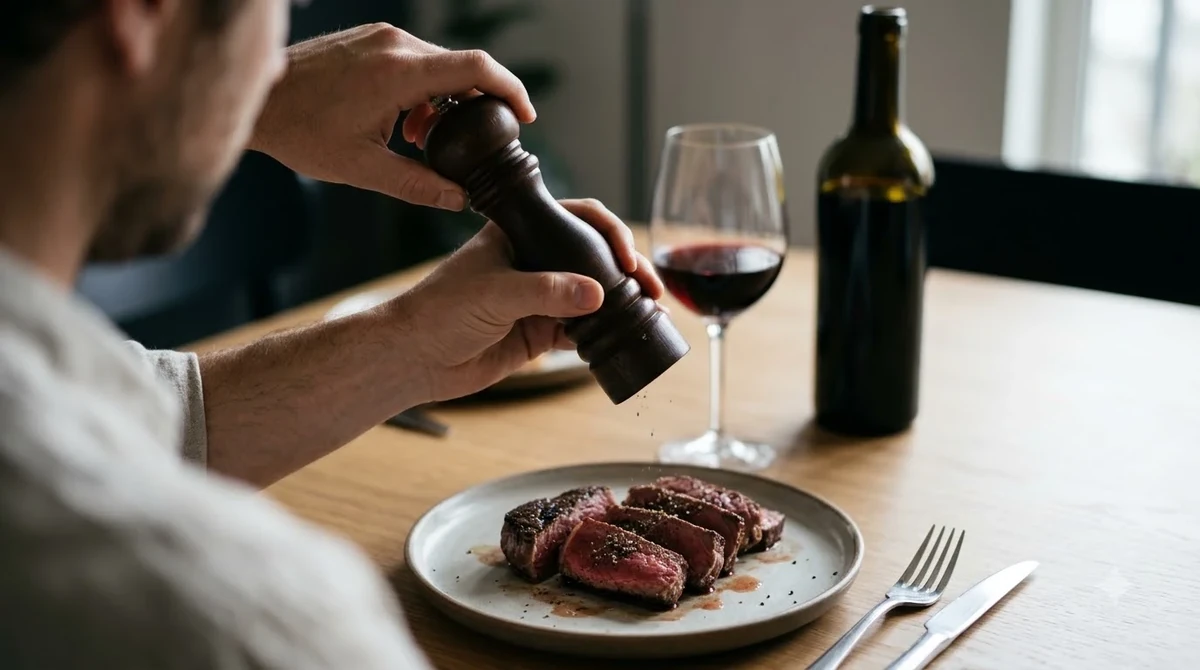
Grilled steak is a natural match for Carménère. The grape’s dark fruit and savory qualities complement the browned flavors produced by grilling, while its moderate tannins work well with the richness of beef. A 5-ounce pour alongside a grilled steak with herbs or a pepper-based sauce provides a straightforward pairing.
Lamb chops are another excellent option. Montes specifically recommends its Alpha Carménère with lamb chops served with red wine and mushroom sauce. The earthy mushroom character complements the wine’s herbal notes, while the meat provides enough richness to balance its tannins.
Roast pork and well-seasoned sausages also work well. The fruit in Carménère can complement the savory character of pork without requiring the stronger tannin structure found in some Cabernet Sauvignon wines.
Vegetables, mushrooms, and vegetarian meals
Roasted mushrooms are particularly useful because their earthy, savory character complements Carménère’s peppery notes. Try portobello mushrooms, roasted eggplant, or a mushroom-based pasta dish with rosemary and thyme.
Bean-based meals are also suitable. Wine Folly recommends pinto bean chili and white bean and kale soup as vegetarian options. The combination of beans, herbs, and savory seasoning provides enough substance to complement a medium-to-full-bodied red.
Roasted peppers, grilled zucchini, and eggplant can provide additional connections with the wine’s green and herbal aromas. A dish with moderate seasoning will usually allow the fruit and spice to remain noticeable.
Spicy food and cheese
Carménère can accompany moderately spiced dishes, including chili and Mexican mole. However, very hot chili preparations require caution. Alcohol and tannins can intensify the perception of chili heat, making a high-alcohol red less comfortable alongside extremely spicy food.
Soft and ripe cheeses are another option identified by Ventisquero. Choose cheeses with sufficient richness to complement the wine without overwhelming its fruit. A small cheese board with mild cured meats, roasted peppers, and mushrooms can work particularly well.
For a more substantial dinner, Bolognese pasta combines tomato, meat, and herbs in a way that complements Carménère’s fruit and savory profile. The acidity of the tomato sauce makes freshness in the wine important, so avoid serving the bottle too warm.
Ventisquero also provides useful producer-specific pairing suggestions. Its Clásico Carménère wine information identifies pork, lamb, soft and ripe cheeses, cream-based dishes, and well-seasoned foods as suitable companions.
Adjusting Temperature for Different Carménère Styles
Although 60–65°F is a dependable starting point, the ideal position within that range depends on the wine’s body, alcohol, oak treatment, and regional character. Lighter bottles generally benefit from the cooler end, while fuller and more concentrated wines can be served slightly warmer.
Carménère from Chile’s Central Valley is not a single uniform style. Maipo, Cachapoal, and Colchagua produce wines with different combinations of fruit, acidity, body, and herbal expression. These differences can influence how the wine performs at the table.
Lighter and fresher examples
For a lighter Carménère with fresh cherry, raspberry, and floral aromas, aim for approximately 60–62°F. This temperature helps maintain freshness and makes the wine particularly appealing alongside grilled poultry, roasted vegetables, or lighter pork dishes.
Wine Folly describes Maipo Valley examples as potentially lighter and more refined, with floral notes such as cherry, hibiscus, and rose. A cooler serving temperature can help emphasize their freshness without completely suppressing their aromatic character.
Full-bodied and oak-aged examples
For a fuller wine with concentrated blackberry, plum, chocolate, and oak-derived spice, aim for approximately 63–65°F. This gives the aromas room to develop while maintaining enough coolness to keep the alcohol balanced.
Peumo in Cachapoal Valley is associated with fuller-bodied Carménère and higher alcohol. A bottle with this type of concentration may show greater aromatic detail near the upper end of the recommended serving range.
Montes Alpha provides a useful producer-specific example. Its technical information describes a Carménère-based blend containing 90% Carménère and 10% Cabernet Sauvignon, with 14.5% ABV and a recommended serving temperature of 62–66°F. The producer also recommends at least 30 minutes of decanting.
The Colchagua Valley offers another broad range of styles. Its Carménère wines can display raspberry fruit and characteristic green peppercorn notes, while individual vineyard sites and winemaking choices influence their concentration and structure.
For readers exploring different wine categories, the Wine by Type section provides a useful starting point for understanding how grape varieties influence body, acidity, tannin, and serving expectations.
Blends and bottles with stronger structure
Carménère is sometimes blended with Cabernet Sauvignon or other red varieties. These blends may have firmer tannins and a fuller overall structure than straightforward varietal examples. A starting temperature of 63–65°F is generally appropriate, with a short period of aeration if the wine seems closed.
The amount of oak aging also matters. New French oak can contribute vanilla, toasted spice, and smoky characteristics, while extended maturation may create a more integrated and layered profile. Temperature cannot change the wine’s underlying structure, but it can influence how clearly those characteristics are perceived.
For most bottles, there is no need to create a separate serving routine based on the country or region alone. Start with 60–65°F, assess the wine after pouring, and make small adjustments if necessary.
Frequently Asked Questions
Can Carménère be served in a chilled wine glass?
Yes, but the glass should not be extremely cold. A glass taken directly from a freezer can rapidly lower the wine’s temperature and reduce its aromatic expression. A clean glass at ordinary room temperature is generally the better choice.
Does Carménère need to breathe after opening?
Not every bottle requires extended aeration. Some Carménère wines are ready immediately, while concentrated examples may improve after 30–60 minutes. If a wine initially seems closed, give it a little time in the glass before deciding whether to decant the entire bottle.
How many glasses can you pour from one bottle of Carménère?
A standard 750 ml bottle contains approximately five servings when each glass receives a 5-ounce pour. This is a practical estimate because glass sizes and individual pours vary. A bottle shared between four people allows slightly more generous servings.
Can Carménère be stored upright after opening?
Yes. An opened bottle can stand upright in the refrigerator once it has been securely recorked or fitted with a wine stopper. Keeping the bottle refrigerated slows the oxidation process, and most opened still wines are best consumed within approximately 3–5 days.
Is Carménère suitable for long-term wine storage?
Some structured Carménère wines can develop additional complexity over several years. Wine Folly identifies approximately 5–10 years as a possible cellar window for suitable examples, while Montes describes its Alpha bottling as capable of aging for up to 10 years. Storage conditions and the individual wine’s structure determine its actual development.
For most bottles, serving Carménère at 60–65°F is the simplest way to enjoy its dark fruit, peppery aromas, and balanced structure. Refrigerate a warm bottle briefly, use a standard red wine glass, and allow approximately 30 minutes of aeration when the wine benefits from it. These small adjustments make Carménère an excellent companion for grilled meats, lamb, pork, mushrooms, and hearty vegetarian dishes.
More in Wine Types & Grapes
 What Does Ruby Port Taste Like? Flavor Notes, Styles, and Serving TipsUpdated Nov 21, 2026
 What Does Ribolla Gialla Taste Like? Crisp White and Amber Styles ExplainedUpdated Nov 21, 2026
 What Does Semillon Taste Like? Flavor Profile, Styles & PairingsUpdated Nov 21, 2026
 What Does Scuppernong Taste Like? Flavor, Styles, and Pairing GuideUpdated Nov 21, 2026
 What Does Saperavi Taste Like? Flavors, Styles, and Pairing GuideUpdated Nov 21, 2026
 What Does Natural Wine Taste Like? Flavors, Styles, and Serving TipsUpdated Nov 21, 2026