


We may earn a commission when you buy through links on this page, at no extra cost to you. Learn more.
Volnay wine tasting reveals the elegant, aromatic character of Burgundy Pinot Noir, with flavors of red cherry, raspberry, violet, and subtle spice supported by fresh acidity and refined tannins. Produced in the Côte de Beaune, Volnay is particularly admired for its finesse, silky texture, and expressive vineyard differences. Its wines range from approachable village-level bottles to complex Premier Crus that develop additional depth with bottle age. Understanding the appellation, its vineyards, and its characteristic aromas makes it easier to recognize what distinguishes Volnay from other Burgundy reds.
Volnay offers an excellent introduction to the more delicate side of Burgundy. Although it shares the Côte de Beaune with more powerful reds, its reputation rests on fragrance, balance, and an appealing combination of red fruit and earthy complexity. A closer look at its geography, grape variety, vineyard classifications, and tasting characteristics helps explain why this small appellation attracts so much attention from Pinot Noir enthusiasts.
Where Volnay Comes From and What Makes Its Terroir Special
Volnay is a village appellation in Burgundy’s Côte de Beaune, located south of Beaune between Pommard and Meursault. Its vineyards occupy sloping ground around the village, where elevation, exposure, and changing limestone soils influence the character of the finished Pinot Noir. The appellation received official controlled status in 1937 and remains exclusively associated with red wine.
The Burgundy wine authority describes the vineyard landscape as a relatively narrow, steep slope associated with the hill of Chaignot. Its orientation differs slightly from the surrounding Côte de Beaune, giving the vines a predominantly southeast-facing exposure. This positioning helps explain the distinctive growing conditions found in the appellation. According to the regional description, the vineyards sit approximately 230 to 280 meters above sea level.
The soil composition changes as the slope rises and falls. Pink oolitic limestone appears toward the upper sections, while chalky Argovian limestone and reddish, iron-bearing Bathonian limestone occur farther down. At the foot of the slope, deeper and more gravelly soils become more common. These variations influence drainage, water availability, and the growing conditions experienced by individual vineyard parcels.
Volnay’s geological diversity matters because Pinot Noir is sensitive to its growing environment. Differences in soil depth, exposure, and elevation can affect ripening and the balance between fruit concentration and freshness. A wine from one part of the slope may emphasize floral aromas and delicate red fruit, while another may feel darker, firmer, or more structured.
The appellation’s historical production figures also demonstrate its scale. Burgundy’s regional documentation records 221.99 hectares under production in its historical dataset, including 132.95 hectares classified as Premier Cru. The same dataset records average annual production of 7,459 hectoliters. These figures provide useful historical context rather than a fixed description of every current harvest.
Volnay’s position between two well-known neighbors makes geographical comparisons particularly useful. Pommard lies to the north and is generally associated with firmer, more structured Pinot Noir. Meursault lies to the south and is especially famous for white Chardonnay. Volnay occupies a distinctive position between these styles, offering red Burgundy that emphasizes fragrance and finesse.
For readers exploring other regions, comparing Volnay with Alsace wine tasting provides an interesting lesson in how grape variety and regional conditions shape aromatic expression. The comparison also demonstrates why a wine’s origin matters as much as its grape name.
The Pinot Noir Grape and Volnay’s Characteristic Flavor Profile
Volnay is made from Pinot Noir, a grape particularly well suited to Burgundy’s limestone-rich slopes. Its relatively delicate skin and sensitivity to vineyard conditions produce wines that can express differences between individual sites. In Volnay, the typical result is a red wine with fragrant fruit, fresh acidity, moderate tannin, and a texture that often feels polished rather than aggressive.
At a tasting, begin by examining the wine’s color. Young Volnay commonly displays bright ruby or garnet-red tones, sometimes with a relatively transparent appearance compared with darker varieties such as Syrah or Cabernet Sauvignon. Older examples may show lighter garnet or brick-colored reflections as their pigments evolve.
The nose usually provides the most recognizable clues. Red cherry, raspberry, redcurrant, and violet are common reference aromas. Some wines also suggest rose petals, peony, blackcurrant, or subtle forest-floor characteristics. The precise combination depends on the vineyard, producer, vintage, and stage of development.
On the palate, Volnay generally combines fresh fruit with lively acidity and fine-grained tannins. The initial impression may be delicate, but that does not mean the wine lacks structure. A well-made example can have considerable concentration beneath its relatively light appearance. Its acidity gives the fruit definition, while its tannins provide shape and a gently drying sensation toward the finish.
Oak treatment can introduce additional aromas and textures. Depending on the producer, barrel aging may contribute vanilla, toast, baking spice, or subtle roasted notes. The objective is usually to complement the Pinot Noir rather than overwhelm its natural fragrance. Excessive oak character can obscure the floral and red-fruit qualities that make Volnay distinctive.
With bottle age, the aromatic profile becomes more complex. Fresh cherry and raspberry may gradually give way to dried fruit, mushroom, forest floor, mild spice, and game-like notes. Maison Joseph Drouhin, for example, describes the development of ripe and candied fruit, mushroom, mild spices, and vanilla in its Volnay.
The finish is another important part of the tasting experience. Rather than relying on heavy tannin or powerful alcohol, many Volnay wines leave an impression of lingering red fruit, floral character, and gentle savory complexity. The best examples maintain freshness throughout the finish instead of becoming flat or overly soft.
How to Taste Volnay and Recognize Its Different Characteristics
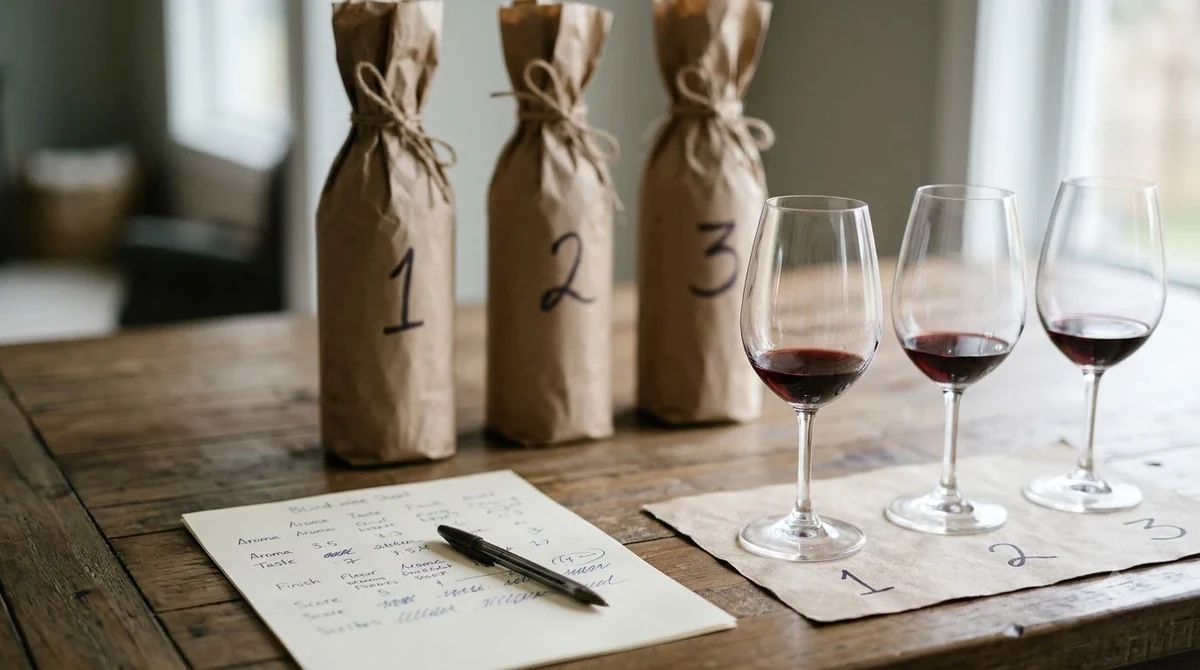
A structured tasting helps separate the wine’s individual components. Examine its appearance, smell the glass before and after swirling, and then assess acidity, tannin, fruit intensity, texture, and finish. Comparing two wines from different Volnay vineyards can reveal how much variation exists within this relatively small appellation.
Begin with a moderate pour in a Burgundy-shaped glass. A standard tasting pour is approximately 5 ounces, although a smaller serving can be useful when comparing several wines. Hold the glass by its stem, examine the color against a neutral background, and gently swirl to release the aromas.
For the first aromatic assessment, look for fresh fruit and floral notes. Cherry, raspberry, redcurrant, and violet are useful starting points. After swirling, consider whether additional aromas appear, such as rose, blackcurrant, earth, spice, or subtle oak. Avoid trying to identify every possible scent. The more important question is whether the aromas are clear, balanced, and consistent with the wine’s age and style.
Take a moderate sip and allow the wine to move across the palate. Consider whether its acidity feels bright or restrained, whether the tannins are fine or firm, and whether the fruit remains present through the finish. Volnay often feels silky, but the wine should still have enough structure to maintain its shape.
It is also useful to distinguish fruit intensity from body. A wine can have concentrated cherry and raspberry flavors without feeling heavy. Volnay often demonstrates this distinction: aromatic intensity and persistence can coexist with a relatively graceful body. A powerful finish does not necessarily require a thick or muscular texture.
Village Volnay and Premier Cru in the glass
Village-level Volnay is generally a good starting point for understanding the appellation’s overall character. Expect recognizable Pinot Noir aromas, fresh fruit, and a balanced structure. The style varies by producer, but these wines often emphasize immediate aromatic appeal and can be approachable earlier than more ambitious vineyard selections.
Premier Cru wines may offer greater concentration, depth, and structural complexity. Their differences are not simply a matter of stronger flavor. Some emphasize floral precision and mineral impressions, while others show darker fruit, more noticeable tannin, and a longer finish. A Premier Cru designation identifies a classified vineyard origin, not a guarantee that every bottle will taste identical or that every producer uses the same winemaking approach.
When tasting several bottles, use the same glassware and approximate serving temperature. Record the producer, vineyard name, vintage, and the most noticeable aromas. This creates a useful comparison that can reveal differences more clearly than tasting each wine in isolation.
Tip: Taste village Volnay before Premier Cru selections when comparing several bottles. Begin with the freshest and least structured wine, then move toward more concentrated examples. This progression makes differences in tannin, aromatic intensity, and finish easier to recognize.
Volnay Premier Cru Vineyards and Their Individual Identities
Volnay contains 29 officially recognized Premier Cru climats, making vineyard identification an important part of understanding its wines. These named sites are distributed across the appellation, with an additional qualifying climat, Santenots, located in neighboring Meursault. Each site has its own geographical characteristics, and producers may interpret those differences through their vineyard management and winemaking choices.
Several Premier Cru names appear regularly in discussions of Volnay. Champans, Les Caillerets, Clos des Chênes, Taillepieds, and Frémiets are useful names to recognize when exploring the appellation. Their appearance on a wine label indicates a more specific vineyard origin than a standard village appellation.
Champans is one of the recognizable Premier Cru names associated with Volnay. Wines from this climat are often discussed in terms of their combination of fruit, structure, and aromatic depth. When comparing Champans with a village wine, pay attention to the persistence of the finish and the relationship between fresh fruit and tannin.
Les Caillerets is another important vineyard name. Its wines are frequently associated with refinement and a strong expression of the appellation’s aromatic character. Look for floral notes, fresh red fruit, and a structured but balanced palate when assessing examples from this site.
Clos des Chênes is particularly useful for understanding the range of Volnay styles. Its wines can show greater weight and firmness than the most delicate expressions of the appellation. This makes it an interesting selection for tasters who want to see how Premier Cru Volnay can combine elegance with a more substantial structure.
Taillepieds is another recognized climat worth exploring. Its vineyard origin can provide an opportunity to examine the relationship between site, concentration, and tannin. Compare its wines with those from Frémiets or Champans rather than assuming that all Premier Cru bottlings share the same profile.
The Santenots exception deserves particular attention. Although the vineyards are physically located in Meursault, Pinot Noir grown in the designated Santenots climat can qualify for the Volnay appellation. This means that a bottle labeled Volnay Premier Cru Santenots comes from a geographical location outside the village of Volnay itself.
For practical tasting comparisons, choose two or three Premier Cru bottles from different named climats and, if possible, from the same vintage. This helps reduce vintage-related differences and makes vineyard character easier to assess. A comparison of Champans, Les Caillerets, and Clos des Chênes, for example, can demonstrate how different expressions of Pinot Noir exist within one appellation.
The official Burgundy wine authority’s Volnay appellation profile provides a useful reference for the recognized vineyard names, geographical setting, soil types, and traditional wine characteristics.
Serving Temperature, Glassware, and Bottle Aging
Volnay generally benefits from a serving temperature between 57°F and 61°F, with the precise choice depending on the wine’s body, age, and structure. Serving it slightly cool preserves freshness and helps maintain the clarity of its red-fruit and floral aromas. Excessive warmth can make alcohol more noticeable and reduce the impression of freshness.
Producer recommendations offer useful reference points. Domaine Aegerter suggests 57–59°F for its Volnay, while Maison Joseph Drouhin recommends approximately 61–62°F. These examples illustrate why a small temperature adjustment can be appropriate for different bottlings.
| Wine characteristic | Recommended temperature | Practical tasting purpose |
|---|---|---|
| Light-bodied red wine | 55–60°F | Preserves freshness and aromatic definition |
| Typical Volnay | 57–61°F | Balances fruit, acidity, and tannin |
| Fuller Premier Cru | 60–65°F | Allows more developed aromas to emerge |
| Cool cellar storage | About 55°F | Supports steady bottle aging |
Use a medium-sized Burgundy glass with a broad bowl and a narrower opening. The bowl provides room for swirling, while its shape helps concentrate aromas toward the nose. A standard red wine glass can also work, but a Burgundy glass is particularly useful when evaluating delicate floral notes.
Young Volnay does not always require decanting. Many village wines are attractive shortly after opening, especially when they have a fresh, fruit-driven style. However, a more concentrated young Premier Cru may benefit from 20 to 30 minutes of exposure to air. Older bottles require more caution because excessive aeration can cause delicate aromas to fade.
Decanting is also useful when a wine has visible sediment. Carefully pour the wine into a clean decanter, leaving the sediment behind in the bottle. Avoid treating every older Burgundy as a wine that needs several hours of aeration. Fragile Pinot Noir can lose its most appealing characteristics if exposed to too much oxygen.
Bottle aging depends on the producer, vintage, vineyard classification, and storage conditions. Maison Joseph Drouhin recommends an optimal consumption period of 5 to 8 years for its Volnay, with aging potential of approximately 10 years. Domaine Aegerter lists a five-year aging potential for its particular bottling. These are producer-specific recommendations rather than universal limits for every Volnay.
Store bottles on their sides in a cool, dark location with a stable temperature near 55°F. Avoid frequent temperature changes, direct sunlight, and unnecessary vibration. Good storage conditions help preserve the wine’s fruit and allow its secondary aromas to develop gradually.
Once opened, keep the remaining wine refrigerated with a suitable closure. Most opened still wines are best consumed within approximately 3 to 5 days, although their aromatic quality can decline sooner. Allow a refrigerated bottle to warm slightly before serving rather than placing it directly on the table at refrigerator temperature.
Food Pairings That Bring Out Volnay’s Elegance
Volnay pairs particularly well with roasted poultry, duck, rabbit, game birds, and gently prepared red meats. Its fresh acidity and moderate tannin make it suitable for dishes that need aromatic complexity without the heavier structure of a powerful Cabernet Sauvignon or Syrah. The best pairings preserve the wine’s delicate fruit while providing enough flavor to complement its savory development.
Roasted chicken is a dependable starting point. A simply seasoned bird with crisp skin and a light pan sauce allows cherry and raspberry notes to remain recognizable. More elaborate preparations can work too, especially when they include mushrooms, herbs, or a moderate amount of roasting juices.
Duck is another excellent choice. Its richer texture provides a contrast to Volnay’s acidity, while the meat’s savory flavor complements the wine’s developing earthy characteristics. Duck breast with a restrained cherry sauce can create a particularly harmonious combination because the fruit in the sauce echoes the wine’s natural aromas.
Rabbit dishes also work well. A slow-cooked rabbit stew with carrots, mushrooms, and herbs gives the wine enough savory complexity without overpowering its structure. Domaine Aegerter specifically suggests rabbit stew with young carrots and pheasant pâté among its pairing ideas.
For game, consider roasted pheasant or other feathered game birds. The richer flavor of these dishes can match the concentration of a Premier Cru Volnay. Slow braising is another suitable preparation because it softens the meat and produces a savory sauce that complements the wine’s texture.
Red meats can also be successful, particularly veal, lamb, and simply prepared beef. Choose preparations that emphasize roasting, grilling, or gentle braising rather than very heavy sauces. A grilled veal chop with herbs, for example, allows the wine’s aromatic profile to remain central.
Mushrooms are especially useful ingredients for older Volnay. Their earthy flavors echo the mushroom and forest-floor notes that can develop during bottle aging. A mushroom tart, sautéed wild mushrooms, or a mushroom-based sauce can make a mature bottle particularly expressive.
Cheese pairings should consider the intensity of both the wine and the cheese. Medium-intensity washed-rind cheeses and moderately aged cow’s milk cheeses are useful options. Stronger cheeses can work with sufficiently concentrated Volnay, although very pungent or heavily salty varieties may overwhelm a delicate village wine.
Some foods require more careful matching. Very spicy dishes can make alcohol and tannin feel more pronounced, while strongly acidic sauces may make the wine seem less fresh. Excessively sweet sauces can also make a dry red taste sharper. Keep sweetness in the dish restrained and use herbs, mushrooms, roasting, and moderate richness to build compatibility.
Volnay is not an ideal choice for oily fish served without a complementary sauce. Its tannins can clash with the texture and flavor of certain fish preparations. For seafood, a lighter white Burgundy or another high-acidity white wine is usually a more dependable direction.
Readers interested in comparing different regional food and wine traditions can also explore Willcox wine tasting, where Arizona’s growing conditions and grape varieties provide a very different tasting experience. Another useful comparison is Bolgheri wine tasting, which introduces a more structured Tuscan red-wine tradition.
How Volnay Compares With Other Burgundy and Pinot Noir Wines
Volnay is often recognized for its perfume, freshness, and refined texture, but it is important not to assume that every Burgundy Pinot Noir tastes the same. Differences in climate, soils, vineyard location, producer decisions, and vintage can create substantial variation. Comparing Volnay with neighboring appellations helps clarify its identity.
Pommard is the most obvious comparison because the two villages are neighbors in the Côte de Beaune. Pommard generally produces Pinot Noir with a firmer, more structured character, while Volnay is commonly associated with greater aromatic delicacy and a softer impression of texture. This is a broad stylistic distinction, not an absolute rule. Some Volnay Premier Crus can be quite muscular, and some Pommard wines can be surprisingly refined.
Meursault offers a different comparison because its reputation is built largely on Chardonnay rather than Pinot Noir. White Meursault frequently shows citrus, orchard fruit, and richer textures influenced by lees contact and oak aging. Volnay, by contrast, centers on red fruit, floral aromas, and the structure of red Burgundy. The neighboring vineyards demonstrate how dramatically grape variety changes the character of wines grown in a similar geographical area.
Comparisons with other Pinot Noir regions can be equally revealing. Oregon Pinot Noir may show ripe cherry, cranberry, earth, and spice, depending on the region and producer. New Zealand Pinot Noir can offer bright fruit and pronounced freshness. Burgundy’s Volnay, however, is particularly associated with its combination of limestone-influenced vineyard expression, red-fruit fragrance, and traditional regional identity.
It is also useful to compare Volnay with wines from the broader Côte de Nuits. Some well-known villages there produce Pinot Noir with greater concentration, darker fruit, and firmer structure. These differences are not simply about quality. They reflect different vineyard conditions, site characteristics, and winemaking approaches.
Price should not be the only measure of quality when selecting a bottle. A carefully made village Volnay can offer an excellent expression of the appellation, while an expensive Premier Cru may require more time in the cellar to show its full potential. Producer reputation, vintage conditions, vineyard origin, and personal preference are all useful considerations.
For a focused comparison, open a village Volnay and a village Pommard from the same vintage. Serve both at approximately 60°F and use identical glasses. Compare the aromatic intensity, fruit profile, tannin, and finish. This straightforward exercise often makes the distinction between the two neighboring appellations easier to understand.
For further regional background, the Wine Regions resource provides a broader framework for understanding how geography, climate, grapes, and appellation rules influence wine styles around the world.
Frequently Asked Questions
These common questions address additional details about Volnay’s classification, production, and tasting experience. They are useful for interpreting wine labels and choosing bottles for a more focused Burgundy tasting.
Does Volnay have any Grand Cru vineyards?
No. Volnay has village-level vineyards and 29 officially recognized Premier Cru climats, but no Grand Cru classification. This distinction matters when comparing Burgundy labels because Premier Cru is the highest vineyard classification available within the Volnay appellation itself.
Can Volnay wine be made from whole-cluster Pinot Noir grapes?
Yes, winemakers may choose to include some whole clusters during fermentation, depending on their approach and the vintage. Whole-cluster fermentation can introduce additional aromatic and structural characteristics, including herbal, floral, and stem-derived notes. The precise technique varies between producers and individual wines.
What does the term climat mean on a Burgundy wine label?
A climat is a precisely identified vineyard site with its own geographical and historical identity. In Burgundy, these named places are central to the classification system and the way wines communicate their origins. A named Volnay climat provides more specific geographical information than the village appellation alone.
Is Volnay always a dry red wine?
Yes, Volnay is a red wine appellation for still Pinot Noir. It is not a designation for sparkling wine, rosé, or sweet dessert wine. Its characteristic style is dry, with the balance of fruit, acidity, and tannin varying according to the producer and vineyard origin.
What does Volnay mean on a wine label when Santenots appears after it?
Volnay Santenots identifies Pinot Noir from the Santenots climat in Meursault that qualifies for the Volnay appellation. This is a distinctive geographical exception within Burgundy’s classification system. The designation connects the wine to the Volnay red-wine tradition even though its vineyard is located in the neighboring commune.
Volnay offers a rewarding way to explore Burgundy through the fragrance, freshness, and complexity of Pinot Noir. Starting with a village bottling before moving to Champans, Les Caillerets, or Clos des Chênes provides a practical introduction to the appellation’s vineyard differences. With appropriate serving temperature, thoughtful food pairings, and attention to bottle age, Volnay reveals why this small Côte de Beaune appellation remains an important reference point for elegant red Burgundy.
More in Wine Regions
 Willcox Wine Trail: Discover Arizona’s High-Elevation Wine CountryUpdated Nov 20, 2026
 Yakima Valley Wine Region: Find the Best Styles to TryUpdated Nov 20, 2026
 Vosne Romanee Wine Tasting: Identify Aromas and Choose Better PairingsUpdated Nov 20, 2026
 Yakima Valley Wine Festival: Find the Best Seasonal Wine EventsUpdated Nov 20, 2026
 Wales Vineyards: Discover Cool-Climate Wines and Where to VisitUpdated Nov 20, 2026
 Yountville Wine Festival: Discover Napa Wines and Local FoodUpdated Nov 20, 2026