

We may earn a commission when you buy through links on this page, at no extra cost to you. Learn more.
The uco valley wine region in Mendoza, Argentina, is best known for high-altitude Malbecs with vivid fruit, fresh acidity, and a strong sense of place. Its vineyards climb toward the Andes across the departments of Tupungato, Tunuyán, and San Carlos. Cabernet Franc, Cabernet Sauvignon, Chardonnay, and Pinot Noir also show why this region is more varied than a single-grape reputation suggests.
Uco Valley is one of the most closely watched wine-growing areas in Argentina. Its combination of mountain-influenced sites, dry conditions, alluvial soils, and distinct local growing areas gives wine drinkers several ways to explore Mendoza beyond its better-known historic districts.
Where Uco Valley Sits in Mendoza
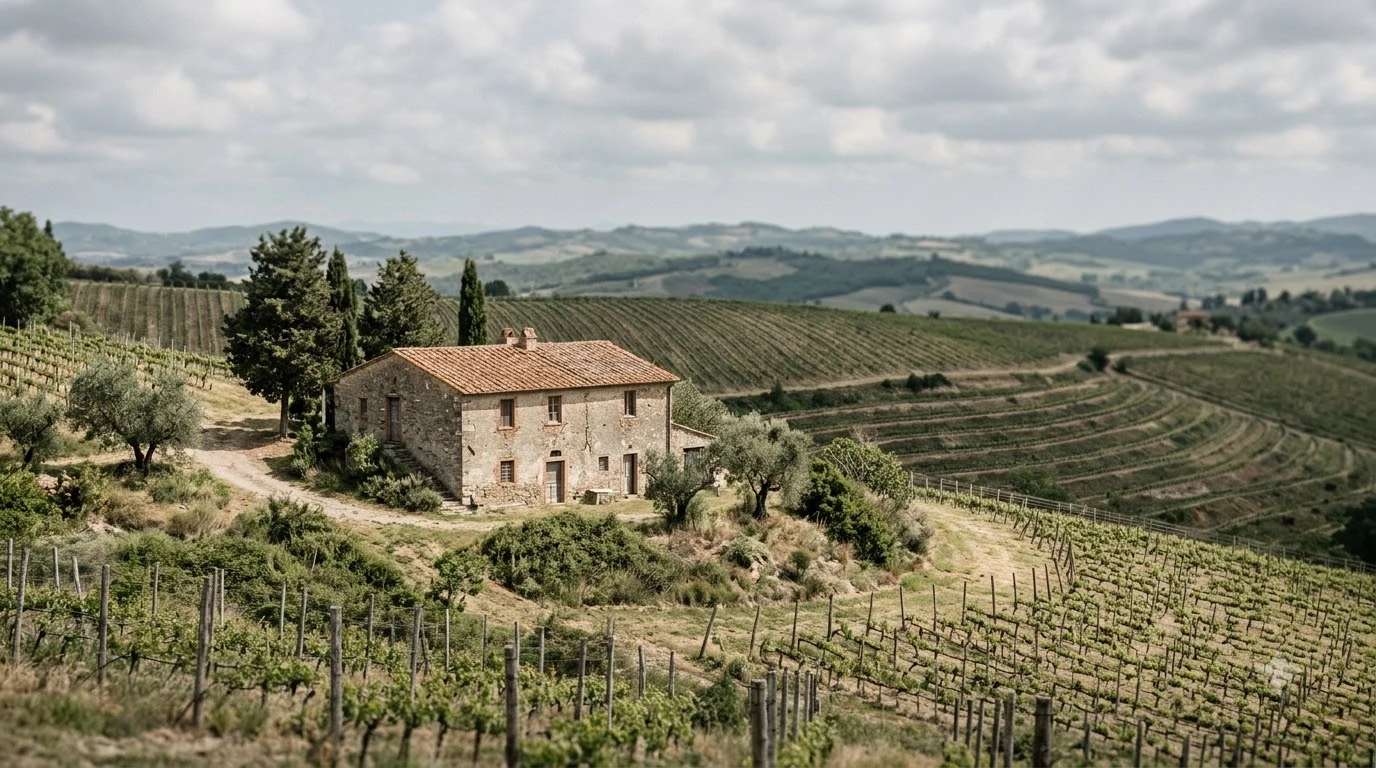
The Uco Valley lies south of Mendoza city in the Cuyo region of western Argentina, along the eastern foothills of the Andes. The wine-growing area stretches from Tupungato in the north through Tunuyán to San Carlos in the south, with vineyards set across a broad landscape rather than one narrow valley floor.

The mountains form the western backdrop, while the land opens toward the drier plains to the east. The regional tourism authority places vineyards between about 900 and 1,700 meters above sea level, or roughly 2,950 to 5,580 feet. That 800-meter span matters: a site at the upper end can have a different growing season and fruit profile from a lower vineyard a short drive away. The higher sites are not automatically better; they simply offer different conditions for ripening and retaining freshness. It is one reason a bottle marked with a specific district or vineyard can tell a more precise story than a general Mendoza designation.
Wine Enthusiast describes a north-to-south stretch of roughly 45 miles and vineyard land approaching 70,000 acres; Visit Argentina identifies about 28,000 hectares under vine, a broadly similar figure after conversion. The three departments provide a practical first map for understanding this substantial growing area.
Uco belongs in the wider conversation about New World regions shaped by local conditions. Compare it with California’s Alexander Valley wine region to see how landscape shapes Cabernet and other varieties, or use the Wine Regions library for more label-reading context. The official Visit Argentina Uco Valley overview also gives a useful picture of the wider destination beyond wine.
High-Altitude Climate and Andean Soils
Uco Valley is dry, sunny, and strongly influenced by elevation, with cold mountain nights helping preserve freshness in the grapes. Its climate is not identical from one vineyard to the next, but the combination of altitude, scarce rainfall, and Andean geology is central to the region’s identity.
| Reference point | Typical figure | Why it matters |
|---|---|---|
| Vineyard elevation | 900–1,700 meters | Creates different site conditions across the valley |
| Annual rainfall | Under 10 inches | Makes irrigation important in this dry growing area |
| Average temperature | About 14°C | Gives a broad indication of the region’s generally cool conditions |
| North-to-south span | About 45 miles | Allows meaningful variation among districts and vineyard sites |
The figures describe the region as a whole, not an individual vineyard. Visit Argentina calls the climate dry, with wide temperature ranges and scarce rainfall; Wine Enthusiast puts annual rainfall below 10 inches. Decanter gives an average temperature near 14°C and describes vineyards commonly found at 1,000 to 1,500 meters. Together, these numbers point to a high, dry environment with meaningful differences among sites.
Soils are largely shaped by Andean alluvial deposits carried down by water over long periods. Depending on the site, growers encounter stones, gravel, sand, and finer sediment; the mix and depth can change over short distances. Although the landscape is arid, snowmelt from the Andes feeds the rivers and irrigation systems that sustain vineyards, making careful water management essential.
For wine drinkers, these conditions can translate into ripe fruit balanced by lively acidity. Cool nights can slow ripening compared with warmer lowland sites, while strong sunlight supports color and concentration in red grapes. Altitude and stony soils do not guarantee quality, but they help explain why Uco Valley wines can feel fresh and structured at the same time.
Three Departments and Their Key Wine Areas
The Uco Valley’s three main departments are Tupungato, Tunuyán, and San Carlos, running broadly from north to south. Each contains named places that help explain the origin of a wine, and several have become familiar reference points for growers and collectors.
Tupungato is the northern department and includes Gualtallary and San Pablo. Wine Enthusiast identifies San Pablo among the highest reaches of southern Tupungato and lists Gualtallary as a prominent zone. Gualtallary is associated with high-elevation vineyards and alluvial, rocky ground; its wines can emphasize freshness and site character rather than sheer ripeness. The district is also a source of Chardonnay and Pinot Noir, not only Malbec.
Tunuyán occupies the central stretch, with Los Chacayes, Vista Flores, and Los Árboles among its recognized places. Los Chacayes has its own geographical indication, while Wine Enthusiast places Vista Flores and Los Árboles in this department. San Carlos lies to the south and includes Paraje Altamira and La Consulta; El Cepillo is another named southern Uco area. Paraje Altamira is a reference point for calcareous, stony soils; Wine Enthusiast describes vineyards there at around 3,600 feet and notes that one named vineyard was planted in the 1950s.
These place names help buyers compare different parts of Uco rather than treating the region as one uniform source. The same approach is useful in Australia’s Eden Valley wine region and North Carolina’s Yadkin Valley wine region, where local geography also helps explain wine style. A more specific origin makes side-by-side comparisons of freshness, texture, and fruit character more meaningful.
Grapes and Wine Styles to Know
Malbec is the grape most closely associated with Uco Valley, but it is only the starting point. The region also produces Cabernet Sauvignon, Cabernet Franc, Syrah, Merlot, Pinot Noir, Chardonnay, Sauvignon Blanc, and other varieties that make its portfolio broader than its best-known red wine.

Malbec ranges from plush, dark-fruited bottlings to fresher wines with savory detail, lively acidity, and a firm finish. A district or vineyard name helps explain differences that a varietal label alone cannot: elevation, soils, extraction, and oak choices all influence the final wine. Look for a balance of fruit, acidity, and tannin rather than assuming every bottle from the region follows the same powerful style.
Cabernet Franc and Cabernet Sauvignon offer alternatives to Malbec. Cabernet Sauvignon generally has high tannin and a firm structure, while Cabernet Franc can bring herbal and red-fruit detail. Syrah offers darker fruit and spice; Pinot Noir is lighter, with lower-to-medium tannin and naturally high acidity.
Whites broaden the picture. Chardonnay ranges from citrus-led examples to wines with more lees or oak influence, while Sauvignon Blanc can show bright acidity and herbal or citrus notes. Semillon and Torrontés also appear in the wider regional mix. Blends are common, with Malbec combined with Cabernet Sauvignon, Merlot, or Syrah; Tempranillo can appear in red blends from El Cepillo. These varieties give the region options for different meals and seasons, and also make Uco a useful place to compare how the same high-altitude setting supports both red and white grapes. For a first comparison, choose a district-labeled Malbec, then try Cabernet Franc or Chardonnay from another part of the valley.
Producers and the Shift Toward Fresher Wines
Uco Valley’s growth has involved both established Argentine producers and wineries built around the region’s mountain sites. Names frequently associated with the area include Zuccardi, Catena, Salentein, Domaine Bousquet, Andeluna, Rutini, Atamisque, and Clos de los Siete.
Visit Argentina lists Zuccardi, Atamisque, Casa de Uco, Alfa Crux, Clos de los Siete, Domaine Bousquet, Salentein, Andeluna, Rutini, Zorzal Wines, and the Adrianna vineyard associated with Catena. The range includes established wineries, modern facilities, and projects focused on particular vineyards. A producer’s name is a useful starting point, but the area and grape on the label matter just as much when choosing a style.
Winemaking priorities have shifted toward freshness, balance, and wines that express individual sites. Wine Enthusiast contrasts this interest with an earlier fashion for powerful, very ripe reds with substantial new-oak character. Winemakers interviewed in the article describe picking earlier to retain natural acidity and using Andean alluvial sites to shape wines with freshness and mineral impressions; some bottlings use little or no oak.
This does not mean every Uco Valley wine is light or unoaked. Structured reds and barrel-aged styles remain part of the region, alongside taut single-vineyard Malbec, savory Cabernet Franc, and Chardonnay that emphasizes texture rather than obvious vanilla. Technical notes can clarify whether a wine was fermented or aged in concrete, stainless steel, or oak, and whether it comes from one site or a blend. For a closer look at this shift, read Wine Enthusiast’s reporting on the transformation of Uco Valley wines, which discusses growers’ focus on harvest timing, vineyard differences, and natural acidity.
How to Choose, Serve, and Pair Uco Valley Wine
Choose a bottle by starting with the grape, then narrowing the selection by department or named district. A Malbec from Paraje Altamira, a Cabernet Franc from Gualtallary, and a Chardonnay from Tupungato may all come from Uco Valley, but they can offer very different combinations of fruit, texture, acidity, and oak.
A district-labeled Malbec is a reliable first purchase because it connects the valley’s signature grape with a specific origin. For firmer reds, compare Cabernet Sauvignon or Cabernet Franc; for a lighter red, try Pinot Noir; for whites, look for Chardonnay or Sauvignon Blanc. Notice whether the producer names a single vineyard, a geographical indication, or a broad regional blend. Those details help explain why two wines made from the same grape can taste different.
Serve full-bodied Malbec and Cabernet Sauvignon around 60–65°F, lighter reds such as Pinot Noir around 55–60°F, and Chardonnay around 50–55°F. Pour a standard 5-ounce glass; a 750-milliliter bottle yields about five pours. A young, full-bodied red can benefit from 30–60 minutes in a decanter if its tannins feel firm.
Match the wine’s weight and structure to the dish. Malbec and Cabernet Sauvignon work with grilled beef, lamb, sausages, and roasted mushrooms because protein and fat soften firm tannins. Cabernet Franc suits grilled vegetables or herb-roasted chicken, while Chardonnay can balance roast chicken, richer fish, and butter or cream sauces. Choose a bright Chardonnay or Sauvignon Blanc for oily fish rather than a tannic red; for sharp vinaigrette or tomato-heavy dishes, choose a wine with equal or higher acidity. For dessert, the wine should be at least as sweet as the dish. Once opened, keep still wine in the refrigerator and aim to finish it within three to five days; store unopened bottles on their side near 55°F.
Tip: Match the wine to the strongest element on the plate. Salt and fat soften tannin, but chili heat makes alcohol and tannin seem more pronounced, so a highly alcoholic, firm red is usually a poor partner for very spicy food.
Frequently Asked Questions
These quick answers cover practical details for understanding the region and planning a visit, beyond the vineyard and grape information above.
What are the approximate coordinates of Uco Valley?
Decanter lists the region at approximately 33°37′ south and 69°08′ west. Those coordinates place it in western Mendoza, near the Andean foothills, and can help orient travelers comparing maps or planning a route.
Which road connects Uco Valley with Mendoza city?
Ruta Nacional 40 is the main approach from Mendoza city, according to Visit Argentina. The city’s international airport is the usual gateway for visitors arriving by air, after which the drive continues south toward the wine-growing departments.
How long should visitors plan to stay in Uco Valley?
Visit Argentina recommends a stay of three to five days. That allows room for winery appointments, meals, and time in more than one department rather than trying to cover Tupungato, Tunuyán, and San Carlos in a single rushed day.
When is the landscape especially colorful?
Decanter describes autumn as particularly scenic, when vines and trees take on amber, russet, and gold tones. Harvest activity also brings a lively atmosphere to wineries, with Malbec picking commonly taking place in the southern hemisphere’s late summer and early fall.
Should winery visits be reserved in advance?
Yes. Visit Argentina specifically advises booking winery tours in advance, which is sensible for scheduled tastings and estate restaurants. Confirm the visit details directly with each winery, especially when your itinerary includes more than one appointment on the same day.
The Uco Valley rewards attention to both the grape and the place printed on the label. Start with Malbec, then branch into Cabernet Franc, Chardonnay, and Pinot Noir to see how the valley’s different elevations and districts shape its wines.
More in Wine Regions
 Willcox Wine Trail: Discover Arizona’s High-Elevation Wine CountryUpdated Nov 20, 2026
 Yakima Valley Wine Region: Find the Best Styles to TryUpdated Nov 20, 2026
 Vosne Romanee Wine Tasting: Identify Aromas and Choose Better PairingsUpdated Nov 20, 2026
 Yakima Valley Wine Festival: Find the Best Seasonal Wine EventsUpdated Nov 20, 2026
 Wales Vineyards: Discover Cool-Climate Wines and Where to VisitUpdated Nov 20, 2026
 Yountville Wine Festival: Discover Napa Wines and Local FoodUpdated Nov 20, 2026