

We may earn a commission when you buy through links on this page, at no extra cost to you. Learn more.
Naoussa wine tasting introduces you to Xinomavro, Greece’s distinctive indigenous red grape, through structured wines with bright acidity, firm tannins, and savory flavors. Located in Macedonia in northern Greece, the Naoussa PDO produces exclusively red wines from 100% Xinomavro. Visitors can explore mountain vineyards, compare traditional and modern winemaking styles, and taste wines that develop considerable complexity with bottle age.
For wine enthusiasts interested in discovering Greek wine beyond familiar international varieties, Naoussa offers an especially rewarding destination. Its vineyards surround a historic Macedonian town on the slopes of Mount Vermio, where changing elevations, soils, and exposures create different expressions of Xinomavro. A well-planned visit combines winery appointments, regional food, and enough time to understand why this grape has earned comparisons with some of Europe’s most age-worthy reds.
Understanding the Naoussa PDO and Its Wine Heritage
Naoussa is one of Greece’s most important red wine appellations, recognized for its exclusive relationship with Xinomavro. Understanding the PDO designation helps visitors recognize what makes these wines distinctive and why tasting bottles from different producers can be so interesting.
The Naoussa Protected Designation of Origin was established in 1971. Its production area covers the town of Naoussa and several surrounding communities in the regional unit of Imathia, including Kopanos, Lefkada, Marina, Giannakohori, Stenimachos, Rodochori, Trilofos, and Fitia. These communities share a connection to Xinomavro, but their vineyard conditions are not identical.
One important rule defines the appellation: PDO Naoussa wines are made exclusively from 100% Xinomavro. They are red wines and may be dry, semi-dry, or semi-sweet. This differs from several other Greek wine appellations, where Xinomavro can be blended with other indigenous grapes. For example, PDO Goumenissa uses Xinomavro and Negoska, while PDO Rapsani combines Xinomavro with Krassato and Stavroto. The official Wines of Greece Naoussa PDO profile provides further information about the appellation’s production rules, vineyard geography, and traditional wine styles.
The regional identity is closely connected to the grape’s naturally distinctive structure. Naoussa Xinomavro generally has high acidity and pronounced tannins, with a color that can appear surprisingly light for such a structured red. Strawberry, sour cherry, tomato, olive, and spice characteristics frequently appear in its aromatic profile.
Visitors familiar with Italian Nebbiolo may recognize similarities in the combination of pale color, firm tannins, aromatic complexity, and aging potential. However, Xinomavro has its own personality, particularly its characteristic tomato, olive, and dried-herb notes. Comparing the two varieties can be an interesting exercise for anyone exploring European wine regions. The broader Wine Regions collection provides additional context for understanding how geography and grape varieties influence regional wine styles.
Naoussa’s reputation also reflects a long history of wine production. The modern appellation brought greater definition to a region whose vineyards and winemaking traditions had already developed considerable recognition. Today, producers continue to interpret Xinomavro through different vineyard selections, fermentation methods, oak programs, and aging periods.
Mount Vermio Vineyards, Climate, and Terroir
Naoussa’s vineyard landscape is shaped by Mount Vermio, southeastern exposures, and substantial differences in elevation and soil. These conditions explain why wines from neighboring communities can have noticeably different textures, aromas, and levels of concentration.

The main vineyard area occupies the southeastern slopes of Mount Vermio, with many sites between approximately 150 and 400 meters above sea level. Some regional descriptions use a broader range, reflecting differences in the precise boundaries and vineyard sites being considered. The mountain landscape provides varying degrees of sunlight, wind protection, drainage, and temperature exposure.
The climate combines Mediterranean and continental influences. Winters can be cold, while summers are relatively hot. Northern winds influence growing conditions, and the southeastern vineyard orientation provides favorable sunlight exposure. These factors help Xinomavro reach ripeness while retaining the acidity that gives Naoussa wines their recognizable freshness.
Soil differences add another dimension. The mountainous areas around Giannakohori and Fyteia include sandy-clay-loam soils, while flatter sections have sandy-clay compositions. Across the broader appellation, differences in soil structure, slope, elevation, and vineyard exposure contribute to distinct local expressions.
For wine travelers, this variation makes it worthwhile to compare wines from more than one producer rather than treating Naoussa as a single uniform style. A wine from one vineyard may emphasize bright red fruit and fresh acidity, while another may show denser fruit, stronger tannins, or more pronounced savory characteristics.
During a guided vineyard walk, pay attention to the direction of the slopes, the surrounding vegetation, and the relative height of the vines. Ask the guide how the estate’s particular sites differ from vineyards closer to the town. These details help connect the landscape to the wine in the glass.
It is also useful to distinguish Naoussa from neighboring Xinomavro regions. Amynteo, for instance, has vineyards at substantially higher elevations, often around 570 to 750 meters according to the Winemakers of North Greece. Its cooler conditions and different soils contribute to another expression of the grape. Naoussa generally produces more substantial, tannic reds, making the two appellations particularly interesting to compare.
What Xinomavro Tastes Like During a Wine Tasting
Xinomavro is best understood through its combination of red-fruit aromas, savory complexity, high acidity, and assertive tannins. Rather than expecting a soft, immediately fruity red, prepare for a wine that can reveal additional layers as it opens in the glass.
Strawberry and sour cherry are common fruit references. Depending on the producer, vineyard, vintage, and bottle age, these notes may appear fresh and bright or become more concentrated and dried. Tomato, olive, dried herbs, and earthy characteristics contribute to the grape’s distinctive savory profile.
The acidity is one of the most important structural features. It keeps the wine lively and makes it particularly effective with food. The tannins, meanwhile, can be firm and drying, especially in younger traditional bottlings. These characteristics should not automatically be interpreted as faults. They are part of the grape’s natural identity and frequently contribute to its ability to develop with age.
Color can be another surprise. Some Naoussa wines appear translucent ruby or garnet rather than deeply opaque. This lighter appearance does not mean that the wine lacks structure. Xinomavro can have considerable tannic strength despite its relatively pale color.
How to assess a glass of Naoussa Xinomavro
Start by examining the color against a white background. Notice whether the wine is bright ruby, pale garnet, or a deeper red. Older examples may show more pronounced garnet or brick-colored edges.
Next, smell the wine before swirling, then give it a gentle swirl and smell again. Look for strawberry, sour cherry, tomato, olive, dried herbs, and spices. With mature examples, additional earthy notes such as mushrooms and truffle may emerge.
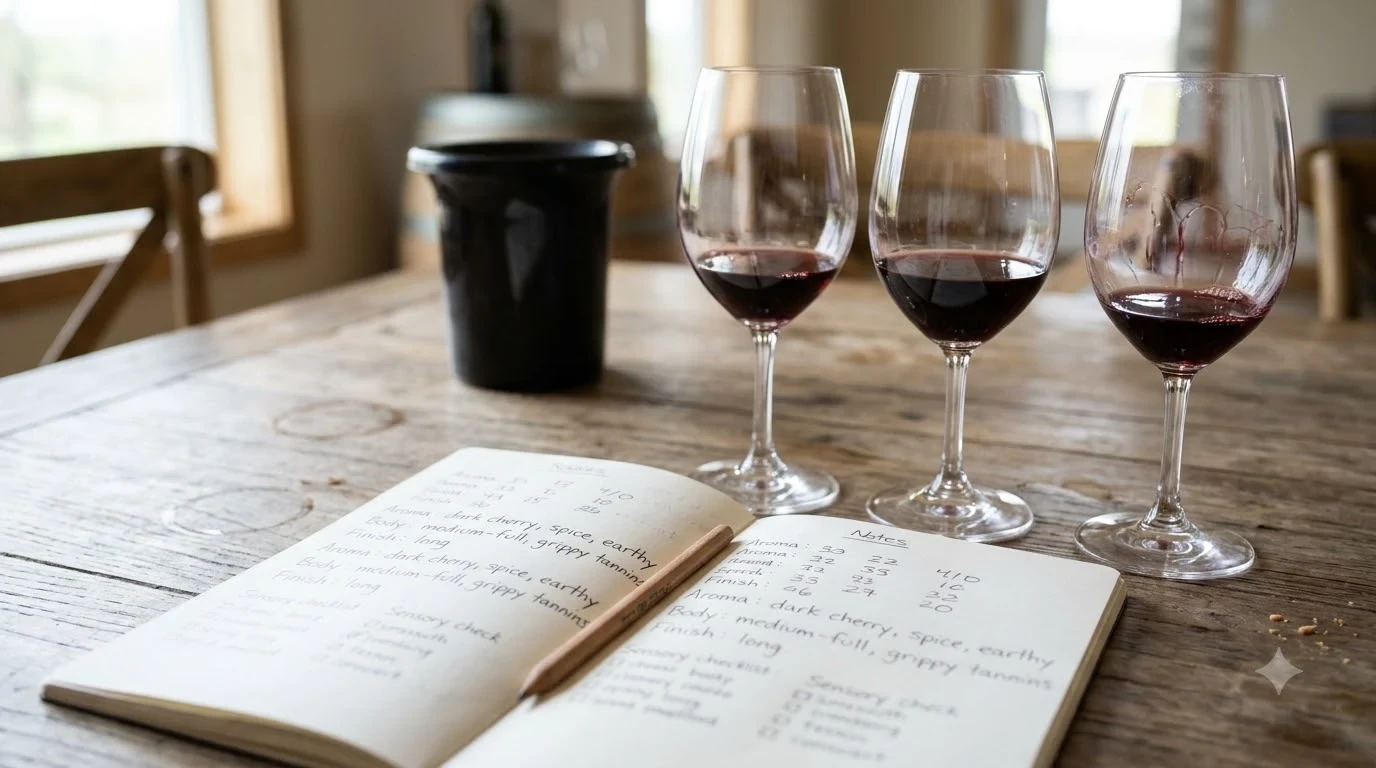
Take a small sip and assess acidity, tannin, body, and finish separately. High acidity should create a fresh sensation, while tannins create a drying impression along the gums and cheeks. Notice whether the fruit remains noticeable after the initial tannic sensation.
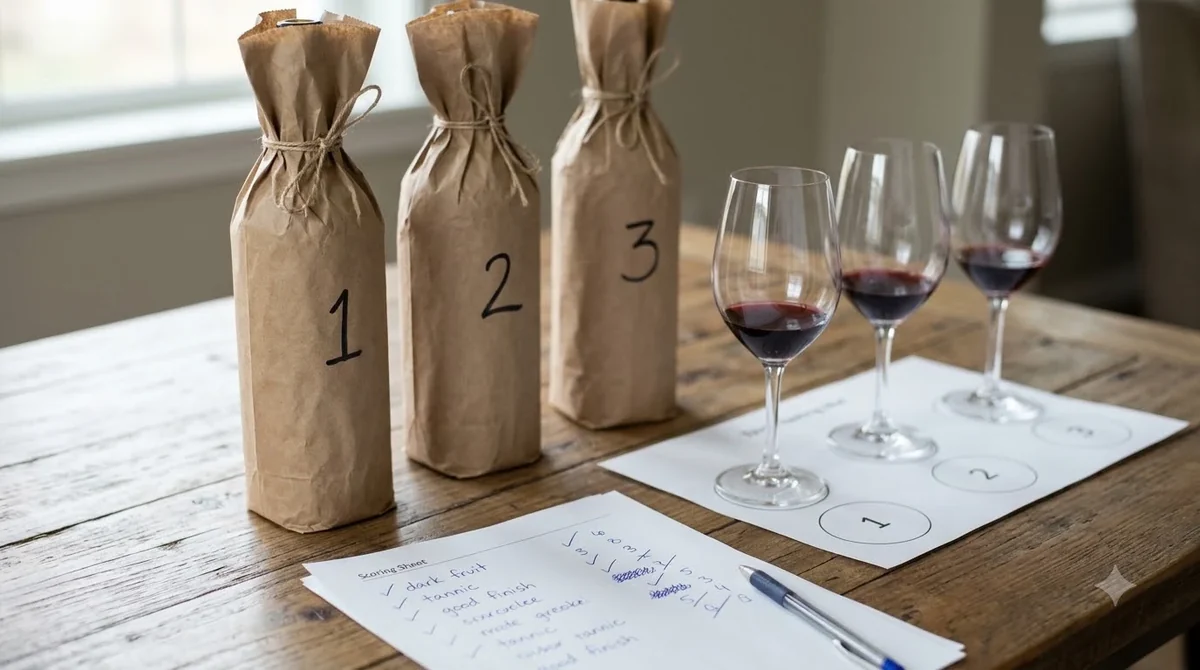
A useful tasting exercise is to compare two wines from different producers side by side. Record whether one is more fruit-driven, more savory, more tannic, or more approachable. This simple comparison often teaches more about regional variation than tasting several unrelated wines without a clear reference point.
Traditional and modern styles
Traditional Naoussa often emphasizes structure, extended maceration, and wood maturation. These wines may appear austere in their youth, with pronounced tannins and savory aromas. Additional bottle aging can help integrate their structure and reveal more complex earthy and dried-fruit characteristics.
Modern interpretations generally place greater emphasis on concentrated fruit, stronger color, and earlier drinkability. Oak may contribute vanilla, spice, or toasted characteristics, although its influence varies considerably between producers. Modern winemaking does not eliminate Xinomavro’s natural acidity or tannins; it changes how those features are expressed.
Both approaches deserve attention during a Naoussa visit. Ask for a traditional bottling and a more modern interpretation if the tasting room offers them. Comparing the two can reveal how fermentation, extraction, barrel selection, and aging influence the final wine.
Naoussa Wineries and Tasting Experiences to Consider
Naoussa offers several ways to explore Xinomavro, from vineyard-focused estate visits to larger winery tours. Two useful starting points are Ktima Kir-Yianni and VAENI Naoussa, which offer different approaches to explaining the region’s winemaking traditions.
Ktima Kir-Yianni is located in Yiannakohori in the Naoussa area. Its visitor experience includes guided vineyard walks, winery tours, wine tastings, and wine-and-food menus. The estate also describes additional activities such as picnics and e-bike excursions along vineyard trails. Visitors can explore its official winery visit and reservation information to review the available experiences and visiting arrangements.
The estate is particularly suitable for visitors who want to connect the wine with the landscape. Walking among the Xinomavro vines before tasting the wines provides useful context about the relationship between vineyard location and wine style. A guided session also offers an opportunity to ask about grape selection, fermentation, barrel maturation, and the differences between individual bottlings.
Kir-Yianni requires reservations. Its published schedule lists Tuesday through Sunday visits, with weekday hours from 10 a.m. to 5 p.m. and weekend hours from 11 a.m. to 6 p.m. Monday is closed, and the estate’s cuisine operates Wednesday through Sunday. Confirm the current schedule and tasting availability when arranging a visit.
VAENI Naoussa provides another useful introduction through its cooperative winery and guided tours. Located on the Veroia-Edessa road, the winery is approximately one hour from Thessaloniki. Its guided experience can include the vineyard, winery, bottling facilities, and cellar.
The standard tour without tasting lasts approximately 45 minutes. VAENI can also arrange a tasting of three wines accompanied by crackers and cheese, with additional wines available upon request. Tours are offered in Greek and English, and appointments are necessary for some visiting times and arrangements.
The cooperative format makes VAENI interesting for visitors who want to understand a broader range of local production rather than focusing exclusively on one estate. Ask about the wines available for tasting and whether the selection includes different expressions of Naoussa or other regional bottlings.
When choosing between these experiences, consider what you want to learn. Kir-Yianni is a strong option for a vineyard-centered visit with food and outdoor activities. VAENI is useful for understanding winery operations and exploring the cooperative’s range. Both can contribute valuable perspectives to a regional tasting itinerary.
Tip: Reserve winery visits before traveling, especially if you want a guided vineyard walk, a food menu, or a comparison of older Xinomavro vintages. Ask about the number of wines included, the expected visit duration, and whether the tasting can accommodate different experience levels.
Planning a Naoussa Wine Tasting Itinerary
A successful Naoussa wine trip should balance winery appointments with time for lunch, vineyard scenery, and the historic town. Two carefully selected winery visits usually provide more opportunity for meaningful comparisons than rushing through several tasting rooms in a single day.
Naoussa is in northern Greece, in the regional unit of Imathia. Thessaloniki is a useful arrival point for international visitors, and the drive to the wine region generally takes around one hour or somewhat longer depending on the exact destination and traffic. Renting a car provides flexibility, although arranging a local driver is a practical alternative for anyone planning several wine tastings.
Start the morning with an appointment at a vineyard estate. A visit to Kir-Yianni, for example, can combine a guided walk through the vines with an introduction to the estate’s wines. Allow enough time to ask questions rather than treating the tasting as a quick stop.
For a second appointment, consider VAENI or another local producer whose wines offer a different approach to Xinomavro. If you have already tasted a modern, fruit-focused wine in the morning, ask for a more traditional, structured bottling in the afternoon. This gives the day a clear educational purpose.
A practical one-day schedule
| Time | Activity | Purpose |
|---|---|---|
| 9:30 a.m. | Arrive in Naoussa | Allow time for the first appointment |
| 10:00 a.m. | First winery visit | Explore vineyards and taste 3-5 wines |
| 12:30 p.m. | Lunch in Naoussa | Try regional food with local wine |
| 2:30 p.m. | Second winery appointment | Compare traditional and modern Xinomavro |
| 4:00 p.m. | Explore the town | Enjoy local architecture and scenery |
| 5:00 p.m. | Return to accommodation | Review tasting notes and arrange transport |
This schedule is a planning example, not a guarantee of appointment availability. Winery opening hours and tasting arrangements vary, so confirm both visits before setting the rest of the day around them.
If you have two days, use the additional time to visit more producers and explore nearby villages. Giannakohori, Trilofos, and Fytia are useful names to recognize when discussing the appellation’s different vineyard communities. Ask local wineries which sites or neighboring producers best illustrate the differences in their preferred Xinomavro styles.
Visitors with broader European wine interests may also enjoy comparing the regional identity of Naoussa with destinations such as Alsace wine tasting, where grape varieties and cooler growing conditions create a very different tasting experience. For a contrasting red wine destination, Bolgheri wine tasting introduces visitors to Tuscany’s internationally recognized red blends.
Do not forget to leave space for an unhurried meal. Naoussa is not simply a destination for collecting tasting-room experiences. Regional cuisine provides an important part of the context, particularly because Xinomavro’s acidity and tannins make it such a distinctive food wine.
Food Pairings, Serving Temperatures, and Cellaring
Naoussa Xinomavro works particularly well with savory dishes that have sufficient protein and fat to complement its firm tannins. Its high acidity also makes it a strong partner for tomato-based recipes, rich sauces, and foods with pronounced umami flavors.
For a traditional pairing, consider grilled lamb, roast beef, or duck. The protein and fat help soften the drying sensation of tannins, allowing the wine’s red-fruit and savory notes to become more noticeable. Rich meat preparations are especially effective with structured, oak-aged Naoussa.
Hard cheeses are another useful option. Aged Manchego and Parmigiano-Reggiano offer concentrated savory flavors and sufficient richness to complement the wine’s acidity and tannic structure. A cheese course can be a good way to compare different Xinomavro bottlings without changing too many elements of the tasting.
Tomato-based foods are particularly appealing because the wine’s acidity can match the acidity of the dish. Try pasta with tomato sauce, meat ragù, or stuffed tomatoes. Mushroom risotto is another excellent choice, particularly with mature Xinomavro that has developed earthy and umami-rich characteristics.
Grilled poultry and duck confit can also work well. For a more contemporary pairing, consider a beef or chicken dish with a moderate amount of soy sauce. Savory ingredients can complement the wine’s olive and dried-herb notes, but very spicy preparations should be avoided because chili heat can become more pronounced alongside alcohol and tannin.
Sweet dishes are generally less suitable for dry Naoussa because sweetness can make the wine taste more acidic and tannic. Oily fish such as sardines and mackerel are also difficult pairings for highly structured Xinomavro. Some richer fish preparations can work with lighter expressions, but the firmest red versions are better suited to meat, mushrooms, and aged cheese.
Serving temperature and decanting
Serve a full-bodied Naoussa red at approximately 60-65 degrees Fahrenheit. This temperature range helps preserve aromatic definition while allowing the wine’s structure to show clearly. Excessive warmth can make alcohol seem more prominent, while serving it too cold can exaggerate tannins and suppress aromas.
For a young, full-bodied bottle, decanting for approximately 30-60 minutes is a useful starting point. This gives the wine time to open and can make its fruit and savory characteristics easier to recognize. Older bottles may require a gentler approach, especially if sediment is present.
Pour approximately 5 ounces per glass to leave enough room for swirling and smelling. A standard 750-milliliter bottle provides approximately five such servings. During a winery tasting, smaller pours are often preferable because they allow visitors to compare several wines without losing focus.
How long can Naoussa wine age?
Naoussa is particularly attractive to collectors because high acidity and substantial tannins provide the structural foundation for extended bottle aging. Well-made examples can develop for more than ten years, with some wines capable of considerably longer maturation depending on producer, vintage, and storage conditions.
Young wines tend to emphasize fresh strawberry, sour cherry, firm tannins, and herbal characteristics. With bottle age, the fruit may become more dried and concentrated, while mushroom, truffle, earthy, and spice notes become more noticeable. The tannins can also become more integrated, producing a smoother overall impression.
Store bottles on their sides in a dark, stable environment near 55 degrees Fahrenheit. Avoid frequent temperature fluctuations, direct sunlight, and excessive heat. Once opened, keep the wine refrigerated and aim to finish a still red within approximately three to five days for the best quality.
For visitors who want to understand aging potential, tasting a young wine alongside an older vintage is one of the most informative experiences available in Naoussa. Ask producers whether they have library releases or older bottles available. These comparisons can demonstrate how much complexity Xinomavro develops over time.
Frequently Asked Questions
Is Naoussa wine made from a single grape variety?
Yes, PDO Naoussa requires 100% Xinomavro. The grape’s name is commonly translated as black sour, referring to characteristics associated with its dark-skinned berries and naturally pronounced acidity. This exclusive grape requirement distinguishes Naoussa from Greek appellations that permit Xinomavro blends.
Is Naoussa wine suitable for someone new to Greek wine?
Yes, although its firm tannins and savory character can be challenging for drinkers accustomed to soft, fruit-forward reds. A modern bottling or a wine with several years of bottle age is often a comfortable introduction. Ask the tasting-room host to recommend an approachable example before moving to more structured traditional wines.
When is the grape harvest in Naoussa?
Xinomavro is generally harvested during the autumn, with timing varying according to the growing season and individual vineyard conditions. Producers monitor grape maturity carefully because acidity, sugar development, and tannin ripeness all influence the final wine. Visitors interested in harvest activities should contact estates well in advance because picking schedules change with the weather.
What does PDO mean on a Greek wine label?
PDO stands for Protected Designation of Origin, a European classification connecting a wine to a legally defined geographical area and its production rules. It specifies permitted grape varieties and other requirements associated with the appellation. For Naoussa, this means the wine must come from the designated region and follow its Xinomavro production requirements.
Can visitors buy Naoussa wine directly from wineries?
Yes, winery shops can provide opportunities to purchase bottles from the producers themselves. VAENI describes a wine shop at the entrance to its facilities, while visitors to estate wineries can ask about available releases and older vintages. International travelers should also ask about shipping arrangements and customs requirements before purchasing bottles for delivery abroad.
Naoussa offers an excellent introduction to one of Greece’s most distinctive indigenous grapes, combining mountain vineyards, varied terroir, and wines with remarkable structure and aging potential. Whether you visit Kir-Yianni, VAENI, or several smaller producers, take time to compare different Xinomavro expressions and enjoy them with regional food. The most rewarding Naoussa wine tasting is one that leaves you understanding not only the grape, but also the landscape and traditions that make this Macedonian wine region special.
More in Wine Regions
 Willcox Wine Trail: Discover Arizona’s High-Elevation Wine CountryUpdated Nov 20, 2026
 Yakima Valley Wine Region: Find the Best Styles to TryUpdated Nov 20, 2026
 Vosne Romanee Wine Tasting: Identify Aromas and Choose Better PairingsUpdated Nov 20, 2026
 Yakima Valley Wine Festival: Find the Best Seasonal Wine EventsUpdated Nov 20, 2026
 Wales Vineyards: Discover Cool-Climate Wines and Where to VisitUpdated Nov 20, 2026
 Yountville Wine Festival: Discover Napa Wines and Local FoodUpdated Nov 20, 2026