

We may earn a commission when you buy through links on this page, at no extra cost to you. Learn more.
The jumilla wine festival is Jumilla’s annual Fiesta de la Vendimia, an August harvest celebration in southeastern Spain centered on Monastrell wine, grape traditions, and lively street parades. Its signature moments include the Wine Fountain, the offering of grapes and first must, and the spectacular Gran Cabalgata del Vino. The modern festival began in 1972, and its events bring local winegrowers, peñas, residents, and visitors together in the town of Jumilla, in the Region of Murcia.
Unlike a trade tasting built around winery booths, Jumilla’s harvest festival is a town-wide celebration with religious observances, traditional costumes, grape competitions, music, food stalls, and public wine events. The best visit combines the ceremonies with time to taste the local wines and understand why Monastrell is so closely tied to this dry, high-altitude corner of Spain.
When to Visit Jumilla in August
The Fiesta de la Vendimia usually takes place in mid-to-late August, with the main program commonly falling around August 14–23. The timing coincides with the August 15 feast of the Assumption, the day honoring Jumilla’s patroness, the Virgin of the Assumption.
The festival lasts longer than a single weekend. Its central period includes the Wine Fountain inauguration, the grape offering, the traditional parade, and the final Gran Cabalgata del Vino, while competitions and preliminary events can start earlier. The annual program sets the exact dates and times, so visitors should use the current schedule rather than assume that every event happens on the same date each year. Some years place the main wine events across a slightly different sequence of days, even when the celebration remains anchored in August.
For a short visit, plan around two events: the Ofrenda de Uvas y Primer Mosto, which demonstrates the traditional transformation of grapes into must, and the Gran Cabalgata del Vino, the exuberant wine parade that closes the main festivities. Staying for three or four days makes it easier to add the children’s parade, the traditional parade, wine tastings, and smaller contests without rushing from one venue to another.
How the Harvest Festival Began
The modern Jumilla harvest festival was created in August 1972 by local winemakers who wanted a public celebration of the town’s wine identity. A committee led by Pedro Mulet, then president of the Jumilla Denomination of Origin regulatory council, brought together representatives from the seven municipalities in the appellation.
The first celebration lasted just two days, August 19 and 20, 1972, and included six events: a wine-tasting competition, a wine pavilion, the Wine Fountain, the blessing of the must, wine exaltation, and a wine procession. Regional tourism records estimate that about 25,000 people attended that first edition. Its first Wine Parade featured 12 floats representing the seven municipalities and drew approximately 15,000 spectators, a remarkable response for a new local event.
The celebration expanded as participation grew, and the Federation of Peñas became its coordinating body. The festival also draws on a much older viticultural setting: archaeological finds near Jumilla have been linked to ancient grape growing, while organizers connect some customs with Roman harvest celebrations. Those references provide cultural background, but the present-day Fiesta de la Vendimia has a documented modern beginning in 1972.
The Wine Fountain and the First Must Ceremony
The Wine Fountain and the Ofrenda de Uvas y Primer Mosto are the ceremonies that give the festival its harvest identity. One turns wine into a public symbol of welcome; the other shows, step by step, how freshly picked grapes become the first juice of the season.
The Wine Fountain is inaugurated during the first Friday of the main festivities. Festival representatives known as the vendimiadores pour wine into the fountain, after which it flows during the celebration. The ceremony is followed by the opening of the stand for the Jumilla Protected Designation of Origin, where visitors can sample wines from the surrounding wine region. In the official program, the inauguration takes place at Jardín del Rey Don Pedro I, with the DOP stand opening shortly afterward.
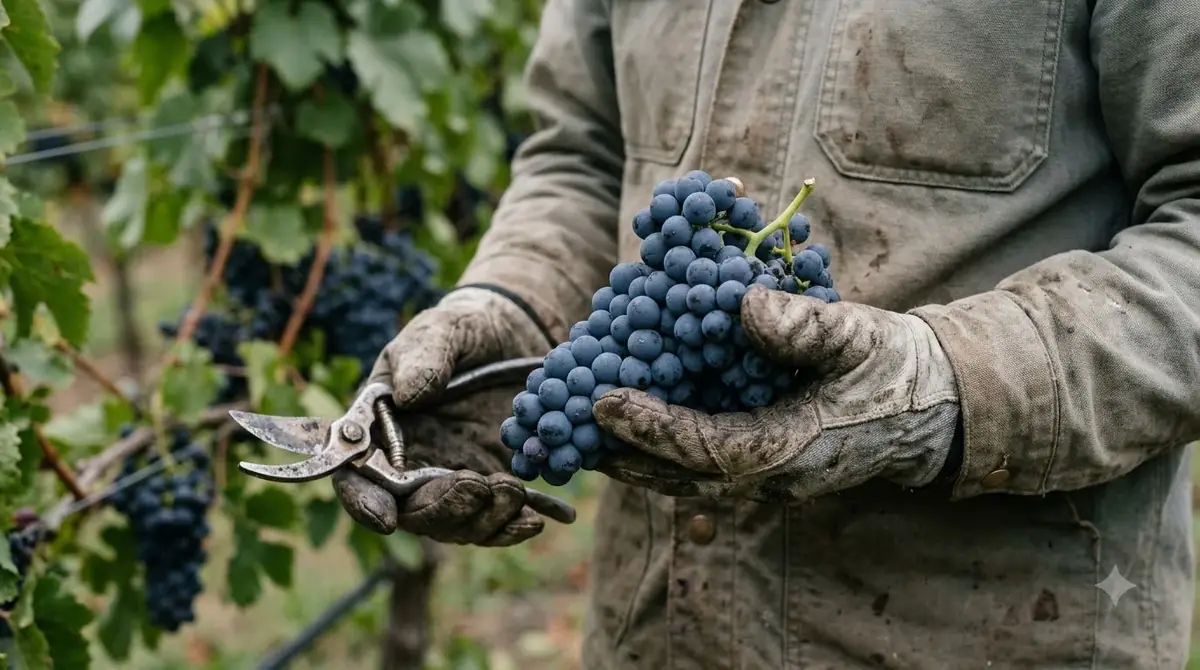
The grape offering is more ceremonial and agricultural in character. Peñas carry grapes in esparto baskets through the town and deliver them to a traditional wine vat, or lagar. Grape treaders then crush the fruit as musicians and local folk dancers accompany the demonstration. The program may also show related cellar tasks, including destemming, pressing, pumping, and racking, giving visitors a practical sense of the work between harvest and finished wine.
Once the grapes have been trodden and the first must has been collected, the liquid is blessed and the ceremony ends with a communal toast. The festival presents this as Spain’s first must of the new harvest, a symbolic opening of the national grape-picking season. For visitors interested in wine production, this is the event to prioritize: it connects the celebratory atmosphere to the physical process behind every bottle.
Parades and the Gran Cabalgata del Vino
Jumilla’s parades turn the historic center into a moving display of local identity, from children’s costumes and agricultural history to the large-scale wine celebration that finishes the main program. The Gran Cabalgata del Vino is the loudest and messiest event, so it is best approached as a participatory street party rather than a quiet procession.
The children’s parade features floats, costumes, music, and small gifts for spectators, following central streets such as Calle Trabajo, Cánovas del Castillo, and Avenida de Levante. The traditional parade looks back to Jumilla’s agricultural past through decorated carts, farming tools, and old customs. Its peñas dance to brass-band music and offer wine or sangria along the route; the festival also names regional sweets such as sequillos, pirusas, and wine torrijas among the treats associated with the procession. Since routes and start times can change, use the annual itinerary to choose a viewing point and arrive before the streets fill.
The Gran Cabalgata del Vino is the finale. The festival organization describes it as a wine battle lasting about three hours, during which participating peñas distribute and throw roughly 70,000 liters of wine. The same organization says recent editions have drawn crowds approaching 100,000 people, so expect packed streets, loud music, and wine splashing well beyond the parade route. Wear clothes and shoes that can be stained, protect phones and cameras in waterproof bags, and leave delicate belongings at your accommodation. This is not the moment for a favorite white shirt or an unprotected camera lens.
Why Monastrell Defines the Jumilla Wine Region
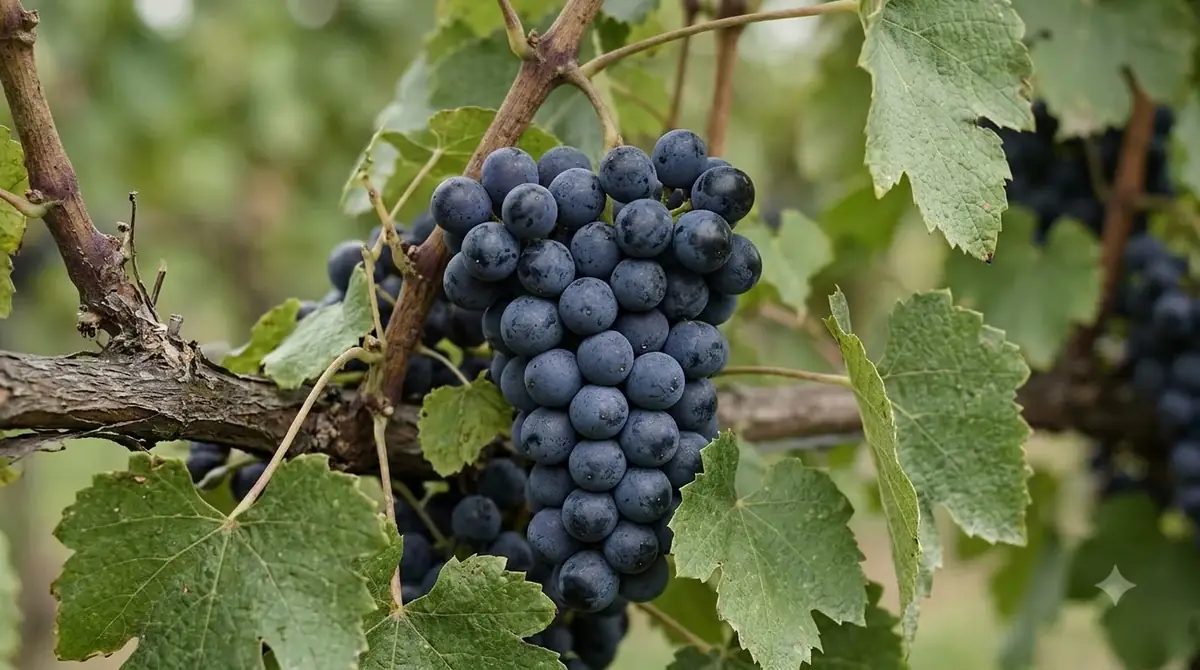
Jumilla’s festival makes more sense when visitors understand the grape at its center: Monastrell, known elsewhere as Mourvèdre. It thrives in the region’s hot, dry conditions and accounts for about 70% of the registered vineyard area, making it the defining variety of the Jumilla DOP.
The appellation stretches across southeastern Spain, covering parts of the Region of Murcia and Albacete province. Its high plateau has limestone-rich soils, strong sunshine, and sharp day-to-night temperature changes at higher sites. The DOP describes roughly 20,000 hectares of registered vineyards, planted from about 320 to 1,000 meters. The wine authority reports less than 300 millimeters of annual rainfall and more than 3,000 hours of sunshine; more than 20% of the vineyards are over 30 years old, and around 1,000 hectares are ungrafted. The figures are summarized below.
| Jumilla vineyard feature | Reported figure | What it tells visitors |
|---|---|---|
| Registered vineyard area | About 20,000 hectares | A sizeable appellation spread across Murcia and Albacete |
| Monastrell share | About 70% | The grape most closely associated with Jumilla |
| Vineyard elevation | 320–1,000 meters | Sites range from lower, warmer plots to cooler upland vineyards |
| Annual rainfall | Less than 300 millimeters | Dry conditions shape vineyard management |
| Annual sunshine | More than 3,000 hours | Strong sunlight supports reliable ripening |
Monastrell-based reds are the region’s best-known wines, with depth and firm structure, but the DOP also recognizes rosé and white wines. Compare a younger Monastrell with a bottle from older vines or a higher-elevation site to see how freshness, fruit, and weight can differ. The Jumilla DOP’s vineyard overview explains how altitude, rainfall, and vine age shape local growing conditions; our guide to Wine Regions puts Jumilla alongside other appellations.
Food, Tastings, and Wine-Country Experiences
Food stalls and public wine tastings make it easy to sample Jumilla without booking a formal winery visit. The festival’s food is part of the street atmosphere, while the wine stand gives visitors a direct introduction to bottles made under the Jumilla DOP.
Try local wine with a small plate from a festival stall, and taste more than one style before choosing a bottle. Monastrell is the natural starting point, but a rosé or white from the same appellation shows the range of authorized grapes and styles. At the traditional parade, sequillos, pirusas, and torrijas de vino connect the celebration with older harvest customs.
For a longer wine trip, arrange a winery appointment in the Carche Valley or one of the DOP’s villages, including Montealegre del Castillo, Fuente-Álamo, Ontur, Hellín, Albatana, and Tobarra. These visits differ from public festival tastings: confirm the language and duration with the producer, and ask whether the appointment includes vineyard access as well as a tasting-room session.
It is useful to separate a festival tasting from a structured wine tour. At the festival, the priority is social and celebratory; a winery visit can provide more time to compare vineyards, grape varieties, and cellar methods. If the trip is part of a broader wine-event itinerary, our guides to the Indiana wine festival, the Livermore wine festival, and the Utah wine festival offer examples of how regional wine celebrations differ in setting and format.
How to Plan Your Festival Visit
Jumilla is in the northeast of the Region of Murcia, on the Altiplano, and its central festival area is compact enough to explore on foot. Regional tourism information places the town about 69 kilometers from Murcia city, 90 kilometers from Alicante, and 158 kilometers from Valencia; the DOP describes the wider appellation as about three hours south of Madrid. These are regional estimates, so check the route from your actual starting point. The bus station is on Calle Ana Abellán, while nearby rail connections include Villena, about 52 kilometers away, and Alicante, about 90 kilometers away.
Traffic restrictions affect the historic center on the main festival days, so use parking outside the center, including the industrial area, and walk to the events. Book accommodation early if you want to attend evening ceremonies and late parade awards; otherwise, arrange a reliable return journey before choosing a hotel outside town.
Plan around fixed events rather than assuming activities run continuously. Arrive early for the grape offering near Plaza de la Glorieta; for the final wine parade, check the route and decide whether to watch from the edge or join the wine-splashing crowd. The festival’s official program and event schedule is the best starting point for dates, procession routes, and start times. Confirm the next edition’s calendar before booking nonrefundable travel, because the order of events and daily timings can change.
Tip: For the Gran Cabalgata del Vino, wear clothes you can stain, keep phones in waterproof protection, and carry a dry change of clothes for the journey back.
Frequently Asked Questions
These answers cover a few details that help explain the festival’s organization, history, and wider wine-country setting. They are useful when planning beyond the headline parades and public tastings.
When did Jumilla receive national tourism recognition?
Spain’s Secretary of State for Tourism granted La Vendimia de Jumilla the title of Fiesta de Interés Turístico Nacional by a resolution dated September 8, 2026. The decision was published in Spain’s official state gazette on September 19, 2026. This national designation is separate from the festival’s earlier recognition at the regional level.
What does the Boy of the Grapes represent?
The Niño de las Uvas is a central devotional figure in the festival’s grape-offering tradition, receiving the grapes and first must during the ceremony. The festival’s history records the arrival of this figure in 1984, adding a distinctive symbol to the harvest celebration. It is also associated with processions connected to the Convent of Santa Ana del Monte.
When was the Federation of Peñas established?
The Federation of Peñas of the Wine Harvest Festival was formalized in 1983. It coordinates the participating peñas, which organize many of the contests, parades, and communal activities. The organization is central to the festival’s structure rather than simply a sponsor of individual events.
How old is the archaeological evidence for grape growing near Jumilla?
The festival organization reports that excavations at the El Prado site found cultivated grape pips dated to between about 4,350 and 3,950 years ago. Its history page records 22 pips from an excavation in 1984 and another 121 from 1985, recovered at depths of roughly 2 to 2.5 meters. These finds are evidence of ancient grape cultivation in the area, not proof that the present festival itself is thousands of years old.
How close is the Jumilla wine region to Alicante Airport?
The Jumilla DOP’s official English-language site describes the region as less than an hour by car from Alicante Airport. That estimate refers to the appellation area, which spans several municipalities, so the drive to a particular winery or hotel can take longer. Check the exact destination before choosing a rental-car pickup or transfer.
Jumilla’s harvest festival is best enjoyed as both a wine celebration and a local tradition, with the first-must ceremony and Gran Cabalgata del Vino providing two very different views of the region. Add a tasting of Monastrell and a little time in the surrounding wine country, and the visit becomes a fuller introduction to Jumilla’s wines and culture.
More in Wine Regions
 Willcox Wine Trail: Discover Arizona’s High-Elevation Wine CountryUpdated Nov 20, 2026
 Yakima Valley Wine Region: Find the Best Styles to TryUpdated Nov 20, 2026
 Vosne Romanee Wine Tasting: Identify Aromas and Choose Better PairingsUpdated Nov 20, 2026
 Yakima Valley Wine Festival: Find the Best Seasonal Wine EventsUpdated Nov 20, 2026
 Wales Vineyards: Discover Cool-Climate Wines and Where to VisitUpdated Nov 20, 2026
 Yountville Wine Festival: Discover Napa Wines and Local FoodUpdated Nov 20, 2026