

We may earn a commission when you buy through links on this page, at no extra cost to you. Learn more.
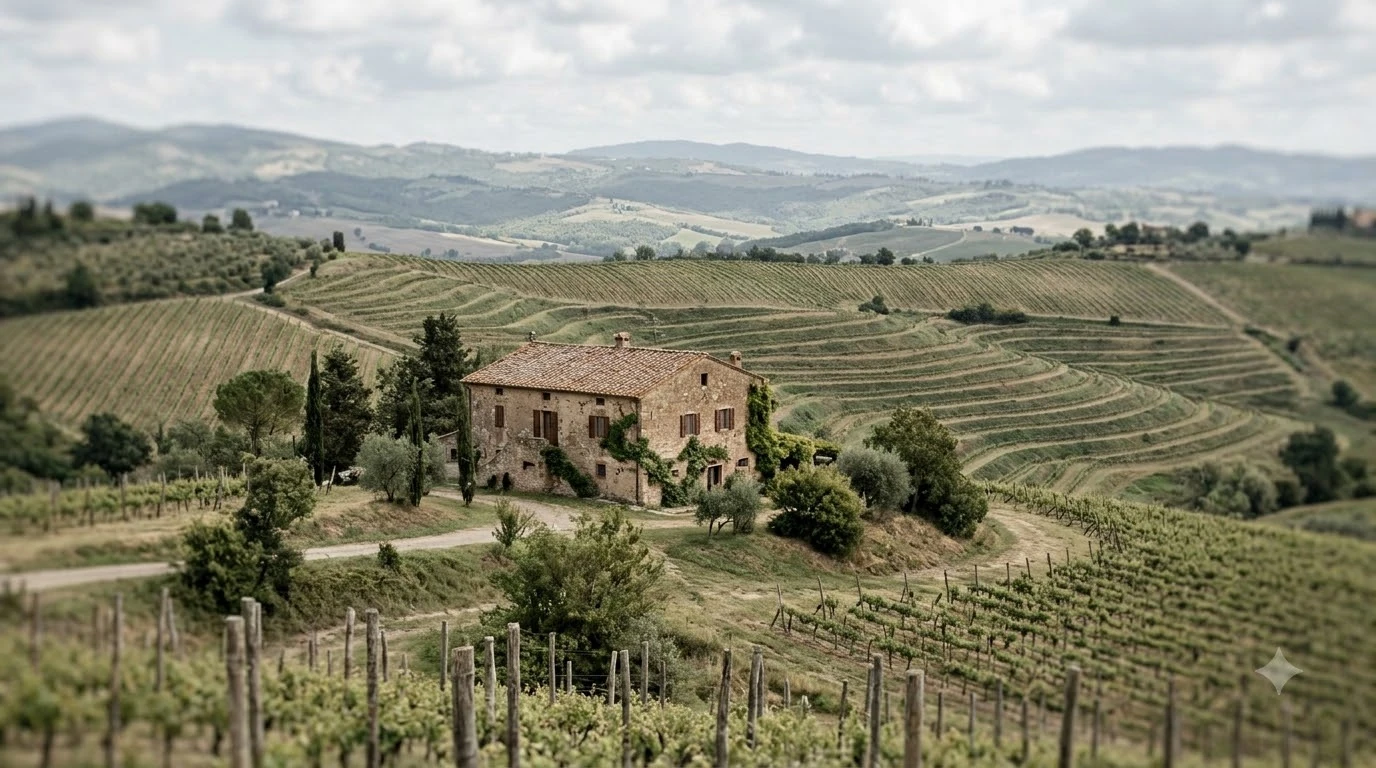
The istria wine region is a northern Adriatic wine area centered on Croatia’s Istrian peninsula, best known for Malvazija Istarska and Teran. Its vineyards range from breezy coastal slopes to cooler inland hills, while red, gray and pale limestone-rich soils help explain the range of styles. Start with the fresh, aromatic white and the vivid, high-acid red, then explore Muscat, international grapes and the region’s food-friendly wines.
Istria offers a clear lesson in how local grapes and varied vineyard sites shape regional identity. Its Mediterranean setting is tempered by cooler Alpine air, inland elevation and a long history of cultural exchange. For American wine drinkers, the easiest way in is to recognize two names—Malvazija Istarska and Teran—and understand what to expect from each.
Location, climate and harvest conditions
Istria’s vineyards occupy the northwestern edge of Croatia, on a peninsula reaching into the northern Adriatic. Western sites feel distinctly maritime, while central vineyards can experience greater day-to-night temperature swings because they sit farther inland and often higher above sea level.
The Adriatic moderates coastal vineyards with daytime sea breezes, while cooler air from the Alps arrives at night. The Wine & Spirit Education Trust (WSET) explains that this pattern can extend ripening and preserve acidity. Rainfall is concentrated mainly in winter, spring and late autumn; WSET gives an annual figure of about 800 millimeters and identifies warm, dry summers and drought as important vineyard challenges.
These conditions help explain why Istrian whites can combine ripe fruit with freshness instead of tasting simply broad or tropical. A western Malvazija may feel rounder, while a cooler inland version can emphasize citrus, herbs and a firmer line of acidity. Readers interested in other mountain-influenced vineyards can compare the Savoie wine region; the maritime character also makes the Tasmania wine region a useful comparison.
Red, gray and white soils shape the wines
Istria is often described through three soil-color zones: Red Istria, Grey Istria and White Istria. The names are shorthand for differences in geology and vineyard position, not rigid boundaries that guarantee a particular flavor in every bottle.
Red Istria lies closer to the coast and takes its name from iron-rich terra rossa. It is commonly associated with red varieties, but white grapes grow there too and can produce wines with greater body and structure. Grey Istria occupies much of the central peninsula; WSET describes its flysch soils as sedimentary rock and gray clay rich in limestone, suited to aromatic whites with good acidity and medium body. White Istria is generally farther inland and higher, with rockier ground and a stronger limestone influence, often giving wines that are bright, aromatic and linear.
Vinistra, the regional wine association, describes red, white, black and gray soils with limestone deposits beneath them. This broader classification is a reminder that the peninsula is not a simple three-part map. Soil color can orient a buyer, but producer, vineyard exposure, vine age, crop level and cellar decisions also shape the final wine. Vinistra’s Istria regional overview gives a concise look at the region’s soils and leading grapes.
Malvazija Istarska: the signature white grape
Malvazija Istarska is Istria’s defining white grape and the best first bottle for most newcomers. It can be fresh and citrus-led, but it also has enough body and aromatic depth for seafood, grilled vegetables and dishes with herbs or olive oil.
The grape is also called Malvasia Istriana, but it should not be treated as interchangeable with every Mediterranean grape named Malvasia. WSET says it has no close connection to other Mediterranean Malvasia varieties and considers it indigenous to Croatian Istria. Expect aromas that can include acacia blossom, lemon peel, pear, citrus and honey, sometimes followed by a nutty or gently bitter finish. Vinistra describes a full-bodied style with honey, lemon peel and pear, while WSET highlights citrus, acacia flower and bitter almond.
Winemaking gives the variety considerable range. Young stainless-steel versions emphasize fruit, flowers and refreshing acidity; lees ageing can add texture, while skin contact, oak or local acacia barrels bring more structure and savory detail. Decanter also identifies sparkling, sweet passito and orange-wine expressions. It reports 1,509 hectares planted, while WSET describes Malvazija as about 60 percent of Croatian Istria’s plantings and Vinistra says it accounts for almost 70 percent of Istrian wine production; those percentages refer to different measures.
| Grape or measure | Reported figure | Context |
|---|---|---|
| Malvazija Istarska | 1,509 hectares | Decanter-reported planted area, almost all in Istria within Croatia. |
| Teran | 227 hectares | Decanter-reported planted area for Istria’s best-known native red. |
| Malvazija share of plantings | About 60 percent | WSET figure for Croatian Istria. |
| Malvazija share of production | Almost 70 percent | Vinistra figure for Istrian wine production. |
Choose a young, unoaked Malvazija for aperitif service, shellfish and simply grilled fish. A lees-aged, skin-contact or barrel-aged version has more weight for richer sauces, roast poultry or dishes with mushrooms. A single-vineyard name can be an invitation to compare sites, but the producer’s approach matters just as much as the place name.
Teran: Istria’s high-acid red
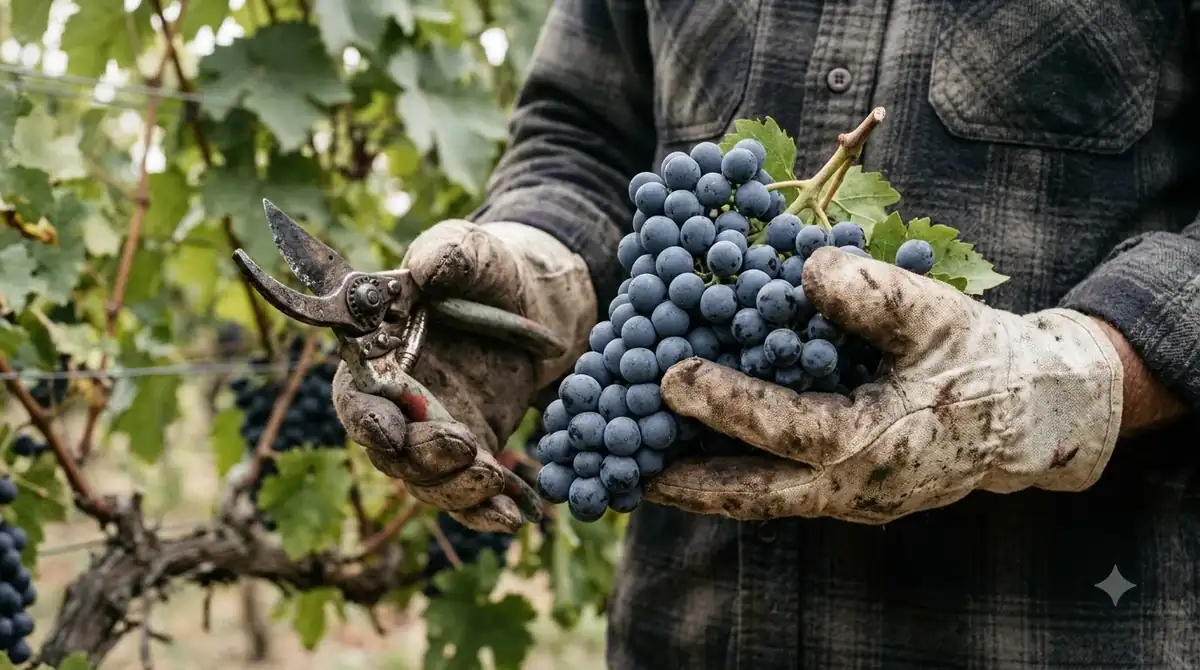
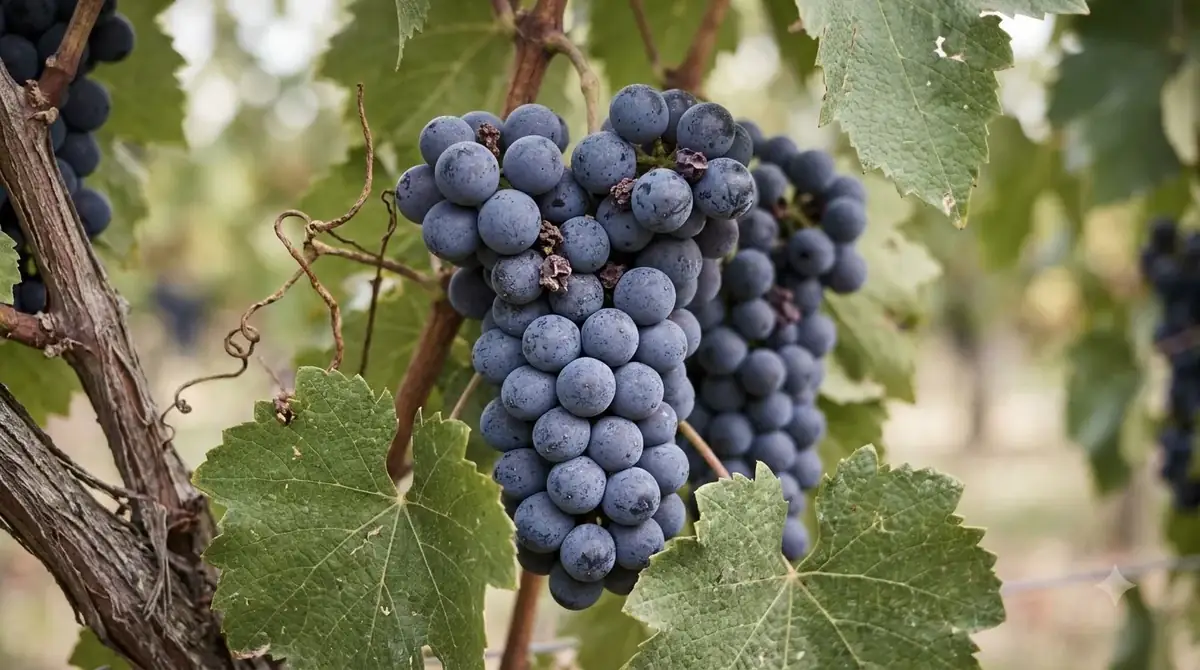
Teran is Istria’s signature red grape, known for deep color, pronounced acidity, firm tannin and flavors of sour cherry, blackberry and wild herbs. It can be rustic when ripeness is incomplete, but good examples balance its natural firmness with concentrated fruit and a savory finish.
Decanter notes that Teran was mentioned as early as the 14th century and documented in Istria in 1641 by the Bishop of Novigrad. It reportedly covered 90 percent of Istrian vineyards by 1880 before losing ground to Malvazija Istarska during the 20th century; Decanter gives its modern planted area as 227 hectares. Producers have worked to restore its status as the peninsula’s leading red. The grape is demanding because it combines high acidity with substantial tannin and can be difficult to ripen fully.
Decanter singles out sites around the hilltop town of Motovun, while Vinistra points to higher, south-facing positions in central Istria. In strong examples, acidity gives energy to dark-fruit and bramble flavors, while firm but polished tannins make the wine suitable for food and, in some cases, bottle ageing. A younger bottling may emphasize sour cherry and herbs; a more concentrated wine can show darker fruit, spice and firmer structure. Some winemakers blend Teran with Merlot to soften its wilder edges and make it more approachable when young. Do not assume every Teran needs years in the cellar: fresh, fruit-forward examples can be enjoyed early, while structured bottlings may benefit from time.
Muscat, international grapes and other Istrian styles
Although Malvazija and Teran define Istria, the region is not limited to those two grapes. Muscat, Merlot, Cabernet Sauvignon, Chardonnay, Sauvignon Blanc, Syrah and Pinot varieties add a mix of local identity and familiar reference points.
Muscat Momjanski, also known as Moscato di Momiano, is a specialty associated with Momjan in western Croatian Istria. WSET describes it as a refreshing, medium-sweet wine with floral and stone-fruit notes, making it a good contrast with dry Malvazija. It can work as an aperitif or with fruit desserts and mildly sweet pastries; choose a wine at least as sweet as the dish so it does not taste thin by comparison.
International grapes appear as varietal wines and blends. Merlot has a strong foothold, while Cabernet Sauvignon and Syrah offer more structured reds; Chardonnay and Sauvignon Blanc provide familiar white-wine styles, and Pinot Grigio and Pinot Bianco reflect links with neighboring Italy. Istria also makes rosé, sparkling wine, sweet wines and skin-contact whites. With Malvazija, extended skin contact can produce deeper color and more tactile structure, while acacia or oak ageing adds roundness and savory notes. The region is best understood as a place with two signature grapes and a broad supporting cast.
Food pairings and serving temperatures
Istrian wine is closely linked to a cuisine that combines the Adriatic coast with inland farms, forests and olive groves. Malvazija is the natural first choice for shellfish and seafood, while Teran’s acidity and tannin make it a better match for richer meat dishes, cured ham and savory food.
Start with Malvazija and oysters, grilled white fish, shrimp, scallops or simply prepared calamari. A crisp, unoaked version complements shellfish without overwhelming delicate flavors. A fuller, lees-aged or acacia-aged bottling has more weight for grilled fish with olive oil, roast poultry or Istrian fuži pasta with truffles. WSET highlights oysters from Limski Kanal and truffles from the Motovun forest as natural partners for the grape. Teran works with grilled lamb, beef, game, sausages and pršut, especially when the dish includes herbs or a rich sauce; its acidity refreshes the palate, while protein and fat soften tannin.
Serve fresh Malvazija at 45 to 50 degrees Fahrenheit and fuller, barrel-aged whites around 50 to 55 degrees. Teran is best around 55 to 60 degrees as a lighter red, or 60 to 65 degrees if fuller and more structured; Muscat Momjanski and other sweet whites suit 43 to 50 degrees. Avoid pairing tannic Teran with delicate oily fish, and remember that chili heat makes alcohol and tannin feel more aggressive.
Tip: For a meal that moves from seafood to meat, open a chilled Malvazija first and bring out Teran with the richer courses. That order lets the red’s structure follow, rather than overwhelm, delicate shellfish.
For dessert, serve Muscat Momjanski only when its sweetness can meet or exceed the dish. A wine less sweet than the food will often seem sharper and less generous than it does on its own.
Choosing, storing and exploring Istrian bottles
A useful first purchase is a young Malvazija Istarska from a producer who names the grape clearly and gives a straightforward indication of style. For a second bottle, choose Teran and compare its acidity and tannin with a familiar red such as Pinot Noir, Merlot or Syrah. This two-wine introduction gives a clearer picture of Istria than beginning with an international variety that could have been made in many regions.
Look for clues about structure. Fresh, stainless-steel or young generally point toward a brighter Malvazija; references to lees, skin contact, acacia or oak suggest added texture or savory depth. With Teran, the producer’s description of ripeness, vineyard site and ageing is especially useful because natural acidity and tannin can be handled in different ways. Store unopened bottles away from light and temperature swings, ideally on their side near 55 degrees Fahrenheit. Once opened, keep still wines refrigerated and plan to finish them within three to five days; sparkling wine is generally best within one to three days when properly recapped.
For a regional tasting, compare western Istria around Umag, Buje and Poreč with the hillier center around Pazin and Motovun. Try a fresh Malvazija, a textured or aged white, Teran and, finally, a sweet Muscat. A standard five-ounce pour makes a 750-milliliter bottle about five glasses. To explore other alpine-influenced wine areas, browse the Switzerland wine region overview and the site’s Wine Regions section for more regional comparisons.
Frequently Asked Questions
These quick answers add historical and geographical context to the grape and style overview above. They are useful when a label or regional map raises a question beyond the wine’s tasting notes.
How old is winemaking in Istria?
WSET says Greek colonists introduced grapevines to Istria as early as the sixth century BC. That places the peninsula among Europe’s long-established wine-growing areas, even though its modern international profile developed much later.
Did Istria once have more vineyards than it does today?
Yes. WSET contrasts about 44,000 hectares of vines at the end of the 19th century with roughly 4,000 hectares under vine in Croatian Istria in its regional profile. Phylloxera and later changes in the wine economy reshaped the scale of production.
Is Istria only part of Croatia?
No. The wider Istrian wine area also reaches into the coastal tip of southern Slovenia, according to WSET. The name Istria can therefore refer to a cultural and geographic region that crosses a modern national border.
What are Superistrian wines?
WSET uses this term for modern blends that combine Teran with Merlot or other international grapes. The name nods to blending a local variety with international grapes while retaining an identifiable Istrian character.
Why did Istrian wine production change after Yugoslavia?
WSET explains that the decline of bulk-producing state cooperatives after Yugoslavia’s breakup created room for quality-focused producers. Many modernized wineries and lowered vineyard yields, aiming for more concentrated and complex wines rather than volume alone.
Istria rewards a simple first comparison: taste Malvazija Istarska for aromatic freshness and Teran for acidity, dark fruit and structure. Once those two grapes are familiar, Muscat Momjanski, textured whites and international varieties show how much range the peninsula offers. A tasting of one fresh white, one structured red and one sweet local wine is a practical next step toward understanding Istria’s wine culture.
More in Wine Regions
 Willcox Wine Trail: Discover Arizona’s High-Elevation Wine CountryUpdated Nov 20, 2026
 Yakima Valley Wine Region: Find the Best Styles to TryUpdated Nov 20, 2026
 Vosne Romanee Wine Tasting: Identify Aromas and Choose Better PairingsUpdated Nov 20, 2026
 Yakima Valley Wine Festival: Find the Best Seasonal Wine EventsUpdated Nov 20, 2026
 Wales Vineyards: Discover Cool-Climate Wines and Where to VisitUpdated Nov 20, 2026
 Yountville Wine Festival: Discover Napa Wines and Local FoodUpdated Nov 20, 2026