

We may earn a commission when you buy through links on this page, at no extra cost to you. Learn more.
Jura wine tasting introduces you to distinctive French wines made from Chardonnay, Savagnin, Poulsard, Trousseau and Pinot Noir, including the famous nutty, dry Vin Jaune. Located between Burgundy and Switzerland, the Jura produces fresh whites, pale reds, traditional sparkling wines, sweet specialties and distinctive wines aged under a natural yeast veil. A good tasting explores these different styles side by side, helping you understand how local grapes, limestone and marl soils, and unusual cellar techniques shape the wines.
The Jura is a rewarding destination for wine enthusiasts who want to explore something different from the familiar regions of Burgundy, Bordeaux and Champagne. Its small vineyards and varied winemaking traditions create a surprisingly broad selection of wines. Whether you are visiting local cellars in Arbois, exploring the hillside vineyards around Château-Chalon or tasting Jura bottles at home, understanding the region’s grapes and production methods makes each glass more interesting.
Understanding the Jura Wine Region and Its Appellations
The Jura is a compact wine-producing region in eastern France, situated between Burgundy and the Swiss border. Its four geographical appellations and several specialty wine designations provide a useful framework for understanding what appears in a tasting flight.
The vineyard landscape stretches approximately 80 kilometers from north to south, according to Jura Tourism. Vineyards occupy slopes and valleys around towns and villages including Arbois, Poligny, L’Étoile and Château-Chalon. The area’s continental climate brings cold winters and warm summers, while limestone and marl contribute to the character of its wines.
The region has four geographical AOCs: Arbois, Côtes du Jura, L’Étoile and Château-Chalon. Three additional product appellations cover Crémant du Jura, Macvin du Jura and Marc du Jura. These names indicate different categories of production rather than seven interchangeable geographical wine styles.
Arbois is an especially useful starting point for understanding Jura wine. It received AOC recognition in 1936 and offers a broad selection of whites, reds, sparkling wines and specialty bottles. Côtes du Jura covers a larger stretch of the vineyard area and includes numerous wine styles. L’Étoile is particularly associated with white wines, while Château-Chalon is reserved for Vin Jaune.
For a first tasting, compare an Arbois Chardonnay with a Côtes du Jura Savagnin and a Château-Chalon Vin Jaune. The comparison demonstrates how grape variety, vineyard location and cellar treatment influence the final wine. It also makes clear why the Jura cannot be described simply as a region that produces unusual white wine.
The region’s relatively small size is part of its appeal. Wine production is spread across individual estates and cooperatives, and neighboring producers can take quite different approaches to fermentation, aging and bottling. A tasting that includes several producers from the same appellation can reveal differences that a single bottle cannot demonstrate.
The Five Main Grapes to Recognize During a Tasting
Jura wine tasting becomes easier when you recognize its five principal grape varieties. Chardonnay and Savagnin dominate the white wines, while Poulsard, Trousseau and Pinot Noir provide three distinct approaches to red wine.
Chardonnay is the region’s most widely planted grape. According to Wine Enthusiast, it represents approximately 43% of cultivated vines in Jura. It can produce fresh, citrus-driven whites when aged without significant air exposure, as well as richer, more savory wines when producers use different maturation techniques.
Savagnin is the region’s signature white variety. It is particularly important for Vin Jaune, for which it is the only permitted grape. In younger, topped-up wines, Savagnin can show lemon, floral and mineral characteristics. With aging under a yeast veil, it develops more pronounced nutty, savory and spicy aromas.
The three principal red grapes have noticeably different appearances and textures:
- Poulsard: Also called Ploussard, this local variety produces pale ruby or garnet wines. Expect delicate red-fruit aromas, fresh acidity and relatively light tannin. Its color can be surprisingly transparent.
- Trousseau: This grape usually creates deeper-colored reds with more structure. Look for cherry, blackberry, wild strawberry and peppery or earthy notes. It generally provides more tannin than Poulsard.
- Pinot Noir: Familiar to Burgundy drinkers, Pinot Noir produces perfumed, relatively elegant Jura reds. Expect red cherries, fresh acidity and a more recognizable Burgundy-like profile, although local growing conditions give the wines their own identity.
A useful tasting exercise is to sample Poulsard and Trousseau consecutively. Their differences are easier to identify when the wines are poured at similar temperatures and in comparable glassware. Poulsard generally emphasizes delicacy and freshness, whereas Trousseau brings more color, concentration and structure.
Tip: If you are new to Jura reds, start with Poulsard before moving to Trousseau. The lighter wine establishes the region’s delicate red-fruit style, making the deeper color and firmer structure of Trousseau easier to recognize.
Chardonnay and Savagnin also deserve a side-by-side comparison. Both are white grapes, but their aromas can be dramatically different depending on how the producer handles barrel aging. This is one of the most educational comparisons available in the region.
Jura White Wines and the Difference Between Ouillé and Sous Voile
Jura produces several distinct white wine styles, and the most important distinction is whether the wine is aged in topped-up barrels or allowed to develop under a natural yeast veil. Understanding these techniques helps explain the difference between a fresh Chardonnay and an oxidative-style Savagnin.
The term ouillé refers to wine aged in barrels that are regularly topped up to replace wine lost through evaporation. Keeping the barrel full limits contact with oxygen and preserves the wine’s fruit character. Chardonnay and Savagnin produced this way can show lemon, apple, pear, white flowers and mineral notes.
These wines are often a comfortable introduction for drinkers familiar with white Burgundy. A topped-up Jura Chardonnay may combine citrus freshness with a firm mineral impression, while a topped-up Savagnin can offer greater aromatic intensity and a distinctive savory edge.
The alternative is sous voile, meaning aging under a veil. In this method, the producer does not continually replenish the barrel. A layer of naturally developing yeast forms on the wine’s surface, influencing its interaction with oxygen and creating a distinctive aromatic profile.
Wines aged under the veil can show walnuts, almonds, hazelnuts, dried fruit, mushrooms, spices and curry-like aromas. These characteristics may seem unfamiliar to someone accustomed to fresh, fruit-forward whites, but they are central to the Jura’s identity.
The two techniques are useful to compare in a structured tasting. Start with a topped-up Chardonnay, move to a topped-up Savagnin, then finish with a veil-aged white. This progression helps distinguish grape character from the influence of maturation.
Some producers also blend Chardonnay and Savagnin. These wines can combine the freshness of Chardonnay with the more savory character of Savagnin, creating a style that is particularly interesting with regional food.
When choosing a tasting flight, ask whether a white is ouillé or sous voile. The distinction may be more informative than simply knowing whether the bottle contains Chardonnay or Savagnin. Producers do not all use identical cellar methods, so two wines made from the same grape can offer very different experiences.
Vin Jaune, Crémant and Other Signature Jura Wines
Jura’s specialty wines are essential parts of a complete tasting. Vin Jaune is the best-known example, but Crémant du Jura, Vin de Paille and Macvin du Jura demonstrate the region’s broader range of production methods.
Vin Jaune is made entirely from Savagnin and aged under a natural yeast veil for at least six years and three months. During this extended maturation, evaporation reduces the volume of wine, while the developing veil contributes its characteristic aromas. The result is a dry white wine with an intense, savory personality.
Its aromas often include walnut, almond, dried fruit, spice and curry. Despite its golden color and concentrated character, Vin Jaune is not a sweet wine. Its acidity provides balance, and its extended aging creates a style that can remain distinctive even when tasted alongside other mature whites.
Vin Jaune is traditionally sold in a 620 ml bottle called a clavelin. This unusual format is an important visual clue during a tasting. It also makes an interesting conversation point when comparing regional wine traditions with the standard 750 ml bottle used for most still wines.
Château-Chalon is the appellation most closely associated with Vin Jaune. The village’s designation is exclusively for this specialty wine, making it an especially useful bottle to include in a tasting focused on the region’s traditional production methods.
Other specialty wines provide contrasting experiences:
- Crémant du Jura: A traditional-method sparkling wine produced in white and rosé styles. Chardonnay is common, and the wines can also include other permitted regional varieties. Expect refreshing acidity, fine bubbles and flavors ranging from citrus and apple to more developed bread-like notes.
- Vin de Paille: A sweet wine made from selected grapes dried for at least six weeks before pressing. Concentrating the grapes’ sugars produces a rich dessert wine with dried-fruit, honey and concentrated fruit characteristics.
- Macvin du Jura: A fortified specialty made by combining grape must with Jura marc brandy. It can be produced in white, red or rosé styles and is commonly served chilled as an aperitif or alongside dessert.
- Marc du Jura: A regional grape-based spirit that represents another side of the area’s traditional production. It is distinct from the wines themselves and is also used in the production of Macvin.
For a useful tasting sequence, begin with Crémant, continue through fresh Chardonnay and Savagnin, then sample the red grapes. Move to Vin Jaune and finish with Vin de Paille or Macvin. This order progresses from refreshing and lighter styles toward more concentrated and distinctive wines.
The European Union’s published product specification provides additional detail on the traditional production of Vin Jaune and Vin de Paille, including the minimum maturation period and grape-drying requirements.
Planning a Jura Wine Tasting in Arbois and Château-Chalon
Arbois is a practical base for exploring the Jura wine region, while Château-Chalon offers a closer look at the landscape associated with Vin Jaune. Planning visits around these two destinations gives travelers an opportunity to compare different appellations and meet producers.
Arbois is a particularly convenient starting point because it combines wine cellars, restaurants and regional food traditions. Visitors can explore Chardonnay, Savagnin, Poulsard and Trousseau through different producers without needing to travel far between every tasting. The town is also associated with Louis Pasteur, whose childhood home is now a museum.
Begin with a tasting that includes several wines from Arbois AOC. A good selection might contain a topped-up Chardonnay, a Savagnin, a Poulsard and a Trousseau. If the producer offers Crémant du Jura, include it as an opening glass to establish the difference between sparkling and still wines.
Next, consider visiting the vineyards and cellars around Château-Chalon. The village stands above vineyards associated with Savagnin and is closely connected to the production of Vin Jaune. Its location and distinctive landscape provide useful context for understanding why the wine is so strongly identified with this part of Jura.
L’Étoile is another interesting stop, particularly for travelers interested in white wine. Its Chardonnay and Savagnin bottlings provide opportunities to compare different expressions of the region’s marl-rich vineyard sites. Vin de Paille is also worth seeking out when available.
When arranging cellar visits, contact producers in advance. Some estates accept visitors only by appointment, and opening schedules can vary. Ask whether the tasting includes a cellar tour, how many wines are included and whether the producer can pour both topped-up and veil-aged whites.
The annual Percée du Vin Jaune celebration is another option for wine enthusiasts. Held in February, this event celebrates the release of Vin Jaune with regional festivities and tastings. It provides an opportunity to encounter different producers and compare wines from across the appellations.
A well-planned visit should allow enough time between appointments to enjoy the villages and vineyard scenery. Rather than trying to visit too many cellars in one day, choose two or three producers and give each tasting enough attention. This also makes it easier to compare wines without rushing through the more unusual styles.
Travelers who enjoy comparing regional tasting traditions may also find useful contrasts in Alsace wine tasting, where aromatic white grapes and different appellation styles play a major role. For a broader look at wine destinations, the site’s Wine Regions resource offers another starting point.
Food Pairings, Serving Temperatures and Tasting Techniques
Food is an important part of understanding Jura wine, especially because several regional styles have strong savory characteristics. Matching the wine’s acidity, sweetness and structure with the food makes the distinctive flavors easier to appreciate.
Comté cheese is one of the classic regional pairings. This firm cow’s milk cheese works particularly well with Vin Jaune, whose walnut and spice characteristics complement the cheese’s rich, savory flavors. The pairing is also a useful way to introduce a first-time drinker to the intensity of a traditional Jura white.
Morel mushrooms are another classic match for Vin Jaune. Their earthy, savory character complements the wine’s nutty and mushroom-like aromas. A dish of chicken with cream and morels is a particularly traditional regional combination.
Other wines have their own food partners. Fresh Chardonnay works well with grilled fish, roast chicken and soft cheeses. Poulsard is a natural match for charcuterie, roast poultry and mushroom dishes, while Trousseau can accompany duck, grilled meats and richer dishes.
For a more detailed tasting comparison, consider these combinations:
| Jura wine | Typical characteristics | Food pairing | Serving temperature |
|---|---|---|---|
| Crémant du Jura | Fresh, lively, citrus and apple | Oysters, appetizers, soft cheeses | 40–50°F |
| Chardonnay | Fresh fruit, citrus, mineral notes | Grilled fish, chicken, goat cheese | 45–55°F |
| Savagnin sous voile | Nutty, savory, spicy | Comté, mushrooms, roasted poultry | 50–55°F |
| Vin Jaune | Walnut, curry, dried fruit, high acidity | Comté, chicken with morels | 50–55°F |
| Poulsard | Pale color, red berries, fresh acidity | Charcuterie, roast chicken, mushrooms | 55–60°F |
| Trousseau | Dark cherry, spice, firmer structure | Duck, grilled meats, aged cheeses | 60–65°F |
| Vin de Paille | Sweet, concentrated, dried fruit | Fruit desserts, blue cheese | 43–50°F |
| Macvin du Jura | Fortified, rich, aromatic | Fruit desserts, nuts, pâté | Chilled |
These temperatures are practical serving ranges rather than strict rules. Fresh white wines generally benefit from being served cool, while complex, mature whites can show more aromatic detail when they are not excessively cold. Vin Jaune should not be served straight from an extremely cold refrigerator because its savory character and aromatic complexity are easier to appreciate at a moderate temperature.
Pay attention to acidity during the tasting. Jura Chardonnay and Savagnin often have the freshness needed to complement rich foods. Poulsard’s acidity makes it particularly adaptable to lighter meals, while Trousseau can work with dishes that have greater weight and savory intensity.
Sweetness also matters. Vin de Paille should generally be served with a dessert that is no sweeter than the wine. Fruit tarts, dried-fruit desserts and blue cheese can provide suitable contrasts. Macvin offers another option when a tasting moves from savory food toward dessert.
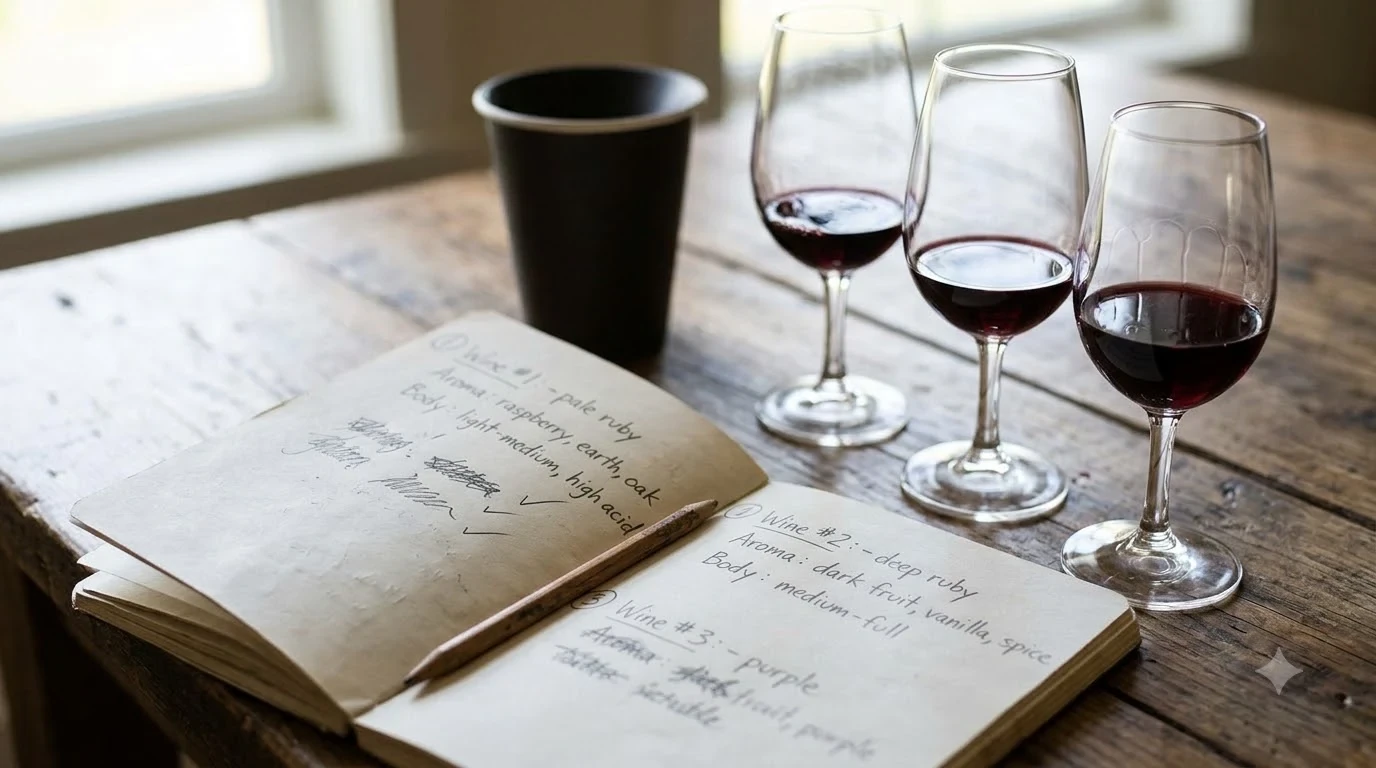
To evaluate a wine systematically, observe its color, smell its aromas, take a small sip and consider its acidity, body, texture and finish. For Vin Jaune, pay particular attention to the relationship between nutty aromas and freshness. For Poulsard, notice how the light color can accompany lively red-fruit flavors.
Try to taste each wine before eating, then taste it again with the suggested food. The difference often reveals why Jura producers and local restaurants favor particular combinations. If you are comparing several bottles, keep the tasting portions modest and use water between wines to maintain a clear palate.
For a wider regional comparison, Willcox wine tasting offers a different perspective on how climate and grape selection shape wines in a geographically distinct growing area. Jura’s cool continental conditions and distinctive aging traditions provide a useful contrast.
Frequently Asked Questions
Is Jura wine the same as Burgundy wine?
No. Jura is a separate French wine region, although it shares a border with Burgundy and grows familiar varieties such as Chardonnay and Pinot Noir. Jura also has distinctive local grapes, including Savagnin, Poulsard and Trousseau, and produces specialty wines such as Vin Jaune that are not typical of Burgundy.
Why is Vin Jaune sold in a smaller bottle?
Vin Jaune is traditionally bottled in a 620 ml vessel called a clavelin. The format is associated with the wine’s long maturation and the volume remaining after evaporation during barrel aging. It is a recognized part of the wine’s identity rather than simply a smaller version of a standard bottle.
Can Jura wine be aged for several decades?
Yes, certain Jura wines have considerable aging potential. Well-made Vin Jaune can develop over several decades, while some mature Savagnin and Chardonnay bottlings also benefit from extended cellaring. Storage conditions, producer, vintage and the individual wine’s structure all influence how long a bottle can develop.
What does the word Ploussard mean on a Jura wine label?
Ploussard is an alternative spelling of Poulsard, one of Jura’s principal red grapes. Both names refer to the same local variety, known for its thin skins, pale-colored wines and lively red-fruit character. The spelling Ploussard is particularly associated with some local wine traditions, including those around Pupillin.
What is the Percée du Vin Jaune festival?
The Percée du Vin Jaune is a regional celebration dedicated to the release of a new Vin Jaune vintage. It traditionally takes place in February, with the host village changing between editions. The event includes wine tastings and festivities celebrating Jura’s signature specialty wine.
Jura offers a fascinating introduction to French wine beyond the country’s better-known regions. From fresh Chardonnay and delicate Poulsard to long-aged Vin Jaune and concentrated Vin de Paille, its wines reward curiosity and careful tasting. Start with a selection of the five principal grapes, compare the different white-wine aging methods and finish with a glass of Vin Jaune alongside Comté to experience the region’s distinctive character.
More in Wine Regions
 Willcox Wine Trail: Discover Arizona’s High-Elevation Wine CountryUpdated Nov 20, 2026
 Yakima Valley Wine Region: Find the Best Styles to TryUpdated Nov 20, 2026
 Vosne Romanee Wine Tasting: Identify Aromas and Choose Better PairingsUpdated Nov 20, 2026
 Yakima Valley Wine Festival: Find the Best Seasonal Wine EventsUpdated Nov 20, 2026
 Wales Vineyards: Discover Cool-Climate Wines and Where to VisitUpdated Nov 20, 2026
 Yountville Wine Festival: Discover Napa Wines and Local FoodUpdated Nov 20, 2026