

We may earn a commission when you buy through links on this page, at no extra cost to you. Learn more.
Condrieu Vineyards are the steep, terraced hillside plantings on the Rhône’s right bank where Viognier is the sole authorized grape. Set about 40 kilometers south of Lyon, these vineyards span seven communes in the northern Rhône and depend on sunny slopes, granite-rich ground, and painstaking vineyard work. Their setting gives Viognier a distinctive combination of ripe stone-fruit aromas, generous texture, and freshness.
Condrieu is a small white-wine appellation with an unusually clear identity: one grape, a defined stretch of riverbank, and hillsides that require constant attention. Understanding the vineyards explains why bottles can feel both richly aromatic and surprisingly lively, and why the work behind them is so demanding.
Where Condrieu Vineyards Sit Along the Rhône
Condrieu vineyards occupy the right bank of the Rhône in the northern Rhône Valley, roughly 40 kilometers south of Lyon. The appellation lies between Côte-Rôtie to the north and Saint-Joseph to the south, where the river corridor meets the steep foothills of the Massif Central.
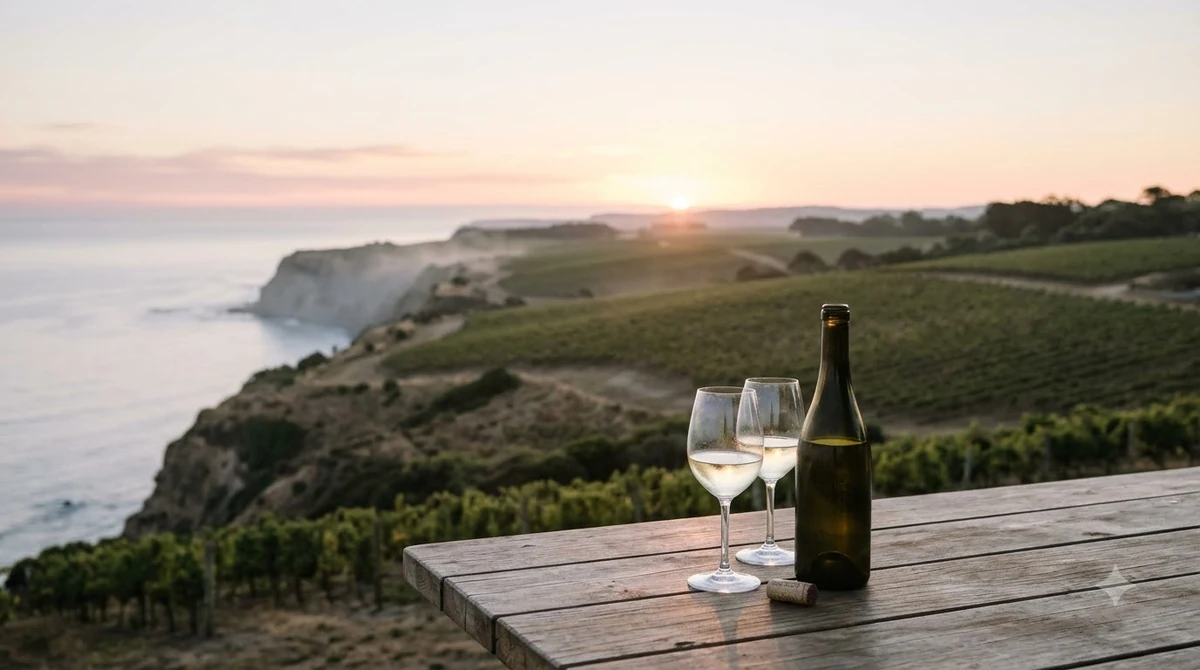
The protected area includes seven communes: Condrieu, Vérin, Saint-Michel-sur-Rhône, Chavanay, Saint-Pierre-de-Bœuf, Malleval, and Limony. They extend across three French departments—Rhône, Loire, and Ardèche—so the appellation is not confined to the administrative commune whose name appears on the bottle. The landscape is a connected series of slopes along the river rather than one uninterrupted block of vines.
The setting matters because the Rhône provides a reference point for exposure and relief. Vineyards rise from the river corridor toward the Plateau de Pélussin, with the most useful parcels often facing south or southeast. A wine labeled Condrieu must come from within the legally delimited area and be made from Viognier; a nearby vineyard outside that boundary cannot use the appellation simply because it shares the same hillside scenery.
| Vineyard detail | Figure | What it tells you |
|---|---|---|
| Authorized grape | 1: Viognier | The appellation is varietally specific |
| Communes | 7 | The area crosses several local jurisdictions |
| Departments | 3 | Rhône, Loire, and Ardèche |
| Vine density | 8,000–10,000 vines per hectare | Plantings are dense and stake-trained |
| Typical annual rainfall | 700–800 millimeters | A regional range, not a fixed yearly total |
| 1986 boundary revision | 300 meters | Vineyards above this altitude were excluded in that revision |
| Hillside gradient | Some slopes exceed 50 degrees | Terraces and manual work are essential |
For readers comparing how geography and local rules shape wine styles in different countries, the landscapes behind Tasmania vineyards and Uruguay vineyards offer useful contrasts. Our broader Wine Regions index also explains how appellation boundaries connect place, grape variety, and production rules.
Steep Slopes, Narrow Terraces, and Manual Vineyard Work
The defining physical feature is the steepness of the hillsides: some Condrieu slopes exceed 50 degrees, making ordinary vineyard machinery impractical. Growers use narrow terraces and retaining walls to hold soil in place and give Viognier vines a workable foothold.
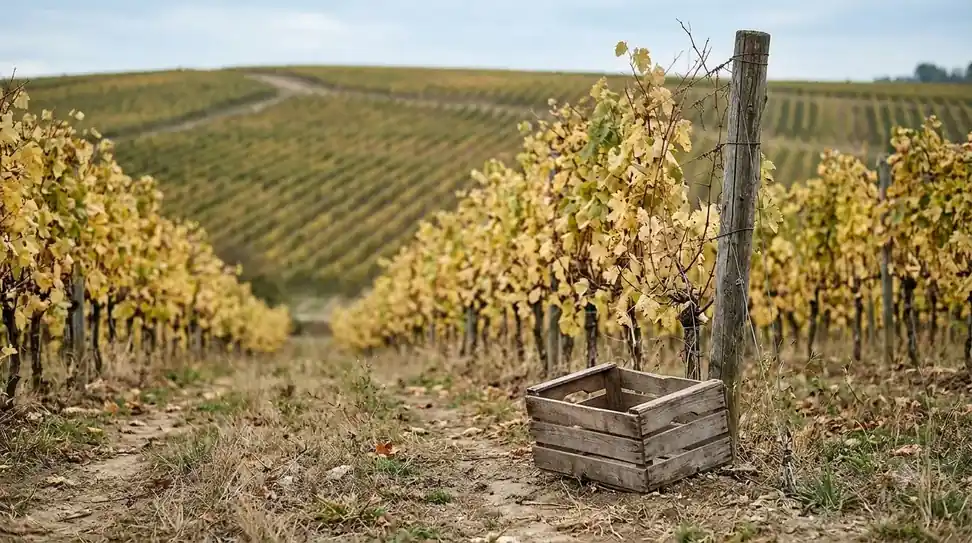
These small terraces are known locally as chaillées or chayées, while the dry-stone retaining walls are called cheys. Their construction is not decorative. Without the walls, rain could carry the thin soil downslope, expose roots, and undermine the planted rows. The terraces also break a long incline into manageable sections and help the soil absorb and retain warmth from the sun.
The work is labor-intensive. The Condrieu growers’ association reports densities of about 8,000 to 10,000 vines per hectare, with vines trained on individual stakes. Workers move along narrow platforms to repair stonework, control vegetation, and tend vines where tractors and harvesters have little access. A damaged wall can threaten the stability of an entire terrace.
The hillside dictates the pace of the vineyard year. Pruning, tying, canopy care, soil work, and picking require repeated handwork, while wet weather can make access difficult. A well-kept terrace is the result of continuous skilled maintenance, not a one-time building project.
Granite, Gneiss, and the Soils Around the Vine Roots
Condrieu’s soils are strongly influenced by ancient granite and metamorphic rocks, including gneiss, with pockets of loess and clay. The surface can look sandy and stony, but cracks in the underlying rock provide routes for roots to reach moisture and mineral nutrients.
As granite breaks down, it produces friable material often described as decomposed granite or granite sand. The soils are generally shallow and poor, while fissures in the bedrock can contain clay that holds water when the surface dries. Slope position, soil depth, rock fractures, and small deposits of windblown loess vary from parcel to parcel, so “granite soil” is only a starting description.
Terraces help keep thin hillside soils from washing away and reduce compaction, allowing organic matter to accumulate. The growers describe acidic soils that store heat, while clay-filled fissures supply water and minerals. These features help Viognier ripen in a relatively northerly location, although individual parcels still differ.
Soil descriptions should not be treated as a simple flavor formula. Granite does not automatically make a wine taste of stone, and two parcels with similar bedrock can produce different results because of orientation, vine age, picking date, and cellar choices. For a concise explanation of how the growers connect the rock, the terraces, and the vine roots, see the Condrieu winegrowers’ vineyard overview.
Climate, Sunlight, and the Northern Limit for Viognier
Condrieu has a Lyonnais-influenced climate with temperate winters, hot summers, and relatively regular rainfall. Its south- and southeast-facing slopes capture sunlight, while the surrounding relief offers shelter from cold northerly conditions.
The Condrieu growers’ association gives a typical annual rainfall range of about 700 to 800 millimeters. That figure is a regional guide, not a promise that each growing season will receive the same amount or that rain will arrive at the same time. In a dry summer, water stored in deeper clay-bearing fissures can become especially valuable; in a wet spell, the freely draining, sloping sites help limit prolonged waterlogging.
The cold, dry north wind is known locally as the Bise; it can dry leaves after rain and reduce conditions favorable to fungal disease. A warm southerly wind can speed ripening and dry the canopy. South and southeast aspects collect sunlight while the hills offer some shelter from colder air moving down the valley.
Viognier ripens relatively late and is planted in Condrieu near the northern edge of its growing range. The location gives the variety enough warmth to reach aromatic and sugar maturity, while the site’s underlying acidity helps keep the resulting wines from feeling merely heavy. The timing of harvest is a close decision: picking too early can leave the fruit less expressive, while waiting too long can push alcohol and richness higher. A grower’s aim is ripe Viognier with enough freshness to carry its perfume and texture.
Viognier, Harvest Decisions, and the Style of Condrieu
Condrieu is made exclusively from Viognier, not from a blend of northern Rhône white grapes. The variety gives the appellation its recognizable aromatic profile, while the local growing conditions help balance its naturally generous fruit and texture.
Typical aromas include white peach, apricot, mango, and other ripe stone or tropical fruits, often joined by violet and other floral notes. With development, some wines show hints of musk, gingerbread, or tobacco. On the palate, Condrieu is usually broad and full in texture, but the best examples retain a lively line of acidity that prevents the fruit from becoming clumsy. The wine is usually dry; the grape’s ability to accumulate sugar means that richer or slightly sweet expressions are possible in suitable conditions, but sweetness is not the defining expectation for every bottle.
Picking decisions are especially important because Viognier can accumulate sugar readily and its production can be irregular. Growers watch the balance between fruit maturity, acidity, and the condition of the bunches rather than using sugar alone as the signal to harvest. On terraces with limited machinery access, picking is generally a manual operation. Fruit can be sorted in the vineyard or at the cellar to remove damaged or under-ripe bunches before pressing.
There is no single cellar recipe that defines every Condrieu. Some producers ferment or age part of the wine in oak, which can add breadth and subtle spice; others rely more heavily on stainless steel to keep the fruit and floral character in front, or combine vessels. The proportion of new oak, the length of lees contact, fermentation temperature, and malolactic fermentation can all change the final texture. Inter Rhône’s regional reference describes Condrieu as a 100 percent Viognier white with aromas that can include honey, peach, apricot, and violet; its Rhône Valley appellation encyclopedia also outlines the terraces, soil fissures, and geography that distinguish this small northern Rhône site.
How the Appellation Survived and Rebuilt Its Vineyards
Condrieu has a long winegrowing history, but the modern vineyard is also a story of near-disappearance and deliberate recovery. The appellation was formally recognized in 1940, expanded in 1967, and reshaped in 1986 to retain the hillside locations best suited to Viognier.
The growers’ historical account records 142 hectares of vines in Condrieu village around the turn of the nineteenth century. Powdery mildew and phylloxera damaged the vineyards in the late 1800s; replanting with grafted vines took about 20 years. The First World War and local industrial growth later reduced the workforce available for the slopes, and terraces were abandoned.
The Condrieu AOC was created on April 27, 1940, initially covering Condrieu, Vérin, and Saint-Michel-sur-Rhône. In 1967, four neighboring communes—Chavanay, Saint-Pierre-de-Bœuf, Malleval, and Limony—were added. That expansion did not stop the decline: by 1978, the growers’ account says only eight hectares of vines remained. This low point makes the subsequent recovery particularly striking, because rebuilding a vineyard on these slopes meant restoring stone terraces as well as replanting vines.
A group of growers helped revive the appellation during the 1980s. In 1986, the boundary was revised to exclude vineyards above 300 meters and retain better-exposed hillsides where Viognier could ripen more reliably. That historical altitude decision should not be confused with the exact area planted in any one season: an appellation’s delimited territory, the land suitable for vines, and the hectares actually in production are three different measurements. Today, the seven-commune identity and Viognier-only rule remain central to the appellation.
How to Serve Condrieu and Pair It With Food
Condrieu is best approached as a richly aromatic white that still needs freshness. Serve a fuller-bodied bottle at about 50 to 55 degrees Fahrenheit, cool enough to retain its shape but not so cold that peach, apricot, and floral aromas disappear.
Tip: Start a fuller Condrieu near 50 degrees Fahrenheit and let it warm slightly in the glass toward 55 degrees; the gradual change helps its floral and stone-fruit aromas open.
Its texture and aromatic intensity make Condrieu a natural partner for shellfish, lobster, scallops, and white fish served with butter or a light cream sauce. Poultry with herbs, roast chicken, and veal can also work well when the dish has enough richness to meet the wine’s broad palate. A local reference is Rigotte de Condrieu, a small goat’s-milk cheese; fresh, mild versions are usually easier partners than very sharp or aggressively acidic cheeses. Keep strong chili heat in check because alcohol can make chili feel hotter, and use lemon or vinegar with restraint so a sharp sauce does not overwhelm the wine. For dessert, the wine should be at least as sweet as the food, so a dry Condrieu is generally better with a savory course than with a very sweet pastry.
Once opened, keep the bottle in the refrigerator and aim to finish it within three to five days; aromatic whites are often most expressive early in that window. For unopened bottles intended for storage, keep them on their sides in a cool, dark place near 55 degrees Fahrenheit, away from temperature swings and direct light. Many Condrieu wines are enjoyable in their youth, although concentrated examples from careful producers can develop more complex notes with time. There is no universal aging schedule, so match the drinking window to the producer’s style and the wine’s balance.
Frequently Asked Questions
These points clarify a few details that can be easy to miss when comparing Condrieu with other northern Rhône names. They also explain why the appellation’s geography and history are sometimes described in ways that sound contradictory.
What does the name Condrieu mean?
The name is traditionally explained as meaning “corner of the stream,” referring to the site of the town near a meeting of waterways. It is a place-name rather than a reference to Viognier, a soil type, or a particular winemaking method.
Is Château-Grillet part of the Condrieu appellation?
Château-Grillet is a separate appellation enclosed within the broader Condrieu area, not a Condrieu vineyard or a subzone on a Condrieu label. It is a tiny monopole of about 3.5 hectares, with its own appellation identity and production rules.
Is Condrieu classified as a Côtes du Rhône cru?
Yes. Condrieu belongs to the “Crus des Côtes du Rhône” category, a group of named appellations recognized within the Rhône Valley’s appellation hierarchy. That classification is different from the broader Côtes du Rhône regional appellation.
Is Viognier originally from the northern Rhône?
The Condrieu growers’ association points to genetic research linking Viognier to very old wild vine varieties that grew along the northern banks of the Rhône. The popular story that the Roman emperor Probus brought the grape from Dalmatia is treated as a legend rather than established proof.
How does Condrieu differ from Côte-Rôtie?
Condrieu is a white appellation made only from Viognier, while Côte-Rôtie is a red appellation led by Syrah. Côte-Rôtie is unusual among northern Rhône red appellations because Viognier may also be planted there alongside Syrah and included in the wine.
Condrieu’s identity comes from the meeting of one expressive grape and a demanding stretch of Rhône hillside. The terraces, granite-based soils, and carefully selected exposures explain both the wine’s aromatic richness and the amount of work required to produce it.
More in Wine Regions
 Willcox Wine Trail: Discover Arizona’s High-Elevation Wine CountryUpdated Nov 20, 2026
 Yakima Valley Wine Region: Find the Best Styles to TryUpdated Nov 20, 2026
 Vosne Romanee Wine Tasting: Identify Aromas and Choose Better PairingsUpdated Nov 20, 2026
 Yakima Valley Wine Festival: Find the Best Seasonal Wine EventsUpdated Nov 20, 2026
 Wales Vineyards: Discover Cool-Climate Wines and Where to VisitUpdated Nov 20, 2026
 Yountville Wine Festival: Discover Napa Wines and Local FoodUpdated Nov 20, 2026