


We may earn a commission when you buy through links on this page, at no extra cost to you. Learn more.
The best way to approach central otago wine tasting is to compare Pinot Noir from several subregions rather than visit only the nearest cellar door. Plan around a compact cluster, taste the region’s signature red alongside its aromatic whites, and reserve ahead for producers that require appointments. Central Otago sits on New Zealand’s South Island and has more than 50 cellar doors. Its valleys, lakes, elevations, and sharp day-to-night temperature changes give neighboring vineyard areas noticeably different characters.
Central Otago is a destination for Pinot Noir drinkers, but a good visit is more than a sequence of red-wine pours. Gibbston’s cooler slopes, Bannockburn’s warmth, and the Cromwell Basin’s varied terraces make regional context useful at every tasting.
Central Otago’s Climate Creates Distinctive Wines
Central Otago is New Zealand’s southernmost commercial wine region, set among the mountains, river valleys, and lakes of the South Island. Its continental conditions combine short, hot summers and dry autumns with cold winters, producing ripe fruit while cool nights help preserve freshness.
Wine Enthusiast describes the region as having New Zealand’s most continental climate and highest vineyard elevations, with Pinot Noir accounting for about 80% of its plantings. The landscape includes snow-capped mountains, arid hills, and river gorges; soils range from windblown loess and river gravel to sand, clay, and broken schist. These details matter at the tasting bar because the wines are not shaped by one uniform valley floor. Elevation, slope direction, nearby water, and soil all influence ripening and the character that reaches the glass.
Sunshine and cool nights are especially important for Pinot Noir. Warm days help grapes ripen, while cooler nights help preserve acidity and aromatic detail. Wines can combine ripe cherry or darker berry fruit with freshness and firm structure. Decanter identifies concentrated fruit and silky texture as recurring features, with wild thyme sometimes appearing in the surrounding hills and in tasters’ descriptions.
For visitors, the practical lesson is to avoid treating Central Otago as a single flavor profile. A wine from a warm, sheltered site may feel broader and darker than one from a cool, higher-altitude slope, even when both are Pinot Noir from the same vintage. Taste those contrasts side by side when possible, and ask which vineyard or subregion supplied the fruit rather than relying on the regional name alone.
Six Subregions, Six Pinot Noir Profiles
Central Otago’s main subregions are close enough to combine on a trip, but their climates and exposures create real stylistic differences. Start by comparing the cooler areas with the warmer inland sites, then use individual producers to explore the detail within each place.
| Subregion | Site conditions and scale | What to look for in the glass |
|---|---|---|
| Gibbston | Highest and coolest subregion; north-facing slopes in the Kawarau Gorge | Later-ripening Pinot Noir that is lighter in body yet intense |
| Bannockburn | One of the warmest and driest areas; harvest can be up to 1 month earlier | Riper, more structured wines with distinctive, complex fruit |
| Cromwell, Lowburn and Pisa | Vineyards extend about 25 km along the western side of Lake Dunstan | Compare valley-floor and terrace sites for differences in fruit weight and texture |
| Bendigo | North-facing slopes and stony soils capture hot days and cold nights | Seek concentrated fruit and a more powerful profile |
| Wanaka | About 80 km north of Queenstown; cooler and slightly wetter than much of the region | Delicate, vivid wines with freshness shaped by the lake environment |
| Alexandra | The southernmost subregion, with pronounced summer and winter extremes | Aromatic wines with fine structure and clear varietal character |
How to taste the differences
Make the comparison deliberate. Pour a Gibbston Pinot Noir beside one from Bannockburn, then note the difference in fruit ripeness, weight, acidity, and tannin. New Zealand Wine describes Gibbston as cooler and later-ripening, while Bannockburn can harvest up to a month earlier than nearby subregions. Decanter groups Bannockburn, Bendigo, and the Cromwell Basin as warmer places to seek more pronounced fruit, while Wanaka, Gibbston, and Alexandra can show a livelier, more energetic profile. Its Central Otago Pinot Noir overview offers another useful set of regional comparisons.
No subregion has just one style. Vineyard aspect, altitude, soil, harvest decisions, and winemaking all matter. Ask whether a Pinot Noir is a regional blend or a single-vineyard bottling, then compare the producer’s range in a consistent order.
For broader context on how grape varieties and place shape wine styles, browse the site’s Wine Regions overview before planning a tasting trip.
Beyond Pinot Noir: Whites, Aromatics, Rosé and Sparkling
Pinot Noir is the region’s calling card, but a well-rounded tasting should include at least one white wine and, where available, a traditional-method sparkling wine. Riesling, Pinot Gris, Chardonnay, Sauvignon Blanc, and Gewürztraminer show how Central Otago’s cool nights and varied sites can produce freshness as well as ripe fruit.

Riesling is one of the most useful wines to taste across a range of styles. Central Otago examples can run from very dry to noticeably sweet, with aromatic fruit and precise acidity. Taste a dry version first, then a sweeter one if offered; the contrast makes it easier to recognize how residual sugar changes the wine’s balance. Pinot Gris is another good comparison, as its texture and fruit profile can vary with the producer’s approach.
Chardonnay tends toward citrus and mineral notes with a tightly structured frame. It may seem reserved when young, so pay attention to acidity, texture, and the length of the finish rather than expecting an immediately rich, buttery style. Sauvignon Blanc can offer herbaceous and mineral notes alongside pineapple or passion fruit, with a crisp, dry finish. These wines make a useful counterpoint to Pinot Noir and help show that the region is not defined by one grape alone.
Look for rosé as an aperitif option and ask whether a winery makes méthode traditionnelle sparkling wine. That style is produced through a second fermentation in the bottle, rather than the tank method used for Prosecco. Central Otago’s traditional-method wines are made in smaller quantities than its Pinot Noir, so availability can vary by cellar door. For a useful comparison of aromatic white-wine traditions, readers can also explore Alsace wine tasting.
Cellar Doors Worth Putting on Your Shortlist
Central Otago has more than 50 cellar doors, ranging from small family wineries to larger tasting destinations with food, vineyard views, and additional experiences. Choose stops by subregion and by the wines you want to compare, rather than trying to visit every well-known name in one day.
Gibbston and the Queenstown side
Gibbston is a natural starting point for visitors based in Queenstown because the vineyards follow the Kawarau Gorge east of town. Chard Farm is listed as a producer focused on single-vineyard Pinot Noir and cool-climate whites. Gibbston Valley offers tastings and local dishes, with a wine cave experience that adds a distinctive cellar visit. These stops are useful for understanding the cooler end of the region’s style range. Check appointment requirements before setting out: the regional directory lists Felton Road as appointment-only, Monday through Friday, alongside venues across Cromwell, Lowburn, Bannockburn, and Gibbston. Booking is especially useful when a producer pours several vineyard-designated wines.
Cromwell, Lowburn and Bannockburn
The Cromwell Basin is a strong base for comparing wineries in a relatively compact area. Mt Difficulty is listed as a wine and food destination with views, while Wooing Tree offers wines with share plates and platters. Carrick is an organic estate on the Lake Dunstan Trail. The directory groups Burn Cottage and Quartz Reef with Bannockburn listings; Burn Cottage centers on Pinot Noir, while Quartz Reef offers Pinot Gris, Pinot Noir, and traditional-method sparkling wines from its pioneer vineyard in Bendigo. These examples can help build a tasting that moves from single-variety comparisons to different wine styles.
For a second itinerary, consider Alexandra or Wanaka instead of adding a long cross-region drive to a Cromwell-based day. The Alexandra area has small, personal cellar doors as well as established producers; Wanaka offers lake scenery and a cooler growing environment. The official New Zealand Wine regional overview provides a useful summary of the six main subregions and their principal wine styles.
Plan a Manageable Tasting Day
A thoughtful tasting day usually works better with two or three planned winery stops than with a packed list of cellar doors. Central Otago’s vineyard areas are spread across a broad landscape, so grouping visits by location leaves enough time for conversations, a meal, and the drive between appointments.
For a first visit, use Queenstown or Cromwell as a base and focus on the nearest cluster. From Queenstown, Gibbston is an obvious option; from Cromwell, build a route through Cromwell, Lowburn, and Bannockburn. A longer trip can add Bendigo or Wanaka, but allow for the distance and avoid treating the map as if every cellar door were next door. The region’s association organizes its cellar-door listings by subregion, which makes it easier to build a realistic route.
Book ahead for small producers and any appointment-only tasting, and confirm opening days, tasting fees, food service, group size, and transport arrangements directly with each venue before departure. Availability and service can change with the season. A guided wine tour is a practical choice if everyone in the group wants to taste; otherwise, nominate a sober driver and keep pours modest. Central Otago Winegrowers specifically encourages visitors who self-drive to taste without swallowing and to choose safe transport.
Allow time between appointments to enjoy the high-country landscape of lakes, mountain ranges, and river valleys. A meal gives your palate a break and a chance to revisit the wines that stood out. If you are comparing other New World destinations, central coast wine tasting offers a different regional frame for thinking about site and style.
Taste, Serve and Pair Central Otago Wines
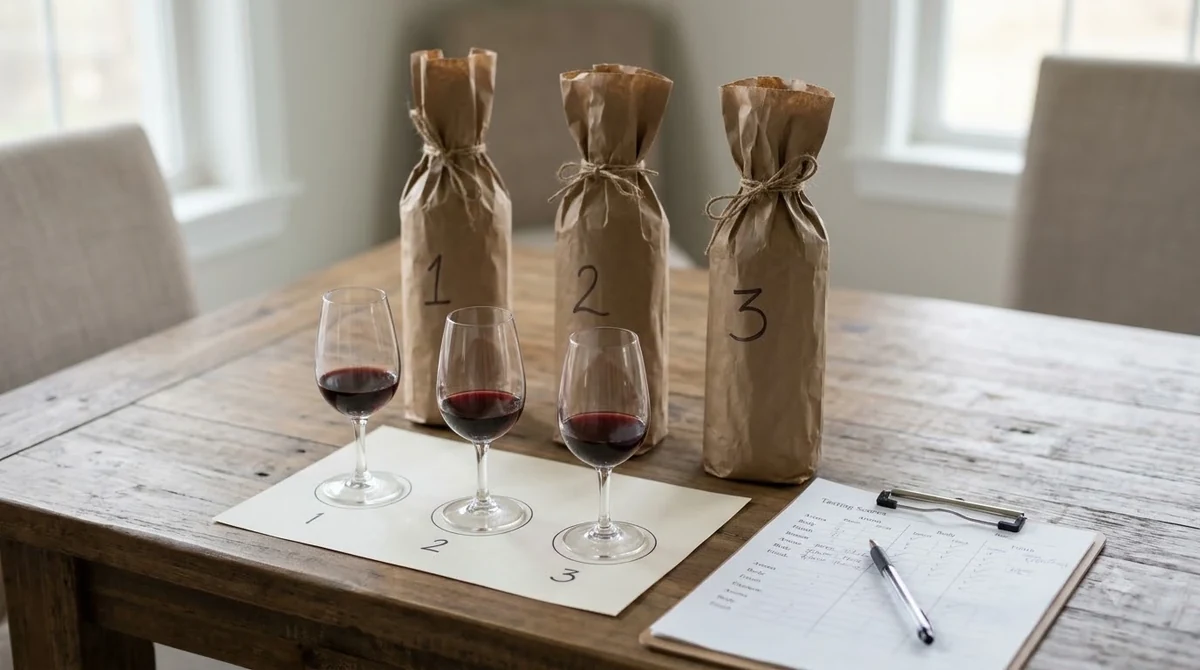
Use a consistent tasting order so that the wines are easier to compare: sparkling first, then aromatic whites, fuller whites, rosé, and Pinot Noir. For Pinot Noir, focus on fruit character, acidity, tannin, texture, and finish instead of judging a wine only by how powerful it feels.
Serve lighter Pinot Noir slightly cool, around 55–60°F, rather than at a warm room temperature. A fuller or more concentrated red can be served closer to 60–65°F. Keep Riesling and other aromatic whites chilled, then let them warm slightly in the glass so their aromas can open. Sparkling wine is best served colder, around 40–50°F; light whites and rosé are generally comfortable at 45–50°F, while fuller-bodied whites suit about 50–55°F.
Tip: Ask the host to pour two Pinot Noirs side by side, ideally from contrasting subregions such as Gibbston and Bannockburn. Taste them at similar temperatures and compare acidity, fruit ripeness, tannin, and finish before discussing which one you prefer.
Pinot Noir’s low-to-medium tannin and high acidity make it a flexible partner for roast chicken, duck, pork, mushrooms, and salmon prepared without an aggressively oily sauce. The wine’s freshness can cut through richer textures, while its relatively gentle tannin is less likely to overwhelm delicate flavors. For a simple match, pair a cooler-climate Pinot Noir with herb-roasted chicken or mushroom dishes, and try a riper, fuller example with duck or grilled pork. Riesling’s acidity makes it a good match for seafood, pork, and dishes with bright citrus or ginger notes. Match sweetness to the food: a wine should be at least as sweet as the dessert served alongside it. Chardonnay can work with roast poultry, firm white fish, and dishes with a creamy texture, while rosé is an easy choice for charcuterie, salads, and light appetizers. Avoid pairing a highly tannic red with oily fish, and remember that chili heat can seem stronger alongside wines with higher alcohol or tannin.
Take short notes on producer, subregion, grape, vintage, and one or two impressions such as red cherry, dark plum, dried herbs, or floral notes. A note about body and acidity is often more useful later than a long aroma list. Revisit a favorite at the end of the day and compare it with your first impression.
Frequently Asked Questions
These five answers cover the region’s scale, the history of Gibbston and Alexandra, and grape varieties beyond Pinot Noir. They can help fine-tune a first visit once you have chosen an area to explore.
How large is Central Otago as a wine region?
The Central Otago Winegrowers association describes the region as a broad triangle roughly 85 kilometers from north to south and 60 kilometers from east to west. Vineyard plantings cover just over 2,000 hectares. That footprint helps explain why a tasting itinerary should be organized by area rather than by a long wish list of winery names.
When did commercial wine production begin in Gibbston?
The first commercial wine bottlings in Gibbston date to 1987, according to Central Otago Winegrowers. The area’s steep river valleys and north-facing slopes helped establish its identity as a cooler, higher-altitude part of the region. That history is one reason Gibbston is often included in first-time tasting itineraries.
Were grapes grown in Central Otago before the modern wine industry?
Viticulture in the Alexandra and Clyde area dates to 1864, making it the region’s earliest planted area. Its early wine history predates the modern expansion of the region’s vineyards by more than a century. The local landscape includes the Clutha and Manuherikia river terraces.
Is Pinot Noir the only red grape grown in Central Otago?
No. Thyme Hill in Alexandra is listed as a family-owned vineyard growing Merlot, providing an example of a red variety beyond Pinot Noir. Regional cellar-door listings also feature producers whose ranges include alternative grape varieties and styles, so it is reasonable to ask what else is being poured.
How much of New Zealand’s vineyard area is in Central Otago?
Wine Enthusiast reports that Central Otago accounts for less than 5% of New Zealand’s planted vineyard acreage. Its international profile is therefore much larger than its share of the country’s vineyard land. Pinot Noir is central to that reputation, but the region’s smaller production footprint also makes its range of subregional styles particularly notable.
Central Otago rewards visitors who slow down and compare wines by place, especially when tasting Pinot Noir from both cool and warm subregions. Build a compact route, include at least one aromatic white, and leave time to enjoy the South Island landscape between cellar doors. The result is a more revealing picture of one of New Zealand’s most distinctive wine regions.
More in Wine Regions
 Willcox Wine Trail: Discover Arizona’s High-Elevation Wine CountryUpdated Nov 20, 2026
 Yakima Valley Wine Region: Find the Best Styles to TryUpdated Nov 20, 2026
 Vosne Romanee Wine Tasting: Identify Aromas and Choose Better PairingsUpdated Nov 20, 2026
 Yakima Valley Wine Festival: Find the Best Seasonal Wine EventsUpdated Nov 20, 2026
 Wales Vineyards: Discover Cool-Climate Wines and Where to VisitUpdated Nov 20, 2026
 Yountville Wine Festival: Discover Napa Wines and Local FoodUpdated Nov 20, 2026