

We may earn a commission when you buy through links on this page, at no extra cost to you. Learn more.
How to organize a wine fridge starts with grouping bottles by storage needs, arranging them by wine style and drinking schedule, and maintaining a consistent temperature. Keep cork-sealed bottles horizontally, place frequently served wines where they are easy to reach, and reserve suitable shelves for larger sparkling bottles. A simple inventory and a sensible shelf arrangement make it easier to find the right bottle without repeatedly disturbing the rest of your collection.
A wine refrigerator can hold everything from everyday Sauvignon Blanc and Pinot Noir to Champagne, aged Cabernet Sauvignon, and bottles saved for a special occasion. However, filling every available rack without a plan can make bottles difficult to locate and interfere with proper storage. The best arrangement depends on whether your appliance has one temperature zone or two, how many bottles you keep, and how quickly you expect to drink them. With a few practical categories, you can make better use of the available space while keeping your wines in good condition.
1. Sort Your Wine Collection Before Filling the Refrigerator
The easiest way to organize a wine fridge is to sort bottles before assigning them to shelves. Separate wines by style, intended drinking date, bottle size, and storage needs so that you can establish a consistent arrangement rather than moving bottles every time you add something new.
Start by taking an inventory of the bottles you currently own. Create five basic groups: sparkling wines, light whites and rosés, full-bodied whites, light reds, and full-bodied reds. If you regularly buy sweet wines or fortified styles such as Port and Sherry, give them their own category as well. These groups make it easier to decide which bottles belong together, particularly when you have a mix of everyday drinking wines and bottles intended for longer storage.
Next, distinguish between wines you plan to open within the next few weeks and those you intend to keep for several months or years. A bottle of Prosecco purchased for an upcoming dinner should be easier to reach than a Cabernet Sauvignon you are saving for a future celebration. Similarly, a young Sauvignon Blanc intended for a weekend meal does not need to occupy the same convenient position as a bottle you plan to hold for a special occasion.
Pay attention to bottle dimensions before deciding how many bottles each shelf can hold. Standard 750 ml bottles are relatively easy to arrange, but Champagne, sparkling wine, and some Burgundy-style bottles have wider bodies. Large-format bottles require even more room. A shelf that comfortably holds six standard bottles may accommodate fewer wide-bodied bottles without forcing them against neighboring racks.
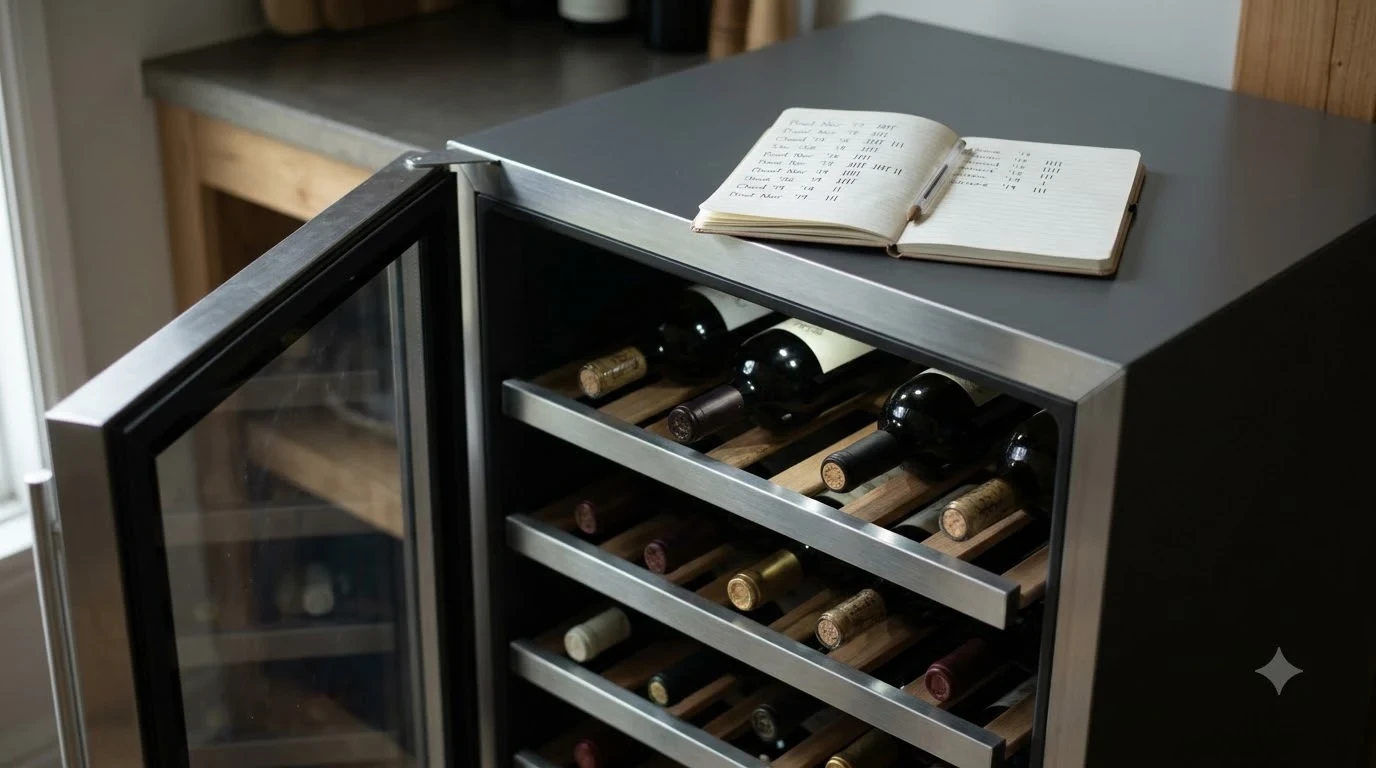
For a larger collection, record the producer, wine name, vintage, grape variety, and shelf location. You can use a notebook, spreadsheet, or phone-based inventory. The purpose is simple: know what you have and where it is stored without pulling out several racks to find one bottle.
A useful starting arrangement is to divide your collection into everyday wines, entertaining wines, and longer-term bottles. You can then subdivide each group by style. This creates a practical system that remains easy to maintain even when your collection grows or your drinking preferences change.
2. Set the Right Temperature Before Arranging the Shelves
Temperature is one of the most important decisions in wine refrigerator organization. For longer-term storage, aim for approximately 55°F, keeping the temperature stable rather than frequently adjusting it to suit individual bottles.
According to Wine Enthusiast, 53–57°F is a suitable range for longer-term wine storage, while 50–59°F works for shorter-term storage. Whirlpool similarly recommends 50–55°F for long-term storage. These recommendations help explain why storing all your reds on a warm shelf and all your whites on a cold shelf is not always necessary. If your goal is preserving a collection rather than preparing bottles for immediate service, a consistent temperature is more important than matching every bottle to its serving temperature.
Serving temperature is a different matter. A sparkling wine should generally be served at 40–50°F, while light whites and rosés are best around 45–50°F. Full-bodied whites such as oaked Chardonnay are better around 50–55°F. Light reds benefit from approximately 55–60°F, and full-bodied reds such as Cabernet Sauvignon and Syrah are generally served at 60–65°F.
The following table provides a practical reference when deciding how to arrange bottles in a refrigerator that is used partly for storage and partly for preparing wines for a meal.
| Wine category | Typical serving temperature | Organizational priority |
|---|---|---|
| Sparkling wine | 40–50°F | Easy access to the coldest service area |
| Light whites | 45–50°F | Group together for regular use |
| Rosé | 45–50°F | Keep with other chilled wines |
| Full-bodied whites | 50–55°F | Separate from lighter whites if convenient |
| Light reds | 55–60°F | Keep accessible for everyday meals |
| Full-bodied reds | 60–65°F | Use the warmer service area |
| Sweet whites | 43–50°F | Group by style and serving occasion |
These are serving temperatures, not instructions to assign every category a different long-term storage temperature. If your refrigerator has one zone and is primarily used for storing wine, approximately 55°F is a sensible target. If it has two zones, you can use one for general storage and the other for bottles you expect to serve soon.
Tip: Use a separate refrigerator thermometer to check whether the displayed setting reflects the actual temperature inside the cabinet. Allow the appliance to stabilize after changing its setting, and avoid repeatedly adjusting the thermostat every time you add a bottle.
For more information about the difference between keeping bottles and preparing them for the table, see this Wine Enthusiast explanation of wine storage temperatures.
3. Arrange Bottles by Wine Style and Shelf Accessibility
Once your categories are established, assign each one a consistent location. Keep wines that you regularly serve together, and place bottles that require less frequent access toward the back or on less convenient shelves.
In a single-zone refrigerator, organize by wine style rather than assuming that each shelf has a different temperature. You might place sparkling wines and whites together in one section, rosés beside the lighter whites, and reds in another section. This arrangement makes selection easier even though all the bottles share approximately the same storage conditions.
A practical layout for a refrigerator with several horizontal racks could look like this:
- Upper shelves: Frequently served sparkling wines, Prosecco, and lighter whites.
- Middle shelves: Sauvignon Blanc, Pinot Grigio, Riesling, rosé, and Chardonnay.
- Lower shelves: Pinot Noir, Merlot, Cabernet Sauvignon, Syrah, and other reds.
- Bottom storage area: Larger bottles, special-occasion selections, or bottles that are not needed regularly, provided the rack design supports them safely.
This is a convenience-based layout, not a universal temperature map. Different refrigerators circulate air differently, and the actual temperature of a shelf depends on the appliance design. Follow the manufacturer’s instructions when deciding which positions are suitable for oversized bottles or long-term storage.
In a dual-zone refrigerator, a different arrangement may make more sense. Use the colder zone for wines you want close to serving temperature and the warmer zone for wines that need more moderate service temperatures or general storage. For example, sparkling wine, Sauvignon Blanc, and rosé can share the colder section, while Pinot Noir and Cabernet Sauvignon can occupy the warmer section.
However, remember that a warmer service zone is not automatically a better long-term aging environment. If you intend to keep valuable bottles for several years, consider whether your appliance can maintain a stable temperature suitable for long-term storage. A dedicated storage zone around 55°F is often more practical than trying to create several different aging temperatures.
Arrange bottles so that their labels face outward whenever the rack design permits. This small adjustment saves time when selecting a wine and reduces the need to pull several bottles forward to identify the one you want.
If you have more bottles than your refrigerator can hold comfortably, do not force the collection into every available gap. Keep overflow bottles in an appropriate alternative storage area rather than blocking ventilation or placing excessive weight on a shelf. A well-organized collection is more useful than a refrigerator packed to its maximum advertised capacity.
4. Store Bottles Horizontally and Make Room for Different Shapes
Horizontal storage is the traditional arrangement for cork-sealed wine bottles. It keeps the wine in contact with the cork and makes efficient use of rack space, while screw-cap bottles offer more flexibility in their position.
Place standard cork-sealed bottles on their sides with the necks supported by the rack. This is particularly useful for bottles intended for extended storage. Natural cork can lose moisture over time, and maintaining suitable contact with the wine is a traditional precaution against a compromised seal. Synthetic closures can also be accommodated horizontally without difficulty.
Screw-cap bottles can generally be stored horizontally or upright because their closures do not depend on wine contact to remain sealed. If you have a small collection of screw-cap Sauvignon Blanc or Riesling, you can use upright storage when the refrigerator has a suitable shelf or bottle holder. This may also make it easier to identify bottles at a glance.
Do not force wide Champagne or sparkling wine bottles into narrow standard racks. Their larger diameter can make them unstable or prevent the shelf from sliding smoothly. Instead, reserve a wider rack, a designated sparkling-wine compartment, or a lower area designed to support larger formats.
It also helps to group similar bottle shapes together. Burgundy-style bottles, Bordeaux bottles, and sparkling bottles have different proportions, so grouping them prevents unnecessary rearrangement. If your collection contains several different formats, record their positions in your inventory.
Some practical placement rules include:
- Keep natural-cork bottles horizontally where the rack supports them securely.
- Use dedicated wider spaces for Champagne and other large sparkling bottles.
- Store screw-cap wines in whichever position makes the best use of the available rack space.
- Avoid placing bottles where they touch the refrigerator’s rear wall or obstruct its airflow.
- Keep bottles away from shelves or components that can scratch labels or damage capsules.
- Use a stable shelf for heavy or unusually shaped bottles rather than stacking them precariously.
The importance of suitable bottle positioning is also discussed in Decanter’s guide to storing wine at home, which emphasizes horizontal storage for cork-sealed bottles and minimal movement during aging.
When organizing the refrigerator, avoid creating a system that requires lifting several bottles to reach one at the back. Place the wines you expect to drink soon in the easiest positions, and leave special-occasion bottles undisturbed whenever possible.
5. Create Separate Areas for Everyday Wine and Special Bottles
A wine refrigerator becomes much easier to manage when its contents are arranged by drinking schedule. Keep bottles intended for immediate enjoyment accessible, and reserve less convenient storage positions for wines you plan to open later.
Start by identifying the bottles you expect to open within the next month. These might include a Pinot Grigio for a casual dinner, a bottle of Cava for a celebration, or a Merlot you enjoy with roasted chicken. Place these selections in a clearly defined everyday section.
Next, create a special-occasion group. This can include vintage Champagne, a carefully selected Napa Valley Cabernet Sauvignon, or a bottle of Barolo you are saving for a particular meal. Store these bottles where they will not need to be moved frequently.
A third category can be reserved for wines that need to be consumed before other bottles. This is especially helpful if you purchase wine regularly. Add the purchase date or intended drinking window to your inventory so that older bottles do not disappear behind newer arrivals.
For a simple rotation system, use the following approach:
- Place newly purchased bottles in their assigned categories.
- Record the vintage and purchase date.
- Identify wines that should be opened first.
- Place those wines in the most accessible positions.
- Update the inventory whenever you remove or add a bottle.
This arrangement also helps when planning food pairings. A high-acid Sauvignon Blanc is a useful option for acidic dishes, while a softer Merlot can work with a variety of roasted meats. Pinot Noir offers a lighter red alternative, whereas a more tannic Cabernet Sauvignon may suit richer dishes with enough protein and fat. Keeping these styles in recognizable groups makes it easier to select a bottle that complements the meal.
For bottles intended to age, avoid opening the refrigerator unnecessarily just to inspect the collection. A simple digital inventory can show which bottles are available, their shelf locations, and their expected drinking windows without disturbing the storage environment.
Not every wine needs to occupy a long-term storage position. Many everyday wines are produced to be enjoyed relatively young. If you are buying bottles for regular meals rather than extended aging, prioritize convenient access and sensible rotation over complicated cellar-style arrangements.
6. Keep the Refrigerator Clean, Stable, and Easy to Maintain
Good organization depends on more than the position of individual bottles. A wine refrigerator also needs suitable ventilation, stable operating conditions, protection from strong light, and enough room for its cooling system to work properly.
Begin by checking the appliance’s recommended capacity and ventilation requirements. Wine refrigerators are designed for a particular bottle count and arrangement. Overloading shelves can prevent bottles from sitting securely, while excessive crowding may interfere with airflow and temperature consistency.
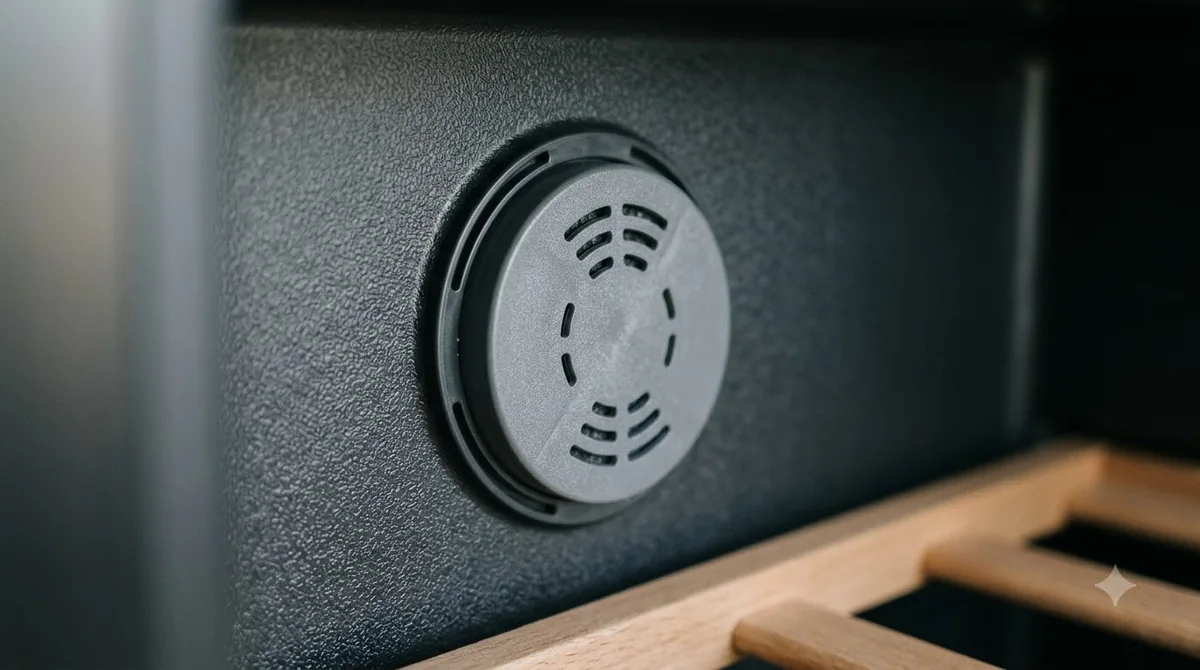
Leave any ventilation openings unobstructed. Do not push bottles against the rear cooling area or use empty spaces around fans to store accessories. Follow the manufacturer’s recommended clearance around the appliance, especially if it is installed under a counter or inside cabinetry.
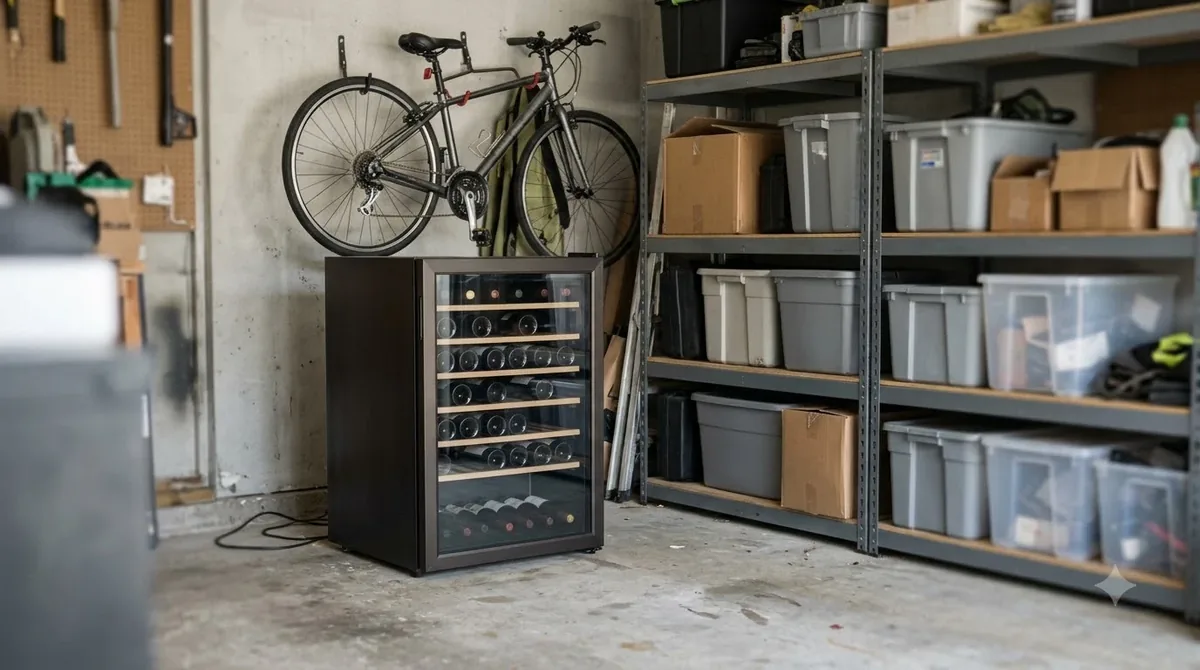
Next, consider where the refrigerator is located. A wine fridge should not sit next to a frequently used oven, a heating appliance, or a window receiving intense sunlight. A hot garage or patio can also create difficult operating conditions, especially in climates with substantial seasonal temperature changes.
Light protection is another consideration. Even when the refrigerator has a glass door, use its interior lighting only when needed. Avoid leaving bright display lighting on for extended periods unless the manufacturer specifically designs it for continuous use. Keep bottles away from direct sunlight, which can affect wine over time.
Humidity deserves attention as well, particularly if you store natural-cork bottles for extended periods. Whirlpool recommends approximately 60–68% humidity for wine storage. Not all compact refrigerators have adjustable humidity controls, so avoid assuming that every model maintains this level automatically. If your appliance has a humidity display or control, follow its operating instructions.
Cleaning should be straightforward. Remove bottles from one shelf at a time, wipe the shelf and surrounding surfaces with an appropriate cleaning solution, and allow the area to dry before returning the bottles. Avoid strong fragrances or chemical residues that could linger inside the cabinet.
A useful maintenance routine includes the following checks:
- Weekly: Confirm the displayed temperature and look for any unusual changes.
- Monthly: Check for spills, loose bottles, damaged labels, and obstructed ventilation.
- Every few months: Clean accessible shelves and review the bottle inventory.
- After adding a large collection: Check that the appliance is not overloaded and can maintain its selected temperature.
Also pay attention to unusual noises, repeated temperature alarms, or condensation that seems excessive. These may indicate that the appliance needs attention. Consult its manual before changing settings or attempting maintenance.
For additional advice about storing wine in a space without dedicated cooling equipment, see how to store wine without a wine fridge. If you have a separate storage area for a larger collection, how to organize a wine cellar offers a useful next step for planning bottle locations and long-term access.
7. Build a Simple Wine Inventory and Adjust It as Your Collection Grows
An inventory prevents a well-organized wine refrigerator from becoming difficult to manage as new bottles arrive. Record what you own, where each bottle sits, and when you expect to drink it.
You do not need specialized cellar-management software to begin. A spreadsheet with a few useful columns can provide everything most home wine drinkers need. Record the wine name, producer, grape variety, vintage, bottle count, and refrigerator location. You can also include a short note describing the occasion or food pairing you have in mind.
For example, a collection might include two bottles of Sauvignon Blanc on the upper rack, three bottles of Chardonnay on the middle rack, and four bottles of Cabernet Sauvignon on a lower shelf. If you have more than one refrigerator, include the appliance name or location in your records.
Use simple shelf labels rather than writing directly on the appliance. Labels such as A1, A2, B1, and B2 can correspond to individual shelf positions in your inventory. This system works especially well when bottles are stored horizontally and their labels are not always visible.
Another useful practice is to separate wines by purchase order or intended drinking date. Older bottles can be placed toward the front of their assigned section, provided they remain securely supported. Newer purchases can go behind them. This helps maintain a basic first-in, first-out rotation without requiring a complicated system.
However, do not treat vintage alone as a reliable indicator of which wine must be opened first. Different grape varieties, producers, regions, and winemaking styles have different aging potential. A young everyday Pinot Grigio may be ready to drink immediately, while a structured Bordeaux may benefit from additional bottle age.
If you enjoy aging wine, record the intended drinking window rather than relying on memory. Keep track of bottles that you want to revisit in a year or two, and separate them from wines intended for immediate consumption. You can also note whether a bottle is suitable for a particular celebration or meal.
For example, your inventory could contain entries such as:
- Riesling, 750 ml, upper shelf, everyday white, intended for near-term drinking.
- Champagne, 750 ml, sparkling section, reserved for a celebration.
- Pinot Noir, 750 ml, lower-middle shelf, light red, intended for dinner.
- Cabernet Sauvignon, 750 ml, lower shelf, longer-term storage.
- Port, 750 ml, designated fortified-wine section, intended for dessert service.
Update the inventory immediately after opening or removing a bottle. This prevents outdated records and makes it easier to determine whether you need to purchase more of a particular style. If your collection becomes too large for one refrigerator, consider whether a dedicated storage cabinet or cellar would be a more suitable solution. You can also read can you age wine in a wine fridge before deciding which bottles are appropriate for extended storage in your appliance.
A useful inventory should save time rather than create additional work. Keep it simple, use consistent shelf names, and update it whenever your collection changes. For more everyday wine questions, visit Wine Q&A.
Frequently Asked Questions
Should I organize wine bottles by grape variety or region?
Both approaches can work, but grape variety is often easier for a home collection that contains wines from several countries. If you regularly collect wines from specific regions, you can create a regional subsection within each grape category. For example, separate Burgundy Pinot Noir from Oregon Pinot Noir if you frequently compare those styles.
Can I store wine bottles upside down in a wine fridge?
Some specialized storage systems support inverted bottle positioning, but ordinary wine racks are designed to hold bottles horizontally or upright. Inverted storage is generally unnecessary for a typical home collection. Use the position recommended by your appliance manufacturer and ensure that every bottle is securely supported.
Should I remove the original wine bottle capsules before storage?
No, removing the capsule is generally unnecessary. The capsule covers the area around the bottle neck and contributes to the bottle’s finished appearance. Leave it intact unless there is a specific reason to inspect or clean the closure area.
Can I store wine accessories inside my wine refrigerator?
Small accessories can be stored in a designated compartment if the appliance manufacturer permits it and the items do not obstruct airflow or contact the bottles. Avoid storing strongly scented materials, cleaning products, or food alongside wine. Corkscrews and clean wine stoppers are usually better kept in a nearby drawer.
How should I organize half bottles and magnums?
Half bottles typically have a capacity of 375 ml, while standard magnums hold 1.5 liters. Their dimensions may differ significantly from standard 750 ml bottles, so assign them to racks designed to support their shape. Record the bottle format in your inventory to avoid confusing different sizes when planning a dinner or celebration.
A well-organized wine fridge should make it easy to find bottles, maintain stable storage conditions, and keep everyday wines separate from special selections. Start with clear categories, choose a suitable temperature, and arrange bottles according to their size and drinking schedule. Review your inventory regularly, and adjust the layout as your collection changes so that every bottle has a practical place.
More in Wine Basics
 Which Rose Is Best for Your Taste, Budget, and Food PairingsUpdated Nov 21, 2026
 Is Cheap Wine Bad? How to Find Bottles Worth DrinkingUpdated Nov 21, 2026
 What To Write On A Wine Gift Tag: Thoughtful Messages For Every OccasionUpdated Nov 21, 2026
 Which Wine Is Best For Weight Loss? Compare Lower-Calorie ChoicesUpdated Nov 21, 2026
 What Is The Best Wine For Mimosas? Choose Bubbly That Balances Orange JuiceUpdated Nov 20, 2026
 Which Prosecco Is Best for Your Taste and OccasionUpdated Nov 20, 2026