

We may earn a commission when you buy through links on this page, at no extra cost to you. Learn more.
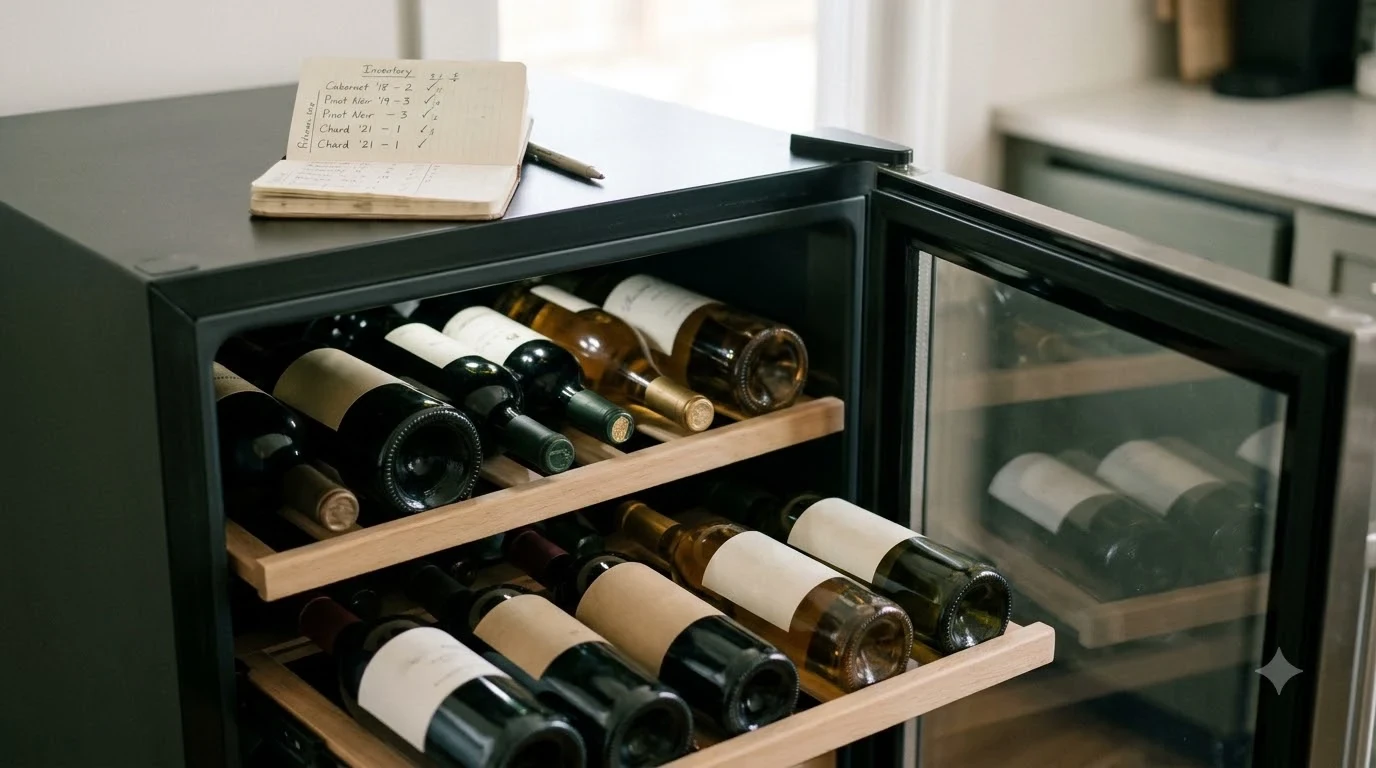
How long can you keep wine in a wine fridge? You can keep unopened wine in a properly maintained wine fridge for several months to several years, depending on the wine’s aging potential and storage conditions. Most everyday wines are best enjoyed within a few years of purchase, while age-worthy Cabernet Sauvignon, Bordeaux, and certain other fine wines can mature for a decade or longer. For reliable storage, maintain a consistent temperature around 55°F, protect bottles from light and vibration, and monitor humidity.
A wine fridge does more than keep bottles ready for dinner. It creates a controlled environment that helps preserve a wine’s aromas, flavors, acidity, and structure until you decide to open it. However, refrigeration does not automatically make every bottle suitable for long-term aging. The type of wine, its original quality, the closure, and the conditions inside the appliance all influence how long it will remain enjoyable. Understanding these factors helps you decide which bottles to drink soon and which ones can spend more time in storage.
How Long Different Wines Can Stay in a Wine Fridge
Most unopened wines can remain in a properly regulated wine fridge for one to several years, but there is no universal expiration date. Everyday wines generally have shorter drinking windows, while well-made wines with sufficient acidity, tannin, concentration, and structure may develop positively over longer periods.
A wine fridge maintains suitable conditions, but it cannot change the aging potential established during winemaking. A simple Pinot Grigio purchased for casual meals is unlikely to improve significantly after ten years, even if stored at an ideal temperature. By contrast, a structured Bordeaux blend or quality Napa Valley Cabernet Sauvignon may develop more complexity over an extended period.
The following ranges are practical planning estimates for unopened bottles stored consistently. They are not guaranteed expiration dates or promises that every bottle of a particular grape will improve for the entire period.
| Wine type | General storage window | Typical drinking approach |
|---|---|---|
| Everyday Sauvignon Blanc | 1–3 years | Drink while fresh |
| Pinot Grigio | 1–3 years | Enjoy its fresh fruit character |
| Rosé | 1–2 years | Prioritize youthful freshness |
| Everyday Chardonnay | 2–4 years | Follow the wine’s style and structure |
| Quality Riesling | 3–10 years or longer | Age-worthy examples can develop complexity |
| Quality Pinot Noir | 3–8 years | Depends on producer and vintage |
| Merlot | 2–7 years | Structured examples may benefit from aging |
| Cabernet Sauvignon | 3–15 years or longer | Fine examples can mature for decades |
| Syrah | 3–12 years | Concentration and structure matter |
| Vintage Port | 10–30 years or longer | Depends on vintage and producer |
These estimates assume unopened bottles and appropriate storage rather than bottles left in a warm room before being transferred to a cooler. White wines such as Riesling can age surprisingly well when they have sufficient acidity and sugar. Red wines such as Cabernet Sauvignon often have more tannin and concentration to support extended development.
For sparkling wines, the distinction between non-vintage and vintage bottlings also matters. Many non-vintage sparkling wines are intended for relatively early drinking, while certain vintage Champagne and traditional-method sparkling wines can mature for years. A wine fridge helps maintain suitable conditions, but it cannot guarantee that a bottle will improve.
For additional guidance on which bottles benefit from extended storage, see our explanation of whether you can age wine in a wine fridge.
The Best Temperature for Long-Term Wine Storage
A consistent temperature around 55°F is an excellent target for storing unopened wine. A practical long-term range is approximately 53–57°F, which helps slow premature aging while allowing wines to develop gradually.
Temperature consistency matters more than repeatedly adjusting the controls to match the wine you intend to drink. Wine Enthusiast recommends 50–59°F for short-term storage lasting less than six months and 53–57°F for longer storage. Its guidance also explains that red, white, sparkling, and fortified wines can share the same storage temperature. Its detailed recommendations appear in Wine Enthusiast’s guide to wine storage temperatures.
According to Liebherr, the ideal storage range is 10–12°C, equivalent to approximately 50–54°F. Decanter’s specialist guidance identifies 12–13°C, or approximately 54–55°F, as an appropriate temperature for fine-wine storage. These recommendations support a practical setting close to 55°F.
Temperature affects the speed of chemical reactions inside the bottle. Warmer conditions accelerate maturation, potentially causing fruit aromas to fade and oxidation-related characteristics to appear earlier than expected. Excessively cold conditions can slow development considerably and are not necessarily ideal for wines intended to mature over many years.
Storage temperature versus serving temperature
Storage and serving temperatures have different purposes. A bottle kept at 55°F does not need to be served at that temperature. Instead, bring it to the appropriate drinking temperature before pouring.
Use these general serving ranges:
- Sparkling wines: 40–50°F.
- Light white wines and rosé: 45–50°F.
- Full-bodied white wines: 50–55°F.
- Light-bodied red wines: 55–60°F.
- Full-bodied red wines: 60–65°F.
- Sweet white wines: 43–50°F.
For example, a bottle of Sauvignon Blanc can remain in a wine fridge at 55°F for storage and receive additional chilling before dinner. A Cabernet Sauvignon can also stay at 55°F and warm slightly before serving. There is no need to maintain separate long-term storage temperatures simply because the bottles are different colors.
Tip: Set a single-zone wine fridge close to 55°F if your main purpose is storing unopened bottles. Use a separate serving-temperature arrangement when you need sparkling wine, white wine, or red wine ready to pour immediately.
Humidity, Corks, and Bottle Position Matter
Temperature is only one part of proper wine storage. Humidity, bottle position, light exposure, and vibration also influence how well a bottle holds its quality over time. For cork-sealed bottles intended for extended storage, a relative humidity level around 60–70% is a useful target.
According to Decanter, 65–70% relative humidity is suitable for fine-wine storage. Its explanation of the best humidity for storing wine also highlights the importance of protecting natural corks from excessively dry conditions. Liebherr gives a broader recommended range of 50–80%, explaining that excessively dry air can contribute to cork shrinkage while excessive moisture encourages mold and damages labels.
A natural cork creates a barrier between the wine and outside air. If the cork dries out significantly, its ability to maintain a tight seal may deteriorate. Oxygen entering the bottle can accelerate oxidation, gradually changing the wine’s color, aromas, and flavor.
Humidity is less critical for bottles with screw caps or other closures that do not depend on maintaining a moist natural cork. However, stable temperature, darkness, and limited vibration remain important for these wines.
Why horizontal storage helps
Storing cork-sealed bottles horizontally keeps the wine in contact with the cork, helping prevent the cork from drying out internally. Most wine fridges have shelves designed to support this position.
There are exceptions. Bottles with screw caps do not need to lie horizontally to protect a cork, and sparkling wine bottles can be stored according to the manufacturer’s rack design. The important consideration is keeping bottles secure and avoiding unnecessary movement.
Do not assume that a wine fridge automatically controls humidity just because it controls temperature. Some models have humidity-management features, while others provide limited humidity regulation. If you plan to keep valuable cork-sealed bottles for many years, investigate this feature before relying on the appliance as a cellar replacement.
Factors That Determine How Long Wine Remains Enjoyable
Two bottles stored in the same wine fridge can have very different lifespans. Their grape varieties, acidity, tannin, sugar, alcohol, production methods, and original condition all influence their development.
Consider the difference between a young Beaujolais and a structured Cabernet Sauvignon from Napa Valley. The Beaujolais may be designed to emphasize bright fruit and freshness, making early consumption the better choice. The Cabernet may have firmer tannins, concentrated fruit, and sufficient acidity to support longer aging.
Grape variety and wine structure
Some varieties are generally better suited to extended aging than others, although producer quality and winemaking decisions remain important.
- Cabernet Sauvignon: High tannin and concentrated fruit can support extended bottle development in quality examples.
- Merlot: Medium tannin and softer structure generally produce approachable wines, although serious Bordeaux and other structured examples can age well.
- Pinot Noir: Low-to-medium tannin and high acidity can support aging in carefully produced wines.
- Syrah: Medium-plus to high tannin and concentrated flavors can provide a foundation for several years of development.
- Riesling: High acidity, and sometimes residual sugar, can help preserve freshness during extended aging.
- Sauvignon Blanc: High acidity supports freshness, but many everyday examples are intended for relatively early drinking.
- Chardonnay: Medium acidity and different winemaking styles create a wide range of aging potential.
- Moscato: Many examples are designed for youthful fruit and should be enjoyed relatively soon.
Acidity helps a wine retain freshness as it develops. Tannin contributes structure to many red wines, while sugar can help preserve certain sweet wines. However, no single characteristic guarantees longevity. A highly acidic wine can still have a short intended drinking window if its overall concentration and production style favor early consumption.
Producer, vintage, and closure
The producer’s winemaking decisions are equally important. Harvest timing, grape ripeness, fermentation, oak maturation, blending, and bottling practices all affect the wine’s capacity to evolve.
Vintage conditions can also change the expected drinking window. A cooler growing season may produce wines with different acidity and structure from a warmer season. Even wines made by the same producer from the same vineyard can develop differently across vintages.
The closure is another consideration. Natural cork allows very small amounts of oxygen to interact with wine over time, while screw caps generally provide a more consistent seal. Neither closure automatically determines quality or aging potential. The producer’s intended style and the wine itself remain the most important considerations.
If you are building a collection, record the producer, vintage, grape variety, and purchase date. These details make it easier to decide which bottles should be opened first rather than relying on the length of time they have spent inside the fridge.
How to Maintain a Wine Fridge for Several Years
A wine fridge can provide suitable storage for several years when it operates consistently and is installed in an appropriate location. Regular checks of temperature, humidity, ventilation, and bottle organization help prevent problems that may otherwise go unnoticed.
Start by choosing a stable location away from direct sunlight, ovens, radiators, and other heat-producing appliances. A wine fridge installed in a hot garage or patio may struggle to maintain its target temperature, particularly during periods of high outdoor temperatures.
Wine Enthusiast notes that many standard wine refrigerators have temperature ranges between 40°F and 65°F. That range is generally sufficient for a storage setting near 55°F, but the actual performance of an appliance depends on its design and surroundings.
Practical maintenance routine
Use the following routine to keep your storage conditions consistent:
- Check temperature weekly: Verify that the interior remains close to 55°F rather than relying exclusively on the displayed setting.
- Monitor humidity monthly: Use a separate hygrometer if your appliance does not display humidity. Aim for approximately 60–70% for long-term cork-sealed storage.
- Clean the interior regularly: Remove dust and spills without introducing strong cleaning odors that could linger around the bottles.
- Inspect the door seal: A damaged or poorly fitted gasket can interfere with temperature stability.
- Maintain ventilation: Leave the clearance required by the manufacturer so the cooling system can operate properly.
- Avoid overfilling: Keep within the appliance’s rated capacity to support consistent cooling.
- Minimize unnecessary opening: Repeatedly opening the door allows warm air to enter and can produce temperature fluctuations.
- Protect bottles from vibration: Avoid placing the fridge beside equipment that creates substantial movement or vibration.
Overfilling deserves particular attention. A fridge packed beyond its rated capacity may struggle to distribute cool air evenly. It can also become difficult to remove one bottle without disturbing several others. Leave the appliance organized so that bottles remain secure and air can circulate as intended.
Power interruptions are another consideration. If electricity fails, keep the door closed to help preserve the internal temperature. A brief interruption does not automatically ruin wine, but prolonged exposure to warm conditions can accelerate aging. For a collection containing valuable bottles, consider an appliance alarm or temperature monitor that can alert you to unexpected changes.
For a collection intended to mature over many years, a dedicated wine fridge with reliable temperature regulation and suitable humidity management is preferable to a standard kitchen refrigerator. The latter is designed primarily for food preservation rather than long-term wine storage.
Opened Wine Has a Much Shorter Storage Life
Once a bottle is opened, its storage life changes dramatically. Oxygen enters the bottle and begins interacting with the wine, gradually reducing freshness and changing aromas. A wine fridge slows this process through refrigeration, but it does not stop oxidation completely.
For opened still wines, a practical general guideline is three to five days in the refrigerator. Sparkling wines generally last one to three days, while fortified wines can remain enjoyable for several weeks depending on their style and storage method.
The following estimates assume that the bottles are properly closed after pouring and returned to refrigeration promptly.
- Sparkling wine: Approximately one to three days when sealed with an appropriate sparkling-wine stopper.
- Light-bodied white wine: Approximately three to five days.
- Full-bodied white wine: Approximately three to five days.
- Rosé: Approximately three to five days.
- Red wine: Approximately three to five days.
- Fortified wine: Several weeks, depending on the style and closure.
These are practical quality guidelines rather than strict safety deadlines. A bottle’s condition depends on how much wine remains, how long it was exposed to air, and how carefully it was handled.
How to extend the life of an opened bottle
Replace the original cork or use a suitable wine stopper immediately after pouring. Keep the bottle upright to reduce the wine’s exposed surface area and return it to refrigeration promptly.
Vacuum wine stoppers can reduce the amount of air inside some bottles, while inert-gas preservation systems can help limit oxygen exposure. Sparkling wine requires a stopper designed specifically to retain carbonation because ordinary wine stoppers will not maintain the pressure effectively.
Before serving a refrigerated red wine, allow it to warm slightly. A light Pinot Noir is generally more expressive around 55–60°F, while a full-bodied Cabernet Sauvignon often benefits from a serving temperature around 60–65°F.
Changes in aroma and flavor are often the first signs that an opened bottle is past its best. Diminished fruit, excessive acidity, flat sparkling wine, or strong oxidation-related aromas suggest that the wine has lost its original character.
For more information about changes in wine after opening, see our article answering whether wine can make you sick.
Frequently Asked Questions
Can a wine fridge keep wine for 20 years?
Yes, certain age-worthy wines can remain in a properly maintained wine fridge for 20 years or longer. Vintage Port, some Bordeaux, and selected high-quality Rieslings are examples of wines that can develop over extended periods. However, an ordinary entry-level wine may lose its freshness long before reaching that age, regardless of storage conditions.
Can wine freeze inside a wine fridge?
Most wine fridges operate above the freezing point of wine and should not freeze bottles during normal operation. However, an incorrectly adjusted appliance or malfunctioning thermostat can create excessively cold conditions. Freezing can expand the liquid, potentially push out the cork, or damage the bottle.
Does wine continue aging at 55°F?
Yes. Wine continues undergoing chemical changes at 55°F, although the process is relatively slow. In suitable age-worthy wines, compounds responsible for aroma, color, and structure continue interacting as the bottle matures. Refrigeration does not completely stop this development.
Should wine be stored upside down in a wine fridge?
No. Upside-down storage is unnecessary for ordinary wine bottles and can make sediment collect around the closure. Horizontal storage is the conventional choice for natural cork bottles because it maintains contact between the wine and cork. Screw-cap bottles can generally be stored upright or horizontally.
Can you store wine in a wine fridge during a vacation?
Yes. A properly functioning wine fridge can maintain suitable storage conditions while you are away for several weeks. Before leaving, verify the temperature, close the door securely, check the power connection, and avoid overloading the appliance. An independent temperature alarm can provide additional reassurance if the electricity supply is interrupted.
A wine fridge can preserve unopened wine for months or years, provided the wine has suitable aging potential and the storage conditions remain stable. Aim for approximately 55°F, maintain appropriate humidity, protect bottles from light and vibration, and organize your collection by expected drinking window. Most importantly, remember that proper storage preserves a wine’s potential; it does not guarantee that every bottle will improve with age.
More in Wine Basics
 What Is The Best Wine For Mimosas? Choose Bubbly That Balances Orange JuiceUpdated Nov 20, 2026
 Which Prosecco Is Best for Your Taste and OccasionUpdated Nov 20, 2026
 Which Wine Is Best For Health? Understand the Risks and BenefitsUpdated Nov 20, 2026
 Which Champagne Is Best for Your Taste and OccasionUpdated Nov 20, 2026
 What To Put In A Wine Gift Basket For A Thoughtful, Memorable GiftUpdated Nov 20, 2026
 What Is the Best Wine for Mulled Wine? Choose a Smooth, Fruity RedUpdated Nov 20, 2026