

We may earn a commission when you buy through links on this page, at no extra cost to you. Learn more.
The best answer to “what wine goes with smoked gouda” is an off-dry Riesling with lively acidity and a little residual sweetness. Its freshness cuts through the cheese’s creamy richness, while ripe apple, peach, and citrus flavors work with the salt and gentle wood smoke. For a drier option, choose Sauvignon Blanc; for a red, reach for low-tannin Gamay or Pinot Noir rather than a heavily tannic Cabernet Sauvignon.
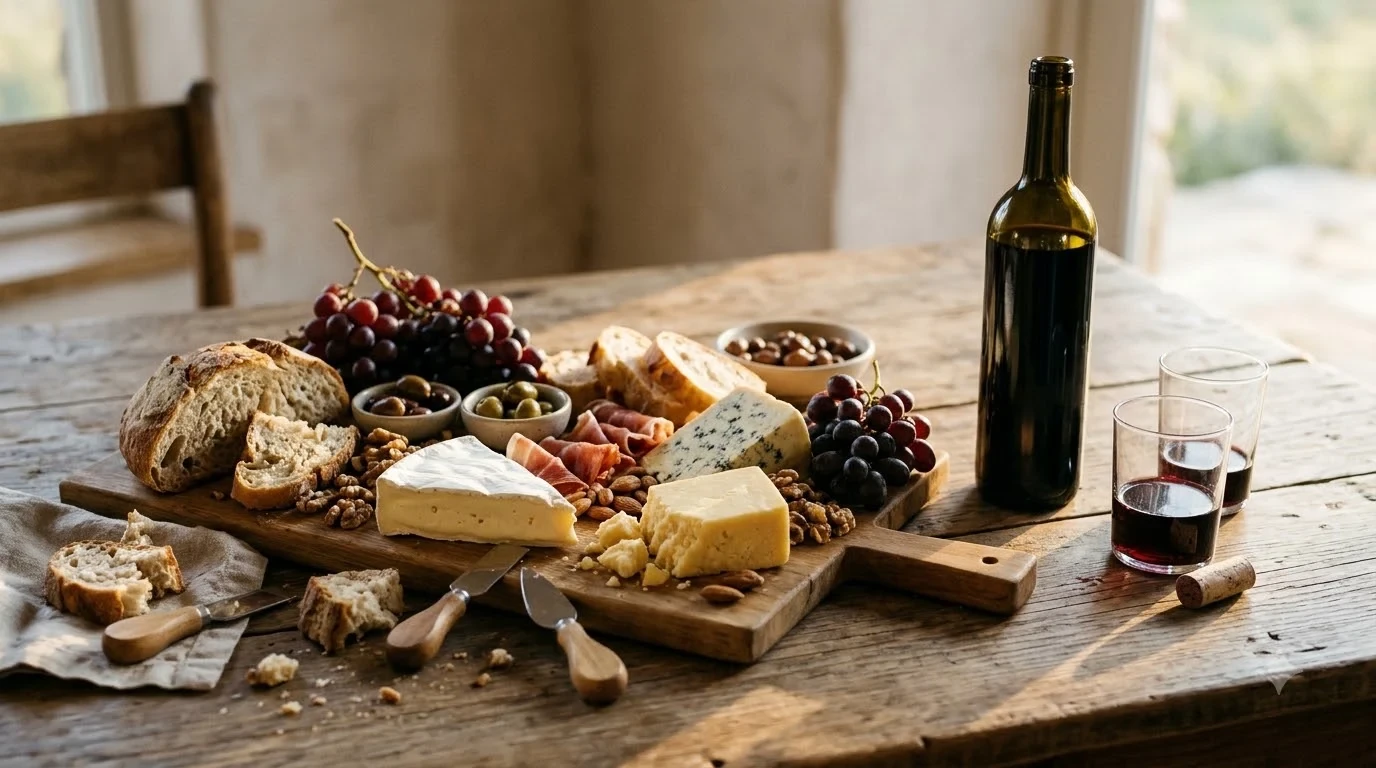
Smoked Gouda is a flexible cheese, but the amount of smoke, the cheese’s age, and the foods served beside it all affect the match. The safest approach is to balance richness with acidity, echo nutty or caramel notes with fruit, and avoid letting an assertive wine bury the cheese. These choices work for a simple snack, a cheese board, or a warm sandwich.
Why Off-Dry Riesling Is the Best Starting Point
Off-dry Riesling is the most reliable first choice for smoked Gouda because its acidity refreshes the palate while a modest touch of sweetness softens salt and smoke. A German Riesling Kabinett or an off-dry bottle from Washington State can bring enough fruit to meet the cheese without making the pairing taste sugary.
Smoked Gouda combines a creamy, buttery base with salt and an added smoky flavor. Riesling answers each part of that profile: its crisp acidity keeps the cheese from feeling heavy, its peach and orchard-fruit character complements the dairy sweetness, and its small amount of residual sugar gives the salt a pleasant counterpoint. The wine should still taste fresh, not syrupy. A very sweet dessert Riesling can overwhelm a mild wedge, especially when the smoke is delicate.
The match is especially persuasive with Gouda that has developed butterscotch or toffee character. Wine Enthusiast notes that these flavors and the cheese’s salt become more pronounced after about a year of aging, and recommends off-dry Riesling. Decanter likewise points to German and Australian Rieslings for smoked foods because they combine high acidity with a touch of sweetness; read its advice on pairing wine with smoky ingredients.
Choose the sweetness level according to the cheese. A lightly smoked young Gouda generally needs only a rounded, fruit-forward white, while a salty, assertively smoked wedge can benefit from a little more residual sugar. If the wine tastes flat after a bite of cheese, move toward a brighter Riesling; if the cheese seems dull or overly sweet, try a drier style.
White Wines That Balance Cream, Smoke, and Salt
Riesling is the leading choice, but Sauvignon Blanc, Gewürztraminer, and sparkling Muscat each offer a different route to balance. A crisp Loire Sauvignon Blanc suits restrained smoke, while aromatic Gewürztraminer or gently sweet sparkling Muscat can match a more pronounced cheese.
Sauvignon Blanc brings high acidity and flavors of lime, grapefruit, green apple, or fresh herbs. Those crisp notes refresh the palate after a rich bite of Gouda. Choose a balanced Loire Valley or cool-climate bottle rather than one with aggressive grassiness or intense tropical fruit. With strongly smoked cheese, a rounded style is safer than a very lean, bone-dry example.
Gewürztraminer offers a more aromatic pairing, with floral and spice notes that echo smoke. An off-dry style suits salty cheese and works well with pear, apricot, or peach. Keep accompaniments simple: hot mustard, chili jam, or vinegary pickles can throw the wine out of balance. Chardonnay is possible, too: a medium-bodied, restrained-oak bottle can complement the creamy texture, while a heavily oaked, buttery version may duplicate the cheese’s richness.
Sparkling Muscat is a useful celebratory choice because its bubbles refresh the palate and its floral fruit works with Gouda’s natural sweetness. The Cheese from the USA wine-and-cheese guide lists semi-sweet sparkling Muscat among its Gouda suggestions, alongside light- to medium-bodied whites such as Riesling and Gewürztraminer. A dry traditional-method sparkling wine can also work when you prefer less sweetness; Champagne and Cava gain their bubbles through a second fermentation in the bottle, while Prosecco is typically made from Glera using the tank method.
Red Wines That Won’t Overpower Smoked Gouda
For red wine, start with Gamay or Pinot Noir, two options with more freshness and less tannin than Cabernet Sauvignon or Syrah. Fruity Merlot can also work with a richer, more mature wedge, especially when the board includes dried cranberries or toasted nuts.
Gamay, especially from Beaujolais, is an excellent red choice because it brings cherry and berry fruit, lively acidity, and low tannin. Wine Enthusiast notes that aging Gouda’s sharpness can be uncomfortable beside pronounced tannins, while Gamay’s fruit and acidity soften its piquant edge. Serve it slightly cool.
Pinot Noir is another flexible option. Its low-to-medium tannin, fresh acidity, and red-fruit character allow the cheese’s smoke to remain noticeable. A lighter Oregon Pinot Noir or a red Burgundy with restrained oak is a better direction than a powerful, heavily extracted style. The pairing also works in a grilled sandwich with mushrooms, onions, or roasted turkey. Merlot, softer than Cabernet Sauvignon, can suit a fuller, nuttier Gouda; look for plum, blackberry, or gentle cedar notes. The Cheese from the USA guide pairs buttery Gouda and dried cranberries with a soft, fruity Merlot showing blackberry, cedar, and tobacco.
Cabernet Sauvignon and Syrah are less dependable starting points. Cabernet Sauvignon has high tannin, and Syrah can have medium-plus to high tannin; both can make an aged or sharply smoky Gouda taste more aggressive. Salt and fat can soften tannin, so these reds are not automatic failures, but Gamay, Pinot Noir, or softer Merlot usually gives a more harmonious result.
Match the Wine to the Cheese’s Smoke and Age
A younger smoked Gouda and a wedge aged for about a year need different levels of sweetness and intensity. The smoking method also matters, because a delicate wood-smoke aroma and a pronounced smoke flavor do not create the same pairing challenge.
Cheesemakers can introduce smoke by cold-smoking finished cheese in a chamber or by using liquid smoke flavoring. The Cheese Science Toolkit explains that liquid smoke may be added to milk, brine, or curds, or applied to the finished cheese by spraying or soaking. Those methods do not guarantee the same flavor, so taste the cheese before choosing a bottle. A delicate smoke profile can be overwhelmed by a very aromatic wine; a stronger smoke profile needs a wine with enough fruit and freshness to remain present.
Age offers a second clue. A younger Gouda is generally softer, creamier, and more milky or nutty, so try sparkling Muscat, a fresh Riesling, or a restrained Sauvignon Blanc. As Gouda matures, its flavors can deepen into butterscotch and toffee, and its saltiness may become more pronounced. That is the point at which off-dry Riesling, Gewürztraminer, or a fruit-forward Gamay becomes especially useful.
A very smoky cheese may be more satisfying with cider or beer than with wine. The Cheese from the USA guide specifically says smoked and seasoned Gouda varieties can work better with beers and ciders, a helpful reminder that smoke intensity can be a difficult match. For a wine-focused meal, reduce the intensity of the other flavors on the board and select a high-acid white with a touch of sweetness rather than forcing a powerful red into the role.
Tip: Taste the Gouda on its own before opening the wine. If the smoke lingers strongly for several seconds, choose a fruitier Riesling or Gewürztraminer; if the cheese tastes mostly creamy and nutty, a crisp Sauvignon Blanc or Gamay is likely to feel more balanced.
Build a Cheese Board Around the Wine
Smoked Gouda pairs best with accompaniments that add freshness, gentle sweetness, or crunch without introducing a stronger competing flavor. Green apple, pear, apricot, and honeydew are useful with Riesling, while almonds, cashews, rye bread, and whole-wheat crackers make the board feel complete.
Fresh fruit refreshes the palate and creates a bridge to the wine. Granny Smith apple brings tartness; pear or peach echoes Riesling and Gewürztraminer; dried cranberries suit softer Merlot. Rye and pumpernickel sit naturally beside smoke, while plain water crackers help when comparing wines. Choose unsalted almonds or cashews; a little honey can soften a sharp wedge, but use it sparingly. For a simple board, set out two fruits, crackers, nuts, and Gouda rather than crowding it with condiments.
When the board includes other smoked foods, match the wine to the strongest component. Smoked turkey can make a light red or Riesling a sensible bridge; see what wine goes with smoked turkey for the meat-focused version. Smoked salmon calls for a different balance because fish adds delicate texture and can make tannic reds taste harsh; the separate guide to what wine goes with smoked salmon covers that match. For a board built around plain Gouda instead, compare the suggestions for what wine goes with gouda.
Condiments deserve attention. Strong vinegar, very hot chili sauce, or a sweet-and-sour relish can change the taste of the wine more than the cheese does. Decanter notes that sharp, sweet, intense accompaniments such as chutney and cranberry sauce can be difficult for wine, so serve them in small portions and keep them separate from the main cheese-and-wine bite. For more pairing fundamentals, the site’s Wine Pairing guide can help with the rest of the board.
Serving Temperature and Portions for a Better Match
Serve sparkling wine at 40–50°F, light whites at 45–50°F, and light reds at 55–60°F so the fruit and acidity stay clear beside the cheese. Take the Gouda out of the refrigerator about 45–60 minutes before serving, as Decanter’s cheese expert recommends for allowing aromas and flavors to open up.
Temperature changes the balance. A white served too cold can seem muted, while a warm red can feel heavier and more alcoholic. Keep Riesling and Sauvignon Blanc cool but not icy; give Gamay or Pinot Noir a short chill. A full-bodied Chardonnay is best around 50–55°F.
| Wine style | Serving temperature | Best Gouda match | Why it works |
|---|---|---|---|
| Off-dry Riesling | 43–50°F | Salty, caramel-toned smoked Gouda | Acidity refreshes; a touch of sweetness balances salt and smoke |
| Sauvignon Blanc | 45–50°F | Young or lightly smoked Gouda | Citrus and herbal notes keep the creamy cheese lively |
| Sparkling Muscat | 40–50°F | Gouda on an appetizer board | Bubbles refresh the palate and floral fruit complements dairy sweetness |
| Chardonnay | 50–55°F | Creamy Gouda with restrained smoke | Medium acidity and texture echo the cheese without needing heavy tannin |
| Gamay or Pinot Noir | 55–60°F | More mature or deeply flavored Gouda | Fresh red fruit and lower tannin leave room for the smoke |
Plan on a standard 5-ounce glass per serving; a 750-milliliter bottle provides about five glasses. Use smaller tasting pours when comparing Riesling, Sauvignon Blanc, and Gamay. Refrigerated still wines generally keep 3–5 days after opening; sparkling wine is best within 1–3 days when properly recapped.
Use the cheese as the anchor and pour a small amount of wine before serving the full board. Taste one bite of Gouda, take a sip, and notice whether the wine feels fresher, flatter, sweeter, or more tannic. That quick check is more useful than choosing a bottle by grape name alone, especially when the cheese has an unusually strong smoke character.
Frequently Asked Questions
Look for the “Gouda Holland” or “Noord-Hollandse Gouda” designations, and remember that the Codex standard describes normal ripening as beginning at about three weeks. These details help distinguish origin and production from the wine-pairing choices above.
How can I identify authentic Dutch Gouda?
Wine Enthusiast recommends looking for the designations “Gouda Holland” or “Noord-Hollandse Gouda” when seeking authentic Dutch Gouda. The article notes that the name Gouda is used internationally for many different cheeses, so the additional designation can help distinguish a protected Dutch origin from a generic Gouda-style cheese.
Does Gouda naturally develop crunchy crystals?
Long-aged Gouda can develop tiny, crunchy amino acid crystals that contribute an intense savory, umami impression. Wine Enthusiast compares the texture with crystals found in Parmigiano-Reggiano and describes them as a feature that cheese enthusiasts may value, rather than a defect.
How long is Gouda normally ripened?
The Codex standard describes normal ripening for Gouda intended for direct consumption as beginning at about three weeks, with conditions around 10–17°C depending on the desired maturity. That is a broad production standard, not a promise that every Gouda sold in a store has the same age or flavor.
Can Madeira work with Gouda?
Yes. Wine Enthusiast suggests Sercial Madeira with younger Gouda because the wine’s nutty notes, faint sweetness, and palate-cleansing acidity echo the cheese’s buttery, nutty character. It is a useful alternative when you want a fortified wine instead of Riesling or sparkling Muscat.
What shapes can Gouda be made in?
The Codex description allows Gouda to be made as a flattened cylinder with convex sides, a flat block, or a loaf. It also describes a firm or semi-hard body with small, rounded openings that can range from pinhead to pea size, so the cut face can look different from one style to another.
For most smoked Gouda, begin with off-dry Riesling, then compare a crisp Sauvignon Blanc or a light Gamay to see which best suits the cheese’s smoke and age. Keep the accompaniments simple, serve the wine at the right temperature, and let the cheese—not the boldest bottle on the table—set the pace.
More in Food & Wine Pairing
 Risotto With White Wine Recipe: Make a Creamy Dinner at HomeUpdated Nov 20, 2026
 Wassail With Wine Recipe for a Festive Spiced Holiday DrinkUpdated Nov 20, 2026
 Spritz Veneziano Recipe: Make a Classic Venetian Aperitivo at HomeUpdated Nov 20, 2026
 Summer Wine Punch Recipe for Easy Homemade EntertainingUpdated Nov 20, 2026
 Bishop Recipe: How to Make a Bright, Citrus-Forward Red Wine CocktailUpdated Nov 20, 2026
 Wine Cupcakes Recipe: Bake Rich Chocolate Cupcakes at HomeUpdated Nov 20, 2026