

We may earn a commission when you buy through links on this page, at no extra cost to you. Learn more.
what wine goes with nuts depends on whether the nuts are raw, roasted, salted, spiced, or sweetened, but dry Sherry, crisp sparkling wine, and high-acid whites are reliable places to start. Fino or Manzanilla Sherry is especially good with almonds and mixed savory nuts. For walnuts and richer roasted nuts, try Pinot Noir, aged sparkling wine, Amontillado, or Tawny Port.
Nuts bring several pairing factors to the table at once: natural oils, toasted or earthy flavors, salt, and sometimes a bitter edge from their skins. A good wine either refreshes the palate with acidity and bubbles, echoes those roasted flavors, or supplies enough sweetness to meet a sugary coating. The best bottle is therefore shaped as much by the preparation as by the nut itself.
The Easiest Wines to Serve With Nuts
For a bowl of savory nuts, start with Fino or Manzanilla Sherry, Brut sparkling wine, or a crisp white such as Sauvignon Blanc. These wines have the dryness, freshness, and savory character to complement almonds, pistachios, and mixed roasted nuts without overwhelming them.
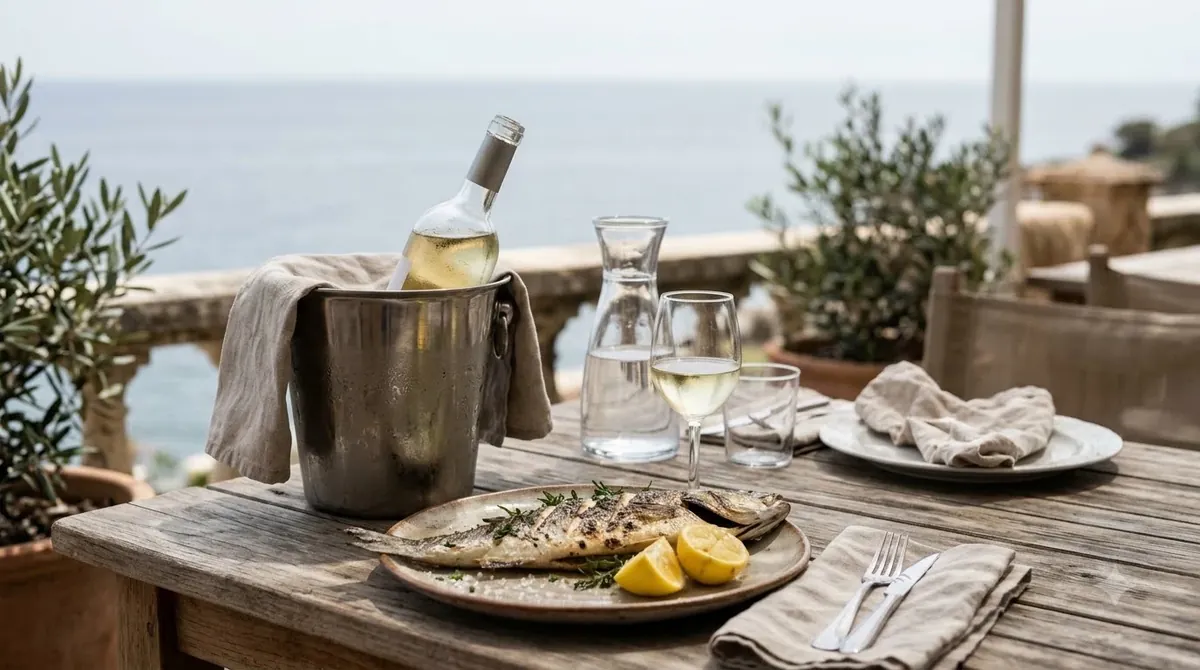
Fino is a particularly natural match because it is made from Palomino grapes and develops almond-like aromas during biological aging under flor, a layer of yeast. The Sherry authority describes Fino as dry, delicate, and reminiscent of almonds, and recommends it with nuts and tapas. Serve it well chilled, around 43–46 F, the equivalent of the regional body’s recommended 6–8 C. Its savory finish suits salted almonds, olives, and cured ham. Read the regional explanation of Fino Sherry’s almond notes and food matches for more detail.
For an easy-to-find alternative, choose Brut Champagne, Cava, or another dry sparkling wine. Bubbles and acidity refresh the palate after cashews, macadamias, and salted pistachios. Crisp Sauvignon Blanc or dry Riesling also works with lightly salted nuts; for a mixed bowl without strong seasoning, these styles are more versatile than a heavily oaked red.
Match the Wine to the Type of Nut
The nut itself gives you a useful first clue: almonds are a natural fit for dry Sherry, walnuts can take more savory depth, and creamy nuts benefit from lively acidity. Use the following pairings as starting points, then adjust for salt, roast level, sweetness, and any added seasoning.
| Nut | First wine to try | Why it fits | Serving cue |
|---|---|---|---|
| Almonds | Fino or Manzanilla Sherry | Dry, savory flavors echo almond notes; freshness balances the oil. | Fino at 43–46 F |
| Walnuts | Pinot Noir, Brut Champagne, or Tawny Port | Low-to-medium-tannin Pinot avoids piling on astringency; bubbles or nutty aging add contrast. | Light red at 55–60 F; sparkling at 40–50 F |
| Pistachios | Brut sparkling wine or Sauvignon Blanc | Acidity and effervescence refresh the palate after salty, oily bites. | White at 45–50 F |
| Hazelnuts | Amontillado Sherry or Chardonnay | Toasted and nut-like wine aromas echo the browned flavor. | Fuller white at 50–55 F |
| Pecans | Off-dry Riesling or Tawny Port | Fruit and gentle sweetness meet the pecan’s buttery, naturally sweet character. | Sweet white at 43–50 F |
| Cashews or macadamias | Brut sparkling wine or Chenin Blanc | Fresh acidity counters a creamy, rich texture. | Sparkling at 40–50 F; light white at 45–50 F |
| Pine nuts | Sauvignon Blanc or dry sparkling wine | Aromatic freshness suits their delicate, buttery flavor. | Light white at 45–50 F |
Almonds are the easiest place to begin. Raw or lightly salted almonds work well with Fino or Manzanilla, whose dry finish and almond-like character make the match feel connected. For smoked or deeply toasted almonds, move toward Amontillado Sherry or an oaked Chardonnay; their savory depth meets the darker roast.
Walnuts need a little more thought because their papery skins bring mild bitterness and astringency. Wine Enthusiast highlights several routes: Montepulciano d’Abruzzo for a red-wine match, vintage Champagne for its lees-aged, buttery character and bubbles, Verdejo for a greener note, and vintage Port for the fruitier side of fresh walnuts. A lighter Pinot Noir is a softer alternative when you want red wine without a heavy tannic grip. The Wine Enthusiast walnut pairing examples show how different features of the same nut can lead to different wines.
Pistachios, cashews, and macadamias usually reward freshness more than power. Try Brut or Sauvignon Blanc with salted pistachios, and Chenin Blanc with creamy cashews. Hazelnuts suit Amontillado or Chardonnay; pecans work with off-dry Riesling or Tawny Port. The table’s serving ranges help keep each style fresh without muting its aromas.
How Roasting, Salt, and Seasoning Change the Match
Preparation can change a pairing more than the nut variety does. Raw, lightly salted almonds are delicate and savory, while dark-roasted, smoked, honey-glazed, and chili-coated nuts each add a stronger flavor that calls for a different kind of wine.
Roasting deepens nut flavors with toast, browned butter, and sometimes caramel. Pair lightly roasted nuts with dry sparkling wine or a crisp white; darker roasted or smoked nuts suit Amontillado Sherry, an oxidative white, or a measured-oak Chardonnay. These wines echo the savory toast without adding sweetness. Avoid very oaky or high-alcohol wines with intensely charred nuts, which can make the combination feel heavy.
Salt can make wine taste rounder and soften the perception of tannin, which is one reason salty nuts work with sparkling wine and some structured reds. Salted almonds can make a dry white seem less austere, while salted walnuts may soften a medium-bodied red. For a salty snack, acidity or bubbles still provide the most refreshing counterpoint to the oil.
Sweet coatings require a different rule. Honey-roasted nuts, candied pecans, praline almonds, and brittle are better with a wine at least as sweet as the food; otherwise the wine can seem thin, sharply acidic, or bitter. Try Moscato, a late-harvest Riesling, sweet Madeira, or Tawny Port depending on the depth of the coating. For chili-lime or hot-pepper nuts, avoid high-alcohol, tannic reds because alcohol and tannin can make chili heat feel stronger. An aromatic Riesling with a little sweetness is a safer match, particularly when the coating is hot rather than smoky.
Tip: For one mixed bowl that includes salt, smoke, and a little sweetness, choose a Brut sparkling wine or a dry-to-off-dry Riesling rather than a big red. If the bowl is mostly candied nuts, switch to a sweeter wine that can match the coating.
Why Acidity, Tannin, and Sweetness Matter
The best nut pairings become easier to predict once you focus on four features: fat, salt, tannin, and sweetness. Nuts are oil-rich, some skins taste a little bitter, and many snack mixes are salted or sweetened, so the wine needs to respond to the strongest feature rather than simply match the color of the food.
Acidity is useful against richness. It refreshes the palate after an oily bite, much as lemon brightens a rich dish. Sauvignon Blanc and Riesling are high-acid whites, and sparkling wine adds bubbles; Chardonnay is generally more moderate in acidity and suits toasted hazelnuts or browned-butter flavors. For an introduction to how food traits guide a glass, see this broader Wine Pairing overview.
Tannin calls for care. Walnuts have tannins in their papery skins, and highly tannic Cabernet Sauvignon can make the combination feel more drying. Pinot Noir generally has lower-to-medium tannin and higher acidity, making it a more forgiving red; Merlot is another softer option. Salt and fat may soften tannin, but a big red is not an automatic match. Consider the walnut skin, salt level, and wine weight together.
Sweetness is the clearest rule of all. A dry wine beside a candied nut can taste sour because the sugar in the snack makes the wine seem less sweet by comparison. The wine should be at least as sweet as the nut preparation, whether that means off-dry Riesling with honey-roasted nuts or a dessert wine with praline and nut brittle. Acidic accompaniments such as citrus-dressed nuts also need a wine with equal or higher acidity, while very hot chili coatings call for moderate alcohol and low tannin. Those simple checks prevent most mismatches before the bottle is opened.
Pairing Nuts With Cheese Boards and Desserts
Nuts rarely appear alone at a gathering, so consider what else is on the board. Cheese, dried fruit, cured meat, bread, and preserves can shift the best pairing even when the bowl of almonds or pecans stays the same.
For an appetizer board with Marcona almonds, olives, and cured ham, Fino or Manzanilla is a strong choice because it can handle several salty, savory flavors at once. Amontillado suits a board built around toasted hazelnuts, aged cheese, mushrooms, or smoked ingredients. If the centerpiece is a blue cheese, remember that its intensity may dominate the nuts; the useful next step is to choose the wine for the cheese first, using this guide to what wine goes with blue cheese, then select nuts that echo the wine’s savory or sweet notes. A Tawny Port can connect the nutty, dried-fruit side of a board, especially when there are figs or other dried fruits as well.
For desserts, match the wine to the whole dish, not just the nut. Pecan pie suits sweet Madeira, Tawny Port, or late-harvest Riesling better than a dry white. Baklava, nut brittle, pralines, and almond pastries need enough sweetness and flavor to stand beside syrup and caramel. Vin Santo is a classic partner for almond biscotti, while Moscato suits lighter nut cookies.
For a savory dinner, the nuts may be a garnish rather than the main event. Toasted pecans over a dish with beef brisket will not override the meat, smoke, and sauce; the wine should still suit the main dish, as explained in this guide to what wine goes with beef brisket. Similarly, pine nuts in an eggplant Parmesan topping are one element in a tomato-and-cheese dish, so choose around the acidity of the tomato and the richness of the cheese. This is a useful way to apply the same logic to eggplant Parmesan: the complete plate, not a single garnish, sets the wine’s requirements.
Serving Temperature and a Simple Tasting Setup
Serving temperature affects how clearly a wine’s acidity, fruit, and aroma come through. Keep sparkling wines at 40–50 F, light whites at 45–50 F, fuller whites at 50–55 F, light reds at 55–60 F, and sweet whites at 43–50 F; Fino is best served colder, around 43–46 F according to the Sherry regional body.
Set out three wines for a simple flight: chilled Fino or Manzanilla for almonds, Brut sparkling wine for pistachios and cashews, and Pinot Noir or Tawny Port for walnuts and pecans. Put the nuts in separate bowls labeled raw, salted, roasted, smoked, or sweetened. This makes it easier to tell whether the wine changes because of the nut or its coating. Keep intensely spiced nuts apart from delicate samples.
For portions, a standard wine pour is about 5 ounces, and a 750 ml bottle provides roughly five glasses. That is enough for a small comparison flight when each guest receives a measured taste rather than a full glass of every wine. Start with the driest and lightest wine, then move toward richer or sweeter bottles; this keeps a sweet Tawny Port or dessert wine from making the earlier dry styles seem austere. Offer plain water and unsalted bread between particularly intense samples, and serve the nuts in small portions so guests can compare them without palate fatigue. Keep the exercise simple: compare raw and roasted almonds with Fino and Brut, then try walnuts with Pinot Noir and Tawny Port. The contrast shows how preparation changes the match and gives you a repeatable format for an appetizer board or wine night.
Frequently Asked Questions
These quick answers cover a few details that often come up when choosing wine for snack bowls, nut-based spreads, and less common ingredients. They add practical context for foods that do not fit neatly into the main pairings above.
Are peanuts actually nuts?
No. Peanuts are legumes, botanically closer to beans and peas than to tree nuts. They develop in pods underground, which is why they behave differently from almonds or walnuts in plant classification, even though they are served as a snack in similar ways.
Are pine nuts true nuts?
Pine nuts are edible seeds from pine cones, not botanical nuts. Their small size and delicate flavor make them easy to overwhelm, so use them as a garnish with a fresh white or dry sparkling wine rather than treating them like a heavily roasted nut mix.
What wine works with nut butter?
Nut butter has a more concentrated, palate-coating texture than whole nuts, so try a brisk Brut sparkling wine or a dry, high-acid white with unsweetened almond or cashew butter. Sweetened hazelnut spreads are different: their sugar and cocoa call for a wine with noticeable sweetness, such as a suitably sweet fortified wine.
How should walnuts be stored before serving?
Keep shelled walnuts in an airtight container in the refrigerator, where cool storage helps slow the development of stale or rancid flavors. Their delicate oils can pick up off aromas if walnuts sit warm for too long, so buy from a source with good turnover and open the container shortly before serving.
What wine should I pour with honey-roasted peanuts?
Try an off-dry Riesling or Moscato if the honey coating is clearly sweet, because the wine should not be less sweet than the snack. For a lightly glazed batch with more salt than sugar, Brut sparkling wine can still work, but a dry, austere wine is less forgiving as the coating gets stickier and sweeter.
For most savory nut bowls, Fino or Manzanilla Sherry, Brut sparkling wine, and crisp whites are dependable starting points. Shift to Pinot Noir, Amontillado, or Tawny Port for walnuts and deeper roasted flavors, and reserve sweeter wines for nuts with a sweet glaze or dessert. Let the preparation guide the final choice, and the pairing will feel balanced rather than complicated.
More in Food & Wine Pairing
 Risotto With White Wine Recipe: Make a Creamy Dinner at HomeUpdated Nov 20, 2026
 Wassail With Wine Recipe for a Festive Spiced Holiday DrinkUpdated Nov 20, 2026
 Spritz Veneziano Recipe: Make a Classic Venetian Aperitivo at HomeUpdated Nov 20, 2026
 Summer Wine Punch Recipe for Easy Homemade EntertainingUpdated Nov 20, 2026
 Bishop Recipe: How to Make a Bright, Citrus-Forward Red Wine CocktailUpdated Nov 20, 2026
 Wine Cupcakes Recipe: Bake Rich Chocolate Cupcakes at HomeUpdated Nov 20, 2026