

We may earn a commission when you buy through links on this page, at no extra cost to you. Learn more.
What wine goes with olives? Dry sparkling wine, crisp Sauvignon Blanc, Albariño, dry rosé, and Fino or Manzanilla Sherry are excellent choices because their freshness and acidity complement the salty, briny character of olives. The best bottle depends on whether you are serving firm green olives, mellow black olives, garlic-stuffed olives, or a spicy Mediterranean marinade. For a straightforward appetizer, start with dry sparkling wine or a refreshing Spanish white. Save heavily tannic Cabernet Sauvignon and strongly oaked Chardonnay for other dishes.
Olives are small, but their concentrated flavors can make wine pairing surprisingly challenging. A single serving may combine salt, bitterness, oil, vinegar, garlic, herbs, and chili. Each ingredient changes how wine tastes, which explains why a bottle that works beautifully with one bowl of olives might seem harsh or unbalanced with another. The good news is that several wine styles offer reliable starting points, whether you are preparing an antipasto platter, setting out a cocktail-hour snack, or serving olives alongside a Mediterranean dinner.
Why Olives Need Fresh, Balanced Wines
The main pairing challenge with olives is their combination of salt, bitterness, and rich texture. Wines with refreshing acidity and restrained tannins generally provide the most dependable results, while excessive oak, alcohol, or tannin can make the combination less pleasant.

Olives contain several flavor elements that influence the experience of drinking wine. Their brine brings saltiness, their flesh can have a noticeable bitter edge, and their natural oils create a coating sensation on the palate. Curing methods, ripeness, and added seasonings determine how pronounced these characteristics become.
Salt is particularly important. According to the Washington State Wine Commission’s food-pairing guidance, olives belong to the salty-food category, alongside Parmesan, feta, oysters, and cured meats. Dry sparkling wines and high-acid whites are recommended for these foods, while low-acid whites and tannic reds can perform poorly. The commission also explains that oak tannins can clash with salty and bitter ingredients.
Acidity helps provide contrast to the richness of olive oil and the concentrated flavors of brine. A fresh white wine can make the palate feel refreshed between bites, particularly when the olives are served at room temperature with bread, cheese, and cured meats. Sparkling wines add carbonation, creating another refreshing element.
Tannin requires more caution. Tannin creates the drying, gripping sensation associated with wines such as Cabernet Sauvignon and Syrah. Salt can make this sensation more noticeable and can emphasize bitterness in the combination. That is why a powerful young red may seem much harsher beside a bowl of brined olives than it does when enjoyed with a grilled steak.
Alcohol also matters. A high-alcohol wine can feel particularly warm alongside chili-marinated olives, and strong oak flavors can compete with herbs, garlic, and brine. A moderate-alcohol wine with clean fruit and refreshing acidity is generally a more versatile choice.
For additional pairing principles, the Wine Pairing fundamentals explain how acidity, salt, fat, sweetness, and tannin influence the way food and wine interact. Applying those principles makes it easier to choose a bottle based on the actual preparation rather than simply the olive’s color.
The Best Wine Styles for Olives
Dry sparkling wine, crisp white wine, dry rosé, and delicate Sherry are the strongest starting points for most olive servings. Each offers a different balance of acidity, fruit, body, and savory character.
Dry sparkling wine is one of the most flexible choices. Champagne, Cava, and Brut sparkling wines provide refreshing acidity and bubbles that work particularly well with salty green olives and mixed Mediterranean appetizers. The combination also makes sense for cocktail-hour snacks because sparkling wine can be served before a meal without overwhelming lighter foods.
Look for Brut or Extra Brut styles when the olives are salty and strongly brined. Brut Nature is another option for drinkers who prefer particularly dry sparkling wine. Extra Dry Prosecco is slightly sweeter than Brut Prosecco, so it can be an appealing alternative when the olives have a gentle herbal or fruity marinade rather than an intensely salty cure.
Crisp white wines are another reliable category. Sauvignon Blanc offers pronounced acidity and citrus or green-fruit flavors that complement the fresh, herbal qualities of many green olives. Albariño is particularly appealing with Mediterranean appetizers because its refreshing acidity and citrus character can stand up to brine without introducing substantial tannin.
Other good options include Picpoul, Muscadet, Vermentino, and unoaked Pinot Grigio. These wines can provide freshness without the heavy oak influence that sometimes competes with salty ingredients.
Dry rosé provides a useful middle ground between white and red wine. A Provence-style rosé or another dry Mediterranean rosé can combine refreshing acidity with slightly more fruit and body than a delicate white. This makes it particularly suitable for mixed antipasto plates containing olives, roasted peppers, grilled vegetables, and mild cured meats.
Fino and Manzanilla Sherry deserve special attention. These dry Spanish fortified wines are classic companions for salty appetizers. Their dry, savory character works particularly well with plain green olives, almonds, and other traditional aperitif snacks. Manzanilla is often especially appealing when the food has a pronounced briny character.
For a closer look at the recommendations, consider the following starting guide.
| Wine style | Olive preparation | Why it works |
|---|---|---|
| Brut Champagne | Salty green olives | Acidity and bubbles refresh the palate |
| Cava Brut | Mixed Mediterranean olives | Freshness balances brine and oil |
| Albariño | Herb-marinated olives | Citrus and acidity complement herbal flavors |
| Sauvignon Blanc | Green olives with lemon | Bright acidity matches fresh seasoning |
| Dry Provence rosé | Black olives and antipasto | Fruit and freshness accommodate richer flavors |
| Fino Sherry | Traditional brined olives | Dry, savory flavors suit salty snacks |
| Manzanilla Sherry | Salty Spanish olives | Its dry character complements briny flavors |
| Beaujolais | Earthy black olives | Light body and modest tannin avoid excessive grip |
These are practical starting points rather than strict rules. A heavily seasoned olive preparation may require a different bottle from a simple bowl of olives, even when both use the same variety.
The Washington State Wine Commission’s pairing advice offers a useful explanation of why acidity, salt, tannin, and oak affect these combinations.
Pairing Wine With Green and Black Olives
Green olives often have a firmer texture and sharper, more pronounced briny or herbal flavors, making crisp whites and dry sparkling wines excellent choices. Black olives can have softer, earthier, and sometimes fruitier characteristics, opening the door to dry rosé and lighter-bodied reds.
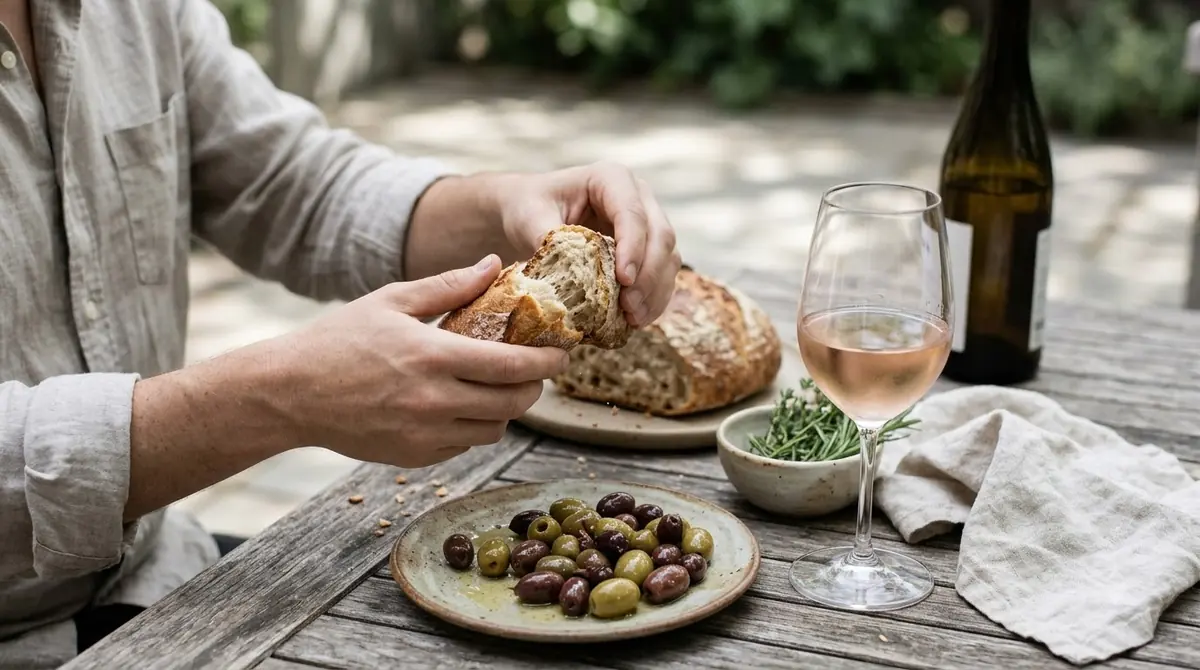
Green olives are generally harvested before full ripeness and are frequently cured in brine. Depending on the variety and curing process, they can have grassy, peppery, citrus-like, or distinctly salty characteristics. Their firmness and concentrated seasoning make them natural companions for wines with noticeable freshness.
Try Sauvignon Blanc with green olives seasoned with lemon zest, thyme, or rosemary. The wine’s citrus and herbal notes can complement the seasoning without adding excessive weight. Albariño is another good choice, particularly with Spanish-style olives served with almonds or seafood appetizers.
For very salty green olives, dry sparkling wine is especially reliable. Champagne and Cava offer enough acidity to keep the pairing lively, while the bubbles refresh the palate between bites. Fino Sherry is a more savory alternative when the olives are served as a simple aperitif.
Black olives present a different opportunity. Their flavor can be softer, more rounded, and earthier, particularly when they have been cured in oil or used in cooked Mediterranean dishes. Dry rosé can match this greater flavor intensity while retaining enough freshness to balance the richness.
Light-bodied red wine can also work with black olives. Pinot Noir, Gamay, and Beaujolais generally have less tannin than Cabernet Sauvignon or Syrah. Their fruit-forward profiles can complement earthy ingredients without making the salty flavors seem excessively harsh.
Consider a chilled Beaujolais with black olives, roasted mushrooms, sun-dried tomatoes, and crusty bread. The wine’s bright fruit and restrained tannins provide a better balance than a heavily extracted red. Pinot Noir can be another option when the plate includes roasted vegetables or savory mushroom preparations.
However, olive color should never be the only consideration. Some black olives are intensely salty, while certain green olives are mild and buttery. The curing method, added seasoning, and other ingredients on the plate are more useful indicators of which wine to choose.
Wine Pairings for Stuffed and Marinated Olives
Stuffed and marinated olives require more specific pairing decisions because their fillings and seasonings can become more influential than the olive itself. Garlic, cheese, anchovies, peppers, vinegar, and herbs each create different demands on the wine.
Garlic-stuffed olives generally work with dry sparkling wine, Sauvignon Blanc, or Albariño. Garlic has an assertive savory flavor that can overpower delicate wines, so choose a white with enough acidity and flavor intensity to remain noticeable. Avoid heavily oaked Chardonnay when the garlic is particularly strong.
Blue-cheese-stuffed olives need a wine with sufficient freshness to balance the salty, creamy filling. Dry sparkling wine is a useful option because its acidity and bubbles contrast with the richness of the cheese. A crisp white can also work, provided it has enough flavor to stand alongside the filling.
Blue cheese introduces a stronger savory character than plain olives. If the platter includes additional cheese, consider the cheese’s saltiness and intensity rather than treating every olive as an independent ingredient. Our guide to what wine goes with blue cheese explains why sweetness, acidity, and body can become particularly important with stronger cheeses.
Pimento-stuffed olives are usually easier to pair. Their pepper filling adds a mild sweetness and vegetable character, which can work well with dry rosé, Cava, or a crisp white. Sauvignon Blanc is especially appealing when the olives are served with fresh herbs or lemon.
Anchovy-stuffed olives bring more salt and savory intensity. Manzanilla Sherry and dry sparkling wine are strong options, while Albariño can be particularly suitable when seafood and olives appear together on the same platter.
Herb-marinated olives often contain rosemary, thyme, oregano, parsley, or citrus peel. These ingredients pair naturally with aromatic white wines such as Sauvignon Blanc and Vermentino. Dry rosé also provides enough fruit to complement the herbs without competing with the olive’s savory character.
Vinegar-marinated olives require additional attention to acidity. A strongly acidic marinade can make a low-acid wine taste flat. Select a wine with comparable or greater acidity, such as Sauvignon Blanc, Albariño, or Brut sparkling wine.
Oil-cured olives have a concentrated, rich character that can benefit from a refreshing wine. Dry rosé, sparkling wine, and crisp whites are useful options because their acidity contrasts with the oily texture.
When the filling becomes the dominant flavor, use it as the primary pairing clue. A mild olive stuffed with a powerful cheese is effectively a cheese pairing, while a strongly brined olive stuffed with anchovy is closer to a seafood appetizer.
Choosing Wine for Spicy and Mediterranean Olive Dishes
Chili-marinated olives and cooked Mediterranean dishes need wines that can handle stronger seasoning without increasing the impression of heat. Moderate alcohol, refreshing acidity, and restrained tannins are particularly useful when olives are combined with chili, tomato, garlic, or roasted vegetables.
Spicy olives can contain fresh chili, red pepper flakes, hot paprika, or infused chili oil. Alcohol and tannin can amplify the impression of heat, so powerful reds are generally poor choices for intensely spicy preparations. A refreshing white or dry rosé with moderate alcohol is usually a safer starting point.
If the chili seasoning is mild, a slightly off-dry Riesling can also work. Its small amount of residual sugar can soften the impression of spice while its acidity keeps the combination fresh. The wine should not be so sweet that it overwhelms the savory flavors of the olives.
For a Mediterranean olive salad with tomatoes, cucumber, red onion, feta, and olive oil, try Albariño, Sauvignon Blanc, or dry rosé. These wines have sufficient freshness to complement the vegetables and enough flavor to stand alongside the briny olives and salty cheese.
Cooked dishes call for a different approach. Olives used in tomato sauces, roasted vegetables, and baked casseroles contribute savory depth rather than functioning as the main ingredient. In these situations, the entire preparation determines the wine choice.
A tomato-based dish needs a wine with enough acidity to match the tomato. A lighter Italian red, such as Barbera, can work with a tomato-and-olive sauce, especially when the dish also includes herbs and roasted vegetables. A fresh white or dry rosé is another option when the preparation is relatively light.
For grilled eggplant with olives, herbs, and tomato, consider dry rosé or a lighter-bodied red. The smoky character of grilled vegetables can accommodate more savory wine flavors, while the olives and tomato still benefit from freshness. The same principles apply to what wine goes with eggplant parmesan, where tomato acidity, cheese, and the richness of fried eggplant all influence the pairing.
Olives served with grilled seafood require particular care. Their briny character can work with crisp whites, but the fish itself should also guide the selection. Albariño, Muscadet, and dry sparkling wine are useful choices for lighter seafood dishes.
For a richer Mediterranean main course featuring lamb, beef, or roasted vegetables, a light red may become more appropriate. However, a bowl of olives served alongside a large, tannic red wine should not be assumed to work simply because the main dish contains meat. The wine needs to match the strongest component of each bite.
Tip: If you are serving several olive preparations together, choose one versatile bottle of Brut sparkling wine or dry rosé. Serve the wine first with the plain olives, then see how it performs with the stuffed and spicy varieties before adding another bottle to the table.
Serving Temperature and Planning an Olive Wine Platter
Serving temperature can make a noticeable difference when pairing wine with olives. Sparkling wines, crisp whites, and dry rosé should be properly chilled, while lighter reds benefit from a cooler serving temperature than full-bodied reds.
Use these temperature ranges as a practical reference:
| Wine category | Serving temperature | Serving approach |
|---|---|---|
| Sparkling wine | 40–50°F | Serve chilled in sparkling wine glasses |
| Light white wine | 45–50°F | Serve cool to emphasize freshness |
| Full-bodied white wine | 50–55°F | Allow slightly more warmth for texture |
| Dry rosé | 45–50°F | Serve chilled but not excessively cold |
| Light-bodied red wine | 55–60°F | Serve slightly cool |
| Full-bodied red wine | 60–65°F | Serve below typical warm room temperature |
| Fino or Manzanilla Sherry | 40–50°F | Serve chilled in small glasses |
For an appetizer platter, begin with the wine rather than putting every ingredient on the plate at once. A simple combination of green olives, black olives, almonds, bread, and a small portion of cheese gives guests several flavors to compare. Add roasted peppers, artichokes, and marinated vegetables when you want a more substantial selection.
Keep strongly flavored ingredients separate where possible. Garlic-stuffed olives, chili-marinated olives, and anchovy-stuffed olives can dominate milder foods and make it difficult to appreciate the more delicate pairings. Separate bowls also help guests identify which combinations they enjoy.
Portion size matters for a balanced appetizer. A standard wine pour is approximately 5 ounces, and a 750 ml bottle provides about five such servings. For a small gathering, one bottle can accompany a modest platter, while a larger selection of appetizers may benefit from offering both a crisp white and a dry sparkling wine.
Fino and Manzanilla Sherry are especially useful when the occasion is centered on olives rather than a full meal. Their dry, savory character suits traditional Spanish appetizers, and their smaller serving portions make them appropriate for an aperitif. The Wine Society also recommends Mediterranean dry whites and rosés, including flavorful Spanish and Portuguese options, as alternatives.
For a mixed platter, consider the order in which guests will eat. Start with plain olives and mild almonds, move to herb-marinated varieties, and finish with stuffed or spicy olives. This gives the wine an opportunity to show its freshness before stronger flavors become dominant.
Storage also matters when preparing the platter in advance. Keep opened sparkling wine properly sealed and refrigerated, and refrigerate opened still wines. As a general guideline, opened sparkling wine is best consumed within 1–3 days, while most opened still wines are best within 3–5 days. Serve the wine fresh and avoid leaving chilled bottles sitting beside the platter for extended periods.
Common Olive and Wine Pairing Mistakes
The most common mistakes are choosing wine based on olive color alone, serving a heavily tannic red with strongly brined olives, and overlooking the effects of vinegar, chili, and garlic. A few simple adjustments can make the pairing more successful.
Choosing Cabernet Sauvignon for every savory appetizer is a frequent mistake. Cabernet Sauvignon typically has high tannin, and salty or bitter olives can make its drying sensation more pronounced. It is generally better suited to fatty meats and substantial dishes where protein and fat can soften tannin.
Assuming every red wine is unsuitable is another mistake. Pinot Noir, Gamay, and Beaujolais have relatively restrained tannins and can work with earthy black olives, mushrooms, and cooked tomato dishes. The important distinction is the wine’s structure rather than simply its color.
Serving heavily oaked Chardonnay with very salty olives can also produce an awkward combination. Oak flavors and the wine’s lower apparent freshness may compete with brine and bitterness. An unoaked Chardonnay or a more acidic white is usually a better starting point.
Ignoring the marinade can lead to an equally disappointing result. Vinegar increases the need for wine acidity, while chili increases the impression of alcohol and tannin. Garlic and anchovy add strong savory flavors that can overwhelm delicate wines.
Serving every wine too cold or too warm can hide important characteristics. Excessively cold whites can seem muted, while warm sparkling wine loses some of its refreshing appeal. Light reds should also be served cooler than full-bodied reds to preserve their freshness beside salty appetizers.
Pairing only with the olives instead of the whole dish is perhaps the biggest mistake. If olives are served with steak, cheese, seafood, or roasted vegetables, the other ingredients can become more important than the olives themselves. A powerful main course may justify a more substantial wine even when the appetizer contains briny ingredients.
For example, a platter featuring olives and grilled beef can accommodate a different wine from a platter featuring olives, oysters, and delicate white fish. The broader food combination should determine the final choice. If beef is the centerpiece, consider the principles behind what wine goes with beef brisket rather than choosing a wine exclusively for the olives.
Frequently Asked Questions
What is the single best wine to serve with olives?
Brut sparkling wine is one of the most versatile choices because it can accompany green olives, black olives, and many mixed appetizers. Champagne and Cava are particularly useful options for a platter that includes cheese, almonds, and cured meats. For a traditional Spanish aperitif, chilled Manzanilla is another excellent choice.
Is Pinot Grigio a good wine to drink with olives?
Yes. Pinot Grigio can be a good choice with mild green olives, pimento-stuffed olives, and simple herb marinades. Choose a fresh, dry style rather than a particularly rich or heavily oaked white. Its relatively light body makes it especially suitable for an appetizer before dinner.
Can you pair olives with red wine vinegar marinades?
Yes, but the vinegar can make the wine seem less fresh if its acidity is insufficient. A Sauvignon Blanc, Albariño, or Brut sparkling wine is generally a more dependable choice than a soft, low-acid red. Red wine vinegar marinades are also best served in moderation so that they do not overwhelm the other ingredients.
Does olive oil change which wine you should choose?
Yes. Oil-cured olives and olives served generously dressed in extra-virgin olive oil have a richer mouthfeel than dry-brined varieties. High-acid wines such as Albariño, Sauvignon Blanc, and sparkling wine can provide a refreshing contrast. Vermentino is another Mediterranean white worth considering with olive oil and fresh herbs.
Are olives traditionally served with wine in Spain?
Yes. Olives are a familiar Spanish aperitif food, often served with almonds, cured ham, and other small snacks. Andalusia is particularly associated with Fino and Manzanilla Sherry, which are classic choices for these salty appetizers. This regional connection makes dry Sherry a particularly appropriate option for a Spanish-inspired olive platter.
The best wine for olives is usually a bottle with refreshing acidity, moderate alcohol, and restrained tannins. Start with Brut sparkling wine, Albariño, Sauvignon Blanc, dry rosé, or Fino Sherry, then adjust the choice according to the olive’s curing method and seasoning. With the right balance of freshness and flavor, even a simple bowl of olives can become a memorable wine-pairing experience.
More in Food & Wine Pairing
 Risotto With White Wine Recipe: Make a Creamy Dinner at HomeUpdated Nov 20, 2026
 Wassail With Wine Recipe for a Festive Spiced Holiday DrinkUpdated Nov 20, 2026
 Spritz Veneziano Recipe: Make a Classic Venetian Aperitivo at HomeUpdated Nov 20, 2026
 Summer Wine Punch Recipe for Easy Homemade EntertainingUpdated Nov 20, 2026
 Bishop Recipe: How to Make a Bright, Citrus-Forward Red Wine CocktailUpdated Nov 20, 2026
 Wine Cupcakes Recipe: Bake Rich Chocolate Cupcakes at HomeUpdated Nov 20, 2026