

We may earn a commission when you buy through links on this page, at no extra cost to you. Learn more.
What wine goes with hot pot? Off-dry Riesling is the best all-around choice for spicy hot pot, while dry Sauvignon Blanc, Pinot Grigio, sparkling wine, and light reds suit milder broths and different ingredients. The right bottle depends on the broth’s heat, the meat or seafood in the pot, and the dipping sauces served alongside it. For Sichuan hot pot, prioritize refreshing acidity, moderate alcohol, and a little sweetness; for Japanese shabu-shabu, choose a crisp white or delicate red.
Hot pot is a particularly interesting wine-pairing challenge because the meal changes as it cooks. A single pot might contain thinly sliced beef, lamb, shrimp, mushrooms, tofu, leafy greens, and noodles, all absorbing the flavors of the broth at different rates. Diners also control their own combinations of ingredients and dipping sauces. Instead of choosing wine based on one ingredient, start with the broth, then consider the strongest flavors and richest ingredients on the table. This approach makes it easier to find a bottle that works throughout the meal rather than only with the first few bites.
Best Wine Styles for Different Types of Hot Pot
The most versatile starting point is an off-dry Riesling, particularly when the broth contains chili or peppercorns. For delicate hot pot, a crisp dry white or light red usually makes a better match because it preserves the subtle flavors of the broth and ingredients.

Riesling is especially useful because it combines high acidity with refreshing fruit and can be made in styles ranging from completely dry to noticeably sweet. An off-dry German Riesling is a dependable choice for Sichuan, mala, and kimchi hot pot. Its modest sweetness helps soften the perception of chili heat, while its acidity keeps the combination lively. Look for a bottle with balanced sweetness rather than an intensely sweet dessert style.
For mild broths, Sauvignon Blanc and Pinot Grigio offer different but equally useful characteristics. Sauvignon Blanc has high acidity and often displays citrus, green apple, and herbal notes. These qualities work particularly well with clear broth, seafood, leafy greens, and dipping sauces containing lime or ponzu. Pinot Grigio is generally lighter and more restrained, making it suitable for delicate tofu, mushrooms, chicken, and vegetables.
Other options include Gewürztraminer, sparkling wine, and light-bodied reds. Gewürztraminer offers fragrant floral and tropical fruit aromas that complement ginger, garlic, and aromatic spices. Sparkling wine brings refreshing bubbles, while light reds such as Gamay or Pinot Noir can accompany meat-focused broths that are not excessively spicy.
The following table provides a practical starting point for choosing a bottle. The recommended serving temperatures follow standard wine-service ranges, with the cooler end particularly useful for meals involving chili.
| Hot Pot Style | Recommended Wine | Serving Temperature | Why It Works |
|---|---|---|---|
| Sichuan mala | Off-dry Riesling | 45–50°F | Sweetness, acidity, and refreshing fruit |
| Kimchi hot pot | Brut sparkling wine | 40–50°F | Bubbles and acidity refresh the palate |
| Shabu-shabu | Pinot Grigio | 45–50°F | Light body complements delicate broth |
| Clear mushroom broth | Unoaked Chardonnay | 50–55°F | Freshness and gentle texture complement mushrooms |
| Sukiyaki | Merlot | 60–65°F | Soft tannins and ripe fruit complement beef |
| Spicy seafood hot pot | Off-dry Riesling | 45–50°F | Acidity and a little sweetness balance spice |
| Beef and mushroom hot pot | Pinot Noir | 55–60°F | Moderate tannin and bright acidity suit savory ingredients |
These are starting recommendations rather than rigid rules. A clear broth containing delicate shrimp may need a different wine from one loaded with beef and sesame sauce, even if both are technically mild. Similarly, a moderately spicy broth allows more flexibility than one dominated by Sichuan peppercorns and chili oil.
Wine Pairings for Sichuan and Spicy Mala Hot Pot
Off-dry Riesling is the strongest general recommendation for Sichuan hot pot because its sweetness and high acidity provide balance against chili heat and the rich flavors of mala broth. Gewürztraminer and lightly sweet sparkling wines are useful alternatives when the broth is particularly aromatic or fiery.
Sichuan mala hot pot combines dried chilies, Sichuan peppercorns, chili oil, garlic, and other aromatic ingredients. The resulting broth delivers two distinct sensations: the burning heat associated with chili and the tingling, numbing sensation associated with Sichuan peppercorns. Fat from chili oil also gives the broth a substantial texture. These characteristics make a conventional full-bodied red wine a difficult choice.
Riesling addresses several of these challenges at once. Its naturally high acidity refreshes the palate after fatty broth and meat, while residual sugar can make chili heat seem less aggressive. Choose an off-dry style with noticeable fruit and relatively moderate alcohol. A completely dry Riesling can still work, especially when the broth is only mildly spicy, but a touch of sweetness provides additional flexibility when the heat increases.
Gewürztraminer is another strong option, particularly when the broth contains star anise, ginger, garlic, and other fragrant spices. Its aromatic profile can stand up to complex seasoning without requiring the structure of a powerful red wine. Choose a style with a little residual sweetness if the broth contains substantial chili.
For diners who prefer bubbles, Prosecco and demi-sec sparkling wine are useful alternatives. The carbonation creates a refreshing contrast to the oily texture of the broth. A demi-sec style brings some sweetness, while Brut Prosecco offers a drier profile that works better with moderate spice and savory ingredients.
One important distinction is the difference between aromatic spice and actual chili heat. Black pepper, star anise, cinnamon, and ginger can make the broth fragrant without necessarily making it extremely hot. In that situation, a dry aromatic white may work perfectly well. However, when chili dominates, sweetness and moderate alcohol should become more important considerations.
Tip: If the mala broth is extremely spicy, start with a chilled off-dry Riesling rather than a powerful red. Choose a bottle with moderate alcohol and pour small servings so the wine stays cool throughout the meal.
High-alcohol Cabernet Sauvignon, Syrah, and heavily oaked reds are generally less reliable with intensely spicy broth. Their alcohol can amplify the burning sensation, while firm tannins can make the combination feel dry and harsh. Even a beautifully structured red can lose its fruit when the broth becomes overwhelmingly hot.
The WSET explanation of pairing drinks with spice provides useful background on why sweetness, alcohol, acidity, and tannin change the experience of spicy food. Its recommendations support choosing off-dry aromatic whites when chili heat is the dominant characteristic.
Best Wines for Japanese Shabu-Shabu and Sukiyaki
Japanese hot pot usually calls for lighter and more delicate wines than intensely spicy Chinese hot pot. Dry Pinot Grigio, Sauvignon Blanc, and unoaked Chardonnay work well with shabu-shabu, while fruit-forward Merlot or other softer reds can accompany the richer beef and sweeter broth of sukiyaki.
Shabu-shabu
Shabu-shabu typically features thin slices of beef or pork briefly cooked in a light broth. Dashi provides a savory foundation without overwhelming the natural flavor of the meat. The meal is often served with ponzu or sesame dipping sauce, creating two distinct pairing opportunities.
For ponzu, choose Sauvignon Blanc or dry Riesling. Both offer enough acidity to match the citrus-based sauce and complement the delicate flavor of the cooked meat. Pinot Grigio is another option when the dipping sauce is relatively mild and the meal includes tofu, cabbage, mushrooms, and other vegetables.
Sesame sauce creates a richer combination because its nutty, creamy texture coats the meat. A lightly oaked Chardonnay can work well here, particularly with pork or fatty beef. Alternatively, a fruity Pinot Noir offers a gentle red-wine option without the heavy tannins found in Cabernet Sauvignon.
Sukiyaki
Sukiyaki is a different pairing challenge because the broth usually combines soy sauce, sugar, mirin, and other sweet-savory ingredients. The beef becomes rich and flavorful as it cooks, and the sweetness of the sauce changes the balance of the meal.
Merlot is a practical red-wine choice because it generally has softer tannins than Cabernet Sauvignon. Its ripe plum and cherry flavors complement beef without introducing excessive dryness. Pinot Noir also works, particularly when the sukiyaki contains mushrooms, scallions, and other savory ingredients.
A fruit-forward Primitivo can suit especially rich sukiyaki made with fatty beef or pork belly. However, choose a moderate, balanced style rather than an extremely alcoholic bottle. The additional richness of the broth can support a fuller wine, but the sweetness of the sauce still needs to be considered.
Japanese hot pot does not have to be paired with one wine for every preparation. A dry white is usually the safer choice for delicate dashi, while a softer red makes more sense for sweet-savory beef dishes. For further examples involving beef, see our guide to what wine goes with beef brisket.
For additional examples of Japanese preparations, this Japanese hot pot wine-pairing guide discusses shabu-shabu, sukiyaki, kimchi nabe, and tofu-based preparations, with recommendations ranging from dry whites to fruit-forward reds and sparkling wine.
Choosing Wine for Beef, Lamb, Seafood, and Vegetables
The ingredients in the pot influence how the wine tastes, especially when the broth is mild enough for individual flavors to remain noticeable. Beef and lamb can support light or medium-bodied reds, while seafood, tofu, and vegetables generally benefit from crisp white wines with refreshing acidity.
Beef and lamb
Thinly sliced beef is a natural partner for Pinot Noir, Merlot, and some lighter styles of Sangiovese. Pinot Noir offers bright acidity and relatively low-to-medium tannin, allowing it to complement the meat without overpowering the broth. Merlot brings softer tannins and a rounder fruit profile, which can be particularly effective with richer beef preparations.
Lamb has a stronger flavor and can accommodate more aromatic wines. A moderate Syrah may work with a mildly spicy lamb hot pot, especially when the broth includes black pepper, garlic, and warming spices. However, Syrah generally has medium-plus to high tannin, so a lighter style is preferable when chili heat is pronounced.
Seafood and fish
Shrimp, scallops, squid, and white fish usually work better with crisp white wines. Sauvignon Blanc, Albariño, and dry Riesling provide refreshing acidity that complements seafood without introducing heavy tannins. Their citrus and mineral characteristics can also work with ginger, garlic, and fresh herbs in the broth.
Be particularly careful with full-bodied tannic reds when serving fish. Oily fish and tannic red wine are generally an uncomfortable combination, and the savory elements of seafood broth can make the wine taste even less balanced. A crisp white or sparkling wine is a more reliable choice.
Mushrooms and tofu
Mushrooms contribute earthy, savory flavors that work well with wines offering freshness and restrained oak. Pinot Noir can be an excellent match for mushroom-heavy hot pot because its moderate structure complements earthy ingredients without dominating them. Unoaked Chardonnay also works, particularly when the broth contains mushrooms, tofu, and leafy greens.
Tofu is relatively delicate and absorbs the flavors of the surrounding broth. A light Pinot Grigio or dry Riesling allows its texture and subtle flavor to remain noticeable. When the tofu is served with spicy chili oil or a strong fermented sauce, move toward an off-dry aromatic white instead.
Vegetables such as napa cabbage, spinach, bok choy, and daikon also benefit from wines with moderate body and refreshing acidity. Sauvignon Blanc is a useful choice when fresh herbs and citrus are prominent. If the meal includes a mixture of vegetables, mushrooms, seafood, and meat, a versatile Riesling or dry sparkling wine is usually easier to pair across the entire table.
Matching Wine with Hot Pot Broth and Dipping Sauces
The broth establishes the overall flavor of hot pot, but dipping sauces can change the pairing considerably. Ponzu, sesame, chili oil, soy sauce, and fermented bean pastes introduce different levels of acidity, fat, sweetness, salt, and umami that should influence the wine selection.
Start by identifying the dominant flavor rather than trying to account for every ingredient separately. A citrus-based broth or sauce needs a wine with enough acidity to remain lively. Rich sesame sauce benefits from fruit and refreshing acidity, while salty soy-based sauces often work with wines that have generous fruit and moderate tannins.
Ponzu and citrus sauces
Ponzu combines soy sauce with citrus juice, creating a salty, acidic, and savory dipping sauce. Sauvignon Blanc and dry Riesling are particularly useful because their high acidity can match the citrus without making the wine seem flat. Albariño is another strong choice, especially when seafood is the main ingredient.
A light Pinot Noir can work if the meal centers on beef or pork rather than seafood. Its acidity and relatively restrained tannins allow it to accompany the meat while remaining compatible with the citrus sauce. Avoid powerful reds with pronounced oak, which can make the combination feel unnecessarily heavy.
Sesame and peanut sauces
Sesame-based dipping sauces are rich, nutty, and often slightly sweet. They create a different experience from ponzu because their fat and texture soften the perception of some wine characteristics. A lightly oaked Chardonnay offers enough body to complement the creamy texture, while a fruit-forward Pinot Noir can work with beef and pork.
Peanut sauces introduce additional richness and sometimes a touch of sweetness. An off-dry Riesling or fruity rosé can provide an appealing contrast. The goal is to select a wine with enough fruit and freshness to avoid being overwhelmed by the sauce.
Chili oil, garlic, and fermented sauces
Chili oil and fermented bean pastes are common additions to Chinese-style hot pot. These ingredients contribute heat, salt, savory depth, and sometimes considerable oiliness. A chilled Riesling is a dependable choice, while sparkling wine can help refresh the palate after rich, salty bites.
Garlic-heavy sauces are easier to accommodate with aromatic whites such as Gewürztraminer or Sauvignon Blanc. If the sauce is more savory than spicy, a light red can also work. The important distinction is whether chili heat or umami is the dominant characteristic.
Umami deserves particular attention because it can make tannic wines seem more bitter and less fruity. This is one reason why lighter, fruit-driven wines are generally more successful with hot pot than heavily structured reds. The same principles apply to other savory dishes, including what wine goes with hot dogs, where salt, fat, and toppings can change the ideal pairing.
Serving Temperature, Pouring, and Practical Pairing Tips
Serving temperature can make a noticeable difference during a hot pot meal. White and sparkling wines should be served properly chilled, while light reds benefit from a cooler temperature than many people expect. Keeping the wine at the right temperature also helps preserve its freshness as the meal progresses.
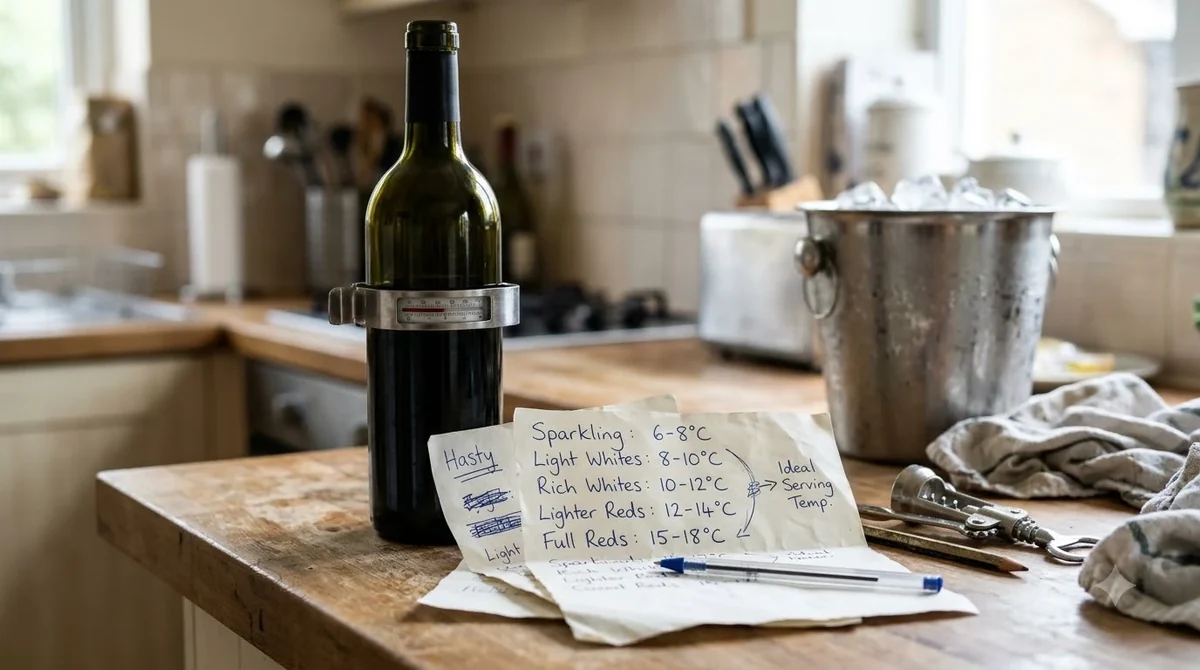
For hot pot, serve sparkling wines at 40–50°F, light whites at 45–50°F, and fuller whites at 50–55°F. Light reds such as Pinot Noir are best served around 55–60°F, while fuller reds such as Merlot or Primitivo generally suit 60–65°F. These temperatures provide a practical framework for keeping the wine balanced alongside steaming broth.
Do not place a red wine directly beside the hot cooking vessel for an extended period. Heat can make alcohol seem more prominent and reduce the refreshing qualities that help the pairing work. Keep the bottle in a cooler location and pour smaller amounts throughout the meal. An ice bucket can help maintain the temperature of white and sparkling wines.
Portion size also matters. A standard wine pour is approximately 5 ounces, and a 750 ml bottle contains about five such servings. For a communal meal with several different ingredients, smaller pours make it easier to compare wine styles and keep each glass fresh.
When serving several people, consider choosing one versatile white and one complementary red instead of opening many bottles. An off-dry Riesling can cover spicy broth, seafood, vegetables, and some meat combinations, while a Pinot Noir provides an alternative for diners who prefer red wine. If the menu is particularly rich or spicy, a bottle of sparkling wine is another useful addition.
Think about the entire meal rather than only the broth. If the first course is delicate seafood but the later courses feature fatty beef and sesame sauce, the wine should be flexible enough to accompany both. This is where high acidity, moderate alcohol, and restrained tannins become especially useful. For more pairing fundamentals, explore our Wine Pairing resource.
Finally, avoid assuming that red wine is automatically better with meat or white wine is always better with vegetables. The broth, sauce, and cooking method can be more influential than the main ingredient. A moderately spicy beef hot pot may work with an off-dry Riesling, while a mild mushroom broth can be excellent with Pinot Noir.
Frequently Asked Questions
Can you drink Champagne with Chinese hot pot?
Yes. Champagne made using the traditional bottle-fermentation method can be an excellent match for savory hot pot, particularly when the meal includes shrimp, scallops, mushrooms, or pork. Its acidity and bubbles provide freshness, while Brut styles offer a dry finish that works well with salty ingredients.
Is orange wine a good choice for hot pot?
Orange wine can work with mild mushroom, tofu, and vegetable hot pot because its skin contact often contributes texture and savory flavors. However, some examples have noticeable tannin, which can become harsh alongside strong chili heat. Choose a lighter, fresher style if the broth contains substantial spice.
Does wine pair well with hot pot leftovers?
Yes, provided the leftover ingredients are served in a preparation that retains their original flavor balance. Reheated beef and mushroom ingredients can work with Pinot Noir, while seafood and vegetables are generally better with crisp white wine. A broth that has reduced during cooking may become saltier and more concentrated, so a wine with good acidity and fruit is often the safer choice.
Can nonalcoholic wine work with hot pot?
Nonalcoholic sparkling wine and dealcoholized Riesling can provide refreshing alternatives for hot pot. Their acidity and bubbles can complement salty broths, while a slightly sweet style can accompany moderate chili heat. Serving these alternatives well chilled helps preserve their refreshing character.
What wine should you serve with hot pot for a large group?
For a group with different preferences, a versatile off-dry Riesling is a useful starting point, particularly if the table includes both mild and spicy broths. A Brut sparkling wine offers another flexible option for seafood, vegetables, and savory dipping sauces. If the group prefers red wine, a light-bodied Pinot Noir is a more adaptable choice than a heavily tannic Cabernet Sauvignon.
The best wine for hot pot depends on the broth, ingredients, and dipping sauces, but off-dry Riesling is the most reliable choice for a spicy communal meal. For delicate shabu-shabu, choose a crisp white or light red, and consider sparkling wine when the table includes rich or salty flavors. With the right combination of acidity, fruit, moderate alcohol, and serving temperature, wine can complement everything from Sichuan mala to Japanese sukiyaki.
More in Food & Wine Pairing
 Risotto With White Wine Recipe: Make a Creamy Dinner at HomeUpdated Nov 20, 2026
 Wassail With Wine Recipe for a Festive Spiced Holiday DrinkUpdated Nov 20, 2026
 Spritz Veneziano Recipe: Make a Classic Venetian Aperitivo at HomeUpdated Nov 20, 2026
 Summer Wine Punch Recipe for Easy Homemade EntertainingUpdated Nov 20, 2026
 Bishop Recipe: How to Make a Bright, Citrus-Forward Red Wine CocktailUpdated Nov 20, 2026
 Wine Cupcakes Recipe: Bake Rich Chocolate Cupcakes at HomeUpdated Nov 20, 2026