

We may earn a commission when you buy through links on this page, at no extra cost to you. Learn more.
Muscat food pairing works best when you match the wine’s sweetness, acidity, and body to the dish: dry Muscat suits seafood and herbs, while sweeter Moscato complements spicy, salty, and fruit-based foods. Muscat is a family of grapes rather than one specific wine style, so bottles can range from crisp and dry to gently sparkling, sweet, or fortified. The right match depends on the wine in the glass, not simply the name on the label. Once you identify its style, Muscat becomes a versatile choice for appetizers, main courses, cheese, and dessert.
Muscat is known for its expressive floral aromas and fresh-fruit character. Orange blossom, honeysuckle, peach, pear, citrus, and ripe grape are common notes, although the exact profile changes with the variety, growing region, and winemaking method. Those aromas make Muscat appealing with dishes that feature fragrant herbs, fruit, ginger, and gentle spice. Its different sweetness levels also make it useful throughout a meal rather than just at the end.
Start With the Wine’s Style
Muscat can be dry, off-dry, sweet, sparkling, or fortified, and each style calls for a different approach at the table. A lightly sparkling Moscato d’Asti from Piedmont behaves differently from a dry Muscat from Alsace or a concentrated dessert wine made from Muscat of Alexandria.
The distinction between the grape names helps explain the range. As Decanter’s explanation of Muscat, Moscatel, and Moscato describes, Muscat is the broad family name, Moscato is associated with Muscat Blanc à Petits Grains in Italy, and Moscatel is commonly used for Muscat of Alexandria in Spain and Portugal. These grapes can make very different wines. Muscat Blanc à Petits Grains often has a pronounced floral character, while Muscat of Alexandria can produce concentrated, richly fruity wines. Both varieties can be made in more than one sweetness level.
For a first pairing decision, look at the wine’s sweetness and texture. A dry Muscat with fresh acidity can handle seafood, salads, and savory appetizers. A lightly sparkling, sweet Moscato can complement chili-seasoned dishes, salty snacks, and fresh fruit. A richer dessert Muscat is better suited to strong cheese, fruit-based sweets, and desserts with caramel or spice. Matching the wine’s intensity to the dish is just as important as matching sweetness.
| Muscat style | Typical profile | Serving temperature | Good food matches |
|---|---|---|---|
| Lightly sparkling Moscato d’Asti | Sweet, gently fizzy; typically around 5–6% ABV | 40–50°F | Spicy dishes, fruit, soft cheese |
| Dry still Muscat | Floral, citrusy, and fresh | 45–50°F | Seafood, asparagus, herb salads |
| Sweet still Muscat | Ripe fruit, floral aromas, noticeable sweetness | 43–50°F | Fruit tarts, soft cheese, salty snacks |
| Fortified Muscat | Concentrated fruit, sweetness, and fuller texture | 43–50°F | Blue cheese, chocolate, rich desserts |
Wine Enthusiast gives Moscato d’Asti a typical alcohol range of about 5–6% ABV, making it a lighter option than many still or fortified wines. Its gentle bubbles and sweetness suit informal meals and dishes with a touch of heat. Dry Muscat, by contrast, is a more natural choice when the food needs freshness rather than sweetness. The serving temperatures in the table provide useful starting points; a particularly delicate sparkling wine can be served toward the cooler end of its range.
Tip: Choose the bottle by sweetness before choosing the recipe. Dry Muscat belongs with savory food that benefits from freshness, while sweet Moscato is usually the more adaptable choice for chili heat, salty snacks, and desserts.
Pair Muscat With Spicy Foods and Asian Flavors
Sweet, lightly sparkling Muscat is a natural match for many spicy dishes, especially when the recipe combines chili with ginger, garlic, fruit, or a sweet-savory sauce. Moscato d’Asti and other lower-alcohol sweet Muscats can soften the impression of heat while their floral and fruity aromas complement fragrant seasonings.

Try a lightly sweet Moscato with Thai red curry, kung pao chicken, or Singapore chili crab. Thai curry often combines chili with coconut milk, lemongrass, herbs, and a little sweetness, giving the wine several flavors to echo. Kung pao chicken brings dried chili, savory sauce, and sometimes a sweet edge from sugar or hoisin. Moscato’s fruit character can meet those sweet notes, while its acidity helps keep the combination lively. Singapore chili crab, with its savory, spicy, and slightly sweet sauce, is another good candidate for a softly sparkling style.
For dishes with substantial heat, alcohol level matters. Alcohol can make chili feel more intense, and tannin can add to that drying, hot sensation. Muscat is generally a low-tannin wine, and Moscato d’Asti typically sits around 5–6% ABV, making it a sensible choice with hotter food than a high-alcohol red wine. Sweetness can create a soothing contrast, but it does not remove the chili. For especially fiery dishes, reduce the heat in the recipe or choose a milder preparation rather than expecting the wine to solve the problem.
Dry Muscat has a place with spicy food too, particularly when the recipe is aromatic rather than intensely hot. A dry bottle can work with ginger-scented stir-fried vegetables, herb-heavy Vietnamese dishes, or grilled chicken seasoned with coriander, lime, and garlic. Its freshness can balance richness and refresh the palate between bites. The key is to keep the chili moderate and avoid sauces so sweet that the dry wine tastes sharp by comparison. For more ideas on matching aromatic whites to fragrant dishes, the principles in our Wine Pairing guide apply here as well.
Serve Dry Muscat With Seafood, Salads, and Vegetables
Dry Muscat is especially useful with seafood, fresh vegetables, and dishes built around citrus, herbs, and light sauces. Its aromatic character gives delicate ingredients more presence, while its freshness can balance creamy textures and gently acidic dressings.
Start with shellfish such as crab, shrimp, mussels, or scallops. A dry Muscat with citrus and floral notes can complement the sweetness of shellfish without masking it. Crab with fresh ginger is a particularly appealing combination because the wine’s aromatic profile can echo the ginger’s fragrance. For smoked salmon, choose a dry expression with enough freshness to balance the fish’s salt and richness. The goal is a wine that refreshes the palate rather than adding another heavy flavor.
Asparagus is another useful match, especially when it is served with a creamy sauce. The classic challenge with asparagus is that its green, sometimes bitter character can make certain wines seem harsh. An aromatic dry Muscat is a good option because its fresh fruit and floral notes can work with the vegetable’s grassy qualities. Try steamed or roasted asparagus with hollandaise, mousseline, lemon, or a simple butter sauce. Spring salads with peas, herbs, cucumber, and mild goat cheese can also work well, provided the dressing is not more acidic than the wine.
Roasted vegetables broaden the possibilities. Carrots, fennel, zucchini, bell peppers, and cauliflower develop sweeter, deeper flavors as they cook, which can meet the fruit character of Muscat. Season them with thyme, parsley, mint, coriander, or mild spices rather than relying on heavy smoke or very hot chili. A fuller-bodied dry Muscat can stand up to grilled vegetables and a little char, while a lighter, brisker version is better with raw vegetables and delicate greens. For dishes where citrus and acidity are central, compare the approach with our albarino food pairing suggestions; the same attention to freshness helps identify a suitable white wine.
Match Muscat With Pork, Poultry, and Charcuterie
Muscat’s fruit and floral aromas can make it a useful partner for pork, poultry, and savory cured meats. The most suitable bottle depends on the seasoning: lightly sweet Muscat works with salty or spicy preparations, while dry Muscat is better for herb-roasted meat and savory sauces.
Pork is one of the easiest places to start. Roasted pork, glazed ham, bacon, and pork tenderloin all bring some combination of salt, fat, and gentle sweetness. A lightly sweet Moscato can balance the salt in ham and bacon, while its acidity helps keep richer bites from feeling too heavy. Roasted pork with apple, pear, apricot, or a mild honey glaze is particularly compatible with fruit-forward Muscat. The wine echoes the fruit in the dish without requiring a strongly sweet sauce.
For poultry, choose the preparation as carefully as the protein. Roast chicken with lemon, thyme, and garlic often works better with dry Muscat, especially when the skin is crisp and the sauce is not sweet. Chicken with ginger, orange, or a fruit glaze can take a lightly sweet version. Turkey with a fruit-based stuffing may also suit Moscato, although a dry Muscat is usually a more versatile match for plain roast turkey and savory herbs. Keep sauces moderate so that the wine’s floral aromas remain noticeable.
Charcuterie boards offer room to combine several Muscat styles with different foods. Pair dry Muscat with mild pâté, sliced roast poultry, herbed crackers, or fresh vegetables. A lightly sweet Moscato can work with salty ham, bacon bites, and mild cured meats. Quiche Lorraine and ham-and-cheese pastries are appealing matches because the wine’s fruitiness can offset their savory, buttery filling. Avoid very hot salami or heavily peppered sausage with a low-alcohol sweet wine if the spice dominates; the food can overwhelm the wine. For a richer meat course that calls for a structured red rather than an aromatic white, our amarone food pairing guide offers a useful contrast in weight and intensity.
Choose Cheese, Fruit, and Desserts Carefully
Sweet Muscat is well suited to cheese and dessert, but the best match depends on how concentrated the wine is and how sweet the food tastes. Light Moscato works with fresh fruit and gentle desserts, while richer or fortified Muscat can handle stronger cheese, caramel, and more concentrated flavors.
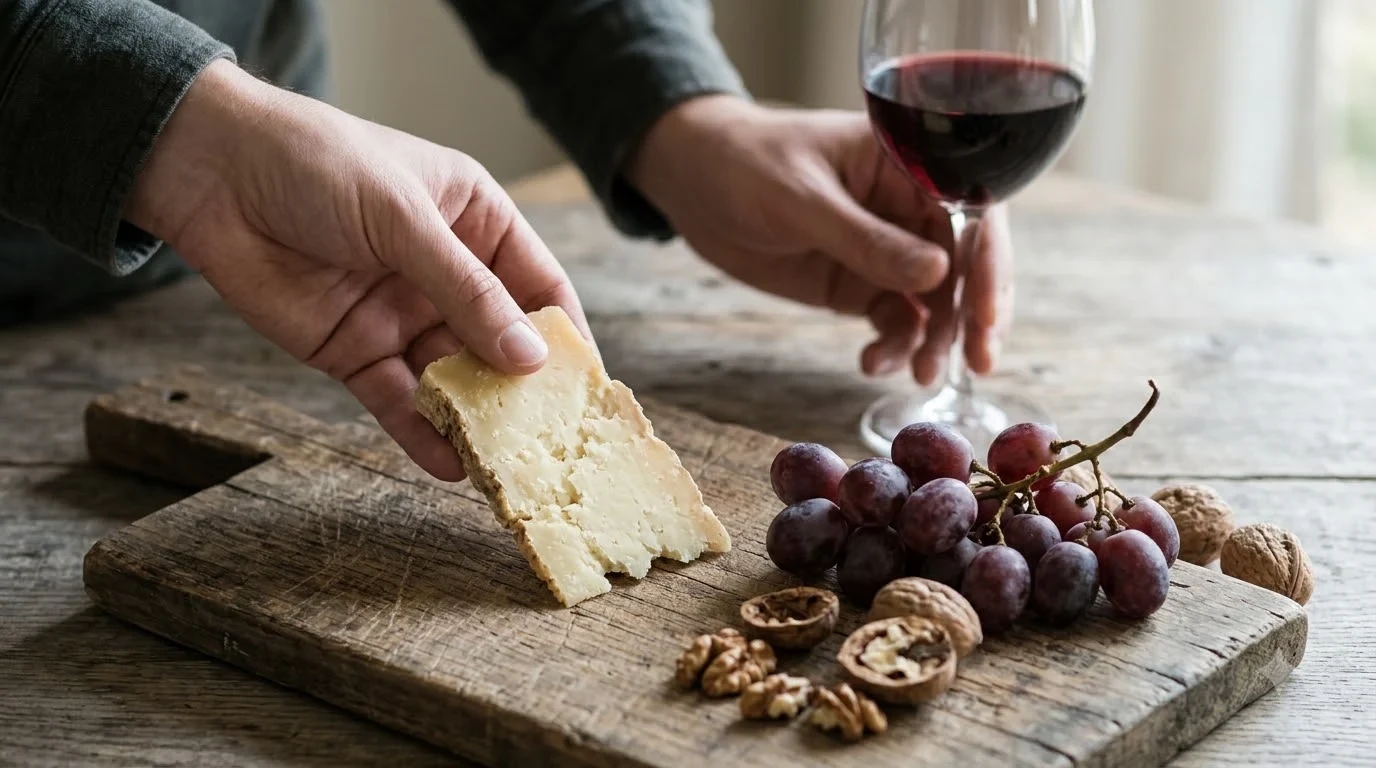
Blue cheese is one of the classic sweet-wine partners. Its saltiness and intense savory flavor can balance the sweetness and fruit of a dessert-style Muscat. Try a small pour with Roquefort, Gorgonzola, or another blue cheese, accompanied by pear slices or plain crackers. Soft cheeses such as Brie, Camembert, and mild goat cheese can work with lightly sweet Moscato, especially when served with grapes, peaches, or melon. Choose a wine with enough sweetness to complement the cheese rather than one that tastes lean and sharp beside it.
Fresh fruit is an easy match for Moscato because the wine often carries peach, pear, citrus, and floral notes of its own. A platter of ripe peaches, strawberries, grapes, melon, or sliced pears can make a simple pairing. Fruit tarts, poached pears, peach cobbler, and apple pastries are also good choices, especially with a lightly sweet or medium-sweet Muscat. The fruit in the dish echoes the wine’s aromas, while the wine’s acidity helps balance pastry and cream.
For richer desserts, match the sweetness level with care. A sweet Muscat should be at least as sweet as the dessert; otherwise, the wine can seem sour or thin after a sugary bite. A light Moscato may suit lemon tart, fruit pavlova, or a not-too-sweet cheesecake, while a concentrated Muscat can stand alongside caramelized fruit, honey cake, or a rich custard. Chocolate is more challenging with delicate, lightly sparkling Moscato because its intensity can overwhelm the wine. A fuller fortified Muscat is a better option with dark chocolate, chocolate truffles, or desserts containing dried fruit and warm spice. Keep portions modest so that neither the wine nor the dessert becomes tiring.
Serve Muscat at the Right Temperature and Build the Menu
Temperature affects how Muscat’s sweetness, acidity, and aromas come across, so avoid serving every style at the same chill. Light sparkling wines benefit from a colder pour, while dry still Muscat needs enough warmth to show its floral and citrus character.
For sparkling Muscat, use a serving range of 40–50°F. Light dry whites are generally best around 45–50°F, while sweet whites can be served around 43–50°F. These ranges allow the wine to stay refreshing without suppressing its aromas. A bottle served too warm may seem heavy or overly sweet; one served extremely cold can hide the orange blossom, peach, and honeysuckle notes that make Muscat distinctive. A medium white-wine glass is useful for still styles because it gives the aromatic wine room to open. A tulip-shaped glass also works well for gently sparkling Moscato.
Plan the food around the wine’s style if Muscat is the centerpiece of a meal. A dry bottle can lead an appetizer course of crab, asparagus, spring vegetables, or smoked salmon. Continue with roast chicken or pork seasoned with herbs and citrus. A sweet, lightly sparkling Moscato can start with salty snacks, accompany a moderately spicy main course, and return at the end with fresh fruit or a light pastry. A concentrated dessert Muscat is best saved for cheese or dessert, where its sweetness and intensity will not dominate lighter dishes.
Practical serving details help keep the wine enjoyable through the meal. A standard pour is 5 ounces, and a 750 ml bottle provides about five glasses. Keep an unopened bottle on its side in a cool, dark place near 55°F when it has a cork closure. After opening a sparkling Muscat, reseal it and keep it refrigerated; aim to finish it within 1–3 days. Still wine generally keeps for about 3–5 days in the refrigerator when properly closed, although its floral aromas are usually freshest soon after opening. Avoid leaving an opened bottle on the table for several hours, especially in a warm room.
Frequently Asked Questions
These common questions cover Muscat names and styles that can be confusing when choosing a bottle. The details below offer a little more background beyond the practical food matches.
Is Muscadelle the same grape as Muscat?
No. Despite the similar names, Muscadelle is a separate grape variety and is not part of the Muscat family. It is associated with Bordeaux, where it can appear in white wine blends. The distinction matters when reading a label or researching a wine by grape variety.
What does Zibibbo mean on a Sicilian wine label?
Zibibbo is a local name for Muscat of Alexandria in southern Italy, particularly Sicily. The island of Pantelleria is known for notable sweet wines made from this grape. A Zibibbo label can therefore signal a different expression from the classic Piedmontese Moscato d’Asti.
Are all Muscat grapes white?
No. The wider Muscat family includes red-skinned varieties, including Moscato di Scanzo and Moscato Rosa del Trentino. These varieties can produce red-hued wines with fragrant red-fruit and floral characteristics. The family name covers more diversity than the familiar white Moscato style suggests.
Why does Moscato d’Asti have a gentle fizz?
Moscato d’Asti is made by controlling fermentation before all the grape sugar has turned into alcohol. This preserves natural sweetness and results in a lightly sparkling wine rather than the stronger bubbles associated with many traditional-method sparkling wines. The gentle effervescence is part of its characteristic style.
Can fortified Muscat be aged?
Some fortified Muscat wines are made to mature, developing more layered aromas as they age. Dried apricot, preserved citrus, nuts, and warm spice can become more prominent in mature examples. Aging potential varies by wine, so follow the producer’s guidance for a specific bottle rather than assuming every sweet Muscat is intended for long storage.
Muscat offers more pairing possibilities than its sweet, lightly sparkling reputation might suggest. Choose dry Muscat for seafood, vegetables, and herb-led dishes, and save sweeter styles for chili-seasoned food, salty cheese, fruit, and dessert. For a specific bottle, start by identifying its sweetness and alcohol level, then match those qualities to the main ingredient and sauce.
More in Food & Wine Pairing
 Risotto With White Wine Recipe: Make a Creamy Dinner at HomeUpdated Nov 20, 2026
 Wassail With Wine Recipe for a Festive Spiced Holiday DrinkUpdated Nov 20, 2026
 Spritz Veneziano Recipe: Make a Classic Venetian Aperitivo at HomeUpdated Nov 20, 2026
 Summer Wine Punch Recipe for Easy Homemade EntertainingUpdated Nov 20, 2026
 Bishop Recipe: How to Make a Bright, Citrus-Forward Red Wine CocktailUpdated Nov 20, 2026
 Wine Cupcakes Recipe: Bake Rich Chocolate Cupcakes at HomeUpdated Nov 20, 2026