

We may earn a commission when you buy through links on this page, at no extra cost to you. Learn more.
Sherry sugar content spans from less than 1 gram per liter in bone-dry Fino and Manzanilla to more than 400 grams per liter in syrupy Pedro Ximénez. While many shoppers assume every bottle from Jerez is a sweet dessert wine, the official Denominación de Origen rules classify five major styles as completely dry at 5 grams per liter or less. Understanding the three regulatory categories—dry vinos generosos, blended generosos de licor, and naturally sweet vinos dulces naturales—makes it easy to pick the exact sweetness level you want.
Because the word sherry covers such a wide spectrum of fortified wines from southern Spain, checking the style name on the front label is far more reliable than guessing from bottle shape or color. If you have ever compared port sugar content against other fortified wines, sherry offers an even broader spread—from crisp, salty aperitifs with virtually zero residual sugar to dark, raisin-like dessert pours.
Sherry Sugar Content Breakdown by Style
The Consejo Regulador de las Denominaciones de Origen Jerez-Xérès-Sherry divides all authentic sherry into three broad sweetness tiers measured in grams of residual sugar per liter (g/L). Dry styles max out at 5 g/L, blended sweet styles run from more than 5 g/L up to 140 g/L, and naturally sweet varietal wines start at 160 g/L and climb past 400 g/L.
To put those figures into everyday perspective, a standard 3-ounce (about 90 ml) pouring of dry Fino or Oloroso carries less than half a gram of sugar—making it drier than most table wines, including the bottles covered in our guide to merlot sugar content. By contrast, a 3-ounce serving of Cream sherry delivers roughly 10 to 12.5 grams of sugar, while the same pour of Pedro Ximénez can pack 27 to 36 grams of sugar.
As detailed by the official Consejo Regulador Sherry Wine classification, alcohol by volume also shifts across styles depending on how each wine is fortified and aged. Biological styles like Fino typically sit at 15% ABV, whereas oxidatively aged Oloroso and Palo Cortado can reach 17% to 22% ABV through gradual water evaporation inside American oak casks.
| Sherry Style | Regulatory Category | Sugar Content (g/L) | Sugar per 3 oz Pour | ABV Range |
|---|---|---|---|---|
| Fino | Vino Generoso (Dry) | Under 4 g/L (often under 1 g/L) | Under 0.4 g | 15%–18% |
| Manzanilla | Vino Generoso (Dry) | Under 4 g/L (often under 1 g/L) | Under 0.4 g | 15%–17% |
| Amontillado | Vino Generoso (Dry) | 0–5 g/L | 0–0.45 g | 16%–22% |
| Palo Cortado | Vino Generoso (Dry) | 0–5 g/L | 0–0.45 g | 17%–22% |
| Oloroso | Vino Generoso (Dry) | Under 4 g/L (max 5 g/L) | Under 0.45 g | 17%–22% |
| Medium (Dry / Sweet) | Generoso de Licor (Blended) | 5–115 g/L (Dry: 5–45; Sweet: 45–115) | 0.45–10.3 g | 15%–22% |
| Pale Cream | Generoso de Licor (Blended) | 45–115 g/L | 4.0–10.3 g | 15.5%–22% |
| Cream | Generoso de Licor (Blended) | 115–140 g/L | 10.3–12.6 g | 15.5%–22% |
| Moscatel | Vino Dulce Natural | Over 160 g/L | Over 14.4 g | 15%–22% |
| Pedro Ximénez (PX) | Vino Dulce Natural | Over 212 g/L (often 300–400 g/L) | 19–36+ g | 15%–22% |
How Winemaking Shapes Residual Sugar in Sherry
Unlike still table wines where sweet styles usually have lower alcohol because fermentation stops early, every sherry begins its life with grape spirit fortification. Winemakers in Andalusia control final sugar levels through three distinct production methods: complete fermentation under yeast, post-aging sweetening blends, or sun-drying grapes before fermentation even starts.
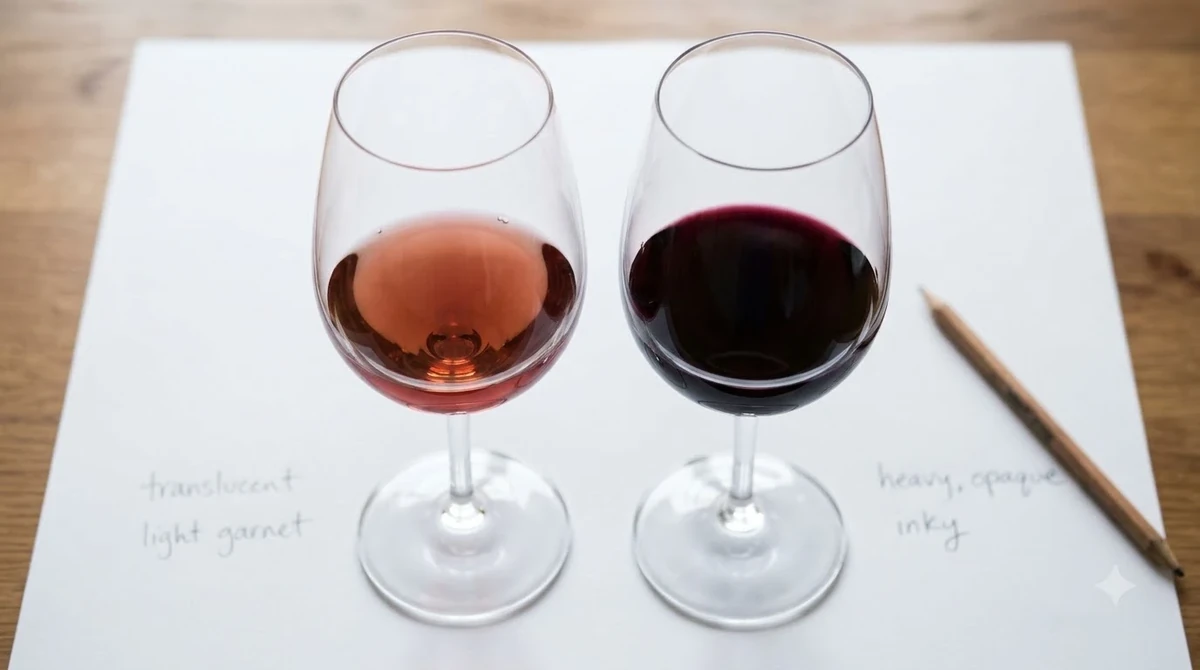
For the five dry styles—Fino, Manzanilla, Amontillado, Palo Cortado, and Oloroso—winemakers ferment Palomino grapes all the way to dryness so virtually no grape sugar remains. They then fortify the base wine to 15% ABV to encourage a protective layer of indigenous yeast called flor, or to 17% ABV to prevent flor and promote oxidative aging in oak butts. In both cases, no sweetener is ever added, keeping residual sugar below 5 g/L even when an old Oloroso develops rich aromas of toasted walnut, caramel, and leather that trick the nose into expecting sweetness.
Naturally sweet sherries take the opposite path from the very beginning of harvest. Producers pick ripe Pedro Ximénez or Moscatel grapes and spread them on mats in the Andalusian sun for up to three weeks—a raisining method called asoleo that concentrates natural fruit sugars to 450 to 500 grams per liter of must. Once pressing begins and fermentation starts, winemakers add grape spirit to halt yeast activity early, locking in huge amounts of natural residual sugar before oxidative cask aging begins.
Understanding Blended Sweet Sherries (Generosos de Licor)
Blended sweet sherries bridge the gap between bone-dry Palomino wines and syrupy dessert styles through a traditional cellar practice known as cabeceo. Rather than stopping fermentation early, cellar masters take fully aged dry sherry and blend it with naturally sweet Pedro Ximénez, Moscatel, or rectified concentrated grape must.
Pale Cream is the lightest and newest member of this group, formalized in Denomination of Origin rules during the 1960s. Winemakers start with biologically aged Fino or Manzanilla and add concentrated grape must so the wine keeps its pale straw color and nutty, bread-dough flor character while softening the crisp finish with 45 to 115 g/L of sugar. Medium sherry uses an Amontillado or oxidatively aged base blended to anywhere between 5 and 115 g/L, with bottles under 45 g/L labeled Medium Dry and those above 45 g/L labeled Medium Sweet.
Cream sherry sits at the top of the blended category with 115 to 140 g/L of sugar, as outlined in the Sherry Wines guide to fortified wines of Jerez. Cellar masters craft Cream sherry by blending aged dry Oloroso with sweet Pedro Ximénez wine, creating a dark mahogany pour that balances raisin and fig sweetness against roasted nut bitterness and 3 to 5 g/L of tartaric acidity.
Tip: Do not confuse “Palomino Fino” or “Cream” cues with sweetness on its own—if a bottle says Oloroso, Amontillado, or Palo Cortado without the words “Cream” or “Medium,” it is legally bone-dry at 5 g/L or less.
Dry vs. Sweet Sherry on the Palate
Tasting notes in sherry frequently confuse newcomers because oxidative aging creates aromas that Americans associate with sweet desserts. Long contact with oxygen and seasoned American oak builds compounds reminiscent of toffee, roasted hazelnuts, dried figs, and baking spices even when a lab test shows less than 4 grams of sugar per liter.

In a dry Amontillado or Oloroso, the palate starts crisp and savory, mid-palate richness comes from 8 to 10 g/L of glycerine rather than sugar, and the finish turns completely clean and mouthwatering. That sharp contrast between sweet-smelling oak aromatics and zero residual sugar is very different from high-sugar table styles you might encounter when comparing riesling sugar content across off-dry and late-harvest bottles.
When sugar actually enters the equation in Cream, Moscatel, or Pedro Ximénez, the texture shifts from nimble and nutty to velvety and viscous. Even at 300 g/L or higher, well-made Pedro Ximénez relies on concentrated tartaric acidity from sun-drying to keep the syrupy texture lively rather than cloying.
Serving Temperature, Glassware, and Food Pairing by Sweetness
Serving temperature plays a major role in how sweet or balanced a glass of sherry tastes. Serving a sweet Cream or Pedro Ximénez too warm amplifies alcohol heat and syrupy weight, while serving a dry Oloroso ice-cold mutes its complex nutty aromatics.
According to Consejo Regulador service guidelines, biologically aged Fino and Manzanilla taste sharpest when chilled in an ice bucket to 43°F to 46°F (6°C to 8°C) and poured into a standard white wine glass rather than a tiny antique cordial glass. Pale Cream also shines chilled around 45°F (7°C) alongside pâté, fresh pears, or salty blue cheese. Dry Amontillado, dry Oloroso, Medium sherry, and Pedro Ximénez all perform best slightly chilled between 54°F and 57°F (12°C to 14°C), while Cream sherry is ideal right around 50°F to 54°F (10°C to 12°C).
Matching sugar levels to food follows classic wine-pairing logic across Wine by Type categories. Bone-dry Fino and Manzanilla cut right through fried seafood, salted almonds, olives, and raw sashimi, while dry Oloroso stands up to braised beef, wild mushrooms, and aged Manchego. Medium sherry handles spicy Indian or Thai curries effortlessly, and Pedro Ximénez doubles as both a dessert pour and a sauce over vanilla ice cream or dark chocolate.
How to Read a Sherry Label for Sweetness
Because European and US wine labels rarely print exact grams-per-liter numbers on the back bottle, learning four Spanish and English label keywords guarantees you never bring home an unexpected dessert wine. Every authentic bottle from the Jerez Sherry Triangle displays the style name prominently on the main label.
- Zero-sugar dry keywords: Look for Manzanilla, Fino, Amontillado, Palo Cortado, or Oloroso standing alone, or the Spanish word Seco (dry).
- Lightly to moderately sweet keywords: Look for Pale Cream, Medium, Medium Dry, or Medium Sweet, which signal a blended generoso de licor between 5 and 115 g/L.
- Rich sweet dessert keywords: Look for Cream (115–140 g/L) or the varietal names Moscatel (over 160 g/L) and Pedro Ximénez or PX (over 212 g/L).
- Age designations: Labels marked VOS (20+ years) or VORS (30+ years) indicate extra-old solera blends; unless paired with PX or Moscatel, these rare bottles are intensely concentrated dry wines.
Shelf life after opening also tracks closely with sugar and aging style. Keep opened Fino and Manzanilla sealed in the refrigerator and finish them within a week, whereas oxidized Amontillado, Oloroso, Cream, and Pedro Ximénez stay fresh in a cool dark spot for weeks or even months thanks to their higher alcohol, oxidative stability, or protective sugar concentration.
Frequently Asked Questions
Is all sherry wine sweet?
No, most traditional sherry styles are completely dry. Fino, Manzanilla, Amontillado, Palo Cortado, and Oloroso are fermented to dryness and contain 5 grams per liter of residual sugar or less. Only blended styles (Pale Cream, Medium, Cream) and naturally sweet varietal sherries (Moscatel, Pedro Ximénez) contain significant sugar.
Which sherry has the lowest sugar content?
Fino and Manzanilla have the lowest sugar content, legally capped under 4 grams per liter and typically containing less than 1 gram per liter. Because the protective layer of flor yeast consumes remaining sugars and glycerol during biological aging, a standard 3-ounce glass contains virtually zero sugar.
Why does dry Oloroso smell sweet if it has almost no sugar?
Oloroso ages exposed to oxygen in American oak barrels for years, creating aromatic compounds that smell like caramel, toffee, walnuts, and dried fruit. In addition, slow water evaporation concentrates natural glycerine to 8 to 10 grams per liter, giving the wine a smooth, rounded mouthfeel despite having under 4 grams per liter of sugar.
How much sugar is in Cream sherry compared to Pedro Ximénez?
Cream sherry contains between 115 and 140 grams of sugar per liter because it blends dry Oloroso with sweet wine. Pedro Ximénez (PX) starts at a legal minimum of 212 grams per liter and commonly reaches 300 to 400 grams per liter, making PX more than twice as sweet as Cream sherry.
Knowing how sherry styles map onto residual sugar takes all the guesswork out of shopping the fortified wine aisle. Whether you want a crisp, zero-sugar Fino before dinner or a velvety glass of Pedro Ximénez afterward, the style name on the label tells you the exact sweetness level before you pull the cork.
More in Wine Types & Grapes
 Zinfandel Sugar Content: Dry Red vs. White Zinfandel GramsUpdated Nov 21, 2026
 Best Zinfandel Substitute Options for Sipping and CookingUpdated Nov 21, 2026
 Zweigelt Food Pairing: Best Dishes, Cheeses, and Serving TipsUpdated Nov 21, 2026
 Zinfandel Tannins Explained: How Structure Shapes Every BottleUpdated Nov 21, 2026
 Zinfandel Sweetness Level: Dry Red vs. Sweet White Zin ExplainedUpdated Nov 21, 2026
 Xinomavro Food Pairing: Best Dishes, Styles, and Serving TipsUpdated Nov 21, 2026