

We may earn a commission when you buy through links on this page, at no extra cost to you. Learn more.
The best way to shop trader joe s wine is to treat the shelf as a changing collection of store-label bottles and established producers, then choose by grape, region, and style rather than by the label alone. Charles Shaw remains the best-known name, but the lineup also includes Reserve tiers, imported wines, and branded selections. A little label reading will help you find the right bottle for dinner, a party, or a simple weeknight glass.
Trader Joe’s wine aisle rewards curiosity, but it is not a fixed catalog: a bottle that appears in one store or season may not be available at another. The guide below explains the retailer’s model, the story behind Charles Shaw, what the Reserve labels signal, and how to judge a bottle by the wine inside it.
What Trader Joe’s Wine Includes, from Private Labels to National Brands
Trader Joe’s wine is a mix of wines made for the retailer and bottles sold under established producer names. The store’s own team describes a program that includes private-label and controlled-label projects as well as national brands, so the familiar Trader Joe’s logo is only one part of the selection.
Private label means a wine is made for a retailer and sold under that retailer’s brand. It does not automatically mean the wine is low quality, anonymous bulk wine, or made in a factory with no winemaker. Wine Enthusiast’s discussion of private-label production explains that experienced wineries can make retailer-specific wines and that the work can involve grape sourcing, blending, production, bottling, and long-term supply arrangements. The retailer may choose the style and audience, while the producer contributes vineyards, winemaking staff, and cellar facilities.
Trader Joe’s says the economics of its private-label program differ from those of a winery’s own consumer brand. In a company podcast recorded at a California winery, the retailer explained that it takes on the marketing and brand-building work, while its supplier can concentrate on making the wine. The winery’s name may not appear on the label, and the retailer has sometimes kept a producer’s identity private because that producer also sells to other customers. Read the retailer’s explanation in its Inside Trader Joe’s conversation about winery partnerships.
Charles Shaw and the Story Behind Two Buck Chuck
Charles Shaw is the wine label that made Trader Joe’s famous with value-minded shoppers, and its arrival in the stores in 2002 gave the brand its enduring nickname, Two Buck Chuck. The wine is now part of a broader portfolio, but it remains a useful starting point for understanding the retailer’s approach to everyday bottles.
The name has a longer history than its grocery-store association suggests. Wine Enthusiast reports that Bronco Wine Company acquired the Charles Shaw brand in 1990, after the original Charles Shaw business had entered bankruptcy. Bronco’s founder Fred Franzia built a business around large-scale California wine production, and the company’s approach helped make a familiar name available to a much wider audience. The Charles Shaw label that shoppers recognize today is therefore not simply a small winery’s original estate bottling moved onto a supermarket shelf.
Trader Joe’s wine team has said that Charles Shaw Cabernet Sauvignon and Chardonnay remain two of the label’s best-selling wines. In the same conversation, a company representative described Charles Shaw as accounting for about one out of every ten bottles of wine customers buy at the chain. That figure is a statement from the retailer’s own team, not a guarantee that every store stocks every variety. The lineup can vary, so the best way to judge a current bottle is to look at its grape, vintage, and flavor description rather than relying on nostalgia for the original Two Buck Chuck era.
Reserve Tiers, Vintage Details, and What the Labels Tell You
Trader Joe’s Reserve program gives its private-label wines a tiered identity, with four main names: Reserve, Grand Reserve, Platinum Reserve, and Diamond Reserve. Those names help organize a varied selection, but they are not a substitute for checking the grape, origin, vintage, or producer information shown on the bottle.
The retailer’s wine team describes the higher tiers as generally involving scarcer wines, and the names are intended to help shoppers distinguish one part of the program from another. A higher tier can be a useful reason to investigate a bottle, particularly when it names a recognizable region such as Napa Valley or Sonoma County. It is not a universal quality score, however, and it does not mean that every Diamond Reserve wine will suit every drinker better than every Reserve wine. A lighter red from a cooler region may be a better fit for one meal than a more concentrated Cabernet from a premium tier.
Pay attention to the vintage and any lot or bottling identifier printed on the label. Retailer-specific wines can be blended for a particular release, and a new vintage may taste different even when the label design stays familiar. A review of an earlier bottle is useful background, but it is not proof that a current release tastes the same. The same caution applies to a label that returns after being absent for several months: it may be a new vintage, a new blend, or a different producer project. Treat each bottle as its own wine instead of assuming a permanent recipe.
Grapes and Styles to Explore Beyond Charles Shaw
The most useful way to broaden your choices is to shop by grape and style, not just by the price tier or the artwork. Trader Joe’s selection has included familiar California grapes such as Cabernet Sauvignon, Chardonnay, and Zinfandel, alongside international styles such as Portugal’s Vinho Verde and wines from regions in Europe and South America.
For a crisp white, look for Sauvignon Blanc, Pinot Grigio, or a Vinho Verde. Sauvignon Blanc commonly brings high acidity and citrus or green-fruit character, while Pinot Grigio can range from light and neutral to more textured depending on its origin and producer. Vinho Verde is often light, refreshing, and gently spritzy; Trader Joe’s wine team has highlighted an Espiral bottling from Portugal as a low-alcohol example of the style. For a rounder white with more body, Chardonnay is a natural alternative, especially beside roast chicken, creamy pasta, or buttery fish.
Red-wine drinkers can use grape names to predict structure. Pinot Noir usually has lower-to-medium tannin and lively acidity, making it a flexible choice with roast turkey, mushrooms, salmon, and many pork dishes. Merlot tends to feel softer than Cabernet Sauvignon, while Cabernet generally brings firmer tannin and darker-fruit flavors that work well with grilled steak or lamb. Syrah can be more savory and peppery, with medium-plus to high tannin. If a familiar producer label catches your eye, compare it with a broader guide to wine brands or read about a Bordeaux-linked label such as Baron Philippe de Rothschild wine to understand how producer identity can help you evaluate a bottle.
How to Choose a Bottle in the Store
A good store-side decision starts with the basics: identify the grape or blend, the region, the vintage, and whether the wine is dry, off-dry, or sweet. Trader Joe’s describes a 70 percent tasting-panel approval threshold, while its staff also points shoppers toward featured displays and crew recommendations. Then choose a style that suits the food and the people drinking it. If the label gives only a broad regional name or a proprietary tier, use the staff description and your own taste preferences as additional clues rather than guessing from the artwork.
Trader Joe’s wine team has described a formal selection process that includes internal tastings and a larger tasting panel. In one account, team members said they might consider only two or three wines from a session involving roughly 20 to 30 samples. That does not mean each bottle on the shelf has an identical review history, but it does show that the retailer presents wine selection as a curated process rather than a simple purchase of whatever is available. For more background on the way store-label wine is produced, Wine Enthusiast’s explanation of private-label winemaking is a useful companion read.
Look at the featured displays and case stacks, then ask a crew member what is popular or what has just arrived. Trader Joe’s wine team has specifically recommended those displays as a way to spot bottles customers are buying regularly. Still, popularity is not the same as personal fit: a bold red can be a poor match for a light lunch, and a very dry white may not satisfy someone who prefers a touch of sweetness. Buy with a meal in mind, and start with one bottle before committing to several. That is especially sensible when the wine has a distinctive label or is described as a limited release.
Serving, Pairing, and Storing Trader Joe’s Wine
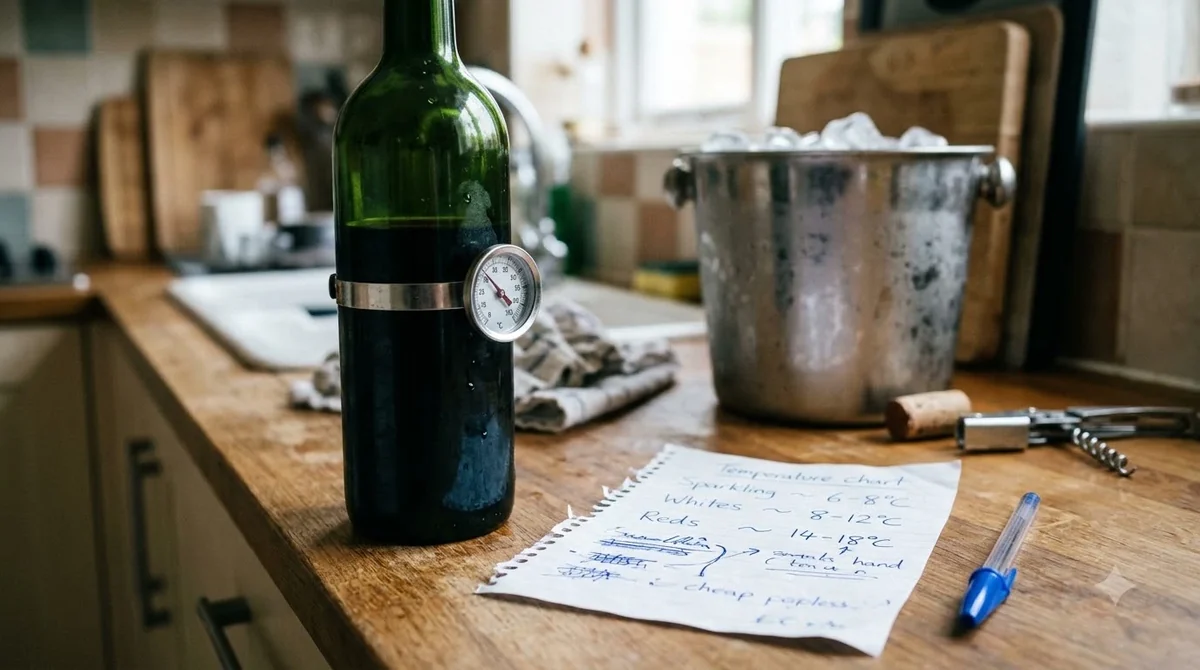
Serving temperature and food pairing can make an ordinary bottle taste more balanced: crisp whites are usually served around 45–50°F, while fuller reds are closer to 60–65°F. A Pinot Noir and a Cabernet Sauvignon also benefit from different temperatures and different foods, so a little planning can make a casual bottle taste more balanced.
Use the temperatures below as a starting point for the main styles you may find in a grocery-store wine section. The table is about serving preference, not a strict rule: a bottle can be adjusted a few degrees to suit the room, the food, and your taste.
| Wine style | Examples to look for | Serving temperature | Food direction |
|---|---|---|---|
| Sparkling | Prosecco, sparkling rosé | 40–50°F | Fried chicken, salty snacks, appetizers |
| Light white or rosé | Sauvignon Blanc, Pinot Grigio, rosé | 45–50°F | Salads, shellfish, goat cheese |
| Fuller white | Chardonnay | 50–55°F | Roast chicken, creamy pasta, buttery fish |
| Light red | Pinot Noir, Gamay | 55–60°F | Turkey, mushrooms, salmon, pork |
| Full red | Cabernet Sauvignon, Syrah | 60–65°F | Steak, lamb, aged hard cheese |
| Sweet white | Moscato, dessert wine | 43–50°F | Fruit desserts, pastries, blue cheese |
Tip: Chill a full-bodied red for a short time before serving if the room is warm. Young, structured reds can also benefit from 30–60 minutes in a decanter, while a light Pinot Noir is usually best served with less aeration.
Match the wine’s sweetness to the food: the wine should be at least as sweet as the dessert, or the dessert can make it taste sour or thin. Acidic foods such as tomato sauce, vinaigrette, and citrus need a wine with equal or higher acidity; that is why Sauvignon Blanc or a crisp rosé can work better than a soft, low-acid white. Salt and fat soften tannin, which is one reason Cabernet Sauvignon can pair well with a fatty steak or a rich cheese. Chili heat is amplified by alcohol and tannin, so a high-alcohol Cabernet or Syrah can make spicy food feel hotter. Oily fish is usually a poor match for tannic reds; choose a bright white or a lighter red instead. Pinot Grigio drinkers who want to compare another widely distributed style can also review the guide to Black Box Pinot Grigio alcohol content.
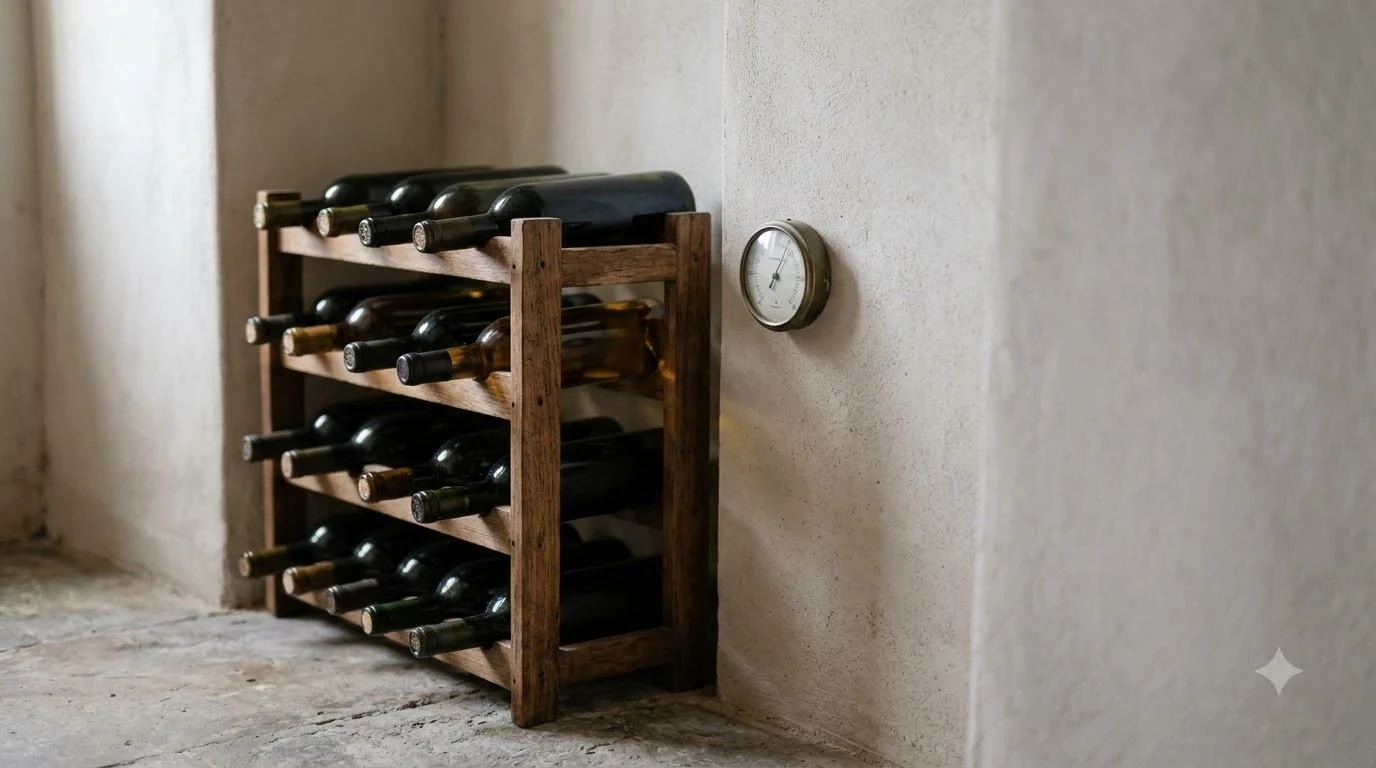
For a standard pour, use about 5 ounces; a 750-milliliter bottle provides roughly five glasses. Keep opened still wine in the refrigerator and aim to finish it within three to five days. Sparkling wine generally keeps for one to three days with a proper stopper, while fortified wine can last several weeks after opening. Store unopened bottles on their sides in a cool, dark place near 55°F when they have a cork, and avoid heat or large temperature swings. For celebrations, a bottle of sparkling wine can serve as a flexible aperitif; the guide to Cook’s Champagne offers another example of the category.
Frequently Asked Questions
These answers clarify California varietal labeling, Portuguese wine terminology, and a few details behind familiar Trader Joe’s bottles. They add useful context without assuming that every store carries the same selection.
Does a California Cabernet Sauvignon have to be made entirely from Cabernet grapes?
No. The retailer’s California winery discussion cites the 75 percent varietal-labeling threshold: a wine labeled with a grape variety can include other grapes in the blend while still meeting the applicable standard. The remaining portion can change the texture and flavor, so the grape name is a useful guide rather than a full recipe.
Is Vinho Verde the name of a grape?
No. Trader Joe’s wine team describes Vinho Verde as both a Portuguese region and a style of wine. Bottles in this category are often light and refreshing, and some have a slight spritz rather than the pronounced bubbles of traditional sparkling wine.
How much alcohol was in the Espiral Vinho Verde discussed by Trader Joe’s?
The retailer’s wine conversation identified that particular Espiral example at about 9 percent alcohol by volume. The team described its lower alcohol as a natural result of the grapes and winemaking style, not as a wine that had alcohol removed after fermentation.
What does “Nouveau” mean on a wine label?
Nouveau means “new” and is used for a fresh, approachable style made to be enjoyed young. The name is associated with celebrating the end of harvest, rather than signaling a grape variety or a long-aging style.
Where did the nickname “Two Buck Chuck” come from?
The nickname refers to the original low-priced Charles Shaw bottles sold at Trader Joe’s after the brand arrived in 2002. Wine Enthusiast reports that the exact origin of the phrase is unclear, although it appeared online by 2003.
Trader Joe’s wine can be a low-pressure way to explore grapes, regions, and different styles, provided you treat each bottle as an individual choice rather than assuming the label guarantees a particular flavor. Start with a grape you enjoy, match its structure to the meal, and stay open to trying something unfamiliar on your next visit.
More in Wine Brands
 Underwood Wine Price: Compare Bottles, Cans, and Pack SizesUpdated Nov 21, 2026
 Zenato Wine Price: Compare Styles and Choose the Right BottleUpdated Nov 21, 2026
 Zuccardi Wine Price: Compare Bottles and Find the Right RangeUpdated Nov 21, 2026
 Yellow Tail Moscato Review: Taste, Sweetness and Serving TipsUpdated Nov 21, 2026
 Wolf Blass Yellow Label Review: Choose Your Best StyleUpdated Nov 21, 2026
 Wolffer Estate Rose Review: Choose the Right Bottle for Your TableUpdated Nov 21, 2026