

We may earn a commission when you buy through links on this page, at no extra cost to you. Learn more.
Hogue Cellars wine is Washington wine from the Columbia Valley, known for approachable fruit flavors, lively natural acidity, and a broad selection of red and white grape varieties. Founded in Prosser in 1982, Hogue Cellars became one of Washington’s recognized winery names through its Riesling, Cabernet Sauvignon, and Merlot. Its range also includes Chardonnay, Pinot Grigio, Sauvignon Blanc, and other varietal styles, giving drinkers several options for everyday meals and different occasions.
Washington has developed a reputation for producing wines that combine ripe fruit character with refreshing acidity. Hogue Cellars is part of that history. Understanding its origins, Columbia Valley setting, grape varieties, and winemaking background makes it easier to select a bottle that matches your preferred style. Whether you enjoy crisp white wines or structured reds, the winery offers a useful introduction to Washington’s diverse wine culture.
Hogue Cellars History and Its Washington Wine Roots
Hogue Cellars began as a family farming venture that developed into a recognizable Washington wine producer. Its early success came from Riesling and eventually expanded into Cabernet Sauvignon and Merlot, helping establish the winery’s reputation beyond its home region.
The story begins with Mike Hogue, whose family operated an agricultural business around Prosser, Washington. His interest in wine grapes developed after encouragement from family friend Mark Schwartzman, who introduced him to Riesling and the possibilities of growing wine grapes in the Yakima Valley. In 1979, Hogue planted a seven-acre Riesling vineyard and named it Schwartzman Vineyard in honor of his mentor.
According to an interview published by HistoryLink, the first experimental wines came from grapes harvested before the vineyard had reached full production. Farm manager Andy Markin recognized the potential of those grapes and suggested making wine. The initial experiments took place in an insulated backyard playhouse, where fermentation could be controlled. Several versions were produced with different residual sugar levels. The HistoryLink account of Mike Hogue’s early winery history provides additional detail about these beginnings.
The promising results encouraged Hogue, Markin, and Schwartzman to establish a commercial winery. Hogue Cellars opened during the 1983 Yakima Valley Spring Barrel Tasting event. The operation was modest: labels arrived shortly before opening, and an old cigar box served as a cash register. Nevertheless, the winery attracted considerable attention, with more than 3,000 visitors arriving the following year.
Although Riesling provided the original foundation, Cabernet Sauvignon and Merlot soon became important additions. In 1983, Markin acquired grapes from a neglected vineyard after its original contract had been canceled. The resulting red wines were made in small quantities, with approximately 400 cases of each variety.
A major breakthrough followed in 1985. Hogue’s 1983 Reserve Cabernet Sauvignon won Best in Show at the Atlanta International Wine Festival, competing against 1,667 entries. The recognition helped demonstrate that Washington could produce serious red wines alongside its established white varieties.
Mike Hogue sold the winery to Vincor International in 2001, although he remained involved in vineyard and orchard operations. Ackley Brands subsequently acquired Hogue Cellars in April 2024. The label continued as part of Washington’s established wine landscape, connecting its agricultural beginnings with a broader portfolio of regional wines.
For readers exploring other American producers, the histories of Cline Cellars wine and Livingston Cellars wine provide useful comparisons between different winery backgrounds and approaches to accessible wine styles.
Columbia Valley Climate and the Character of Hogue Wines
Columbia Valley’s dry growing conditions, abundant sunshine, and substantial daily temperature changes help explain the fruit-forward character associated with Hogue Cellars. These environmental conditions support both aromatic white grapes and structured red varieties.
Columbia Valley is one of Washington’s principal wine-growing regions. It encompasses several recognized appellations, including Yakima Valley and Walla Walla Valley. Hogue’s connection to this region is central to its identity, and its wines reflect the combination of ripe fruit development and natural freshness associated with Eastern Washington.
The Cascade Range plays an important role in the region’s climate. The mountains create a rain shadow that limits Pacific moisture reaching Eastern Washington. According to Hogue’s regional overview, areas east of the Cascades receive less than 10 inches of average annual rainfall, compared with approximately 46 inches in Seattle. The winery’s official overview of its Columbia Valley origins and growing conditions explains how these environmental features influence its wine-growing region.
This relatively dry climate reduces many vineyard disease pressures associated with persistent moisture. It also means that vineyard irrigation is important in many locations. The Columbia River and its tributaries provide essential water resources for agricultural operations throughout the region.
Another important factor is sunlight. Hogue reports that Washington’s northerly position can provide up to two additional hours of sunlight per day during the growing season compared with California’s North Coast. Extended daylight encourages grape ripening and contributes to concentrated fruit characteristics.
However, warmth does not mean that the wines necessarily lack freshness. Hogue describes growing-season temperature differences that can reach 40–50 degrees between daytime and nighttime conditions. Cooler nights help preserve acidity and maintain aromatic definition as grapes mature.
These conditions support a wide range of grapes rather than a single house style. Chardonnay and Riesling can develop citrus, apple, and stone-fruit characteristics, while Cabernet Sauvignon, Merlot, and Syrah can produce wines with darker fruit flavors and different levels of tannin.
Columbia Valley’s size also matters. Different vineyard sites have different elevations, soil compositions, and temperature patterns. A wine carrying the Columbia Valley designation represents a broad regional identity rather than necessarily coming from one narrowly defined vineyard location.
Tip: Look at the grape variety and the wine’s sweetness description before choosing a bottle. Columbia Valley is a large growing region, so two wines from the same appellation can have noticeably different aromas, body, acidity, and sweetness.
Hogue Cellars Grape Varieties and Main Wine Styles
Hogue Cellars draws on Washington’s ability to grow several international grape varieties successfully. Its range includes fresh white wines, aromatic Riesling, and red wines with more pronounced fruit and tannin.
The winery’s regional overview identifies Chardonnay, Sauvignon Blanc, Riesling, Gewürztraminer, Semillon, Pinot Grigio, Viognier, Cabernet Sauvignon, Merlot, Syrah, Malbec, Petit Verdot, and Barbera among the grapes suited to Eastern Washington. Not every variety necessarily appears in every current release, but the selection illustrates the region’s agricultural flexibility.
Understanding the differences between these grapes is more useful than choosing a bottle based on its color alone. White wines vary in acidity, body, and sweetness, while reds differ in tannin, weight, and fruit character.
| Grape variety | Typical style | Common flavor profile | Food direction |
|---|---|---|---|
| Chardonnay | Medium-bodied white | Apple, pear, citrus | Chicken, seafood, creamy pasta |
| Riesling | Dry to sweet white | Lime, peach, apple | Spicy Asian dishes, pork |
| Pinot Grigio | Light-bodied white | Lemon, pear, green apple | Salads, shellfish, light fish |
| Sauvignon Blanc | Fresh, high-acid white | Citrus, herbs, green fruit | Goat cheese, vegetables, seafood |
| Merlot | Medium-bodied red | Plum, cherry, soft spice | Roast chicken, burgers, pork |
| Cabernet Sauvignon | Full-bodied red | Blackcurrant, black cherry, herbs | Beef, lamb, hard cheese |
| Syrah | Medium-plus to full-bodied red | Dark berries, pepper, savory spice | Grilled beef, lamb, barbecue |
These are general grape characteristics rather than guaranteed tasting notes for every Hogue bottle. Ripeness, vineyard location, fermentation decisions, blending, and oak treatment all influence the final wine.
For example, Cabernet Sauvignon generally has higher tannin than Merlot. This gives Cabernet a firmer structure and makes it particularly suitable for richer meat dishes. Merlot typically feels softer, with more approachable tannins and rounded red-fruit flavors.
Riesling offers another kind of versatility. Its naturally high acidity can balance different sweetness levels, making it suitable for drinkers who prefer either refreshing dry whites or wines with noticeable residual sugar. Pinot Grigio, by comparison, generally emphasizes lighter body and uncomplicated fruit freshness.
For additional background on American producers and grape selections, the Wine Brands section offers a broader starting point for comparing winery identities and regional styles.
Hogue Chardonnay, Riesling, and Pinot Grigio Explained
Hogue’s white wine selection is a useful starting point for people who prefer refreshing wines with fruit-forward profiles. Chardonnay, Sweet Riesling, and Pinot Grigio offer different combinations of acidity, body, and sweetness.
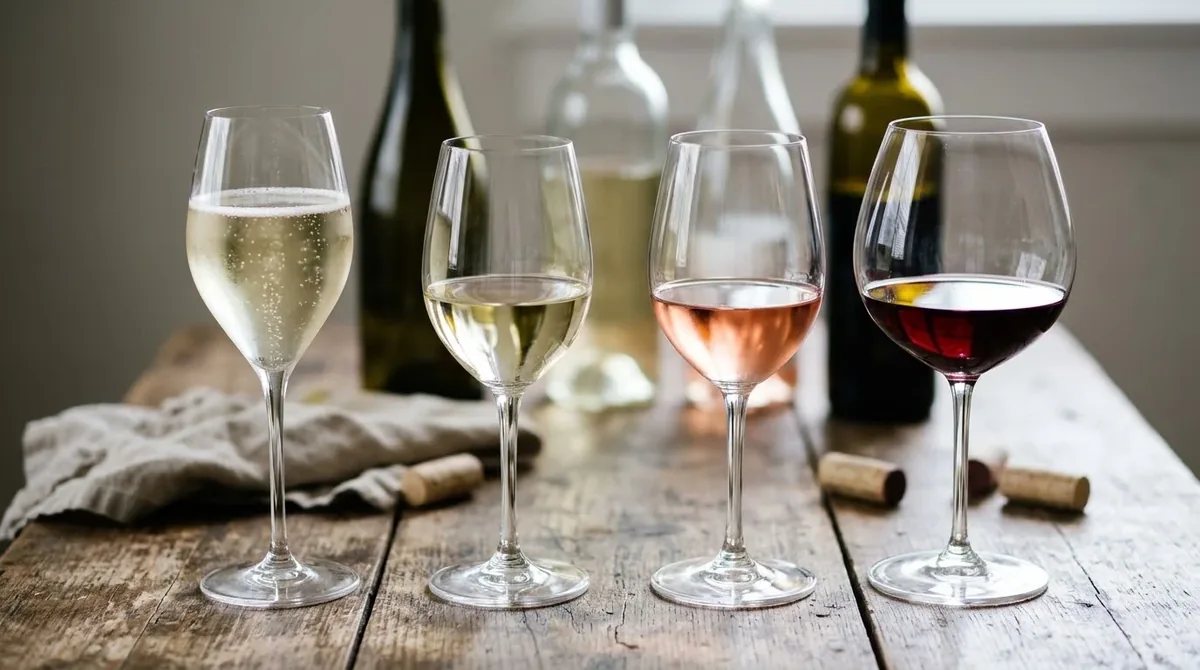
Chardonnay is generally the most flexible option for someone who wants a white wine with moderate acidity and a little more body than a light Pinot Grigio. Depending on its production style, Chardonnay can emphasize fresh apple and citrus, or develop richer notes associated with oak maturation and lees contact.
Hogue’s featured wine selection includes Chardonnay. The exact character depends on the particular bottling and vintage. A lightly styled Chardonnay works well with roast chicken, grilled vegetables, and white fish. A fuller version can complement dishes with butter, cream, or mild cheese.
Riesling has a different personality. It is naturally aromatic and generally has high acidity, which helps balance sweetness. Hogue’s history is closely connected to this grape: Mike Hogue originally planted Riesling in 1979, and the first experimental wines helped inspire the winery’s creation.
The current featured range includes Sweet Riesling. This style is appropriate for drinkers who enjoy noticeable fruit sweetness rather than a completely dry finish. Peach, apple, citrus, and floral impressions are common Riesling characteristics, although individual bottlings vary.
Sweet Riesling can be especially useful at the dinner table because sweetness and acidity serve different purposes. The sugar softens the impression of chili heat, while acidity refreshes the palate between bites. It works particularly well with dishes containing ginger, aromatic spices, and moderate chili seasoning.
Pinot Grigio is usually the simplest choice for someone looking for a light, crisp white wine. Typical flavors include lemon, pear, and green apple. Its lighter body makes it suitable for casual lunches, seafood, and vegetable dishes.
How to choose between the three
Choose Chardonnay when you want a white wine with more body and enough versatility for chicken, creamy pasta, or grilled seafood. Choose Sweet Riesling when you prefer a sweeter wine or need something to balance spicy food. Pinot Grigio is a sensible choice when you want a lighter, refreshing bottle for salads, shellfish, or an uncomplicated aperitif.
Sweetness deserves particular attention. A wine described as sweet is not automatically low in acidity, and a wine with ripe fruit aromas is not necessarily sweet. The actual balance depends on residual sugar and the wine’s natural acidity.
These differences make Hogue’s white wines suitable for different occasions. Instead of assuming that all white wine should taste similarly, consider the dish, desired sweetness, and body before selecting a bottle.
Hogue Cabernet Sauvignon, Merlot, and Other Red Wines
Hogue Cellars’ red wine history began with Cabernet Sauvignon and Merlot, two grapes that remain important reference points for understanding Washington red wine. Their different tannin structures and fruit profiles make them suitable for different meals.
Cabernet Sauvignon is typically a full-bodied red with relatively high tannin. Its flavor profile often includes blackcurrant, black cherry, dark plum, herbs, and oak-related notes. The grape’s firm structure makes it particularly effective alongside protein-rich foods.
One documented example is Hogue’s 2022 Cabernet Sauvignon. Its technical information describes a full-bodied, fruit-forward wine with aromas of black cherry, anise, and vanilla, together with flavors of dark fruit, caramel, and cocoa.
The same technical sheet identifies the blend as 90% Cabernet Sauvignon, 5% Grenache, 4% Syrah, and 1% Barbera. It lists alcohol at 13.3% ABV. This example demonstrates that a wine labeled Cabernet Sauvignon can include smaller proportions of other grapes while retaining Cabernet as its dominant variety.
Merlot generally offers a softer alternative. It has medium tannin and commonly shows plum, cherry, and sometimes chocolate or herbal characteristics. Its approachable texture makes it suitable for drinkers who find Cabernet Sauvignon too firm or intense.
Merlot is also a practical food wine. It pairs with roast chicken, pork, grilled mushrooms, burgers, and tomato-based dishes. Its softer tannin profile gives it flexibility with foods that do not have the richness needed to balance a strongly structured Cabernet.
Syrah is another useful variety to understand. It usually has medium-plus to high tannin, with flavors that can include blackberry, black pepper, dark plum, and savory spice. It works well with grilled meat, lamb, smoked foods, and dishes containing herbs or roasted peppers.
Cabernet Sauvignon and Merlot have a special place in Hogue’s history because their early production contributed to the winery’s breakthrough at the 1985 Atlanta International Wine Festival. The award-winning Reserve Cabernet Sauvignon helped attract wider attention to the quality potential of Washington red wines.
For anyone choosing between the major red styles, Cabernet is generally the firmer, more structured option, Merlot the softer and rounder one, and Syrah the more savory and peppery alternative. Those distinctions provide a practical starting point even when individual vintages differ.
Food Pairings and Serving Temperatures for Hogue Wines
Good food pairing depends on balancing acidity, sweetness, tannin, body, and alcohol rather than simply matching red wine with meat or white wine with fish. Hogue’s mix of white and red varieties makes it possible to select bottles for a broad range of meals.
For Chardonnay, consider roast chicken, grilled shrimp, creamy pasta, or baked fish. The wine’s medium acidity and moderate body generally complement foods with some richness without overwhelming delicate ingredients.
Pinot Grigio is better suited to lighter preparations. Try it with lemon-seasoned seafood, green salads, grilled zucchini, steamed shellfish, or fresh cheeses. Its lighter body allows the flavors of these dishes to remain prominent.
Sweet Riesling is particularly effective with spicy meals. Thai curry, ginger chicken, lightly spicy noodles, and dishes with sweet-and-sour sauces can all work well. The wine should be at least as sweet as the dish; otherwise, a sweet sauce can make the wine seem sour or thin.
Cabernet Sauvignon generally needs richer food. Grilled steak, roast beef, lamb chops, and aged hard cheeses provide enough protein and fat to balance its tannin. Merlot is more flexible and can accompany pork, roast poultry, burgers, and tomato-based pasta.
Acidity is another important consideration. Dishes containing lemon, vinegar, or tomato benefit from wines with equal or higher acidity. A low-acid wine can taste flat beside a strongly acidic dish.
Salt and fat can soften the perception of tannin, which explains why a structured Cabernet Sauvignon often works better with a fatty beef dish than with a lean piece of chicken. On the other hand, oily fish such as salmon or mackerel can clash with strongly tannic red wines. A fresh white wine is usually a more suitable choice.
Chili heat requires additional care. High alcohol and tannin can amplify the burning sensation of spicy food. A sweeter, high-acid Riesling is often a better choice than a powerful red for dishes with substantial chili.
Serving temperature guide
Temperature changes the way wine smells and feels. Serving white wine too cold can mute its aromas, while serving red wine too warm can make alcohol seem more prominent and the wine feel heavy.
| Wine style | Recommended temperature | Practical approach |
|---|---|---|
| Light white wines | 45–50°F | Chill before serving |
| Fuller white wines | 50–55°F | Allow slight warming after refrigeration |
| Sweet white wines | 43–50°F | Serve well chilled |
| Light red wines | 55–60°F | Cool briefly before pouring |
| Full-bodied red wines | 60–65°F | Serve slightly cooler than a warm room |
For a Hogue Pinot Grigio, a temperature around 45–50°F keeps the wine refreshing. Chardonnay generally benefits from 50–55°F, particularly if it has a fuller texture. Sweet Riesling can be served around 43–50°F.
For Cabernet Sauvignon, aim for approximately 60–65°F rather than the warmer conditions of many indoor rooms. Merlot can also benefit from slight cooling, particularly during warmer weather.
Use a standard 5-ounce pour when serving wine at dinner. A 750-milliliter bottle provides approximately five such glasses, making it easy to estimate quantities for a meal with several guests.
Buying, Storing, and Enjoying Hogue Cellars Bottles
Choosing a Hogue bottle is easier when you begin with the grape variety, sweetness, and intended occasion. Proper storage and serving also help preserve the wine’s aromas and balance after purchase.
Start by deciding whether you want red or white wine. If you prefer fresh fruit and lighter body, Pinot Grigio is a useful starting point. If you want something aromatic with sweetness, consider Sweet Riesling. Chardonnay provides a middle ground with more body, while Cabernet Sauvignon and Merlot are options for red wine drinkers.
Pay attention to the grape name and regional designation. A Columbia Valley label indicates a wine associated with that broad Washington appellation. It does not necessarily mean every grape came from a single vineyard or that all wines from the region share the same flavor profile.
Vintage can also influence the finished wine. Growing-season temperatures, rainfall, harvest timing, and grape ripeness change from one year to another. Consequently, the same grape variety can show slightly different fruit intensity, acidity, and structure across vintages.
For a more technical comparison, Hogue’s published Cabernet Sauvignon information provides a useful example of how producers document wine composition. The 2022 Cabernet sheet identifies its grape percentages, alcohol content, acidity, and residual sugar. Such information helps explain why two wines carrying the same varietal name can have different compositions.
Storage before opening
Store unopened bottles in a cool, dark location with a relatively stable temperature near 55°F. Avoid direct sunlight, kitchen heat, and repeated temperature changes. Bottles sealed with natural cork are generally best stored on their sides so the cork remains in contact with the wine.
Temperature stability matters more than finding an elaborate storage system. A quiet interior cupboard can work for bottles intended for relatively early consumption, provided it stays away from ovens, heating equipment, and direct sunlight.
Refrigerate white wines before serving. Red wines can also benefit from a short period in the refrigerator if the room is warm. The goal is to reach the appropriate serving temperature rather than follow the old assumption that all red wine should be served at room temperature.
After opening
Once opened, still wines generally retain their best qualities for approximately three to five days when resealed and refrigerated. The refrigerator slows oxidation even for red wines. Let a red wine warm slightly before serving it again.
Use a sparkling wine stopper for sparkling bottles, which typically retain their quality for one to three days in the refrigerator. Fortified wines can last several weeks after opening, while bag-in-box wines commonly remain usable for four to six weeks, depending on storage and the product.
Cabernet Sauvignon and other young, full-bodied reds may benefit from 30–60 minutes of decanting before serving. This allows the wine to interact with air and can soften the initial impression of its tannins. Lighter Pinot Grigio and fresh Riesling generally do not need decanting.
These basic practices help protect the qualities that make Hogue’s different varieties appealing. Careful storage preserves freshness in white wines, while appropriate serving temperatures help red wines show their fruit and structure without excessive warmth.
Frequently Asked Questions
Who founded Hogue Cellars?
Mike Hogue established the winery with partners Andy Markin and Mark Schwartzman. The winery’s name was suggested by consultant Elizabeth Purser after discussions about the family’s agricultural background and reputation in the Prosser community.
What was Hogue Cellars’ first major award?
The winery’s 1983 Reserve Cabernet Sauvignon won Best in Show at the Atlanta International Wine Festival in 1985. The wine was selected from 1,667 entries, making the result an important milestone in the early recognition of Washington red wine.
Why did Mike Hogue originally plant Riesling?
Family friend Mark Schwartzman encouraged him to grow wine grapes after developing an appreciation for German Mosel Riesling. Hogue planted the original seven-acre vineyard in 1979, naming it Schwartzman Vineyard after his mentor.
What does ABV mean on a Hogue wine label?
ABV stands for alcohol by volume and expresses the percentage of a wine’s volume that consists of alcohol. For example, Hogue’s documented 2022 Cabernet Sauvignon lists 13.3% ABV, which describes its alcohol concentration rather than its sweetness or body.
Does Hogue Cellars have a connection to other Washington wineries?
Hogue Cellars and Columbia Winery became part of Ackley Brands following the acquisition of both Washington wine brands in April 2024. Their shared ownership connects two established names in the state’s wine industry, although each retains its own brand identity and history.
Hogue Cellars offers a useful introduction to Washington wine, from the aromatic freshness of Riesling and Pinot Grigio to the structure of Cabernet Sauvignon and the softer character of Merlot. Its history in Prosser and its connection to Columbia Valley make the winery an interesting name to understand when exploring American wine. Start with the grape variety and sweetness level you enjoy most, then explore other bottles to discover which Washington styles best suit your meals and preferences.
More in Wine Brands
 Underwood Wine Price: Compare Bottles, Cans, and Pack SizesUpdated Nov 21, 2026
 Zenato Wine Price: Compare Styles and Choose the Right BottleUpdated Nov 21, 2026
 Zuccardi Wine Price: Compare Bottles and Find the Right RangeUpdated Nov 21, 2026
 Yellow Tail Moscato Review: Taste, Sweetness and Serving TipsUpdated Nov 21, 2026
 Wolf Blass Yellow Label Review: Choose Your Best StyleUpdated Nov 21, 2026
 Wolffer Estate Rose Review: Choose the Right Bottle for Your TableUpdated Nov 21, 2026