

We may earn a commission when you buy through links on this page, at no extra cost to you. Learn more.
Grenache vs Merlot comes down to fruit character, alcohol, tannins and overall texture: Grenache is generally a warmer, spicier red with ripe strawberry and raspberry flavors, while Merlot is usually softer, rounder and more focused on plum, cherry and dark fruit. Both grapes produce approachable dry red wines, but Grenache often has more noticeable alcohol warmth, whereas Merlot typically offers a smoother, more familiar red-wine profile. Choose Grenache for Mediterranean-inspired meals and generous red-fruit flavors, or Merlot for a versatile companion to roasts, pasta and mushroom dishes.
Grenache and Merlot are two internationally popular red grapes with different growing preferences and personalities. Grenache is particularly associated with Spain, the southern Rhône Valley and warm Australian vineyards. Merlot has its historical home in Bordeaux and has established successful plantings in California, Washington, Chile and other wine regions. Understanding their differences makes it easier to choose a bottle for dinner, compare regional styles and find a red wine that suits your preferred balance of fruit, acidity and tannin.
Grenache Vs Merlot: The Main Differences
Grenache generally delivers ripe red berries, peppery spice and a warming finish, while Merlot emphasizes plum, black cherry and a softer, rounder mouthfeel. Both can be medium to full-bodied, but their differences become clearer when you compare acidity, tannin, alcohol and typical regional expressions.
Grenache is a late-ripening variety that performs particularly well in warm, dry climates. Its grapes have relatively thin skins, which help explain why many Grenache wines have a lighter color than their richness and alcohol might suggest. Depending on the vineyard and winemaking approach, the finished wine can range from fresh, fragrant and medium-bodied to concentrated and powerful.
Merlot is an earlier-ripening variety that produces wines with a naturally rounded texture. Its fruit profile commonly includes ripe plums, cherries and blackberries, sometimes accompanied by cocoa, herbs and vanilla from oak aging. Cooler growing conditions can introduce savory herbal notes, while warmer vineyards tend to emphasize riper, darker fruit.
The most useful distinction is the overall impression each grape creates. Grenache often feels warmer and more aromatic, with red fruit and spice leading the experience. Merlot usually feels more familiar to drinkers who enjoy soft, plush reds with dark fruit and moderate tannin.
| Characteristic | Grenache | Merlot |
|---|---|---|
| Main fruit flavors | Strawberry, raspberry, cherry | Plum, black cherry, blackberry |
| Typical acidity | Low to medium | Medium |
| Typical tannin | Low to medium | Medium, generally softer |
| Body | Medium to full | Medium to full |
| Alcohol character | Often relatively high and warming | Moderate to high, depending on climate |
| Common spice notes | White pepper, dried herbs | Cocoa, cedar, baking spices |
| Famous regions | Southern Rhône, Priorat, McLaren Vale | Bordeaux, California, Washington |
| Serving temperature | 55–60°F for lighter styles; 60–65°F for fuller styles | 55–60°F for lighter styles; 60–65°F for fuller styles |
| Standard pour | 5 oz | 5 oz |
These are typical profiles rather than fixed rules. A concentrated old-vine Grenache from Priorat can feel substantially fuller than a lighter Merlot from a cooler vineyard. Similarly, a structured Bordeaux Merlot can have more noticeable tannin than a juicy, fruit-forward Grenache.
For another useful comparison, see Wine vs Wine, which explores how grape varieties differ in flavor, structure and food compatibility.
Flavor Profiles, Aromas and Sweetness
Grenache usually emphasizes ripe red fruit, white pepper and dried herbs, whereas Merlot leans toward plum, black cherry and softer dark-fruit flavors. Both grapes are generally used to make dry red wines, so their fruity aromas should not be confused with actual residual sugar.
In Grenache, strawberry, raspberry and tart cherry are among the most recognizable aromas. Some bottles also reveal orange peel, white pepper, dried thyme and other Mediterranean herb characteristics. These notes can create an aromatic impression that feels lively and expressive, even in wines with substantial body.
Merlot typically offers a darker fruit profile. Plum, blackberry, black cherry and blueberry are common, while cooler-climate examples may show bay leaf, tobacco and dried herbs. Oak-aged Merlot can develop additional impressions of vanilla, cocoa, cedar and baking spices.
Color is another useful point of comparison. Grenache often appears relatively pale or medium ruby because of its thin grape skins. Merlot is commonly medium to deep ruby, sometimes developing garnet tones as it ages. However, extraction, vineyard conditions and winemaking decisions can change the appearance of both wines.
Neither variety is automatically sweet. Most Grenache and Merlot table wines are fermented dry, meaning that most of the grape sugar has been converted into alcohol. Grenache can seem sweet because its ripe red fruit and alcohol create a warm, generous impression. Merlot can produce a similar sensation through concentrated plum and blackberry flavors.
It is useful to distinguish fruitiness from sweetness when choosing between them. Someone who enjoys ripe fruit but prefers a dry finish can enjoy either variety. If you specifically want a sweet red, look for a wine made in an intentionally sweet style rather than assuming that a fruit-forward Grenache or Merlot will contain significant residual sugar.
For more detail on Grenache’s distinctive aromas, the Wine Enthusiast Grenache grape profile describes its red-fruit character, white pepper notes and growing conditions.
Acidity, Tannins, Alcohol and Body
Grenache is commonly associated with low to medium acidity, relatively gentle tannins and potentially high alcohol, while Merlot generally offers medium acidity and softer, more noticeable tannin structure. These characteristics influence how each wine feels in the mouth and how it performs alongside food.
Grenache accumulates sugar during its long ripening period, particularly in hot, sunny vineyards. This can result in wines with elevated alcohol levels and a warming finish. The combination of ripe fruit, moderate structure and alcohol can make Grenache feel generous without necessarily producing a strongly drying sensation.
Merlot usually offers a more balanced relationship between fruit, acidity and tannin. Its texture is often described as velvety or rounded, with enough structure to accompany substantial meals without the firm grip associated with Cabernet Sauvignon. Its moderate acidity also contributes to a comfortable, smooth drinking experience.
Tannin is particularly important when deciding which grape to serve with food. It creates the drying sensation that can be felt along the gums and inside the cheeks. Grenache generally has low to medium tannin, while Merlot is usually in the medium range with a softer expression than many structured Cabernet-based wines.
Alcohol can change the perception of both varieties. A ripe Grenache may feel warmer than a similarly full-bodied Merlot, especially when served too warm. A cooler serving temperature can help maintain freshness and prevent the alcohol from dominating the fruit aromas.
Body should not be confused with tannin. A full-bodied Grenache can still have gentle tannins, and a medium-bodied Merlot can have a relatively structured finish. Body describes the wine’s overall weight and texture, whereas tannin describes a specific drying sensation.
Tip: If you prefer red wines without a strong drying sensation, start with a fruit-forward Grenache or a softer Merlot. Compare wines from the same broad climate category to understand how grape variety, rather than ripeness alone, influences the final taste.
Growing Regions and Famous Wine Styles
Grenache is especially important in Spain, the southern Rhône Valley and Australia’s warm South Australian regions, while Merlot is strongly associated with Bordeaux, California and Washington State. Regional climate, vineyard age and blending practices can create substantial differences within each grape variety.
Grenache in France
The southern Rhône Valley is one of the best-known places to discover Grenache. In Châteauneuf-du-Pape, it is frequently the principal grape in blends and is one of the 13 permitted varieties. It contributes ripe fruit, body and alcohol, while blending partners can add structure, color and additional aromatic complexity.
Grenache also plays an important role in Gigondas and Vacqueyras. In these southern Rhône appellations, it frequently appears alongside Syrah and Mourvèdre. The resulting wines can combine strawberry and cherry fruit with black pepper, dried herbs and savory notes.
Grenache in Spain
In Spain, Grenache is known as Garnacha. Aragón is an important growing area, while Priorat is particularly recognized for concentrated wines that can develop considerable complexity. Garnacha is also cultivated in Rioja and Navarra, where it can appear in both single-variety wines and blends.
Grenache in Australia
McLaren Vale and the Barossa Valley are important places to explore Australian Grenache. Australia’s wine industry has preserved old Grenache vineyards that can produce concentrated fruit and distinctive savory characteristics. Grenache is also a traditional component of Australian GSM blends, which combine Grenache, Shiraz and Mataro, another name for Mourvèdre.
Merlot in France
Bordeaux is the traditional reference point for Merlot. On the Right Bank, Saint-Émilion and Pomerol are particularly associated with Merlot-led wines. These can be rich and layered, with plum, cherry, blackberry and savory characteristics.
On Bordeaux’s Left Bank, Merlot commonly plays a supporting role to Cabernet Sauvignon. The grape adds roundness and fruit to blends that may also include Cabernet Franc and Petit Verdot. Its earlier ripening can also help vineyard owners manage harvest timing in variable weather conditions.
Merlot in the New World
California produces Merlot in several styles, from approachable, ripe-fruited wines to more concentrated examples with oak influence. Napa Valley and Sonoma County are useful starting points for exploring American Merlot, while Washington State is known for structured examples with dark fruit and balanced acidity.
Chile is another important Merlot-producing country. Its wines can show juicy plum, cherry and herbal notes, offering a different interpretation from the more traditionally structured wines of Bordeaux.
For a closer look at how Bordeaux’s regional identity affects its wines, explore Bordeaux vs Merlot.
Food Pairings: Which Wine Goes Better With Dinner?
Grenache is particularly effective with grilled lamb, Mediterranean vegetables and herb-seasoned dishes, while Merlot is a natural match for roast beef, duck, mushrooms and pasta. Both wines can accompany a wide range of meals, but their fruit profiles, alcohol levels and tannin structures make them better suited to different dishes.
Best foods for Grenache
Grenache’s ripe red fruit and peppery character work well with Mediterranean cooking. Grilled lamb is a classic choice because the meat’s richness and savory flavor complement the wine’s fruit and gentle tannin.
Other suitable dishes include:
- Grilled lamb chops with rosemary and garlic.
- Roast chicken with Mediterranean herbs.
- Spanish-style meatballs in tomato sauce.
- Grilled eggplant with olive oil and herbs.
- Ratatouille with roasted vegetables.
- Duck confit with roasted potatoes.
- Charcuterie with moderately aged hard cheeses.
Grenache can also work with lightly spiced dishes. Its generous fruit can complement cumin, paprika and aromatic herbs. However, very hot chili preparations require care because alcohol can amplify the perception of heat. A high-alcohol Grenache may make an already spicy dish feel even hotter.
Best foods for Merlot
Merlot’s rounded texture and plum-driven flavors make it a flexible dinner wine. Its moderate tannins work particularly well with savory dishes that contain protein, roasted vegetables and earthy ingredients.
Good options include:
- Roast beef with rosemary and pan gravy.
- Beef short ribs braised slowly with vegetables.
- Roast pork with caramelized onions.
- Duck breast with mushroom sauce.
- Mushroom risotto with Parmesan.
- Beef burgers with grilled onions.
- Tomato-based pasta with meat sauce.
Cooler-climate Merlot can be especially appealing with mushroom dishes because its herbal and savory notes complement earthy ingredients. Fuller, ripe examples are more suitable for richer meals such as braised beef or grilled steaks.
Pairing Grenache and Merlot with challenging foods
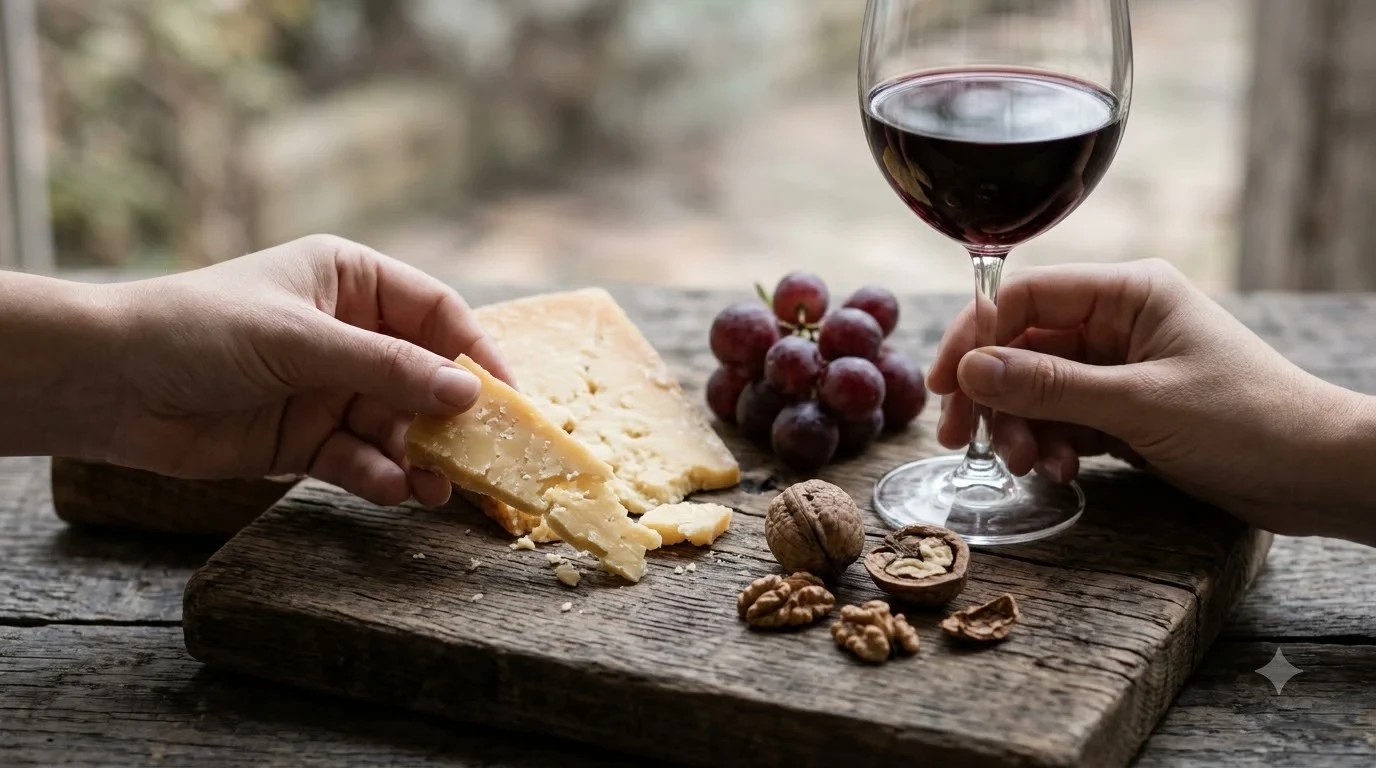
Both wines can work with cheese, but the type of cheese matters. Salt and fat soften the perception of tannin, which can make Merlot particularly enjoyable with aged cheddar and other firm cheeses. Grenache also works well with moderately aged cheeses, especially alongside olives, cured meats and roasted vegetables.
Acidic dishes require another consideration. Tomato-heavy meals can make wines with insufficient acidity seem flat. Choose a fresher Grenache or a Merlot with enough acidity to balance the dish rather than relying on body alone.
Neither grape is an ideal first choice for oily fish such as salmon or mackerel when the wine is strongly tannic. Tannins can clash with fish oils and produce an unpleasant metallic impression. A lighter, low-tannin red may be more suitable if you want to serve red wine with fish.
For additional comparisons involving Grenache’s structure and flavor, see Grenache vs Pinot Noir and Grenache vs Shiraz.
Serving Temperature, Glassware and Storage
Both Grenache and Merlot generally benefit from being served slightly cooler than typical room temperature, with lighter versions around 55–60°F and fuller-bodied examples around 60–65°F. Proper serving temperature helps preserve fruit aromas, maintain freshness and prevent alcohol from becoming too prominent.
A lighter Grenache can benefit from the cooler end of the range. This is particularly useful for aromatic Spanish Garnacha and lighter Australian examples. Fuller southern Rhône wines and concentrated old-vine bottlings can be served slightly warmer to allow their deeper fruit and savory aromas to develop.
Merlot also benefits from moderate cooling. A lighter Chilean or California Merlot can be served at approximately 55–60°F, while a fuller Bordeaux-style wine can be served around 60–65°F. Avoid leaving either wine in a warm room for too long before pouring.
A standard wine glass with a reasonably wide bowl works well for both grapes. This gives the wine room to release aromas without requiring specialized glassware. A 5-ounce pour is a useful serving size, and a standard 750-milliliter bottle contains approximately five such glasses.
Decanting depends on the style and age of the wine. A young, concentrated Grenache may benefit from 15–30 minutes of aeration if it initially seems closed or overly concentrated. Young, full-bodied Merlot can benefit from approximately 30–60 minutes of decanting, especially when its tannins are prominent.
Older bottles require more care. Extended exposure to oxygen can reduce freshness, particularly in delicate wines. For an older Grenache or Merlot, a short period in a decanter may be sufficient, and some bottles are better poured directly into glasses.
Store unopened bottles on their sides in a cool, dark place near 55°F, away from direct sunlight and temperature fluctuations. After opening, replace the cork or closure and refrigerate the bottle. Most still red wines retain reasonable freshness for approximately 3–5 days when stored properly.
For the best comparison, serve both wines at similar temperatures and use the same type of glass. This makes differences in fruit, acidity, alcohol and tannin easier to recognize.
How to Choose Between Grenache and Merlot
Choose Grenache if you enjoy expressive red berries, peppery spice and a warm, generous style of red wine. Choose Merlot if you prefer plum and dark cherry flavors, a rounded texture and a versatile companion for everyday meals.
Grenache is particularly suitable for drinkers who enjoy Mediterranean flavors and wines with noticeable aromatic character. A bottle from Priorat can provide concentration and depth, while a lighter Garnacha or Australian Grenache may offer fresher fruit and a more relaxed drinking experience.
Merlot is a useful choice for people who want an adaptable red that can accompany several different dishes. A Bordeaux Right Bank example may offer more complexity and savory structure, while a fruit-forward California or Chilean Merlot can be approachable without requiring a formal meal.
Consider these practical situations:
- For grilled lamb: Choose Grenache for its ripe fruit, gentle tannin and Mediterranean spice.
- For roast beef: Choose Merlot for its plum character and rounded structure.
- For mushroom risotto: Choose a savory, cooler-climate Merlot.
- For grilled vegetables: Choose Grenache, especially with rosemary, thyme and olive oil.
- For a fruit-forward red: Try either variety, but look for ripe strawberry and raspberry in Grenache or plum and blackberry in Merlot.
- For a softer finish: Compare a low-tannin Grenache with a fruit-forward Merlot rather than assuming that all examples have the same structure.
Blends also deserve consideration. Grenache is frequently combined with Syrah and Mourvèdre in southern Rhône wines and Australian GSM blends. These combinations can offer more structure and darker fruit than a straightforward Grenache bottling.
Merlot is similarly important in blends, particularly in Bordeaux, where it contributes fruit and softness alongside Cabernet Sauvignon and Cabernet Franc. A blended wine may therefore taste quite different from a single-variety Merlot, even when Merlot remains its main grape.
Neither variety is automatically better. The choice depends on whether you prefer Grenache’s ripe red fruit and warmth or Merlot’s rounded dark fruit and balanced structure. Exploring different regions is often more revealing than judging either grape from a single bottle.
For an additional explanation of Merlot’s texture, fruit character and Bordeaux blending role, see Decanter’s Merlot grape variety guide.
Frequently Asked Questions
Is Grenache the same grape as Garnacha?
Yes. Grenache is the French name for the grape known as Garnacha in Spain. In Sardinia, it is called Cannonau, and the same variety has several other regional synonyms. The name on a bottle often reflects the country’s winemaking traditions rather than a different grape.
Is Grenache used to make rosé wine?
Yes. Grenache’s relatively thin skins make it particularly suitable for rosé production. It contributes to well-known southern French rosés, including wines from Tavel and Lirac. Its strawberry and cherry characteristics can give rosé a distinctly fruity and aromatic profile.
Can Grenache be made into fortified wine?
Yes. Grenache is used to produce vins doux naturels in southern France, including Banyuls and Rivesaltes. These wines are made using a fortification process that preserves some grape sweetness. They are different in style from the dry Grenache table wines commonly compared with Merlot.
What is a GSM wine, and how does Grenache contribute?
GSM stands for Grenache, Syrah and Mourvèdre, three grapes frequently combined in southern Rhône-inspired wines. Grenache generally supplies ripe fruit and alcohol, while Syrah and Mourvèdre can contribute additional structure, darker fruit and savory complexity. Australian versions sometimes use the name Mataro for Mourvèdre.
Why is Merlot important in Bordeaux blending?
Merlot ripens earlier than Cabernet Sauvignon, which gives Bordeaux growers flexibility during harvest. Its fruit and softer texture also complement the firmer structure of Cabernet Sauvignon and Cabernet Franc. This combination helps producers create wines with a balance of fruit, tannin and complexity.
Grenache and Merlot are both excellent choices for red wine drinkers, but they offer different experiences at the table. Grenache is the better starting point for ripe red fruit, aromatic spice and Mediterranean dishes, while Merlot is a dependable choice for rounded dark fruit, roasts and savory meals. Try examples from different regions to discover which grape best matches your preferred style.
More in Wine vs Wine
 Chenin Blanc vs Pinot Gris: Acidity, Body, and Pairing DifferencesUpdated Nov 20, 2026
 Chianti vs Lambrusco: How Tuscany and Emilia-Romagna Reds CompareUpdated Nov 20, 2026
 Chianti vs Primitivo: Key Differences in Taste, Body, and PairingUpdated Nov 20, 2026
 Chianti vs Rioja: Key Differences in Taste, Aging, and PairingUpdated Nov 20, 2026
 Chianti vs Shiraz: How Acidity, Body, and Food Pairings CompareUpdated Nov 20, 2026
 Chianti vs Syrah: Key Differences in Taste, Body, and Food PairingUpdated Nov 20, 2026