

We may earn a commission when you buy through links on this page, at no extra cost to you. Learn more.
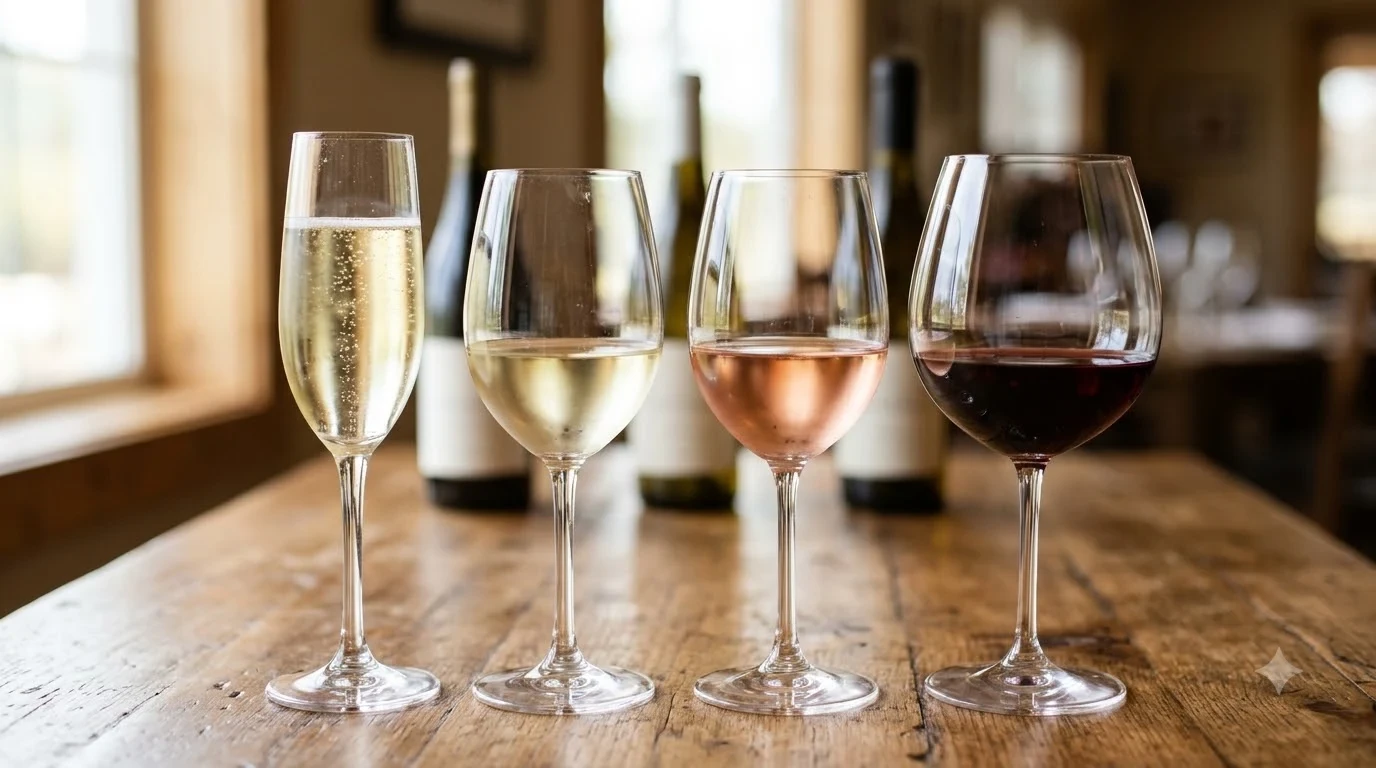
Vin blanc—the answer to “what is vin blanc”—is the French term for white wine, a broad category typically made from grape juice without the extended skin contact used for most red wines. It does not name one grape, one region, or one sweetness level. A vin blanc can be crisp and dry, rich and oak-aged, gently sweet, or sparkling, depending on the grapes and winemaking choices.
French words appear on wine lists, bottle labels, and restaurant menus, so recognizing them makes it easier to understand what is being offered. The useful starting point is simple: vin means wine and blanc means white. From there, grape variety, place of origin, sweetness, acidity, and production method tell you what the wine is likely to taste like.
What the French Term Means on a Label
Vin blanc translates directly as “white wine.” It describes the wine’s color category, not its grape, price, quality, or exact flavor, and it can refer to wines made in France or elsewhere.
On a French wine list, the words may appear as a simple category heading beside vin rouge (red wine) and vin rosé (rosé). A restaurant might group Chablis, Sancerre, and Alsace Riesling under vins blancs even though they come from different regions and grapes. The phrase does not tell you whether a wine is bone-dry, sweet, still, or sparkling; it establishes only that it is white.
A French label gives more detail through an appellation, producer, grape variety, or vintage. Chablis points to a Burgundy appellation associated with Chardonnay; Sancerre is a Loire Valley appellation especially associated with Sauvignon Blanc. Alsace bottles often name Riesling, Pinot Gris, or Gewürztraminer, details that say more about style than the general words vin blanc.
The wording is not a quality grade: an everyday white and a complex special-occasion bottle can both be called vin blanc. A place name such as Burgundy or the Loire Valley gives origin information, while Chardonnay or Sauvignon Blanc identifies a grape. For more categories beyond color, see our guide to Wine by Type.
How White Wine Gets Its Color
White wine is usually made by pressing grapes and fermenting the juice apart from the skins. That production choice explains why white wine can come from pale-skinned grapes or from certain dark-skinned grapes with light-colored juice.
Most grapes have nearly colorless juice inside. Much of the red or purple pigment sits in the skins, so a winemaker can make a white wine from a dark-skinned variety by pressing the fruit soon after harvest and separating the juice before extended skin contact. In Champagne, for instance, Pinot Noir and Pinot Meunier can be used to make a white sparkling wine known as blanc de noirs. The term means “white from black,” referring to dark-skinned grapes handled to produce a pale wine.
For a conventional white, the grapes are harvested, brought to the winery, and pressed. The juice is then settled or clarified before yeast converts grape sugars into alcohol. The process is broadly similar to red winemaking, but red wines generally ferment with their skins, allowing pigment and more tannin to enter the wine. White wines typically have much less skin contact, so they tend to show less color and a lighter tannin structure.
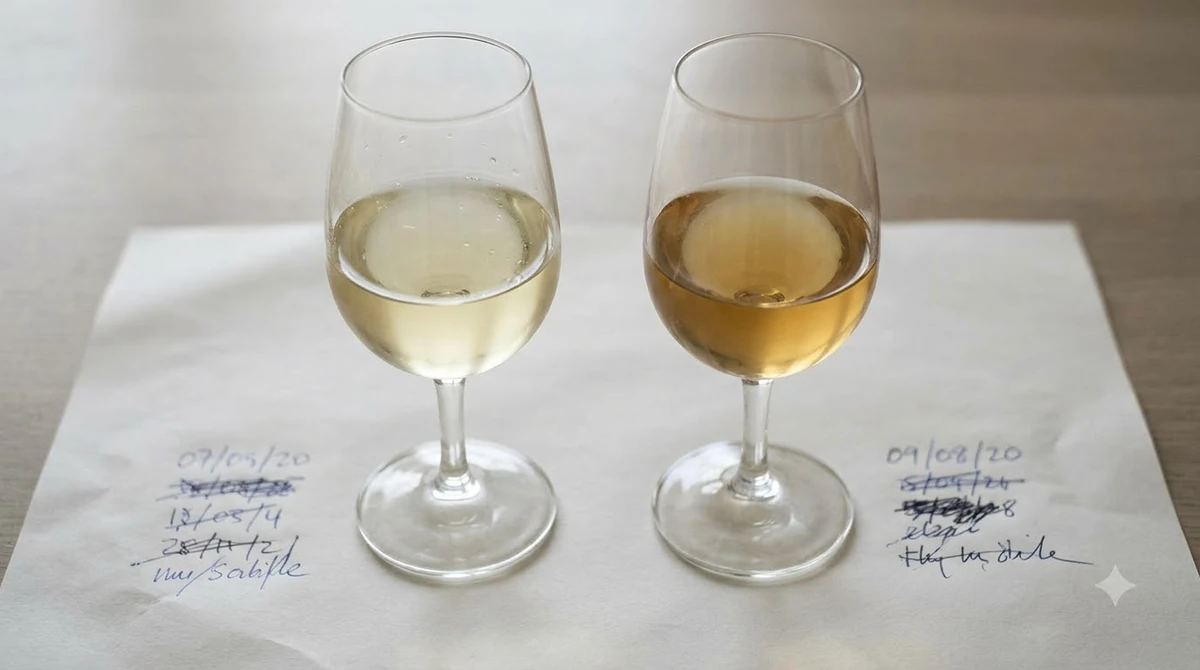
Winemakers can deliberately change that approach. Some white grapes ferment or macerate with their skins for an extended period, producing what is commonly called orange or skin-contact wine. These wines may look amber or copper rather than pale straw, and skin contact can contribute grip, texture, and additional savory notes. They are still made from white grapes; their color comes from the winemaking method rather than from being a conventional red wine. Production choices also shape aroma and texture: stainless steel tends to preserve fresh fruit and floral character, while oak can add spice, toast, and roundness. Lees contact with spent yeast cells can contribute a fuller mouthfeel or fresh-bread nuance. Wine Enthusiast explains pressing, fermentation, oak, lees, and bottling in its article on how white wine is made.
French Regions and Grapes to Know
White wine covers many grape varieties, and French regions offer a useful way to connect a name on the label with a likely style. Chardonnay, Sauvignon Blanc, Chenin Blanc, Riesling, and Viognier are among the key varieties to recognize.
Chardonnay is associated with Burgundy, Champagne, and Languedoc in France. Its style can range from lean and mineral to broad and creamy, depending on climate, ripeness, fermentation, and oak. White Burgundy is made from Chardonnay, but the phrase “Chardonnay” alone does not guarantee a buttery or heavily oaked wine. Cooler-climate examples can emphasize lemon, apple, and acidity, while riper or barrel-aged examples can feel fuller. Sauvignon Blanc is found in Bordeaux, the Loire Valley, southwestern France, and Languedoc. It often gives high acidity and aromas that may suggest citrus, green fruit, herbs, or freshly cut grass. Sancerre and Pouilly-Fumé are familiar Loire examples; Sémillon is another important white grape in Bordeaux. If you are choosing a bottle for a lively, refreshing style, start with this grape or look at vin blanc wine options by style.
Chenin Blanc is especially associated with the Loire Valley and can be made dry, off-dry, or sweet, with acidity that helps the wine stay fresh. Riesling, Gewürztraminer, and Pinot Gris are important white varieties in Alsace. Riesling commonly combines pronounced acidity with citrus, orchard-fruit, or floral notes; Gewürztraminer is often more aromatic, while Pinot Gris can have a fuller texture. Viognier, linked with the Rhône Valley and Languedoc, often produces a more fragrant, rounded white.
These regional associations are guideposts, not flavor guarantees. France’s national tourism website links Chardonnay with Burgundy, Champagne, and Languedoc; Sauvignon Blanc with Bordeaux and the Loire; Chenin Blanc with the Loire; and Riesling, Gewürztraminer, and Pinot Gris with Alsace. Its overview of French wine grapes and regions is a handy reference when you encounter unfamiliar place names. Climate adds another layer: Decanter describes Chablis in northern Burgundy as cooler than most of the region, with Chardonnay wines that can be crisp, flinty, and higher in acidity. Wine Enthusiast places Sancerre in the eastern Loire and describes its Sauvignon Blanc whites as citrusy, mineral, herbal, and lively. Comparing the two shows how one broad color category can span very different expressions, even when both wines are dry.
Sweetness, Acidity, and Body
Two white wines can look almost identical and taste completely different because sweetness, acidity, alcohol, and body are separate parts of a wine’s structure. These qualities are more helpful for choosing a bottle than color alone.
Sweetness depends largely on how much grape sugar remains after fermentation. When yeast converts nearly all fermentable sugar into alcohol, the wine tastes dry. When some sugar remains, the wine may taste off-dry, medium-sweet, or sweet. A dry wine can still taste fruity: ripe peach, pear, or tropical aromas do not necessarily mean that sugar remains in the wine. Conversely, a wine with noticeable sweetness can remain balanced if it also has sufficient acidity.
Acidity gives white wine freshness and a mouthwatering sensation. Sauvignon Blanc and Riesling are typically high in acidity, which is why they can feel crisp and lively. Chardonnay is usually medium in acidity and can seem rounder, especially when oak or malolactic fermentation adds texture. Moscato is generally low to medium in acidity and often has a fragrant, gently sweet profile. Serving temperature and food can change how these elements are perceived, but the underlying structure comes from the grapes and winemaking.
Body describes weight and texture rather than color or sweetness. A light-bodied Pinot Grigio may feel brisk and delicate; an oaked Chardonnay can feel broader and creamier. Alcohol, ripeness, lees contact, and oak can all affect that impression. A useful first choice is to decide whether you want something light and refreshing, aromatic and expressive, or full and textured, then narrow the options by grape or region. White wine can also be still or sparkling. The words vin blanc describe color, so they do not by themselves specify bubbles. Champagne and many other sparkling wines are white, while a still Sauvignon Blanc or Chardonnay has no intentional sparkle. Sweetness and carbonation are separate decisions, just as body and acidity are.
Food Pairings for Different White Wine Styles
Good white-wine pairings balance the dish’s weight, acidity, salt, spice, and sweetness. A crisp Sauvignon Blanc suits bright, acidic food, while a fuller Chardonnay is often a better match for richer dishes.
Match acidity with acidity. A high-acid white such as Sauvignon Blanc or Riesling can stand up to lemon, vinaigrette, ceviche, tomatoes, and fresh goat cheese without tasting flat beside them. A low-acid or very round wine may seem dull next to a sharply acidic sauce. For oysters, shellfish, or simply prepared white fish, look for a dry white with refreshing acidity rather than a heavily oaked wine that might overwhelm the delicate flavors.
Match body with weight. A lean Pinot Grigio or unoaked Chenin Blanc can work with steamed seafood, salads, and light vegetable dishes. A fuller Chardonnay can accompany roast chicken, creamy pasta, lobster with butter, or grilled corn. The aim is not to make the wine and food identical; it is to keep one from overpowering the other. A rich sauce generally needs more texture in the glass than a lightly dressed salad.
Sweetness matters with spicy food and dessert. A wine should be at least as sweet as the dessert or it can taste sour or thin. A gently sweet Riesling can balance chili heat in spicy noodles or Thai curries, while a very dry, high-alcohol white may make heat seem sharper. Alcohol and tannin can amplify chili burn, so a big, dry wine is not automatically the best match. Salt and fat can soften the impression of tannin, which is one reason savory food can make structured red wine feel more approachable. Most conventional white wines have comparatively little tannin, so their pairing strengths are usually acidity, fruit, texture, and sweetness. Oily fish can clash with tannic reds; a bright white with enough acidity is often a more straightforward partner. For a specific example, Sauvignon Blanc can be a natural fit with lemon-herb fish, and our guide to how to serve sauvignon blanc covers how temperature affects its fresh character.
How to Serve and Store White Wine
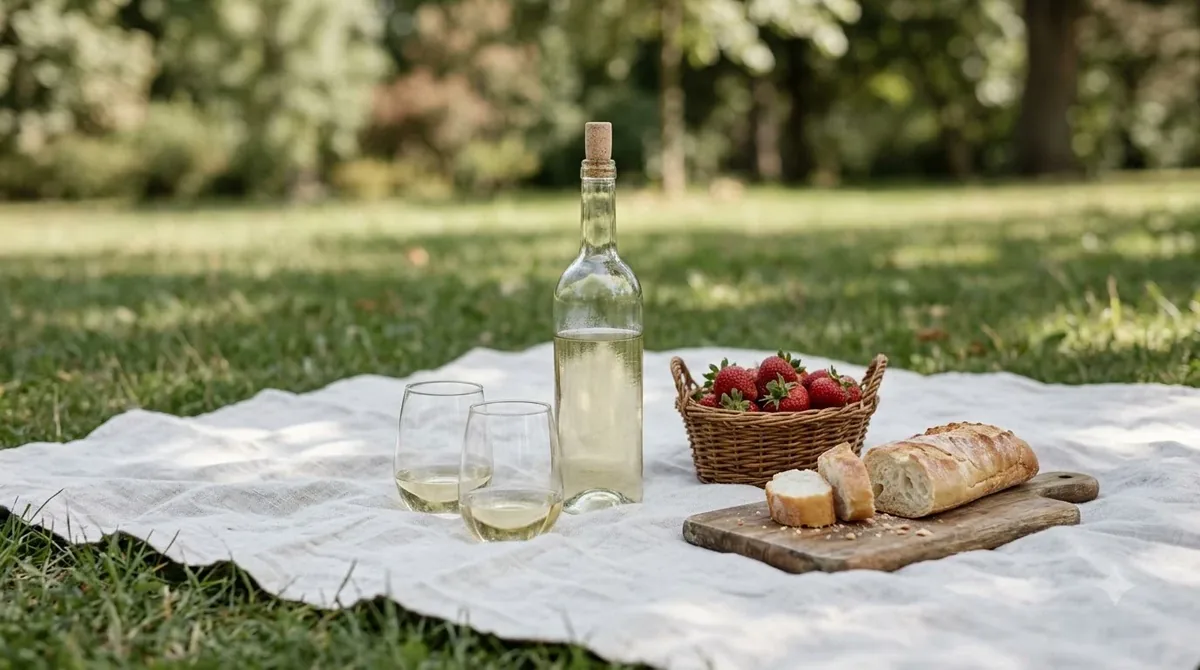
White wine is generally served chilled, but not every bottle should be equally cold. Light whites benefit from a brisk chill, while fuller whites need a little more warmth to show their aroma and texture.
Use these practical serving ranges as a starting point. The temperature is the wine’s temperature in the glass or bottle, not the refrigerator dial. A bottle pulled straight from a very cold refrigerator may need a few minutes on the table before its aromas become expressive.
| White wine style | Serving temperature | Examples |
|---|---|---|
| Light whites and rosé | 45–50°F | Sauvignon Blanc, Pinot Grigio, unoaked Chenin Blanc |
| Full-bodied whites | 50–55°F | Oaked Chardonnay, Viognier, richer white blends |
| Sweet whites | 43–50°F | Moscato, late-harvest Riesling, Sauternes |
A standard pour is about 5 ounces, and a 750-milliliter bottle holds roughly five glasses. A stemmed glass helps keep your hand from warming the bowl, while a moderately sized bowl gives aromatic whites room to release their scents. Very cold wine can mute aroma and flavor.
After opening, replace the closure and refrigerate still white wine; most opened bottles keep their best character for about 3–5 days. Store unopened bottles away from sunlight, heat, and temperature swings, ideally near 55°F. Bottles sealed with natural cork are usually stored on their sides to keep the cork from drying out.
Tip: Chill a light white for about 45 minutes to an hour in the refrigerator if it starts at room temperature, then let it warm slightly in the glass. For serving details specific to Sauvignon Blanc, use the same principle: cold enough to feel refreshing, not so cold that its citrus and herbal aromas disappear.
Frequently Asked Questions
These answers clarify French terms that may appear beside vin blanc on a menu or label.
How do you pronounce “vin blanc”?
In French, the phrase is pronounced roughly “van blahn,” with nasal vowel sounds that do not map neatly onto English. The final consonant in blanc is not pronounced. English speakers may hear different approximations, but the French nasal sounds are the distinguishing feature.
Does “vin blanc” mean the wine is vegan?
No. The term only identifies a white wine, not how it was clarified. Some producers use fining agents derived from egg whites or fish-based isinglass, while others use mineral agents such as bentonite or choose not to fine the wine. Vegan status therefore depends on the producer’s methods, not the words vin blanc.
What does “sur lie” mean on a French white wine label?
Sur lie means that the wine is kept on fine yeast lees after fermentation. For Muscadet Sèvre-et-Maine, France’s INAO says the wine remains on fine lees at least until March 1 after harvest, and the designation is reserved for wine bottled at the winery by December 31. The practice can give the wine a rounder feel, saline mineral notes, and a slight natural spritz.
Can white wine be aged for many years?
Yes. Certain Chablis and other white Burgundies can develop for a decade or longer under suitable storage conditions; Decanter notes that some of the best Chablis wines can preserve their flinty character for decades. Their aromas can shift from fresh citrus and apple toward honey, nuts, toast, and dried fruit as they mature. Most simple, fresh whites are intended to be enjoyed younger.
Why are some white wines bottled with screw caps?
A screw cap is a closure choice, not a reliable quality ranking. It can provide a consistent seal and help preserve fresh fruit character in aromatic whites intended for early drinking. Natural cork remains common too, especially for wines made with longer aging in mind.
In everyday use, vin blanc simply means white wine, but the category includes far more than one familiar style. Use the grape, region, sweetness, acidity, and body to identify the bottle that fits your meal and preferences. Once those details are clear, the French phrase on a wine list becomes an easy starting point rather than a mystery.
More in Wine Types & Grapes
 What Does Mourvèdre Taste Like? Flavor Profile, Regions, and PairingsUpdated Nov 20, 2026
 What Does Marsanne Taste Like? Flavors, Styles, and Food PairingsUpdated Nov 20, 2026
 What Does Malvasia Taste Like? Styles, Flavors, and Food PairingsUpdated Nov 20, 2026
 What Does Grenache Blanc Taste Like? Flavor Profile, Styles, and PairingsUpdated Nov 20, 2026
 What Does Garnacha Taste Like? Key Flavors, Styles, and Pairing TipsUpdated Nov 20, 2026
 What Does Fruit Wine Taste Like? A Complete Flavor and Style BreakdownUpdated Nov 20, 2026