

We may earn a commission when you buy through links on this page, at no extra cost to you. Learn more.
What is colombard? Colombard is a white wine grape originally from southwestern France, known for producing light-bodied, refreshing wines with high acidity and lively citrus and tropical fruit flavors. It is commonly used in dry white wines, aromatic blends and brandy production, particularly in the Cognac and Armagnac regions. Today, Colombard is grown in France, South Africa, California and other wine-producing areas, offering an approachable alternative to familiar whites such as Sauvignon Blanc and Pinot Grigio.
Colombard may not have the international recognition of Chardonnay or Sauvignon Blanc, but it has an interesting history and a distinctive place in modern wine production. Its naturally high acidity makes it useful to winemakers producing fresh, energetic whites, while its versatility allows it to contribute to everything from everyday table wines to traditional French spirits. Understanding its origins, flavor profile, growing regions and food pairings makes it easier to recognize what this underappreciated grape brings to a glass of wine.
What Is the Colombard Grape and Where Did It Originate?
Colombard is a white wine grape variety that originated in southwestern France, particularly the historic Charentes area. It is a natural crossing of Gouais Blanc and Chenin Blanc, two older French grape varieties, and has a long association with French winemaking and distillation.

The grape belongs to the Vitis vinifera species, which includes most of the familiar European wine grapes. Its French origins are particularly important because Colombard developed a reputation for maintaining substantial natural acidity, even in relatively warm growing conditions. That characteristic made it useful for producing wines intended for distillation, as well as refreshing white wines for everyday drinking.
Colombard has several alternative names. French Colombard is a familiar name in California, while Colombar, Bon Blanc, Blanquette and Colombier are among the regional synonyms associated with the variety. These names can make identifying the grape slightly confusing, particularly when comparing European and New World wine labels.
The grape’s name may also have an interesting connection to birds. The Bordeaux wine organization suggests that Colombard could be related to the French word colombe, meaning dove. The possible connection refers to the migration of doves around the time the grapes reach maturity.
Historically, Colombard was especially important in the Charentes, where it contributed to the production of wines and grape spirits. It later became established in other parts of southwestern France, including Gascony and Bordeaux. Its history demonstrates how a grape can serve different purposes depending on regional traditions, vineyard conditions and changing consumer preferences.
Today, Colombard is valued both as a single-variety white wine and as a blending grape. Its acidity can provide freshness to wines made with softer varieties, while its relatively delicate body makes it suitable for uncomplicated, fruit-forward styles.
What Does Colombard Wine Taste Like?
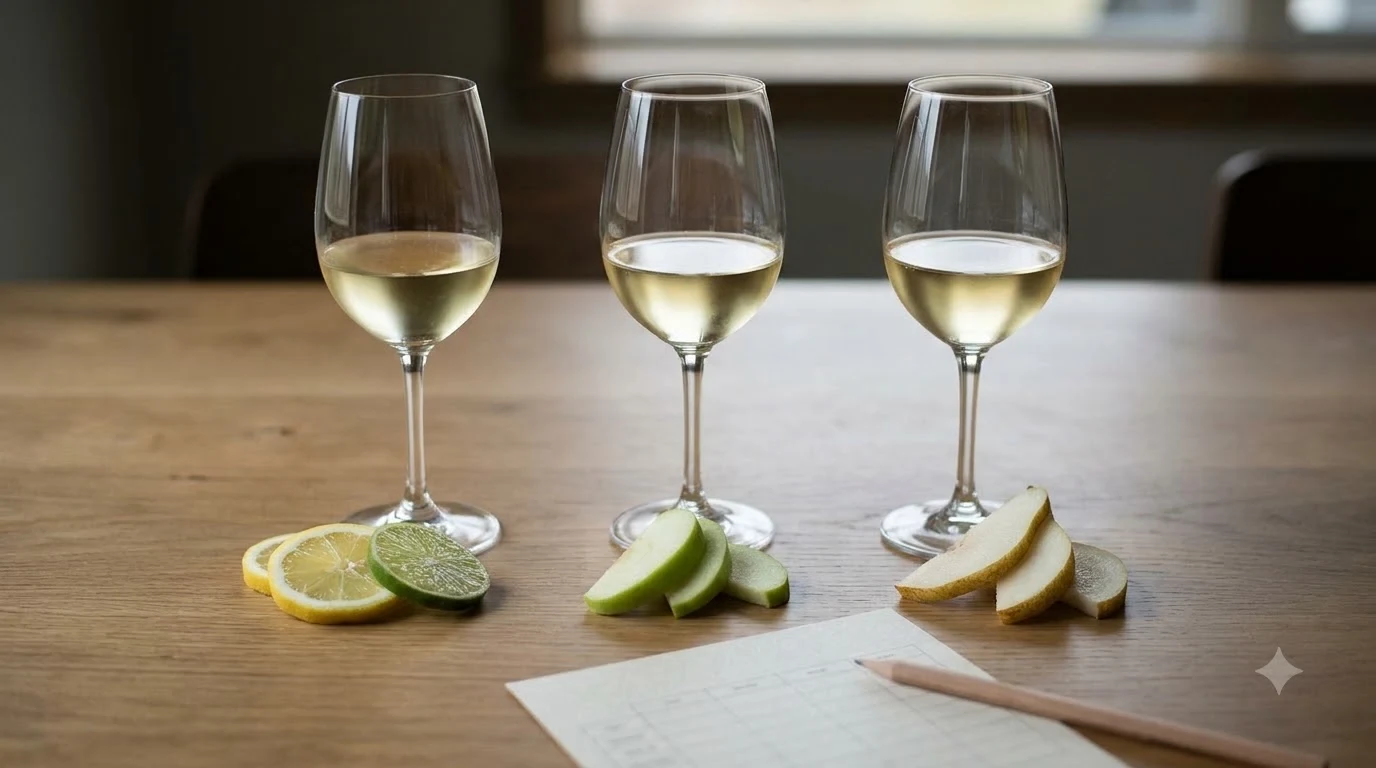
Colombard typically tastes dry, crisp and refreshing, with high acidity, a light body and expressive fruit aromas. Lemon, lime, grapefruit, green apple, white peach and tropical fruit are among its most recognizable characteristics.

The exact flavor profile depends on the climate, harvest conditions and winemaking approach. Cooler conditions and freshness-focused winemaking can emphasize citrus, green apple and herbal notes. Riper fruit from warmer vineyards may produce more pronounced peach, melon, guava and passion fruit characteristics.
One of Colombard’s most appealing qualities is the relationship between its fruit flavors and acidity. The wine can smell generous and fruity without necessarily tasting sweet. A bottle labeled dry Colombard generally has a crisp finish rather than the sugary impression associated with some aromatic white wines.
Common aromas and flavors
- Lime and lemon: Bright citrus notes that give the wine its refreshing character.
- Grapefruit: A slightly bitter citrus quality that adds definition to the finish.
- Green apple: A fresh, tart fruit character that works particularly well with the grape’s acidity.
- White peach and nectarine: Softer stone-fruit flavors that balance sharper citrus aromas.
- Melon and guava: Tropical fruit notes that are especially recognizable in some South African examples.
- Passion fruit and pineapple: Expressive tropical aromas associated with some Gascony wines.
- Lemongrass and floral notes: Aromatic details that can add complexity to an otherwise straightforward white wine.
- Boxwood: A distinctive herbal impression identified in some Bordeaux expressions.
In the glass, Colombard is generally pale straw yellow, sometimes with a faint green tint. Its light appearance reflects the fresh, youthful style commonly associated with the grape.
Its structure is also relatively simple to understand. Colombard has virtually no tannin because it is made from white grapes without the extended skin contact associated with many red wines. Its acidity is much more noticeable than its texture or weight.
For a useful comparison, Sauvignon Blanc is another high-acid white wine that can show citrus, herbal and green-fruit flavors. Colombard can offer similar freshness but often emphasizes peach, melon and tropical fruit alongside its citrus character. Chardonnay, by comparison, generally has medium acidity and can develop a fuller texture, especially when oak aging or malolactic fermentation is involved.
These differences make Colombard a useful choice for drinkers who enjoy crisp whites but want something a little less familiar than Sauvignon Blanc.
Is Colombard a Dry or Sweet Wine?
Most varietal Colombard wines are dry white wines, although the grape can also appear in off-dry blends and sparkling wines. Its naturally high acidity gives even ripe-fruited examples a refreshing sensation that can make the wine seem particularly lively.
It is important to distinguish fruitiness from sweetness. A Colombard wine can smell strongly of peach, melon, guava and tropical fruit while remaining completely dry on the palate. Those aromas come from the grapes and fermentation process rather than necessarily indicating residual sugar.
In France, Colombard is widely associated with dry, aromatic white wines from southwestern vineyards. Côtes de Gascogne is an especially useful regional name to recognize when looking for this style. These wines are commonly intended for drinking young, while their fruit aromas and crisp acidity are still prominent.
Some producers may make softer or slightly off-dry versions, particularly when blending Colombard with other varieties. Sweetness depends on the winemaking decisions and the finished wine rather than being an unavoidable feature of the grape.
Colombard also contributes to sparkling wine production. In this context, its acidity helps provide freshness and balance, particularly when combined with other white varieties. The final sweetness level depends on the producer’s decisions about fermentation and dosage.
For shoppers who enjoy dry, aromatic wines, Colombard is generally a straightforward choice. Its refreshing profile also makes it suitable as an aperitif, especially when served well chilled before a meal.
Tip: Do not assume a wine is sweet simply because the label describes tropical fruit, peach or melon aromas. Colombard is typically made in a dry style, and its natural acidity helps keep the finish crisp.
Where Is Colombard Grown Around the World?
Colombard is most closely associated with southwestern France, but it has become an internationally grown grape with important plantings in South Africa and California. Each region produces wines that reflect local growing conditions and winemaking traditions.
Southwestern France remains the variety’s historical home. Gascony, particularly the Gers department, is an important production area, and Colombard is a recognizable component of the region’s aromatic white wines. Its high acidity and expressive fruit profile suit the region’s preference for fresh, approachable whites.
France: Gascony, Charentes and Bordeaux
In Gascony, Colombard is particularly associated with Côtes de Gascogne. The regional wine organization identifies it as a flagship white variety, accounting for approximately half of the area’s white grape plantings. Wines from this area often emphasize citrus, grapefruit, passion fruit, mango and pineapple aromas. These characteristics make the grape an important foundation for the region’s dry white wines.
The Charentes region has a different historical relationship with Colombard. The grape was traditionally used for wine production connected with the area’s famous brandy-making traditions. It remains relevant to the production of wine destined for distillation into regional spirits.
Colombard also appears in Bordeaux, although it represents approximately 2% of the region’s white grape plantings. According to the Bordeaux wine organization, Côtes de Bourg is a particularly important location for the variety. It can also appear in Bordeaux, Bordeaux Supérieur, Côtes de Bordeaux, Entre-deux-Mers and Crémant de Bordeaux appellations.
In Bordeaux appellation wines, Colombard is used as part of a white-grape blend rather than being presented as the dominant variety in most cases. Other grapes contribute additional roundness, texture and complexity, while Colombard provides aromatic freshness and acidity.
The Bordeaux wine organization’s Colombard profile provides additional details about its regional history, vineyard characteristics and role in Bordeaux white blends.
South Africa: Fruit-forward and versatile styles
South Africa has developed an important relationship with Colombard, where the grape is often spelled Colombar. It is cultivated across several wine-producing areas, including the Olifants River, Northern Cape, Robertson and Breedekloof.
The variety became particularly useful to the South African brandy industry because its natural acidity makes it suitable for producing base wines for distillation. It also gained popularity as a table wine grape, allowing producers to make crisp, fruit-forward whites.
South African examples can display pronounced guava, melon, peach, apricot and tropical fruit characteristics. Some are bottled as single-variety wines, while others are blended to create approachable white wines with lively acidity.
California and other growing regions
California has also played an important role in Colombard’s international development. Known there as French Colombard, the variety has been grown in areas such as Mendocino, Lake County and the San Joaquin Valley.
In California, it has traditionally been useful for producing white wine and blending material. Its ability to retain acidity makes it suitable for wines intended to be approachable rather than heavily structured or designed for long aging.
Other countries, including Australia, also cultivate Colombard. Its international presence illustrates the variety’s versatility, although the most recognizable styles remain connected with southwestern France and South Africa.
How Is Colombard Used in Wine and Brandy Production?
Colombard has two particularly important roles: producing refreshing white wines and supplying grapes for distillation. Its high natural acidity, vigorous growth and relatively neutral underlying structure make it useful in both applications.
For table wines, winemakers generally aim to preserve the grape’s fresh fruit character. Harvesting decisions are important because the balance between ripeness and acidity determines whether the resulting wine emphasizes sharp citrus, softer stone fruit or tropical aromas.
Single-variety Colombard wines
Single-variety wines allow Colombard to show its own personality. These bottles typically have a light body, dry finish, lively acidity and recognizable citrus and fruit aromas.
Cool fermentation in temperature-controlled stainless steel tanks is a common approach for preserving fresh aromas in aromatic white wines. The method helps maintain the grape’s fruit character rather than introducing prominent oak flavors.
Most Colombard table wines are intended for relatively early consumption. Extended bottle aging is rarely necessary because freshness, rather than developing tertiary complexity, is central to their appeal.
Blended white wines
Colombard is also useful as a blending partner. Its acidity can provide structure to varieties that have softer natural freshness, while its fruit aromas help create a more expressive finished wine.
Three familiar blending partners in southwestern France are Sauvignon Blanc, Gros Manseng and Ugni Blanc. Sauvignon Blanc can contribute additional aromatic intensity, Gros Manseng can add structure and stone-fruit character, and Ugni Blanc can help balance Colombard’s pronounced aromatic profile.
For anyone exploring different white wine combinations, understanding the roles of individual grapes is useful. The Airén grape, for example, is another important white variety that has traditionally been valued for its role in wine and spirit production. Comparing these varieties shows how different grapes can serve both commercial and traditional winemaking purposes.
Brandy and traditional French spirits
Colombard’s historical importance extends beyond the wine glass. In southwestern France, the grape has long been associated with distillation for Cognac and Armagnac production.
Distillation requires a suitable base wine rather than the same flavor concentration expected from a finished table wine. High acidity and moderate alcohol can be useful characteristics because the resulting spirit develops its character through distillation and subsequent maturation.
Colombard is not the only grape used in these traditions. Ugni Blanc is another important variety, particularly in Cognac production. The precise grape varieties permitted and used depend on the relevant regional production rules.
It is useful to understand this dual purpose when considering Colombard’s history. The variety was not developed exclusively for fashionable dry white wine. Its ability to produce suitable base wine for distillation helped establish its importance in French viticulture.
How to Serve Colombard and What Foods Pair With It
Colombard is best served chilled at approximately 45–50°F for a crisp, refreshing experience. Its high acidity makes it especially suitable for fresh seafood, salads, grilled fish and lighter dishes that benefit from a bright white wine.
Temperature makes a noticeable difference to the wine’s presentation. If served too warm, the alcohol can become more noticeable and the wine may seem less refreshing. If served excessively cold, some of its fruit and floral aromas can become difficult to detect.
A standard white wine glass works well. There is no need for a specialized glass or decanting, since most Colombard wines are designed for immediate enjoyment rather than extensive aeration.
Food pairing recommendations
The most useful principle for pairing Colombard is to match its acidity with foods that have similar freshness. Its light body also means it works best with dishes that do not overwhelm delicate fruit flavors.
- Seafood: Grilled shrimp, scallops, oysters and steamed mussels complement Colombard’s citrus character. A simple lemon dressing or light herb sauce can reinforce the wine’s freshness.
- White fish: Grilled cod, sole, sea bass and other mild white fish are natural partners. The wine’s acidity complements delicate fish flavors.
- Salads: Green salads with cucumber, citrus, fresh herbs and vinaigrette work particularly well. The wine’s acidity stands up to the dressing without overwhelming the vegetables.
- Sushi: Vegetable rolls, shrimp sushi and mild white fish sushi are good options. Avoid particularly rich or spicy preparations that may dominate the wine.
- Chicken: Roast chicken, grilled chicken breast and lightly seasoned poultry offer enough flavor to complement Colombard while preserving its delicate character.
- Goat cheese: Fresh goat cheese, mild soft cheeses and simple cheese appetizers pair well with the grape’s bright acidity.
- Vegetable dishes: Grilled zucchini, asparagus, green beans and vegetable tarts make suitable partners, especially when prepared with fresh herbs and olive oil.
Food preparation matters as much as the main ingredient. A grilled fish dish with lemon and herbs is likely to work better than a heavily smoked or intensely spiced fish preparation. Similarly, a lightly dressed salad is a better match than one dominated by a sweet or creamy dressing.
Salt and fat can soften the perception of wine acidity, but very rich dishes may overwhelm a light-bodied Colombard. For this reason, grilled seafood, fresh vegetables and moderately seasoned poultry are generally more dependable choices than heavy cream sauces or intensely flavored meats.
Spicy food requires a little more care. Colombard’s freshness can be pleasant alongside moderately seasoned dishes, but chili heat can become more pronounced when alcohol is present. Mild seasoning is generally the safer option.
Serving and storage guide
Colombard is relatively uncomplicated to handle. A few basic serving and storage practices will help preserve its fresh aromas and lively character.
| Wine characteristic | Typical Colombard style | Practical recommendation |
|---|---|---|
| Wine color | Pale straw to light yellow | Serve in a clear white wine glass. |
| Sweetness | Usually dry | Pair with fresh and savory dishes. |
| Body | Light | Choose seafood and lighter meals. |
| Acidity | High | Match with citrus, vinaigrette and fresh herbs. |
| Tannin | Very low to none | No special tannin management is needed. |
| Alcohol | 11.5–13.5% ABV | Compare the bottle’s alcohol percentage with this typical range. |
| Serving temperature | 45–50°F | Chill before serving. |
| Decanting | Generally unnecessary | Open and pour shortly before drinking. |
| Typical drinking style | Young and fresh | Enjoy while its primary fruit aromas remain prominent. |
After opening, reseal the bottle and keep it in the refrigerator. Most still white wines remain enjoyable for approximately 3–5 days when properly stored, although their aromas and freshness gradually decline. A vacuum stopper or other suitable wine preservation closure can help reduce exposure to oxygen.
Colombard is not generally a wine that benefits from long-term cellaring. Unlike certain structured Chardonnays or age-worthy Rieslings, its appeal usually lies in youthful fruit, bright acidity and uncomplicated freshness.
How Does Colombard Compare With Other White Wine Grapes?
Colombard is a useful alternative to familiar white grapes because it combines high acidity with a light body and an expressive fruit profile. Comparing it with Sauvignon Blanc, Chardonnay, Airén and Arinto helps explain its distinctive position among international white wines.
It shares some characteristics with Sauvignon Blanc, particularly citrus flavors and refreshing acidity. However, Colombard often has a softer tropical and stone-fruit emphasis, while Sauvignon Blanc can show stronger herbal and grassy notes.
Chardonnay is generally more flexible in terms of texture and winemaking style. It can be crisp and mineral-driven or rich and creamy, depending on the growing region and techniques such as oak aging. Colombard is more consistently associated with light-bodied, fruit-forward wines.
Airén offers another interesting comparison. It is an important Spanish white grape traditionally used for wine and distillation, but it generally has a more restrained aromatic profile than Colombard. Readers interested in that variety can explore the Airén grape and its role in Spanish wine production.
Arinto, a Portuguese white grape, is another variety worth comparing. Like Colombard, it is valued for its naturally refreshing acidity. However, Arinto is often associated with citrus, mineral and saline characteristics, particularly in Portuguese wines. The article on Arinto wine provides another perspective on how acidity shapes white wine styles.
Brachetto offers a contrast rather than a direct comparison. It is an aromatic Italian grape best known for producing fragrant red wines, including lightly sparkling styles. Its sweetness and red-fruit character are quite different from the typical dry, citrus-driven profile of Colombard. Readers interested in aromatic wines can also explore the Brachetto grape.
The following comparison summarizes the general characteristics of these varieties. Individual wines can differ considerably depending on their region, ripeness and production method.
- Colombard: Light-bodied, high-acid white wine with citrus, green apple, peach and tropical fruit notes.
- Sauvignon Blanc: High-acid white wine with citrus, green fruit and frequently herbal or grassy aromas.
- Chardonnay: Medium-acid white wine with a broad range of possible styles, from crisp apple and citrus to richer stone fruit and creamy textures.
- Airén: Spanish white grape commonly associated with relatively neutral, light and straightforward wines and distillation.
- Arinto: Portuguese white grape recognized for pronounced acidity, citrus character and refreshing structure.
- Brachetto: Aromatic red grape associated with floral aromas, red berries and often gently sparkling or sweet wine styles.
For readers interested in exploring more varieties and wine styles, the Wine by Type section offers a broader introduction to the grapes, regions and production methods that shape different bottles.
Colombard’s main strength is its combination of freshness, aromatic fruit and versatility. It may not have the depth or aging potential of some premium white wine varieties, but it fills a useful role for people who enjoy uncomplicated, refreshing wines.
Frequently Asked Questions
How do you pronounce Colombard?
Colombard is commonly pronounced koh-lom-BAR, with emphasis on the final syllable. The spelling can look unfamiliar to English-speaking wine drinkers, but the pronunciation becomes easier once the French origin is understood.
Is Colombard related to Chardonnay?
Colombard is not a direct offspring of Chardonnay. Its documented parents are Gouais Blanc and Chenin Blanc, although Gouais Blanc is also an ancestor of Chardonnay. This gives the two varieties a distant genetic connection rather than a direct parent-child relationship.
Can Colombard be used to make sparkling wine?
Yes. Colombard can be used in sparkling wine production as well as still wine and distilled wine. Its naturally high acidity makes it useful in wines where freshness is an important part of the finished style.
What color are Colombard grapes when ripe?
Ripe Colombard berries are generally yellowish green, sometimes developing a subtle golden appearance as they mature. The variety produces medium-sized clusters, and the berries are typically round to short oval in shape.
Does Colombard have official regional wine appellations?
Yes. Colombard is permitted in several French regional wine appellations, including certain Bordeaux designations. It is also closely associated with the Côtes de Gascogne geographical indication in southwestern France, where dry white wines are an important part of regional production.
Colombard is a versatile French white grape that deserves attention for its refreshing acidity, approachable texture and citrus-driven fruit character. Whether enjoyed as a dry Côtes de Gascogne white, a South African varietal wine or part of a carefully balanced blend, it offers an enjoyable option for people who appreciate crisp, aromatic whites. Serve it chilled with seafood, salads or grilled chicken to appreciate the freshness that has made this grape valuable to winemakers for generations.
More in Wine Types & Grapes
 Zinfandel Sugar Content: Dry Red vs. White Zinfandel GramsUpdated Nov 21, 2026
 Best Zinfandel Substitute Options for Sipping and CookingUpdated Nov 21, 2026
 Zweigelt Food Pairing: Best Dishes, Cheeses, and Serving TipsUpdated Nov 21, 2026
 Zinfandel Tannins Explained: How Structure Shapes Every BottleUpdated Nov 21, 2026
 Zinfandel Sweetness Level: Dry Red vs. Sweet White Zin ExplainedUpdated Nov 21, 2026
 Xinomavro Food Pairing: Best Dishes, Styles, and Serving TipsUpdated Nov 21, 2026