
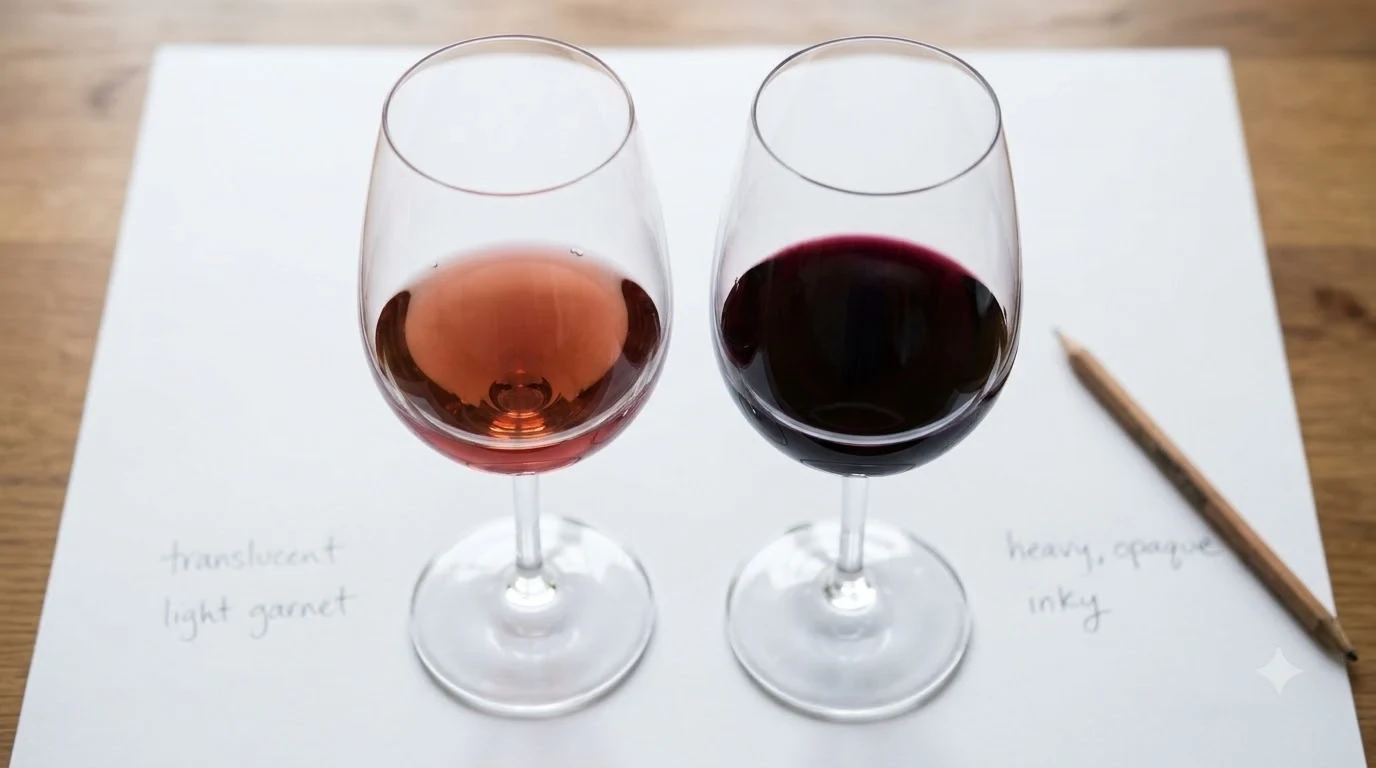

We may earn a commission when you buy through links on this page, at no extra cost to you. Learn more.
Pinot gris color typically ranges from pale straw and yellow-gold to light copper, with some skin-contact versions showing peach, pink, or amber tones. The grape has naturally pinkish-gray skins, even though most Pinot Gris is made as white wine. Its final appearance depends on grape ripeness, growing conditions, and how long the juice remains in contact with those skins during winemaking. A pale glass is normal, but a deeper golden or copper shade can also be completely appropriate.
Pinot Gris is an interesting white wine because its name refers to the color of the grapes rather than the finished wine. The same variety is known as Pinot Grigio in Italy, where many producers favor crisp, light-colored wines, while Alsace in France is known for richer expressions that can display deeper golden hues. Understanding these differences makes it easier to recognize the grape, interpret what you see in the glass, and choose a bottle that suits your preferences.
What Color Is Pinot Gris Wine?
Pinot Gris usually appears pale yellow to golden yellow, sometimes with a subtle copper or pinkish tint. The shade can vary considerably between producers, but a light gold or straw appearance is a reliable starting point when identifying a conventional bottle.
Most everyday Pinot Gris and Pinot Grigio wines are transparent, with a relatively light appearance. Hold a glass against a white background and look for pale straw, lemon-yellow, or soft gold. These shades are especially common in fresh, lightly structured wines made with minimal contact between the juice and grape skins.
Some bottles have a noticeably deeper appearance. A golden Pinot Gris from Alsace, for example, can look more substantial than a pale Italian Pinot Grigio. This difference reflects several winemaking and growing decisions rather than a fundamental difference in grape variety.
Here are the main shades you might encounter:
| Color | Typical appearance | Common association |
|---|---|---|
| Pale straw | Very light yellow with subtle green reflections | Fresh, youthful Pinot Grigio |
| Lemon yellow | Clear, light-to-medium yellow | Fresh, dry white wine |
| Golden yellow | Deeper yellow with warm golden reflections | Riper, richer Pinot Gris |
| Copper | Gold with orange or reddish-brown reflections | Skin-influenced Pinot Gris |
| Peach or pale pink | Soft blush or peach-colored tint | Limited skin contact |
| Amber | Deep orange-gold or brownish orange | Extended skin-contact wine |
These are descriptive categories rather than official color classifications. A wine does not need to fit precisely into one shade to qualify as Pinot Gris. Two bottles made from the same grape can look quite different while both being sound examples of the variety.
Color is also influenced by the lighting and the glass itself. A wine viewed in a dim restaurant may look darker than the same wine held near a window. For a more reliable visual assessment, use a clear glass and natural, indirect light.
Why Pinot Gris Grapes Have Grayish-Pink Skins
The name Pinot Gris comes from the grape’s distinctive grayish-pink skin, which separates it visually from many other white wine varieties. The finished wine is usually white because producers generally press the grapes and separate the juice from the skins before fermentation.
The word gris is French for gray, while grigio is the corresponding Italian word. Both names describe the same grape variety, not two separate types of wine. Pinot Gris is also related to Pinot Noir, sharing a mutation within the Pinot family, as explained by Wine Enthusiast in its discussion of Alsatian Pinot Gris.
The grape berries can have a dusky appearance that ranges from grayish pink to grayish blue. Their skins contain pigments and other compounds that can influence the appearance and structure of wine when they remain in contact with the juice.
However, the presence of colored grape skins does not automatically make the wine rosé. Most conventional Pinot Gris production involves pressing the grapes relatively quickly, reducing the amount of pigment extracted into the juice. The resulting wine is classified as white even though the fruit itself is not green or white-skinned.
How Pinot Gris differs from Pinot Noir
Pinot Noir has much darker skins and is normally used to produce red wine. Pinot Gris has lighter, grayish-pink skins and is generally made into white wine. Their relationship is a useful reminder that relatively small differences within a grape family can produce substantially different appearances in the vineyard and cellar.
For drinkers, the important distinction is that grape-skin color and wine color are related but not identical. A gray-skinned grape can produce a pale white wine, while a producer who deliberately extracts more pigment can create a deeper-colored expression.
How Winemaking Changes Pinot Gris Color
Skin contact is one of the most important factors affecting Pinot Gris color. The longer grape juice remains with the skins, the more opportunity there is to extract pigments, phenolic compounds, and other substances that influence the wine’s appearance and texture.
For conventional white Pinot Gris, producers generally separate the juice from the skins before fermentation or keep contact relatively limited. This approach helps preserve the familiar pale appearance and fresh fruit character associated with many Italian Pinot Grigio wines.
Skin-contact production follows a different approach. Instead of immediately separating the juice, the winemaker allows the crushed grapes to remain with their skins during part or all of fermentation. This can create additional color, a firmer texture, and more noticeable tannin than a typical white Pinot Gris.
Short skin contact
Limited contact can create a subtle peach, copper, or rose-gold reflection. The wine may still look unmistakably like a white wine, but it can have more visual warmth than a conventionally produced bottle.
Wine Enthusiast describes a Darling Wines Pinot Gris from California’s Petaluma Gap that spent five days on its skins and some stems. Its appearance was described as pale peach-rose gold, illustrating how a relatively defined period of skin contact can affect the finished wine.
Extended skin contact
Longer contact can produce much deeper colors, including orange, amber, and copper. These wines are often grouped with orange wines, a category made from white grapes fermented with their skins rather than a wine made from oranges.
The resulting texture can also be different. Skin-contact Pinot Gris may feel more structured, grippy, or tannic than a conventional white version. Wine Enthusiast explains that some producers use extended contact to create orange-hued wines with noticeable tannic texture.
Not every orange-colored Pinot Gris follows the same recipe. Fermentation vessels, temperature, skin condition, grape maturity, and the duration of extraction can all influence the result. Five days of contact at one winery will not necessarily produce the same color as five days at another.
Tip: If you want a traditional pale Pinot Gris, look for a fresh, conventionally made white wine. If you want a copper, peach, or amber appearance, explore bottles specifically described as skin-contact or orange Pinot Gris.
Pinot Gris Color in Alsace, Italy, and Oregon
Where Pinot Gris is grown and how local producers approach winemaking can influence the shade in your glass. Alsace, northeastern Italy, and Oregon are useful places to compare because they are associated with different expressions of the same grape.
Alsace in northeastern France is especially known for Pinot Gris with a golden appearance and a fuller structure. The region’s dry, sunny conditions and extended autumn growing season can support ripe, expressive fruit. Wine Enthusiast notes that Alsace Pinot Gris can be made in dry, off-dry, and sweet styles, with aromas and flavors ranging from fruit and flowers to smoke, spice, and honey.
The official Alsace wine organization describes Pinot Gris d’Alsace as yellow-gold in appearance. It also highlights its full-bodied structure, dried-fruit and apricot aromas, and smoky character. These wines can look more deeply colored than the lightest Italian examples without requiring extended skin contact.
Italian Pinot Grigio
In northern Italy, Pinot Gris is commonly marketed as Pinot Grigio. Many examples are produced in a fresh, crisp style, with pale straw or light lemon-yellow color. Minimal skin contact helps retain a clean, delicate appearance.
However, Italian Pinot Grigio does not have to be completely pale. Some examples show a slight copper reflection, particularly when the winemaking approach allows more influence from the grape skins. Decanter describes Pinot Gris and Pinot Grigio as often lightly copper-colored, demonstrating that a subtle warm tint is not unusual.
Oregon Pinot Gris
Oregon offers another useful comparison for American wine drinkers. Its Pinot Gris can range from light and refreshing to richer, more textured expressions. The final color depends on the producer’s decisions, the growing conditions, and the degree of skin contact.
California producers are also experimenting with skin-contact Pinot Gris, creating wines with peach, copper, and orange-gold shades. These examples demonstrate that deeper color is not limited to traditional European regions.
When comparing bottles, it helps to consider the regional style rather than treating color as a strict indicator of origin. A pale Oregon wine and a golden Alsace wine can both be excellent examples of Pinot Gris, even though their appearances differ.
Does Pinot Gris Color Tell You About Sweetness or Flavor?
Color can offer clues about winemaking style and grape maturity, but it cannot reliably tell you whether Pinot Gris is dry, off-dry, or sweet. A golden wine is not automatically sweeter than a pale one, and a copper-colored bottle is not necessarily more alcoholic or more intense in flavor.
Sweetness is determined mainly by the amount of residual sugar left after fermentation. If yeast converts most of the grape sugar into alcohol, the resulting wine can be dry even when it has a deep golden appearance. Conversely, a pale Pinot Gris can retain noticeable sweetness.
Alsace provides a particularly clear example. Its Pinot Gris wines can be dry, off-dry, or sweet, depending on harvest decisions and fermentation choices. Some late-harvest examples can be richly sweet while retaining a golden or amber appearance.
What different shades might suggest
Pale straw often accompanies fresh, uncomplicated wines with citrus, green apple, and pear characteristics. This is a familiar profile in many light Italian Pinot Grigio bottlings.
Golden yellow can accompany ripe fruit aromas, including peach, apricot, and yellow apple. In fuller Alsace styles, the wine may also show honey, smoke, gingerbread, or beeswax notes. The official Alsace wine organization describes these characteristics as part of the variety’s aromatic complexity.
Copper, peach, and amber shades may indicate additional skin influence. Depending on the production method, these wines can have more texture, citrus-peel character, spice, and tannin.
For a more useful assessment, consider appearance alongside aroma and taste. A golden wine that smells fresh and tastes dry is still a dry white wine. A pale wine with noticeable residual sugar remains sweet regardless of its light color.
Also remember that color intensity and wine quality are separate matters. A deeper-colored Pinot Gris is not necessarily better, older, or more complex than a pale example. The best choice depends on the style you enjoy and the food you plan to serve.
How to Examine and Serve Pinot Gris
A clear glass, good lighting, and an appropriate serving temperature make it easier to appreciate Pinot Gris color. You do not need professional wine equipment to distinguish pale straw from copper or golden yellow.
Start by pouring a small amount into a transparent wine glass. Tilt the glass slightly over a white surface and examine the center and outer edge of the wine. The center usually appears darker, while the thin layer near the rim makes subtle color differences easier to identify.
Look for three characteristics: intensity, hue, and clarity. Intensity describes how pale or deep the wine appears. Hue refers to whether it leans toward yellow, gold, pink, copper, or orange. Clarity describes how transparent the liquid looks.
Serving temperatures by style
Temperature can affect how the wine feels and how its aromas develop. Light, fresh Pinot Grigio generally benefits from a colder serving temperature than a richer, fuller Pinot Gris.
| Wine style | Serving temperature | What to expect |
|---|---|---|
| Light Pinot Grigio | 45–50°F | Fresh citrus and crisp fruit |
| Fuller Pinot Gris | 50–55°F | More expressive aromas and texture |
| Skin-contact Pinot Gris | 50–55°F | Greater aromatic expression and texture |
| Sweet Pinot Gris | 43–50°F | Freshness alongside sweetness |
These temperatures are practical starting points rather than rigid rules. A bottle that is too cold may conceal delicate aromas, while an overly warm glass can make the alcohol seem more noticeable. For additional practical guidance, see how to serve pinot gris.
Food also helps put the wine’s style into context. Fresh Pinot Grigio pairs naturally with seafood, salads, and lighter dishes. Fuller Alsace Pinot Gris can complement roast pork, veal, duck, mushroom risotto, and aged cheeses such as Gruyère.
When serving a richer, golden Pinot Gris, consider the weight of the dish. A fuller wine can stand up to creamy sauces and roasted meats more easily than a delicate, light-bodied white. For sweet versions, pair the wine with food that is equally sweet or less sweet so the wine does not seem overly sharp.
If you are comparing bottles at home, serve them at similar temperatures and use the same type of glass. This makes it easier to recognize genuine differences in color rather than differences caused by lighting or serving conditions. You can also explore whether Pinot Gris should be chilled before planning a tasting.
How Pinot Gris Compares With Pinot Grigio and Rosé
Pinot Gris and Pinot Grigio are names for the same grape, but neither name guarantees a particular shade. Rosé is a separate wine style, while orange Pinot Gris is a skin-contact white wine that can look surprisingly similar to rosé in the glass.
For a conventional white wine, the difference between Pinot Gris and Pinot Grigio is often more about regional tradition and winemaking choices than grape identity. Italian Pinot Grigio frequently emphasizes lightness and freshness, whereas Alsace Pinot Gris often emphasizes ripeness, texture, and aromatic complexity.
The color distinction is not absolute. Italian producers can make richer wines, and American or French producers can make lighter versions. A pale Pinot Gris is not automatically an Italian-style wine, just as a golden Pinot Grigio is not automatically an Alsatian-style wine.
Pinot Gris versus rosé
Rosé wine gets its pink color from contact between red grape skins and juice during production. Pinot Gris can also develop pinkish tones through skin contact, but it starts with a different type of grape and is generally treated as a white wine variety.
A peach-colored Pinot Gris is therefore not necessarily rosé. It may simply be a white wine made with a little additional contact with its naturally colored skins. The exact appearance depends on the amount of pigment extracted during production.
Pinot Gris versus orange wine
Orange wine is made by fermenting white grapes with their skins. This technique can produce deeper orange and amber colors, along with additional tannin and texture.
Pinot Gris is particularly suitable for this style because its naturally pigmented skins can contribute color and structure. However, not every copper-colored Pinot Gris should automatically be described as an orange wine. Some conventional examples have a subtle copper tint without undergoing extensive skin-contact fermentation.
If you want to compare the terminology more closely, the guide to Pinot Grigio color explains how the same grape can produce different visual styles. For a broader overview of grape varieties and wine styles, visit Wine by Type.
The most useful approach is to consider the production method and the wine’s overall style rather than relying exclusively on its name. A pale, crisp bottle and a copper-colored, textured bottle can both belong to the Pinot Gris family.
Frequently Asked Questions
Can Pinot Gris grapes have different colors on the same vine?
Pinot Gris can show natural variation in berry pigmentation, and grapevine color mutations can sometimes produce unusual differences in fruit appearance. The variety is also closely related to other Pinot family grapes, making variation in skin color an important part of its history. These differences do not automatically mean that the resulting wine will have a different classification.
Does oak aging make Pinot Gris darker?
Oak aging can influence the color of a white wine through maturation and exposure to oxygen, potentially contributing to deeper golden tones. However, oak does not extract the grape-skin pigments responsible for the distinctive color of skin-contact Pinot Gris. A golden wine is not necessarily oak-aged, and many golden Pinot Gris wines are made without noticeable oak influence.
Can Pinot Gris be made into sparkling wine?
Yes. Pinot Gris can be used in sparkling wine production, depending on regional rules and the producer’s approach. Crémant d’Alsace is one example of a regional sparkling wine category that can include Pinot Gris. Its appearance can be pale gold, and bubbles do not require the wine to have pink or orange pigmentation.
Why does Pinot Gris sometimes have a slightly green reflection?
A faint greenish reflection can appear in very pale white wines, particularly when viewed under cool lighting. This is a visual characteristic rather than proof that the wine contains unripe grapes or a particular production ingredient. The underlying wine can still be fully fermented and ready to drink.
Does Pinot Gris lose its color as it ages?
White wines generally tend to develop deeper yellow, gold, and eventually brownish tones as they mature and undergo oxidation. Pinot Gris can follow this pattern, although the speed varies with storage conditions, bottle closure, and winemaking. Some carefully made Alsace Pinot Gris wines are capable of aging for several years, and their color may evolve along with their aromas and texture.
Pinot Gris color ranges from pale straw and lemon yellow to golden, copper, peach, and amber, depending on the grapes and winemaking decisions. The shade alone does not establish sweetness, quality, or origin, but it can provide useful clues about the wine’s style. Whether you prefer a crisp Italian Pinot Grigio or a richer Alsace Pinot Gris, the most important thing is finding an expression whose flavor and texture suit your taste.
More in Wine Types & Grapes
 Zinfandel Sugar Content: Dry Red vs. White Zinfandel GramsUpdated Nov 21, 2026
 Best Zinfandel Substitute Options for Sipping and CookingUpdated Nov 21, 2026
 Zweigelt Food Pairing: Best Dishes, Cheeses, and Serving TipsUpdated Nov 21, 2026
 Zinfandel Tannins Explained: How Structure Shapes Every BottleUpdated Nov 21, 2026
 Zinfandel Sweetness Level: Dry Red vs. Sweet White Zin ExplainedUpdated Nov 21, 2026
 Xinomavro Food Pairing: Best Dishes, Styles, and Serving TipsUpdated Nov 21, 2026