

We may earn a commission when you buy through links on this page, at no extra cost to you. Learn more.
Petite Sirah color is typically deep purple, inky violet, or nearly black, making it one of the darkest and most visually concentrated red wines. Its intense appearance comes from the grape’s naturally dark berries, substantial skin contribution, and the extraction techniques used during winemaking. Young bottles often display vivid purple tones, while mature examples gradually develop garnet, brick-red, and brownish hues.
Color is one of the easiest ways to recognize Petite Sirah before taking a sip. Pour it into a clear glass, and its dense appearance can make the wine look almost opaque, particularly around the center of the glass. Understanding these color characteristics helps explain the grape’s reputation, its role in California red blends, and the differences between young and aged bottles.
What Color Is Petite Sirah Wine?
Petite Sirah is generally a deep purple-red wine with violet, blue-black, and occasionally nearly black visual characteristics. Its color is noticeably more concentrated than that of many lighter-bodied reds, including Pinot Noir and some Merlot wines.
In a glass, a young Petite Sirah commonly shows a dark purple center surrounded by a narrow magenta or ruby-purple rim. Some bottles are so densely colored that very little light passes through the middle. This is why wine descriptions frequently use terms such as inky, opaque, concentrated, and intensely purple.
Several visual characteristics help describe the wine accurately:
- Deep purple: A saturated violet appearance frequently found in young examples.
- Blue-black: A particularly dark shade that can make the wine look almost black under ordinary indoor lighting.
- Dark ruby: A redder appearance that can develop with bottle age or appear in wines with different growing and winemaking conditions.
- Magenta rim: A purple-pink edge that can be noticeable in youthful wines.
- Garnet highlights: Red-brown tones that become more apparent as the wine matures.
Not every bottle looks identical. Growing conditions, grape maturity, harvest timing, fermentation, extraction, and aging all influence the finished wine. A young, concentrated California Petite Sirah may look almost black, while an older bottle from the same producer may show a lighter garnet edge.
Color also varies with the amount of wine in the glass and the lighting in the room. A large pour in a narrow glass can appear darker than a small sample in a broad tasting glass. Natural daylight generally makes purple and ruby distinctions easier to see than warm restaurant lighting.
The important distinction is that Petite Sirah is naturally associated with intense color rather than a single exact shade. Deep purple is the typical starting point, with individual bottles showing different degrees of opacity and red or violet highlights.
Why Petite Sirah Has Such Dark Pigmentation
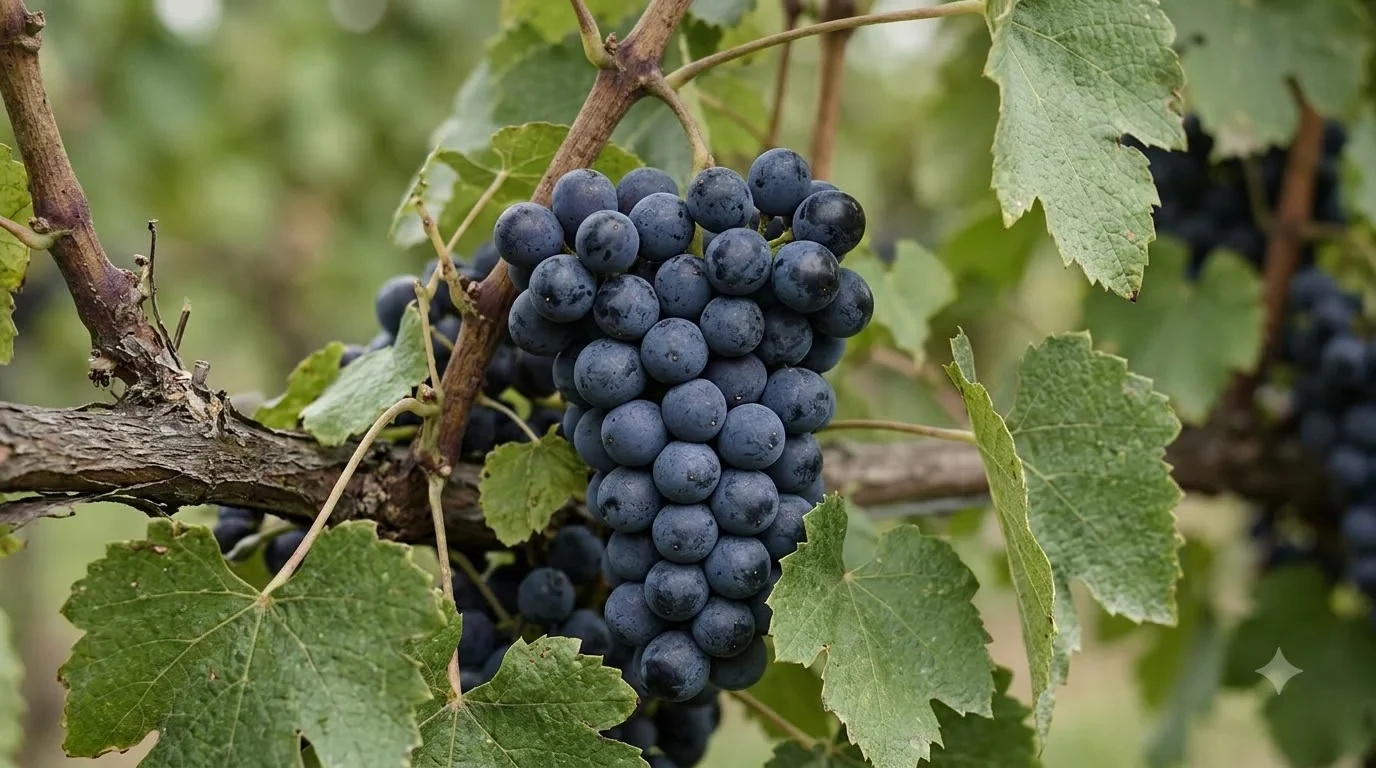
Petite Sirah’s dark appearance begins in the vineyard. Its small, dark berries and concentrated grape characteristics contribute to wines with substantial color, while winemaking decisions determine how much of that color reaches the finished wine.
Petite Sirah is the American name commonly associated with Durif, a grape variety originating in France. According to UC Davis Foundation Plant Services, Durif has black berries and a genetic pedigree of Syrah crossed with Peloursin. This background helps explain why the variety has a distinctive identity separate from ordinary Syrah. The UC Davis Durif grape record provides further information about its identity and registered vine selections.
The word petite refers to the relatively small berries, not a small or weak-growing vine. Smaller berries can provide a relatively high proportion of skin compared with the amount of juice inside each berry. Because grape skins contain important color compounds, this relationship can contribute to concentrated red wine.
During fermentation, winemakers allow grape juice to remain in contact with the skins. This process, called maceration, extracts pigments, tannins, and flavor compounds. Longer skin contact and suitable extraction techniques can produce a wine with greater color concentration and a firmer structure.
Temperature, fermentation management, cap handling, and the duration of maceration influence the final result. Punching down or pumping over the floating grape skins helps maintain contact between the juice and the skins. These decisions affect extraction, although more extraction does not automatically mean better wine.
Petite Sirah’s tannins are another important part of its identity. Tannins contribute grip and structure rather than directly determining every aspect of color. The combination of intense pigmentation and firm tannins helps explain why the wine often feels substantial as well as looking dark.
The Calaveras Winegrape Alliance describes Petite Sirah as producing inky purple wines with concentrated fruit and considerable tannin. Its characteristics make it useful both as a standalone red and as a blending component.
How Petite Sirah Color Changes With Age
Young Petite Sirah typically displays purple, violet, and blue-black tones. With bottle age, its color gradually becomes less purple and more ruby, garnet, and eventually brick-red or brown at the edges.
This transformation is a normal part of red wine development. Anthocyanins, the pigments responsible for much of a red wine’s purple and red coloring, participate in chemical reactions during aging. Some pigment molecules change form or become incorporated into larger compounds, gradually altering the wine’s visible appearance.
A simple way to understand the progression is to compare typical visual characteristics across different stages:
| Wine stage | Typical appearance | Visual characteristics |
|---|---|---|
| Young, approximately 1–3 years | Deep purple | Violet rim, concentrated center |
| Developing, approximately 4–7 years | Dark ruby-purple | More red highlights and less vivid violet |
| Maturing, approximately 8–12 years | Garnet-purple | Noticeable garnet around the edges |
| Older, approximately 13–20 years | Garnet to brick-red | More pronounced red-brown and brick tones |
These are illustrative age ranges rather than fixed deadlines. A wine’s development depends on its vintage, grape quality, acidity, tannin structure, production methods, and storage conditions. A well-structured bottle can retain considerable color for many years, while another may develop more quickly.
Petite Sirah is particularly interesting because its tannin structure can support extended aging. Wine Enthusiast notes that traditional examples have sometimes needed 10 or more years for their textures to soften. However, modern winemaking can produce more approachable wines that are enjoyable much earlier.
Color alone cannot establish whether a bottle is ready to drink. A wine that still looks intensely purple might have developed attractive aromas and flavors, while a wine with a garnet rim may still have substantial tannin. Smell, taste, texture, and overall balance provide more useful information.
Tip: To compare Petite Sirah’s color at different ages, pour equal amounts into identical clear glasses and examine them against a white background. Look at the center and the outer rim separately. This makes changes in purple intensity and garnet development easier to identify.
Comparing Petite Sirah With Other Red Wine Colors
Petite Sirah is generally darker and more opaque than many popular red wines. Cabernet Sauvignon can also have deep color, while Merlot often appears softer and more ruby-red. Pinot Noir usually has a noticeably lighter appearance.
These differences come from grape characteristics and winemaking rather than a universal color rule. Vintage, ripeness, vineyard conditions, extraction, and bottle age can produce exceptions. Nevertheless, comparing the varieties provides a useful reference when examining Petite Sirah.
Petite Sirah versus Cabernet Sauvignon: Both can produce deeply colored wines with substantial tannin. Cabernet Sauvignon commonly displays dark ruby, garnet, and purple shades, while Petite Sirah frequently appears more opaque and intensely purple. Cabernet Sauvignon’s tannins are typically high, and Petite Sirah also has a firm tannic structure.
Petite Sirah versus Merlot: Merlot usually has medium tannin and a softer texture. Its color commonly ranges from ruby to dark purple, depending on the wine. Petite Sirah often looks denser, with a darker center and more pronounced purple-black characteristics.
Petite Sirah versus Syrah: Syrah can also produce dark purple wines, especially in warmer growing regions. The two varieties share a genetic relationship, but Petite Sirah is Durif rather than simply another name for Syrah. Their visual similarities do not mean they have identical grape characteristics.
Petite Sirah versus Pinot Noir: Pinot Noir generally has low-to-medium tannin and a more transparent ruby appearance. Its lighter color makes it a useful contrast with the dense, concentrated appearance of Petite Sirah.
The following comparison summarizes their typical appearances and structural differences:
| Red wine | Typical color | Tannin level | General appearance |
|---|---|---|---|
| Petite Sirah | Deep purple | High | Dense and often opaque |
| Cabernet Sauvignon | Dark ruby-purple | High | Deep and concentrated |
| Merlot | Ruby to dark purple | Medium | Usually softer and less opaque |
| Syrah | Deep ruby to purple | Medium-plus to high | Dark, with regional variation |
| Pinot Noir | Light ruby to garnet | Low to medium | Often more transparent |
These comparisons are particularly useful for people learning to identify wines visually. A dark, nearly opaque center and purple rim suggest a concentrated red, but they cannot confirm the grape variety on their own.
Does Darker Petite Sirah Mean Stronger Flavor?
Petite Sirah’s deep color often accompanies concentrated flavors, firm tannins, and a full-bodied texture. However, appearance and flavor are not interchangeable: a dark wine does not automatically taste more powerful, sweeter, or more alcoholic than a lighter red.
The grape is associated with dark fruit characteristics, including blackberry, blueberry, plum, and black cherry. Secondary and developing aromas can include black pepper, licorice, dark chocolate, coffee, and earthy notes. Oak aging may contribute additional vanilla, toast, and baking spice characteristics.
The wine’s tannin structure can create a drying sensation on the gums and tongue. This sensation is different from acidity, which produces freshness and mouthwatering qualities. Petite Sirah commonly combines substantial tannin with enough acidity to keep its rich fruit profile from feeling completely flat.
Color is only one part of the overall experience. A wine can have an intensely purple appearance while remaining balanced, particularly when ripe fruit, acidity, alcohol, and tannin work together.
Sweetness is another characteristic that should not be judged by appearance. Most varietal Petite Sirah is made as a dry red wine. Its ripe blackberry and plum flavors may seem sweet because of their fruit intensity, but that does not mean the wine contains substantial residual sugar. For more detail, see is Petite Sirah sweet or dry.
To understand how these visual and structural characteristics translate into an actual glass, explore our Petite Sirah tasting notes. The tasting profile provides a fuller picture of how color, aroma, tannin, and finish work together.
How to Examine Petite Sirah Color Like a Wine Professional
A few simple observation techniques can help distinguish purple intensity, transparency, and age-related color changes. A clear glass, a white background, and adequate lighting are usually enough to make a useful assessment.
1. Choose the right glass
Use a clear wine glass without colored decorations. A standard red wine glass with a reasonably wide bowl makes it easier to observe the wine’s depth and rim. Avoid examining the wine against dark furniture or brightly colored surfaces because these can distort your perception.
2. Pour a measured sample
A standard wine serving is 5 ounces, and a 750-milliliter bottle provides approximately five such glasses. For visual assessment, a smaller tasting pour is sufficient. Hold the glass at a slight angle over a white surface and examine the color from the side.
3. Look at the center and rim
The center reveals the wine’s overall concentration, while the outer edge provides information about its hue and development. Young Petite Sirah may have a purple center with a vivid violet rim. Older examples can show more garnet or brick-red tones around the edges.
4. Check transparency
Try looking through the deepest part of the glass. If very little light passes through, the wine is highly opaque. Petite Sirah frequently falls into this category, although not every producer makes an equally concentrated style.
5. Observe the wine after swirling
Gently swirl the glass and allow the wine to settle. This helps release aromas and gives you another opportunity to examine its color. The wine’s movement and legs are influenced by factors such as alcohol and surface tension; they should not be treated as a direct measurement of color intensity or quality.
Temperature also matters when assessing a wine. A practical serving range for a full-bodied red is 60–65 F. Serving Petite Sirah slightly below typical room temperature can help preserve freshness and make its structure more comfortable to appreciate.
Finally, examine the wine under consistent lighting if comparing two bottles. A purple wine viewed under bright daylight can look different from the same wine under a warm yellow lamp. Consistent conditions make visual comparisons much more reliable.
Petite Sirah Color in California Wine Blends
Petite Sirah’s concentrated pigmentation makes it a valuable blending grape, particularly for California producers seeking deeper color and additional structure in red wines. Even a portion of Petite Sirah in a blend can influence the finished wine’s appearance and mouthfeel.
California has become the grape’s most important growing area. Wine Enthusiast identifies Lodi, the Sierra Foothills, Livermore, Paso Robles, and Santa Barbara among the state’s Petite Sirah regions. The grape also appears in smaller quantities in Australia and South America.
In a blend, Petite Sirah can contribute three important characteristics:
- Color concentration: Its dark pigmentation can deepen the appearance of lighter-colored red varieties.
- Tannin structure: Its firm tannins can give a blend additional grip and structure.
- Dark fruit character: Blackberry, blueberry, plum, and spice notes can complement other red grape varieties.
Zinfandel is one example of a California variety that can benefit from Petite Sirah as a blending partner. Zinfandel often offers ripe fruit and a generous texture, while Petite Sirah can add darker coloring and additional tannic structure.
Merlot is another possible blending partner. Because Merlot typically has softer, medium-level tannins, Petite Sirah can add more structure and a deeper visual profile to the finished wine.
Blending proportions vary by producer and wine style. A small addition may make a noticeable contribution, while a larger proportion can produce a wine in which Petite Sirah’s personality becomes more apparent.
In the United States, federal labeling rules generally allow a wine to use a single grape variety name when at least 75% of its composition comes from that variety, subject to applicable requirements. Consequently, a wine labeled Zinfandel may include other grape varieties in its blend.
This explains why Petite Sirah’s influence sometimes appears in wines that do not prominently feature its name. Its contribution is not limited to bottles labeled exclusively Petite Sirah. To explore other varieties and their individual characteristics, visit our Wine by Type collection.
The important point is that blending is not simply about making a wine darker. A skilled producer considers the interaction of color, acidity, tannin, fruit intensity, and overall balance. The goal is a harmonious wine rather than maximum pigmentation alone.
Frequently Asked Questions
Can Petite Sirah have a blue tint?
Yes. Some young examples show noticeable blue-violet highlights, particularly around the rim when viewed in natural daylight. This appearance is related to the wine’s pigment composition and acidity. It is a normal visual characteristic rather than evidence that the wine contains artificial coloring.
Does Petite Sirah leave a purple ring in an empty glass?
It can leave visible purple or red residue after the liquid has been poured out. Pigments and other wine compounds can adhere to the inside surface as the remaining liquid dries. The intensity of the residue depends on the wine’s concentration and the condition of the glass.
Is Petite Sirah naturally darker than Malbec?
Petite Sirah is often extremely dark, but Malbec can also produce deeply colored purple wines. The appearance depends on vineyard conditions, fruit maturity, extraction, and the producer’s preferred style. Neither grape has an absolute color advantage across every bottle.
Can Petite Sirah be made into rosé?
Yes. Rosé production can use limited contact between the juice and dark grape skins before fermentation continues without the skins. The resulting wine can range from pink to deeper salmon or ruby-pink, depending on the production method and extraction.
Does oak aging make Petite Sirah purple?
No. The grape skins provide the primary pigments responsible for Petite Sirah’s purple color. Oak barrels influence the wine’s flavor, aroma, texture, and development, but they are not the source of its characteristic purple pigmentation. Oak aging can contribute vanilla, toast, and spice notes while the wine’s natural color evolves.
Petite Sirah stands out for its exceptionally deep purple color, dense appearance, and substantial tannin structure. Its visual character reflects the grape’s dark berries and the winemaking choices that shape the finished wine. Whether enjoyed young or after years of bottle development, Petite Sirah offers a distinctive example of how grape variety, extraction, and aging influence red wine color.
More in Wine Types & Grapes
 Zinfandel Sugar Content: Dry Red vs. White Zinfandel GramsUpdated Nov 21, 2026
 Best Zinfandel Substitute Options for Sipping and CookingUpdated Nov 21, 2026
 Zweigelt Food Pairing: Best Dishes, Cheeses, and Serving TipsUpdated Nov 21, 2026
 Zinfandel Tannins Explained: How Structure Shapes Every BottleUpdated Nov 21, 2026
 Zinfandel Sweetness Level: Dry Red vs. Sweet White Zin ExplainedUpdated Nov 21, 2026
 Xinomavro Food Pairing: Best Dishes, Styles, and Serving TipsUpdated Nov 21, 2026