

We may earn a commission when you buy through links on this page, at no extra cost to you. Learn more.
A shenandoah valley wine tasting is a chance to explore Virginia wines shaped by limestone soils, mountain elevations, and a relatively dry growing season. The region rewards curious drinkers with Cabernet Franc, Riesling, Chardonnay, and distinctive local blends, served in tasting rooms that range from relaxed farm settings to estate bistros. A good visit starts with a short list of wineries, a realistic route, and enough time to compare the wines rather than hurry through them.
The Shenandoah Valley stretches across a long swath of the central Appalachians, so a wine trip here is as much about choosing a corner of the region as choosing a bottle. Use the notes below to understand the AVA, decide which styles to seek out, and shape a tasting day that leaves room for the landscape and the people making the wine.
Why the Shenandoah Valley’s Geography Matters
The Shenandoah Valley AVA is defined by a mountain-framed landscape, a comparatively dry growing season, and soils with abundant limestone. Together, those conditions help explain why visitors encounter both crisp whites and structured reds across the region.
Virginia Wine describes the Shenandoah Valley as part of the Ridge and Valley region, bounded by the Blue Ridge Mountains to the east and the Appalachian and Allegheny Plateaus to the west. The official AVA includes ten Virginia counties—Frederick, Clarke, Warren, Shenandoah, Page, Rockingham, Augusta, Rockbridge, Botetourt, and Amherst—as well as Berkeley and Jefferson counties in West Virginia. Its footprint is broad, not a compact cluster of tasting rooms, and it reaches from the northern valley toward the Roanoke area.
The AVA was recognized in 1982 as Virginia’s first. The Shenandoah Valley Wine Trail describes it as stretching almost 200 miles, while Visit Shenandoah notes that its boundaries cover about 2.4 million acres. Wine Enthusiast points to limestone soils and a warm, relatively dry growing season; the trail also highlights elevation and mountain shelter. Those conditions support freshness, but grape variety, vineyard site, harvest decisions, and cellar work still shape each wine. For the wider American wine map, start with Wine Regions; the Shenandoah Valley is one part of Virginia’s eight-AVA framework, not a synonym for all Virginia wine country. Its mountain-influenced setting also differs from coastal California, where a russian river valley wine tasting may center on a different mix of cooling influences and grapes.
Which Grapes and Wine Styles Should You Look For?
Start with Cabernet Franc, Riesling, Chardonnay, and Pinot Noir, then branch into local blends and less familiar varieties. These grapes give a first-time visitor a useful cross-section of the region’s red, white, and sparkling possibilities.
Cabernet Franc is a particularly useful red to seek out. It is widely planted in Virginia and appears as a dry varietal wine or as part of a Bordeaux-inspired blend. Look for red-berry fruit, fresh acidity, and a savory edge that may read as herbs or pepper. Compare a single-variety bottling with a Meritage or another red blend: the blend may feel broader, while the varietal wine lets you focus on the grape and vineyard site.
For whites, compare Riesling and Chardonnay rather than assuming all local white wine tastes alike. Riesling can show citrus and orchard fruit with pronounced acidity, and styles range from dry to noticeably sweet. Chardonnay can be crisp and restrained or rounder from lees contact or oak. The Shenandoah Valley Wine Trail also lists Pinot Noir among favored grapes; its lower-to-medium tannin and lively acidity can make it approachable for visitors who prefer less grip than a Cabernet Sauvignon.
Producers may also pour Viognier, Petit Verdot, Vidal Blanc, Traminette, or Norton. Ask which grape is estate-grown, which comes from another Virginia site, and which wine the tasting-room team thinks best expresses the season. Petit Verdot can add color and structure to a blend, while a hybrid such as Vidal Blanc can offer a useful contrast to Chardonnay. A blend is not automatically less distinctive than a single-varietal wine; it may be the winemaker’s clearest expression of balance. Travelers who enjoy contrasting regional identities can also compare the valley with the warmer Australian styles featured in a hunter valley wine tasting.
Wineries to Consider for a First Visit
A useful first itinerary can include a historic producer, a larger estate with a meal option, and a tasting room focused on vineyard scenery. Three good starting points are Shenandoah Vineyards in Edinburg, CrossKeys Vineyards in Mount Crawford, and Muse Vineyards in Woodstock.
Shenandoah Vineyards, Edinburg
Shenandoah Vineyards is a natural stop for visitors interested in regional history. Its tasting room is about two miles from Interstate 81, at 3659 South Ox Road in Edinburg. The winery offers guided flights of estate-crafted wines, with a rotating menu and five-wine or seven-wine options. It is open Wednesday through Sunday, 11 a.m. to 5 p.m.; groups of six or more should call ahead. Outdoor picnics and leashed dogs are welcome outside.
CrossKeys Vineyards, Mount Crawford
CrossKeys suits visitors who want a full-service stop. Wine Enthusiast identifies it as a family-owned, 125-acre estate about 15 minutes from Harrisonburg, with a Tuscan-style villa and on-site bistro. The tasting room is open daily from 11 a.m. to 5 p.m.; traditional tastings use half-ounce pours, and listed flights include Cabernet Franc, Petit Verdot, Chardonnay, and mixed selections. Open tastings stop 30 minutes before closing. Groups of up to eight do not need a reservation for a standard tasting, but larger parties should call ahead. Outside food is not permitted because the estate has a restaurant.
Muse Vineyards, Woodstock
Muse offers vineyard grounds, on-site dining, and a tasting room in Woodstock. Its visitor page lists seasonal hours of noon to 6 p.m. Sunday through Thursday and noon to 8 p.m. Friday and Saturday, with possible winter reductions; reservations and walk-ins are both accepted. The winery says it is about 90 minutes from Washington, D.C. Other options include Barren Ridge Vineyards in Fishersville, described by Visit Shenandoah as a relaxed stop with mountain views and weekend entertainment, and Bluestone Vineyard in Bridgewater, whose hilltop tasting room looks toward the Allegheny Mountains. For current winery choices, consult the Virginia Wine Shenandoah Valley profile and confirm details with each estate.
How to Plan a Shenandoah Valley Wine Tasting Route
Plan around one area and two or three visits, not the full length of the AVA. Interstate 81 is the main north-south route through the valley, but winery entrances, mountain roads, and tasting-room schedules still require preparation.
For a northern itinerary, use Woodstock, Edinburg, Strasburg, or Front Royal as reference points and select wineries that cluster around that part of the valley. Muse Vineyards is in Woodstock, Shenandoah Vineyards is in Edinburg, and Star in the Valley is in Strasburg. For a central-valley day, look around Harrisonburg, Mount Crawford, Bridgewater, and Fishersville: CrossKeys is in Mount Crawford, Bluestone is in Bridgewater, and Barren Ridge is in Fishersville. For a southern itinerary, use Lexington, Raphine, or the Botetourt County area as the planning anchor. Avoid adding a distant winery simply because it appears on the same regional map.
Build the day with a generous buffer. A seated tasting may take 45 to 75 minutes once introductions, questions, and a purchase decision are included; allow longer for a meal, tour, or walk around the property. Two wineries are often enough for a relaxed day, while three can work if the route is compact. Check opening days, last tasting times, food policies, and reservation rules before leaving, since seasonal events and winter schedules can change the plan. Save each winery’s exact address in your navigation app, and arrange a designated driver or transportation so no one in the group needs to drive after tasting.
How to Taste, Compare, and Remember Each Wine
A better tasting is not about identifying every aroma correctly; it is about making clear comparisons. Taste from lighter-bodied wines toward fuller reds, take short notes, and ask the person pouring to explain anything unfamiliar.
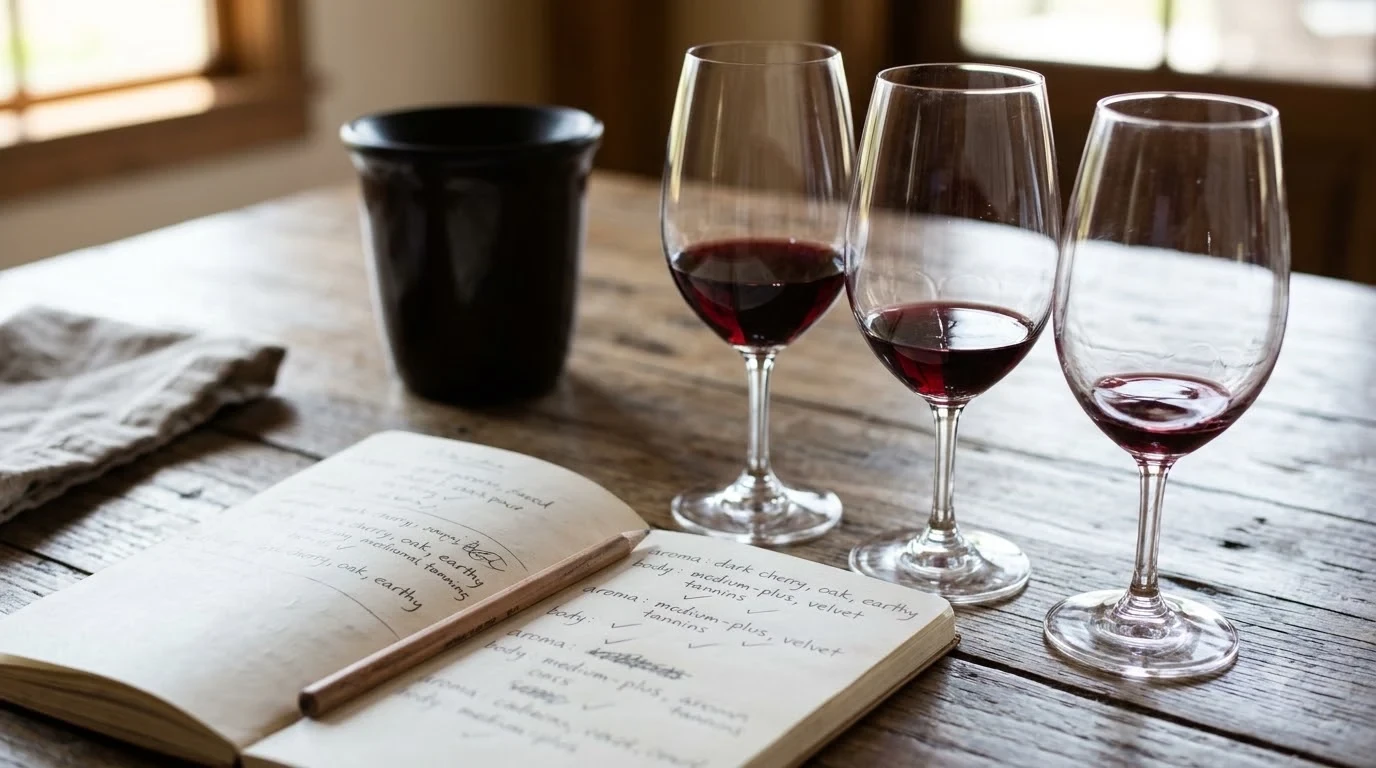
Begin by looking at the wine, then smell it before taking a small sip. Notice color and clarity, but do not treat either as a quality score. On the nose, look for broad families such as citrus, orchard fruit, red berries, darker fruit, flowers, herbs, spice, or oak. On the palate, pay attention to acidity, body, tannin, sweetness, and finish. A simple note such as “lemon, crisp acidity, light body” is more useful later than a long list of uncertain descriptors. Compare two Cabernet Franc bottlings, then a Cabernet Franc with a Meritage blend, or put a dry Riesling beside an unoaked Chardonnay.
Serving temperature changes how a wine seems. Sparkling wines are generally best around 40–50°F; light whites and rosé around 45–50°F; fuller whites around 50–55°F; lighter reds around 55–60°F; and fuller reds around 60–65°F. A cool red may show fresher fruit and more definition, while a too-warm red can seem heavier. Ask whether a bottle has been intentionally chilled or served at room temperature.
| Wine style | Typical serving temperature | What to notice |
|---|---|---|
| Sparkling | 40–50°F | Bubbles, freshness, and the balance of fruit and acidity |
| Light white or rosé | 45–50°F | Citrus, floral notes, and crispness |
| Full-bodied white | 50–55°F | Texture, ripe fruit, and any oak influence |
| Light-bodied red | 55–60°F | Red fruit, acidity, and gentle tannin |
| Full-bodied red | 60–65°F | Dark fruit, structure, and tannin |
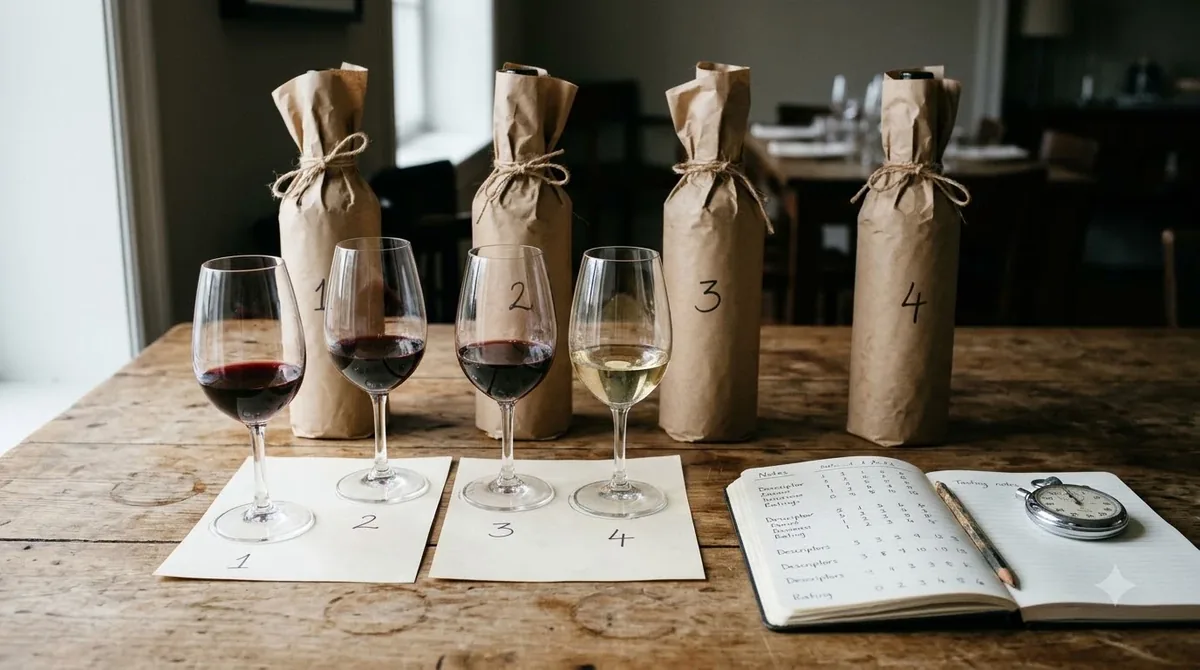
A winery flight uses tasting pours rather than full glasses. CrossKeys describes traditional samples as one-half ounce each, making it possible to compare several wines without committing to a full serving of every selection. Record the producer, grape, vintage, and one or two impressions; photograph a bottle label when permitted. Wine Enthusiast’s Virginia region overview is another useful primer for understanding how the Shenandoah Valley fits into the state’s larger wine picture.
Tip: Choose one question before each flight—such as “Which Cabernet Franc has the freshest acidity?”—and taste with that comparison in mind. You will leave with a clearer sense of your preferences than by trying to memorize every tasting note.
Food, Timing, and Practical Tasting Etiquette
Food makes it easier to compare wines over an afternoon, and pairings show why acidity, tannin, sweetness, and body matter. Before setting out, confirm whether each winery serves meals, permits outside food, or has picnic areas.
CrossKeys has an on-site bistro and does not permit outside food or picnics; Shenandoah Vineyards welcomes outdoor picnics; Muse lists on-site dining as part of its visitor experience. Plan a meal break between tastings, bring water, and take time before moving to the next flight. Cabernet Franc and other medium-tannin reds can work with roast chicken, grilled pork, mushrooms, or tomato-based foods. Salt and fat soften tannin, which is why aged cheese or savory charcuterie can make a structured red seem rounder.
Match sweetness carefully: the wine should be at least as sweet as the dessert, or the dessert can make the wine taste thin and sour. Acidic foods need a wine with equal or higher acidity, while very hot chili dishes can make alcohol and tannin seem more intense. Oily fish is generally a difficult match for tannic red wine; choose a crisp white or a lighter, higher-acid style instead. Riesling’s acidity can work with bright dressings, and a slightly sweet Riesling can be more comfortable with spicy dishes than a very dry, high-alcohol red.
Keep the tasting-room experience pleasant for everyone. Arrive close to the reservation time, tell the host if the group has a driver or a non-drinker, and avoid wearing fragrance that can interfere with aromas. It is fine to spit or leave a sample unfinished; a tasting is an opportunity to learn, not an obligation to finish every pour. Ask before bringing children or pets, since policies differ among wineries, and bring comfortable shoes and a layer for changing mountain weather.
Frequently Asked Questions
These quick answers cover a few details that often come up while planning a first trip or reading a Virginia wine label.
What does AVA mean on a Shenandoah Valley wine label?
AVA stands for American Viticultural Area, a federally recognized grape-growing region defined by geographic features. For a wine to carry a Virginia AVA name, at least 85 percent of its grapes must come from within that AVA’s boundaries, according to Wine Enthusiast’s explanation of U.S. wine labeling rules.
Is the Virginia Shenandoah Valley AVA the same as California’s?
No. California has a separate AVA officially distinguished as the California Shenandoah Valley AVA, located in Amador County. The Virginia and California regions share a name, but they are geographically and viticulturally distinct.
Which hybrid grape grown in Virginia is red?
Chambourcin is a red hybrid grape grown in Virginia. Wine Enthusiast distinguishes it from white hybrid varieties such as Traminette and Vidal Blanc.
What percentage of grapes must come from Virginia for a wine to carry the state name?
At least 75 percent of the grapes must be grown in Virginia for a wine to be labeled Virginia wine. A regional AVA designation has a stricter 85 percent sourcing threshold.
What can I do in the region besides visit wineries?
The wider valley also includes Luray Caverns and Natural Bridge, along with museums and historic sites. Staunton’s Blackfriars Playhouse offers year-round Shakespeare performances, so an overnight itinerary can combine a winery visit with a cultural stop.
Shenandoah Valley wine tasting is most rewarding when the day has a clear geographic focus and room for unhurried conversations at the tasting bar. Start with Cabernet Franc or Riesling, add a local blend, and let the landscape and winery staff guide the next pour. With two or three well-chosen stops, you can get a meaningful sense of the region without turning the visit into a race.
More in Wine Regions
 Willcox Wine Trail: Discover Arizona’s High-Elevation Wine CountryUpdated Nov 20, 2026
 Yakima Valley Wine Region: Find the Best Styles to TryUpdated Nov 20, 2026
 Vosne Romanee Wine Tasting: Identify Aromas and Choose Better PairingsUpdated Nov 20, 2026
 Yakima Valley Wine Festival: Find the Best Seasonal Wine EventsUpdated Nov 20, 2026
 Wales Vineyards: Discover Cool-Climate Wines and Where to VisitUpdated Nov 20, 2026
 Yountville Wine Festival: Discover Napa Wines and Local FoodUpdated Nov 20, 2026