

We may earn a commission when you buy through links on this page, at no extra cost to you. Learn more.
For most visitors, russian river valley wine tasting means comparing cool-climate Pinot Noir and Chardonnay at a small number of nearby wineries, rather than trying to cover the entire Sonoma appellation in one day. Expect fog-influenced freshness, distinct vineyard neighborhoods, and experiences that range from garden lunches to sparkling-wine flights. Start with two or three stops in one part of the valley, then leave time to compare what the wines reveal about their sites.
The Russian River Valley sits in Sonoma County, west of Santa Rosa, and its wine identity is closely tied to the Pacific fog that moves through the region. A good tasting visit is part wine lesson and part geography lesson: the same grape can taste different depending on where it grew, how the winemaker handled it, and whether the bottle emphasizes a broad appellation or one vineyard. The advice below explains what to taste, where to focus, and how to plan a relaxed day.
How Fog and Geography Shape the Wines
The valley’s signature is a cool-climate balance: summer warmth ripens grapes while coastal fog helps preserve acidity and aromatic detail. That combination favors Pinot Noir and Chardonnay.
The Russian River Valley became an American Viticultural Area in 1983. Its boundaries expanded in 2005 by 30,200 acres, bringing the appellation to 126,600 acres, according to Wine Enthusiast. It is not simply a strip along the river: vineyards spread around Santa Rosa, Sebastopol, Forestville, and Healdsburg. Sonoma County Tourism describes the AVA as roughly 15 miles wide and 15 miles tall, so visits can involve meaningful drives.
Pacific air moves inland through gaps in the coastal hills, and fog often arrives in the evening or lingers into morning. This cool period slows grape development while afternoon sun supports ripening. Fog can remain in the hills west of Sebastopol late in the day, even when vineyards farther east are warmer; the AVA therefore does not have one uniform climate.
That variation makes location a useful tasting question. Ask whether the grapes come from a named vineyard and what the site contributes. Alongside sandy loam and Goldridge, the valley has volcanic, sedimentary, shale, sandstone, and clay-influenced soils. For background on American appellations, see our overview of Wine Regions.
Six Neighborhoods and Their Tasting Clues
Russian River Valley Winegrowers divides the appellation into six winegrowing neighborhoods: Middle Reach, Green Valley, Laguna Ridge, Santa Rosa Plains, Sebastopol Hills, and Eastern Hills. Comparing a few of these places gives a visitor a practical way to connect aroma, texture, and ripeness with vineyard location.
Middle Reach, near southern Healdsburg and the Russian River, has some of the appellation’s oldest producing vines; its wines often show ripe flavors and texture with less overt aroma. Green Valley lies between Forestville and Sebastopol and includes Graton and Occidental. It is the only Russian River Valley subregion with its own AVA designation, and its Goldridge soils are associated with Pinot Noir marked by ripe tannins and high acidity.
Laguna Ridge, near Forestville and the Laguna de Santa Rosa, combines Goldridge and Altamont soils; pioneering winemaker Joseph Swan first planted Pinot there. Santa Rosa Plains, east of the lagoon, is known for old Zinfandel plantings and spicy, raspberry-like wines. Compare the Zinfandel with a Pinot if a tasting room pours both.
Sebastopol Hills is the coolest neighborhood, with mostly Goldridge soils and Pinot Noir that pairs full body with bright acidity. Eastern Hills, along the Mayacamas, receives less fog; volcanic and sedimentary soils and warmer west-facing slopes can mean earlier ripening. These are clues, not fixed rules. The Russian River Valley Winegrowers neighborhood profiles offer a geographic reference before a visit.
Pinot Noir: The Benchmark Red to Compare
Pinot Noir is the red grape to prioritize in the valley, especially if you want to understand how different sites can shape one variety. Expect red fruit, lively acidity, and a lighter tannin structure than Cabernet Sauvignon, with details that can range from floral and bright to savory and earthy.
Wine Enthusiast’s Russian River Valley overview lists wild strawberry, black cherry, smoke, and earth among typical Pinot Noir aromas. Treat these as reference points, not a checklist. Cooler sites may emphasize tart red berries and lifted acidity; warmer or sheltered sites can show darker fruit. Oak, whole-cluster fermentation, extraction, and bottle age also affect the result, so wines from one neighborhood may differ.
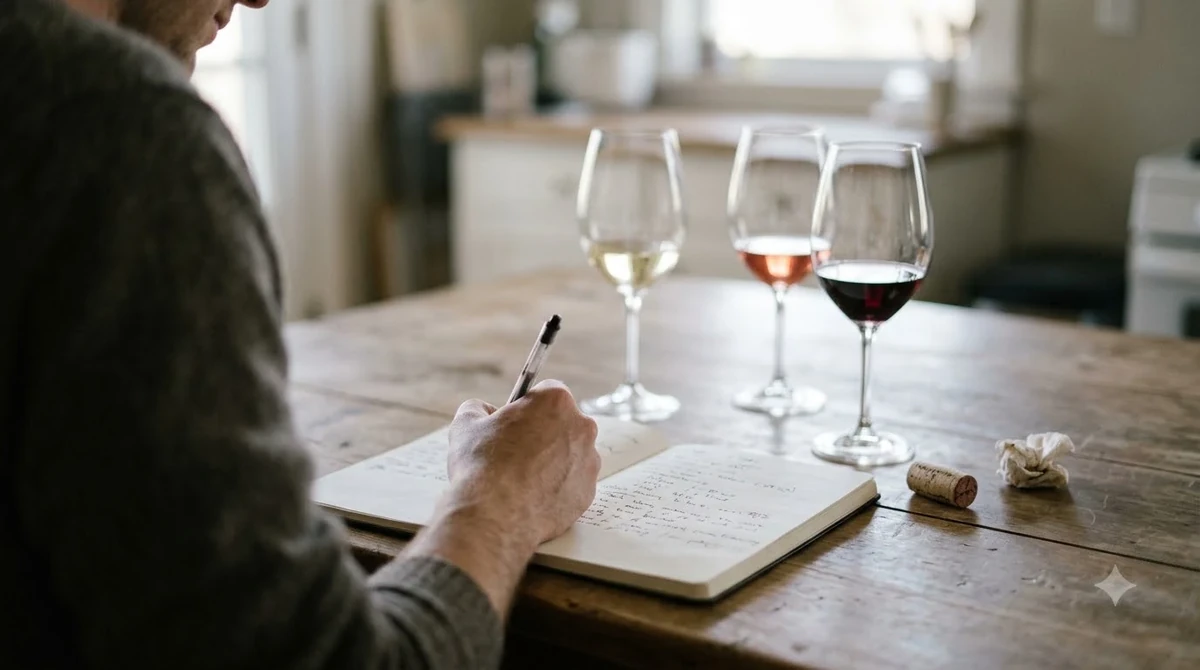
Smell before swirling, then revisit the glass after a few minutes. Note whether the fruit suggests cranberry, raspberry, strawberry, or black cherry; whether the acidity makes your mouth water; and whether the finish is floral, herbal, earthy, or spicy. Compare Sebastopol Hills with Middle Reach, near Healdsburg, and ask whether each wine is an appellation blend or a single-vineyard bottling.
Pinot Noir usually has low-to-medium tannin and high acidity, suiting roast chicken, salmon, mushrooms, duck, and pork. A very sweet glaze or hot chile sauce can make a delicate Pinot seem sharper and more alcoholic. For another American region where Pinot Noir matters, see our Snake River Valley wine article.
Chardonnay and the Valley’s Other White Wines
Chardonnay is the valley’s leading grape by harvest share, and it is worth tasting alongside Pinot Noir rather than treating it as a secondary option. The best comparison is not simply “oaky versus unoaked”; look at acidity, fruit character, texture, and how much the winemaking shapes the wine.
Russian River Valley Winegrowers reports that Chardonnay accounts for about 42 percent of grapes harvested and Pinot Noir approximately 29 percent; together they exceed 70 percent of the region’s wine grapes. Wine Enthusiast lists green apple, nectarine, and Meyer lemon among common Chardonnay aromas, with sandy loam soils contributing to palate richness. These figures make Chardonnay essential to a regional tasting.
| Regional measure | Reported figure | What it tells a taster |
|---|---|---|
| Chardonnay share of grapes harvested | About 42 percent | The valley’s leading variety |
| Pinot Noir share of grapes harvested | About 29 percent | The leading red variety |
| Chardonnay and Pinot Noir combined | More than 70 percent | The core regional comparison |
| Russian River Valley AVA designation | 1983 | The year federal AVA status was granted |
| AVA boundary expansion | 2005 | The year the appellation grew by 30,200 acres |
Compare a Chardonnay with restrained oak against one with more barrel influence. Look for vivid apple and citrus, roundness from ripe fruit, and a crisp or creamy finish. Malolactic fermentation can soften malic acidity and contribute a buttery impression; new oak may add vanilla, toast, or baking spice. Neither approach is automatically better—the question is whether it suits the fruit.
Sauvignon Blanc, Pinot Gris, and Gewürztraminer also appear, though they are less central than Chardonnay. A crisp Sauvignon Blanc can reset the palate between richer whites, while dry Gewürztraminer offers another view of the valley’s aromatic varieties. Ask for a small pour when available.
Zinfandel, Syrah, and Sparkling Wine Beyond the Headliners
Although Chardonnay and Pinot Noir dominate, Russian River Valley tasting rooms can show a wider range of styles. Zinfandel is especially useful for exploring warmer pockets, while Syrah and sparkling wines add further contrasts in body, aroma, and texture.
Sonoma County Tourism ranks Zinfandel behind Chardonnay and Pinot Noir, with Merlot, Cabernet Sauvignon, and Sauvignon Blanc also planted. Santa Rosa Plains is associated with some of the valley’s oldest Zinfandel vines; the growers’ association describes the wines as spicy and raspberry-influenced. Compare one with Pinot Noir to see how grape and site work together.
Cool-climate Syrah is made in smaller quantities and can surprise visitors who expect only broad, ripe flavors. Taste it beside Pinot Noir or Zinfandel and look for black fruit, pepper, savory notes, acidity, and tannin. Merlot and Cabernet Sauvignon provide additional, often firmer-structured comparisons.
Include sparkling wine, too. J Vineyards & Winery in Healdsburg pours sparkling wines in settings that include its Bubble Room; Korbel Champagne Cellars in Guerneville dates to 1882 and offers guided sparkling experiences. A cold sparkling flight adds contrast after still wines and pairs well with salty appetizers.
Choosing Wineries and Planning a Tasting Day
The Russian River Valley has more than 70 wineries, so a satisfying day depends on choosing a small cluster rather than trying to visit every name that catches your eye. Pick a theme—Pinot Noir, Chardonnay, sparkling wine, vineyard-designated bottlings, or a comparison of neighborhoods—and build the route around it.
In Healdsburg, Rodney Strong Vineyards and neighboring J Vineyards & Winery make a practical pairing for still and sparkling wines. Rochioli Vineyards pours estate Pinot Noir and wines from its West Block vineyard, with a tasting room overlooking the valley. Bacigalupi Vineyards suits Chardonnay-history fans: the family still farms a 1964 Chardonnay planting and 125 acres of estate grapes.
For a central or western route, Russian River Vineyards in Forestville pairs vineyard views with food and outdoor seating in a property dating to the 1890s. Martinelli in Windsor pours estate Chardonnay, Pinot Noir, Syrah, and Zinfandel in a former hops barn. In Santa Rosa, Kendall-Jackson offers seated tastings alongside its gardens and garden-sourced food.
Two or three appointments are usually enough for a relaxed day. Confirm reservation rules, opening days, tasting formats, food policies, and group limits before setting out, then leave time for winding roads and lunch. A route with varied experiences teaches more than three similar flights. For another regional itinerary, see our Hunter Valley wine tasting guide.
Tip: Choose one main grape and one secondary theme before booking. For example, compare three Pinot Noirs from different neighborhoods, then finish with one sparkling flight; you will remember more than you would from a hurried sequence of unrelated pours.
Tasting Technique, Food Pairings, and Serving Temperatures
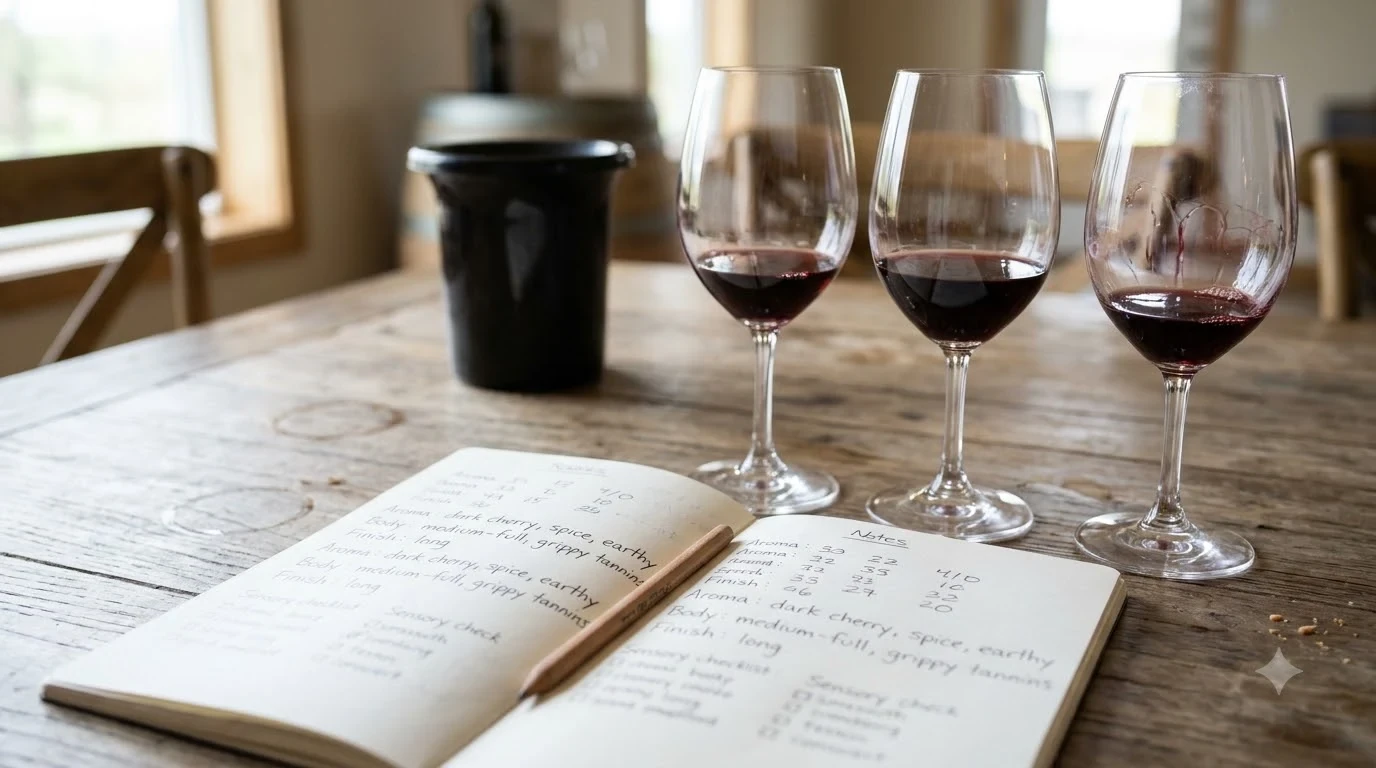
A little structure makes each winery visit more useful. Taste from lighter to fuller wines, compare like with like, and write down the grape, vineyard or neighborhood, acidity, tannin, and finish before moving to the next glass.
At each stop, note the wine’s appearance, smell before tasting, then take a modest sip. Notice whether acidity makes your mouth water, tannin dries your gums, and the finish fades or lingers. Ask about vineyard exposure, fermentation vessels, and oak choices to connect the glass with decisions in the vineyard and cellar.
Match food weight and intensity: Pinot Noir suits roast poultry, mushrooms, salmon, and pork; Chardonnay works with shellfish, creamy sauces, and richer vegetables; Zinfandel complements barbecue and tomato-based dishes. Salt and fat soften tannin, so firmer Cabernet Sauvignon or Syrah may seem less drying beside a fatty or salty bite. Acidic foods need a wine with equal or higher acidity, chili heat can amplify alcohol and tannin, and oily fish generally clashes with tannic reds.
Serve light reds such as Pinot Noir at 55–60 degrees Fahrenheit and full reds at 60–65 degrees. Light whites are best at 45–50 degrees, fuller whites at 50–55 degrees, and sparkling wines at 40–50 degrees. Too much warmth can make red wine seem alcoholic; excessive chill can mute a white’s aroma. A standard pour is 5 ounces, and a 750-milliliter bottle holds about five glasses. Use a dump bucket rather than finish every sample, refrigerate opened still wine and aim to finish it within 3–5 days, and store unopened bottles on their sides near 55 degrees Fahrenheit, away from direct sun.
Frequently Asked Questions
Does every Russian River Valley Pinot Noir taste the same?
No. Beyond vineyard location and vintage, winemaking choices can change a Pinot Noir’s profile. Whole-cluster fermentation leaves some stems in the fermenter and may add herbal, spicy, or structural notes, while the amount and age of oak can change texture and aroma.
Can Russian River Valley Chardonnay be made without oak?
Yes. Some producers ferment or age Chardonnay in stainless steel, while others use neutral or new oak, and some combine vessels. Stainless steel generally preserves a cleaner impression of fruit, while oak can add texture and flavors such as toast or vanilla.
What does “single-vineyard” mean on a tasting list?
It identifies a wine made from grapes associated with one named vineyard rather than fruit blended from multiple sites. The designation lets a visitor compare a particular place across producers or vintages, although each winemaker’s choices still shape the result.
Should I expect every winery to accept walk-ins?
No. Some tasting rooms operate primarily by appointment, while others may offer walk-in service when space allows. Weekend seatings, private groups, and special flights can have separate booking rules, so verify the visit details directly with each winery before driving there.
How can I compare two wines without relying on a score?
Sensory fatigue can dull perception over a long flight, making later wines seem less expressive. Pause with water and a plain cracker between wines, and compare two glasses side by side instead of relying on memory from an earlier tasting.
Russian River Valley is rewarding because familiar grapes show meaningful differences across its neighborhoods and wineries. Keep the route focused, ask where each wine comes from, and leave time to compare rather than rush. You will come away with a clearer sense of why Pinot Noir and Chardonnay define this corner of Sonoma County.
More in Wine Regions
 Willcox Wine Trail: Discover Arizona’s High-Elevation Wine CountryUpdated Nov 20, 2026
 Yakima Valley Wine Region: Find the Best Styles to TryUpdated Nov 20, 2026
 Vosne Romanee Wine Tasting: Identify Aromas and Choose Better PairingsUpdated Nov 20, 2026
 Yakima Valley Wine Festival: Find the Best Seasonal Wine EventsUpdated Nov 20, 2026
 Wales Vineyards: Discover Cool-Climate Wines and Where to VisitUpdated Nov 20, 2026
 Yountville Wine Festival: Discover Napa Wines and Local FoodUpdated Nov 20, 2026