

We may earn a commission when you buy through links on this page, at no extra cost to you. Learn more.
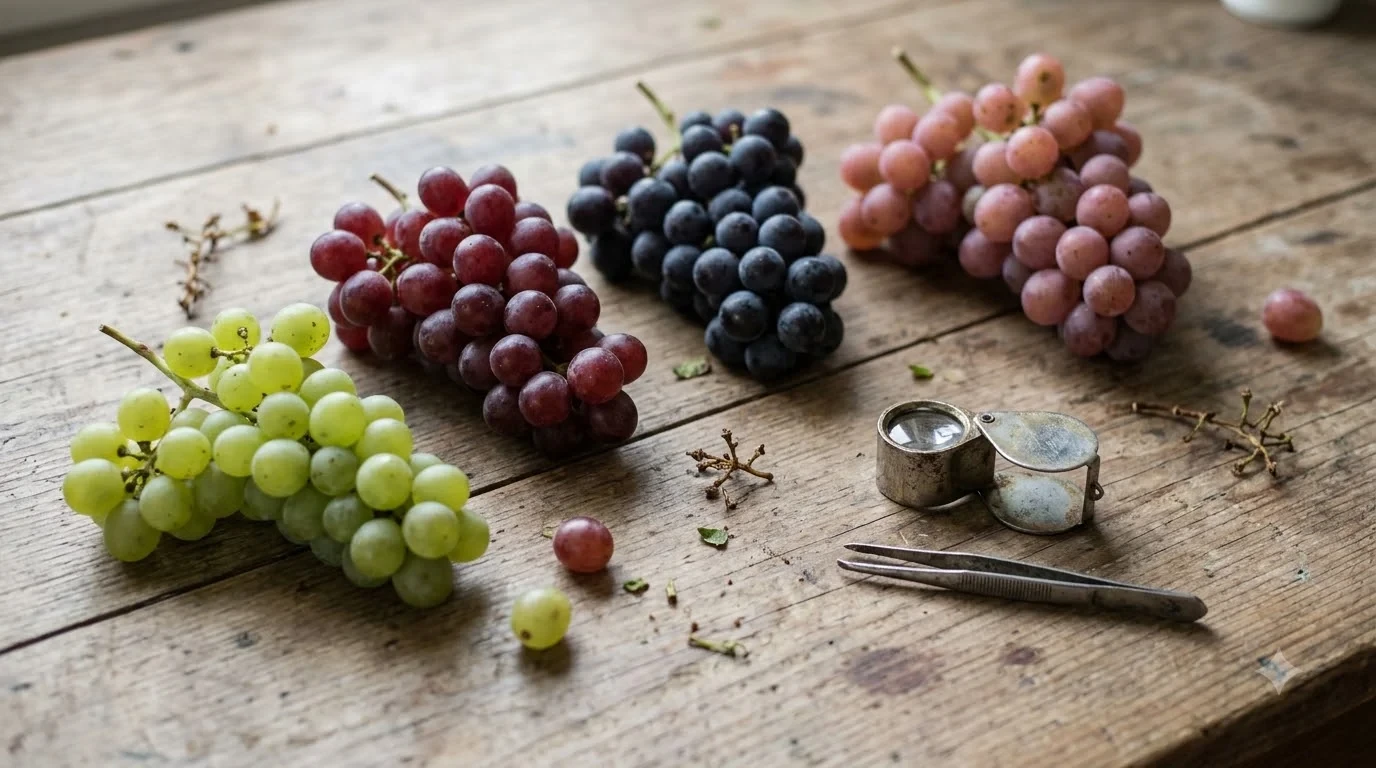
Margaux wine grapes are led by Cabernet Sauvignon and Merlot, with Cabernet Franc and Petit Verdot adding freshness, spice, color, and structure to the region’s signature red blends. The appellation permits six traditional Bordeaux varieties, but four account for the familiar Margaux profile. Understanding what each grape contributes makes it easier to read a blend, anticipate its texture, and choose a bottle for the table or cellar.
Margaux is a celebrated commune appellation on Bordeaux’s Left Bank, where gravelly vineyards meet the influence of the Gironde estuary and the Atlantic. Its wines are not built from one fixed recipe: each château works with its own parcels, proportions, and harvest decisions. The result is a recognizable family of finely structured reds with meaningful differences from one estate to the next.
What the Margaux Appellation Tells You About the Wine
Margaux is a red-wine appellation in the Médoc, north of the city of Bordeaux. Its identity rests on four communes, gravel-rich vineyard sites, and blends led by Cabernet Sauvignon and Merlot.
The appellation covers about 1,500 hectares across Arsac, Labarde, Margaux-Cantenac, and Soussans, according to Bordeaux’s regional wine organization. The vineyards sit between the Atlantic Ocean and the Gironde estuary, a position that moderates temperatures and helps create a temperate maritime growing season. The wines bearing the Margaux name are red; the designation is not a general label for every wine made within the broader area. For readers building a wider understanding of appellations, the site’s guide to Wine Regions explains how a place name can define origin and production rules as well as style.
Margaux received Appellation d’Origine Contrôlée recognition in 1954. It is especially prominent in the 1855 Médoc classification: 21 of the 61 classified growths are in the appellation, and the area includes estates across the First through Fifth Growth ranks. That classification describes the historical standing of individual estates, not the exact percentage of Cabernet Sauvignon or Merlot in a bottle. A wine from an unclassified property can still be Margaux AOC, while a classified château can adjust its blend from one harvest to another.
The name covers more than the most famous château labels suggest. Bordeaux’s regional profile counts 62 estates, including classified growths, Crus Bourgeois, and Crus Artisans. Differences in soil depth, gravel size, clay content, and exposure mean the four communes do not produce identical wines. Margaux is best understood as a regional style with local variation, not one uniform flavor or formula.
The Four Grapes That Shape Most Margaux Blends
Four varieties dominate Margaux’s planted vineyards: Cabernet Sauvignon, Merlot, Petit Verdot, and Cabernet Franc. Decanter’s regional profile, drawing on Maison du Vin de Margaux figures, gives a useful approximate picture of their relative presence in the vineyard.
| Grape | Approximate share of plantings | Main contribution to a blend |
|---|---|---|
| Cabernet Sauvignon | 58% | Structure, firm tannin, dark fruit, and aging capacity |
| Merlot | 35% | Roundness, fruit, color, and a softer middle palate |
| Petit Verdot | 4.5% | Color, spice, and added tannic grip |
| Cabernet Franc | 2.5% | Freshness, aromatic lift, and finesse |
These percentages describe an overall planting profile, not the recipe for every estate or vintage. A château may own several vineyard parcels with different proportions of the four grapes, and the final blend is selected after the team has evaluated each lot. One producer might lean more heavily on Cabernet Sauvignon for firmness and longevity; another might use more Merlot to emphasize plush fruit and a generous texture. The table is a regional orientation, not a formula that every bottle must follow.
The four varieties also ripen at different times, which affects vineyard decisions. Merlot is generally picked first, Cabernet Franc follows, and Cabernet Sauvignon tends to be harvested later; Petit Verdot is among the latest to reach full maturity. Weather around harvest can therefore influence how much of each grape makes it into the final wine. A rainy spell, a cool stretch, or a warm autumn can change the balance between ripeness, acidity, and tannin from one parcel to another.
For a useful comparison of the source’s grape descriptions and planting context, consult the Maison du Vin de Margaux appellation profile. It identifies the four principal varieties and explains why Cabernet Sauvignon is central to the region’s structure, while Merlot is the common partner that rounds out the blend. Those roles are dependable starting points, even though the percentages in a finished wine are not fixed.
What Each Variety Contributes to the Blend
Margaux’s grape varieties work as a team rather than as separate single-variety wines. Cabernet Sauvignon supplies the frame, Merlot gives the blend a softer center, and smaller portions of Cabernet Franc or Petit Verdot can adjust freshness, aroma, color, and grip.
Cabernet Sauvignon is the principal variety and a major reason Margaux can age. Its naturally high tannin gives the wine structure, while its black-fruit character can suggest cassis, blackberry, or darker berries. In a cool or challenging harvest, Cabernet Sauvignon may struggle to reach full ripeness because it is a later-ripening grape. On warm, well-drained gravel, however, it can mature steadily and contribute the firm but fine-grained tannins associated with top Margaux sites. That structure can feel pronounced in youth and become more integrated with bottle age.
Merlot is the counterweight. It ripens earlier than Cabernet Sauvignon and generally brings medium, softer tannins, generous fruit, and a rounder palate. In a blend, Merlot can make Cabernet Sauvignon feel less angular without erasing its shape. It is often especially valuable on cooler or more clay-influenced parcels, where its ripening pattern and fruit profile can complement Cabernet grown on gravel. It also contributes color, helping the finished wine look as substantial as it feels.
Cabernet Franc and Petit Verdot are usually supporting players, but their impact can exceed their share of the blend. Cabernet Franc is picked between Merlot and Cabernet Sauvignon and can add aromatic lift, freshness, and finesse. Petit Verdot ripens late; when it reaches suitable maturity, a small proportion can deepen color, introduce spicy notes, and reinforce tannin. Think of the two as seasoning rather than the foundation: their value comes from how precisely they complete the larger Cabernet-Merlot structure.
How Gravel, Climate, and Vineyard Position Shape the Grapes
Margaux’s gravel terraces are a major reason Cabernet Sauvignon performs so well here. The region combines warm, free-draining gravel with pockets of clay, sand, limestone, and chalk, so site selection matters as much as the grape variety.
Bordeaux’s regional description places the Margaux vineyard on a central plateau about 6 kilometers long and 2 kilometers wide, built from gravel carried by the Garonne River. The plateau contains six terrace types formed during the Quaternary period, with large gravel and smaller pebbles lying over older limestone or clay-marl layers. These are not simply decorative stones: gravel drains readily and warms relatively quickly, while the deeper soil layers can influence water availability and vine growth. A well-drained slope may suit Cabernet Sauvignon particularly well because it encourages steady ripening rather than excessive vigor.
The gravel is not identical across all four communes: some sites have light, shallow gravel, while others contain more sand, clay, or limestone. Decanter notes that the lighter gravel in central Margaux and Cantenac helps explain the area’s silky texture and earlier ripening than more northerly Médoc sites such as Pauillac and Saint-Estèphe; Arsac and Labarde can produce somewhat richer styles. These are useful tendencies, not rules, because parcels can differ even within one commune.
The Atlantic Ocean and Gironde estuary moderate the climate, reducing temperature extremes and allowing a relatively long ripening season. That balance matters to late-ripening Cabernet Sauvignon: warm, dry conditions can help its tannins and fruit mature, while persistent autumn rain can complicate picking. Merlot is generally harvested earlier, so growers make decisions for it before they know exactly how later Cabernet parcels will finish. For more on the interaction of light gravel, well-drained slopes, and Cabernet, read Decanter’s regional profile of Margaux.
Why Margaux Blends Differ From Château to Château
There is no single mandatory Cabernet-to-Merlot ratio that defines every Margaux wine. Estate owners blend from the parcels they farm and the lots they consider balanced in a given harvest, so the same appellation can produce wines that differ in body, perfume, tannin, and pace of development.
One reason is the patchwork of vineyard soils. An estate with a high proportion of deep gravel may rely heavily on Cabernet Sauvignon for structure, while a property with more clay-rich parcels may find Merlot especially useful for balance and fruit. A château that farms scattered plots across Margaux-Cantenac, Soussans, Arsac, or Labarde has a different set of choices from one with a more concentrated vineyard. Blending is therefore a practical response to individual sites, not a competition to use the highest possible percentage of the region’s leading grape.
Vintage conditions add another layer. In a warmer season, Cabernet Sauvignon may achieve full flavor and tannin maturity, making a Cabernet-led blend feel complete. In a cooler or wetter harvest, the winemaking team may emphasize the lots that show the clearest fruit and most balanced tannins, which can change the final proportion of Merlot, Cabernet Franc, or Petit Verdot. This does not mean a vintage can be judged by weather alone. Vineyard health, picking decisions, sorting, extraction, and élevage all influence the result, and neighboring estates may respond differently to the same conditions.
That variation explains why words such as “elegant” should not be mistaken for weakness. Margaux can be perfumed and finely textured while retaining substantial tannin and length. Some bottles emphasize red fruit and floral notes; others show darker fruit, more oak, or firmer structure. The region’s reputation for finesse describes texture and balance, not a promise that every wine is light-bodied or ready to drink immediately.
How to Choose, Serve, and Pair a Margaux
Start with the producer and the style you enjoy, then use the grape blend as a guide to structure rather than a guarantee of flavor. A Cabernet-led Margaux is likely to feel firmer and more structured, while a blend with a larger Merlot component may seem rounder and more approachable earlier.
When comparing bottles, look for the estate name, appellation, vintage, and any reliable information the producer provides about its blend. A classified-growth designation can tell you about an estate’s 1855 standing, but it does not specify the grape proportions in a particular vintage. The regional figures in the table describe plantings across Margaux, not the contents of an individual bottle. If the exact blend matters to you, consult the producer’s technical information rather than assuming that all Margaux wines follow the same recipe.
Serve a full-bodied Margaux at about 60–65°F, rather than warm room temperature, to keep its fruit and structure in balance. A young, firmly structured red may benefit from 30–60 minutes in a decanter so that its aromas open and its tannins feel less compact. Older bottles need more care: separate any sediment gently and avoid giving a mature wine a long, aggressive airing. A standard 750-milliliter bottle yields about five 5-ounce pours, which is a useful serving measure for a dinner table.
Tip: Pair a structured Margaux with roast lamb, grilled beef, duck, or mushroom dishes. The fat and salt in a savory meal can soften the perception of Cabernet Sauvignon’s tannin; very spicy chili heat, by contrast, can make alcohol and tannin seem more intense.
Match the wine’s weight and tannin to the dish. Roast lamb, beef short ribs, steak, duck breast, mushrooms, and aged hard cheese can meet the structure of a Margaux red. Avoid delicate oily fish with a tannic wine, and be cautious with very hot chili sauces. For a contrasting approach to grape skins and color, compare Margaux’s red blend with orange wine grapes, usually white varieties made with extended skin contact.
Frequently Asked Questions
These quick answers add a few regional details that are useful when placing Margaux on a Bordeaux map or understanding changes in its vineyards.
How far is Margaux from the city of Bordeaux?
Margaux is about 25 kilometers north of Bordeaux, according to Decanter’s regional profile. That makes it one of the more accessible Médoc appellations for visitors staying in the city, although individual château visits may require advance arrangements.
What is Castets, and why is it being trialed?
Castets is a late-ripening red grape being experimentally assessed in the Bordeaux area as growers respond to climate challenges. Bordeaux.com reports that its first experimental harvest in Margaux took place in 2025; it is a trial variety, not one of the six traditional varieties described in the appellation’s established grape profile.
What is the Margaux Saveurs event?
Margaux Saveurs is a post-harvest event held in October across the appellation’s four villages. Bordeaux.com describes a program that can include concerts, tastings, workshops, and meals, giving visitors a way to experience the area beyond château cellar visits.
Is Château Margaux one of Bordeaux’s First Growths?
Yes. Decanter identifies Château Margaux as one of the four estates selected as First Growths in the 1855 Médoc classification. It is also the only classified château that bears the name of the Margaux appellation itself.
How long has wine been made in the Margaux area?
The Maison du Vin de Margaux and Bordeaux.com both trace vine growing in the area to Gallo-Roman times. The modern vineyard landscape took shape much later, especially after drainage work in the 17th century opened more of the Médoc to cultivation.
Margaux’s identity comes from the partnership of Cabernet Sauvignon and Merlot, refined by Cabernet Franc and Petit Verdot and shaped by a varied gravel landscape. Once you understand those roles, the appellation’s bottles become easier to compare: pay attention to the producer, the site, the vintage, and the balance the final blend is designed to achieve.
More in Wine Regions
 Willcox Wine Trail: Discover Arizona’s High-Elevation Wine CountryUpdated Nov 20, 2026
 Yakima Valley Wine Region: Find the Best Styles to TryUpdated Nov 20, 2026
 Vosne Romanee Wine Tasting: Identify Aromas and Choose Better PairingsUpdated Nov 20, 2026
 Yakima Valley Wine Festival: Find the Best Seasonal Wine EventsUpdated Nov 20, 2026
 Wales Vineyards: Discover Cool-Climate Wines and Where to VisitUpdated Nov 20, 2026
 Yountville Wine Festival: Discover Napa Wines and Local FoodUpdated Nov 20, 2026