

We may earn a commission when you buy through links on this page, at no extra cost to you. Learn more.
what wine goes with escargot? A dry, high-acid white such as Chablis or Bourgogne Aligoté is the best match for classic escargot with garlic-parsley butter. They refresh the palate after each buttery bite without overwhelming the snail’s mild, earthy flavor. Champagne and Crémant are alternatives, while light reds suit tomato-based or mushroom preparations.
Escargot is often treated as a specialty that requires a special bottle, but the pairing becomes straightforward once you look at the whole dish. The snail meat is delicate; the butter, garlic, parsley, bread, and any added cream or mushrooms have a much stronger influence on the flavor. Start with the sauce, choose a wine with enough freshness and body to meet it, and serve the wine cool rather than ice-cold.
Why the Sauce Matters More Than the Snail
For traditional escargot, the sauce is the deciding factor: garlic-parsley butter calls for a dry wine with lively acidity and restrained oak. The snail itself is mild and slightly earthy, so a forceful wine can easily take over the plate.
In the classic Burgundian preparation, cooked snails are returned to their shells with butter, finely chopped garlic, and parsley, then baked until the butter bubbles. Shallot may also appear, and the dish is commonly served hot with bread for collecting the seasoned butter. The Beaune tourism office’s description of Burgundy snails captures the regional recipe and its straightforward ingredients.
Butter adds richness and a soft coating to the palate. Acidity in the wine provides contrast, making the next bite feel fresh instead of heavy. Garlic and parsley also bring a sharp, savory edge, so the wine needs enough flavor to remain present without introducing excessive oak, sweetness, or tannin. A lean white with citrus, green-fruit, or mineral notes usually does that better than a broad, heavily oaked wine.
The way the garlic is cooked matters, too. Raw or lightly cooked garlic can be pungent, while garlic that is baked in butter becomes rounder and sweeter. Wine Enthusiast’s discussion of matching wine with different expressions of garlic explains why high-acid whites are useful with pungent garlic and why tannin can be awkward beside deeply savory flavors. With escargot, that makes a crisp white a more dependable choice than a firm red.
The Best Wines for Classic Burgundy Escargot
Chablis is the most dependable choice for escargot à la bourguignonne, with Bourgogne Aligoté close behind. Both bring the dryness and acidity needed for garlic butter, while their restrained profiles leave room for the snail and parsley.
Chablis is Chardonnay from the northern part of Burgundy, and the style is often fresher and more mineral than richer, oak-influenced examples of the grape. Depending on the producer, expect flavors and aromas such as lemon, green apple, white flowers, flint, or wet stone. Those notes work with parsley and garlic, and the wine’s acidity cuts through butter without making the dish taste heavier. A village Chablis is usually sufficient; a Premier Cru bottling can add depth, but extra concentration is not essential for a simple starter.
Bourgogne Aligoté is another natural regional choice. It is generally lean, crisp, and citrus-driven, making it especially useful when the butter is generous but the recipe is otherwise simple. It may not have the layered texture of a richer white Burgundy, but its direct acidity is exactly what the dish needs. It is also a good choice when the goal is to keep the wine in a supporting role rather than make it the center of attention.
White Burgundy made from Chardonnay can work well when the preparation has more butter, a little cream, or a richer finish. Choose a bottle with freshness and moderate oak rather than one dominated by toasted wood or vanilla. A gently textured white from the Côte de Beaune can meet the richness of the sauce, while a very powerful, heavily oaked style can obscure the snail’s delicate flavor. The safest formula remains dry, balanced Chardonnay with enough acidity to keep the palate moving. For a practical decision, choose Chablis for a clean, bright expression; Bourgogne Aligoté for a leaner match; and fuller white Burgundy when the recipe adds cream or pastry. Matching the wine’s weight to the sauce is more useful than choosing the most prestigious appellation.
Other Crisp Whites for Herb-Forward Escargot
Sauvignon Blanc, dry Riesling, and other aromatic whites offer strong alternatives when herbs, lemon, or a sharper garlic note stand out. Look for dry examples with clear acidity and moderate alcohol rather than sweet, highly perfumed, or heavily wooded versions.
Sancerre and Pouilly-Fumé from the Loire Valley are useful options because Sauvignon Blanc often carries citrus, green herbs, and a brisk finish. Those flavors echo parsley and refresh the palate after butter. Sancerre is a natural pick when the dish has extra parsley, chives, or lemon, while Pouilly-Fumé can bring a slightly smoky or flinty character that suits browned butter and baked shells. Keep the style dry; noticeable sweetness can make the savory garlic seem harsher.
Dry Riesling is a good choice when you want even more acidity. Its citrus and orchard-fruit character can stand up to garlic and a squeeze of lemon, and it can bring precision to a dish that tastes especially rich. Choose a clearly dry bottling rather than an off-dry style for classic butter preparations. The goal is not to make the wine taste sour, but to give it enough freshness that butter does not mute it.
Dry Chenin Blanc is another flexible option. A fresh Loire Valley example can combine bright acidity with a little more texture than a very lean Sauvignon Blanc. This is useful when the escargot is served in a small casserole or alongside a creamy element. Grüner Veltliner can also work, particularly when its peppery freshness complements herbs and the dish is not overwhelmed by garlic. Match intensity as well as acidity: choose a restrained white for a simple butter, garlic, and parsley recipe, and a more aromatic wine when lemon zest or extra herbs are prominent. Judge dryness, acidity, body, and oak together rather than relying on one shared tasting note.
When Champagne or Sparkling Wine Makes Sense
Brut Champagne and dry Crémant are excellent with escargot because their acidity and bubbles refresh the palate after butter. They are particularly effective for a festive first course, a richer casserole, or a plate where the butter is generous.

Champagne has enough structure to meet garlic and parsley, while its bubbles lift the buttery texture and keep the finish lively. Brut Nature and Extra Brut are especially crisp options for a classic preparation; Brut offers a little more dosage while remaining dry. For an especially rich version with pastry, mushrooms, or a reduced sauce, a more substantial Champagne can supply extra texture without the tannin of a red wine. Choose a bottle with freshness rather than one whose oak or oxidative character dominates.
Crémant de Bourgogne is a regionally fitting alternative, and Crémant de Loire can also work with herb-forward or fried preparations. These traditional-method sparkling wines provide the same broad advantages of acidity and effervescence, often with a lighter feel than a mature Champagne. Prosecco, made from Glera by the tank method and commonly around 11–12% ABV, can be pleasant when dry and uncomplicated, although its fruitier profile makes it a less direct match for very garlic-heavy sauce than a crisp Champagne or Crémant.
Pay attention to the sweetness wording. The sparkling-wine scale runs from Brut Nature and Extra Brut through Brut, Extra Dry, Dry, Demi-Sec, and Doux, moving toward sweeter styles as you go. For classic garlic-butter escargot, Brut Nature, Extra Brut, or Brut will usually keep the savory flavors in balance. A noticeably sweet sparkling wine is more likely to distract from the butter and herbs.
Choose Wine by the Escargot Preparation
When escargot moves away from the classic parsley-butter recipe, the best wine can change with it. Tomato, cream, mushrooms, pastry, and frying each alter the dish’s weight and flavor, so use the sauce and cooking method to guide the choice.
Use this table as a starting point. Temperature ranges follow general guidance for sparkling wines, light whites, full whites, and light reds; adjust for the wine’s body and room temperature.
| Escargot preparation | Wine style to choose | Serving temperature | Why it works |
|---|---|---|---|
| Garlic-parsley butter | Chablis or Bourgogne Aligoté | 45–50°F | High acidity refreshes the palate after butter and complements herbs. |
| Cream sauce or puff pastry | Fuller Chardonnay or white Burgundy | 50–55°F | More body meets the creamy texture without needing firm tannin. |
| Herb-flecked fried snail bites | Brut Champagne or Crémant | 40–50°F | Bubbles and acidity balance the crisp coating and savory filling. |
| Tomato or red-wine sauce | Light Pinot Noir, Gamay, or supple young red | 55–60°F | Fresh fruit can suit the tomato while low-to-medium tannin avoids heaviness. |
| Mushrooms or earthy jus | Chardonnay with freshness or light Pinot Noir | 50–55°F for white; 55–60°F for red | Both styles can echo earthy flavors; choose based on sauce richness. |
For tomato-based escargot, a light red can make sense because the dish is no longer driven only by butter and garlic. Gamay from Beaujolais or lighter Pinot Noir brings fresh fruit without the grip of Cabernet Sauvignon. Choose a young, supple style and serve it slightly cool. Creamy preparations need a different balance: fuller Chardonnay or white Burgundy can meet cream and pastry, but the wine still needs enough acidity to avoid a dense finish. For mushrooms or truffle, consider a textured white or a light Pinot Noir if the sauce is not strongly garlicky.
Very tannic reds are the least reliable match for classic escargot. Cabernet Sauvignon and extracted Syrah can feel hard beside garlic and the snail’s savory character, while the dish’s butter and mild flavor do not need that much structure. If the meal includes a separate red-wine braise or tomato sauce, select a lower-tannin red specifically for that version instead of forcing one bold bottle to cover every recipe.
Serve the Wine at the Right Temperature and Pace
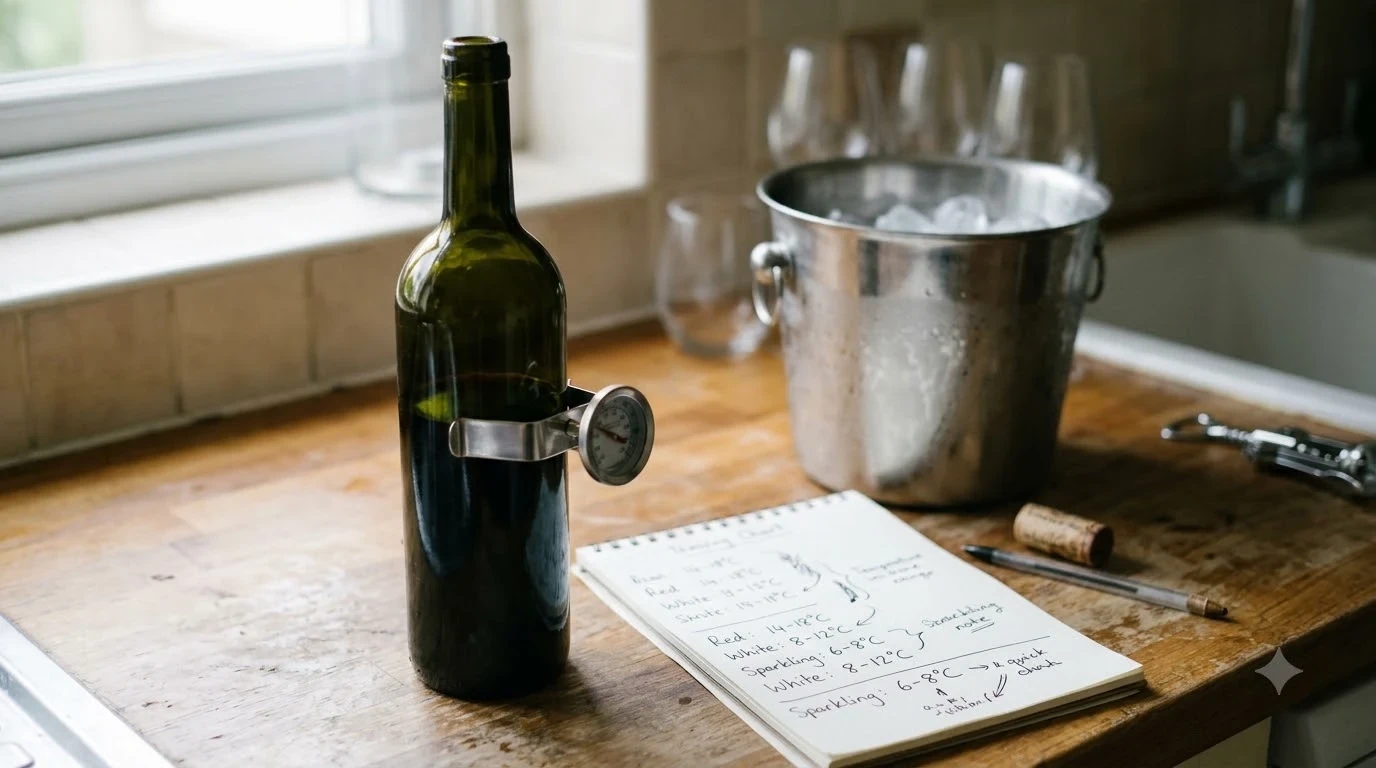
Temperature affects how the wine feels beside warm escargot: serve light whites cool but not numbingly cold, and keep sparkling wine colder. A simple temperature plan helps preserve the wine’s acidity, aroma, and texture throughout the appetizer.
For Chablis, Aligoté, Sauvignon Blanc, and dry Riesling, aim for 45–50°F. A fuller white Burgundy or Chardonnay generally shows better around 50–55°F, where the texture and aromas are easier to notice. Champagne and Crémant are best in the 40–50°F range. If a bottle comes directly from a very cold refrigerator, let it sit briefly before pouring so the aroma is not muted.
Open the bottle shortly before serving and pour a moderate 5-ounce glass; a standard 750-milliliter bottle provides about five servings. A young, crisp white or sparkling wine does not need decanting. Keep the bottle cool and refresh the glasses as the escargot arrives.
Tip: Put the wine in the refrigerator before you prepare the escargot, then take it out as you set the table. The aim is a cool, refreshing pour that still has enough aroma to meet the garlic and parsley.
Think about the order of the meal, too. Escargot is often served as a starter, so a lively white or Brut sparkling wine can continue naturally into other light dishes. If the main course is richer, such as beef brisket, you may want to change to a fuller wine rather than ask one crisp white to do every job. The same idea applies to other strong flavors: a wine chosen for what wine goes with beef brisket may have more body than the bottle best suited to garlic butter. Keep pairings coherent across courses without making them identical. If a cheese course follows, the salt and richness of the cheese can change how the wine tastes, so a new pairing may be appropriate. A guide to what wine goes with blue cheese can help with a particularly salty, intense cheese, while the principles in Wine Pairing are useful when you need to balance acidity, body, sweetness, and texture across a full menu.
Frequently Asked Questions
These quick answers cover a few practical details that can help when ordering or serving escargot. They address the traditional equipment, snail varieties, and a few less common versions of the dish.
What does a traditional escargot plate include?
Traditional escargot plates may have either 6 or 12 shallow wells to hold the shells securely. Snail tongs grip each shell, while a narrow, elongated fork helps remove the meat without tipping the butter onto the plate.
Are Burgundy snails the only snails used for escargot?
No. Helix pomatia is the Burgundy snail, while Helix aspersa is commonly known as petit gris; other regional varieties are also eaten. The species and local cooking tradition can differ, so the name escargot does not always mean the same snail or recipe.
Can rosé Champagne pair with escargot?
Yes, particularly with lightly spiced, tomato-based, or coriander-accented preparations rather than the simplest garlic-butter version. Its red-fruit character gives it a little more presence, while the sparkling acidity keeps the pairing fresh.
Is collecting Burgundy snails unrestricted in France?
No. The Burgundy snail, Helix pomatia, has been under special protection in France since 1979, and collection is prohibited there during its breeding season from April 1 through June 30. Rules for other species and locations can differ.
Why are snails sometimes cooked in broth before baking in butter?
In the traditional Burgundy method, the snails are first cooked in court-bouillon, an aromatic cooking broth, before being returned to their shells with garlic-parsley butter. The two stages give the snail its initial seasoning and then finish it in the rich butter mixture.
For classic garlic-parsley escargot, reach first for Chablis, Bourgogne Aligoté, or a dry sparkling wine with brisk acidity. Change direction only when the sauce changes: fuller whites suit cream and pastry, while low-tannin reds can work with tomato-based versions. The best pairing is the one that leaves the final bite tasting as fresh and savory as the first.
More in Food & Wine Pairing
 Risotto With White Wine Recipe: Make a Creamy Dinner at HomeUpdated Nov 20, 2026
 Wassail With Wine Recipe for a Festive Spiced Holiday DrinkUpdated Nov 20, 2026
 Spritz Veneziano Recipe: Make a Classic Venetian Aperitivo at HomeUpdated Nov 20, 2026
 Summer Wine Punch Recipe for Easy Homemade EntertainingUpdated Nov 20, 2026
 Bishop Recipe: How to Make a Bright, Citrus-Forward Red Wine CocktailUpdated Nov 20, 2026
 Wine Cupcakes Recipe: Bake Rich Chocolate Cupcakes at HomeUpdated Nov 20, 2026