

We may earn a commission when you buy through links on this page, at no extra cost to you. Learn more.
rombauer chardonnay alcohol content is typically 14.5% to 14.6% ABV in the Carneros Chardonnay, with recent vintages clustering near 14.6%. That places it toward the fuller, higher-alcohol end of many still white wines, but the percentage alone does not tell you whether the wine tastes sweet, heavy, or balanced. Rombauer’s ripe fruit, creamy oak character, and bright acidity all contribute to the impression in the glass.
The key is to distinguish the regular Carneros bottling from other Rombauer Chardonnay releases and from older vintages. A 2022 bottle is listed at 14.5%, while the current Carneros technical information gives 14.6%; the difference is small, but it is useful when comparing labels or planning a pour.
The Typical ABV Sits Near 14.5–14.6%
For Rombauer Carneros Chardonnay, a practical expectation is about 14.5% to 14.6% alcohol by volume. Rombauer’s technical data for the 2025 Carneros wine lists 14.6%, and Wine Enthusiast and Decanter also list the 2024 Carneros vintage at 14.6%; the 2022 vintage is recorded at 14.5% by both independent publications.
That makes the short answer straightforward: a recent bottle is likely to be around 14.6% ABV, rather than a lighter 12% or 13% white wine. The 0.1 percentage-point difference between 14.5% and 14.6% is minor in practical terms. It does not mean the newer bottle will taste noticeably stronger, and it should not be treated as a meaningful change in style without considering the vintage and the wine itself.
The figure applies to a specific wine and vintage, not automatically to every bottle with the Rombauer name. Rombauer makes several Chardonnay bottlings, including Carneros, Proprietor Selection, Buchli Station, Home Ranch, and the sweet Joy Late Harvest wine. A producer’s portfolio can include different harvest dates, vineyard sources, and winemaking decisions, so the alcohol figure for the standard Carneros Chardonnay should not be copied onto another label.
For reference, the winery’s published Carneros Chardonnay technical details give the current figure as 14.6%. Decanter’s separate 2024 Carneros Chardonnay record also lists 14.60%, providing an independent cross-check. These sources agree on the key point: recent standard Carneros Chardonnay is close to 14.6% ABV.
What 14.6% Means in a Standard Pour
ABV means alcohol by volume: it describes the share of a wine’s volume made up of alcohol. At 14.6% ABV, a five-fluid-ounce pour contains approximately 0.73 fluid ounces of pure alcohol, before allowing for small measurement differences in the pour or the wine’s exact listed percentage.
For a useful serving comparison, a standard 750-milliliter bottle holds about five five-ounce servings. That means one bottle contains roughly five pours of Rombauer Chardonnay, while a 375-milliliter half bottle holds about two and a half such servings and a 1.5-liter magnum holds about ten. The bottle size changes the total quantity of wine, not the ABV concentration.
| Format or pour | Wine volume | Approximate 5-oz pours | Pure alcohol at 14.6% ABV |
|---|---|---|---|
| One serving | 5 fl oz (about 148 ml) | 1 | 0.73 fl oz |
| Half bottle | 375 ml (12.7 fl oz) | 2.5 | 1.85 fl oz |
| Standard bottle | 750 ml (25.4 fl oz) | 5 | 3.70 fl oz |
| Magnum | 1.5 L (50.7 fl oz) | 10 | 7.40 fl oz |
The calculations use 14.6% as the working ABV and rounded U.S. fluid-ounce conversions. They are useful estimates, not a reason to pour to the rim: a five-ounce serving leaves room in a standard wine glass to swirl and smell the wine. A large glass can make a five-ounce portion look smaller than it is, so using the same measured pour helps keep comparisons consistent across different bottles and glass shapes.
It is also important not to confuse alcohol concentration with sweetness. ABV does not measure residual sugar, and a wine can be dry while still carrying relatively high alcohol. Rombauer’s Carneros Chardonnay is described as a dry still white by Decanter, even though its ripe fruit and creamy texture can create a rounded impression. The buttery aroma is not proof that sugar has been added.
Vintage and Bottling Differences Explain Small Changes
The published figures show a narrow range rather than one universal number: the 2022 Carneros Chardonnay is listed at 14.5%, while the 2024 Carneros Chardonnay and 2025 technical data are listed at 14.6%. That tenth of a percentage point is a small vintage-to-vintage variation, not a reason to assume every Rombauer Chardonnay has the same alcohol level.
Wine Enthusiast lists the 2022 bottle at 14.5% and the 2024 bottle at 14.6%, with both entries showing a 750-milliliter bottle. Decanter likewise lists the 2022 wine at 14.50% and the 2024 wine at 14.60%. The matching figures across the two publications make the comparison useful: the difference is documented by more than one source, and the 2024 listing aligns with Rombauer’s current technical presentation.
Vintage conditions can affect the amount of sugar in grapes at harvest, and sugar is the raw material yeast converts into alcohol during fermentation. The exact result also depends on fermentation choices and the final wine style. A change from 14.5% to 14.6% is modest, and decimal precision should not be mistaken for a large sensory distinction. In a tasting, differences in acidity, oak, fruit ripeness, and serving temperature are often more obvious than that small ABV shift.
It helps to make comparisons bottle-specific. The word Chardonnay names the grape, not one fixed alcohol level; a Carneros Chardonnay, a cooler-climate Chardonnay, and a value-oriented supermarket Chardonnay can all have different ABVs. Readers comparing other supermarket styles can consult the site’s guides to yellow tail chardonnay alcohol content and black box chardonnay alcohol content, then compare the numbers printed for the exact wines they have in front of them.
Ripe Fruit, Oak, and Acidity Shape the Perception
Rombauer’s alcohol level is only one part of its full, creamy style; ripe fruit, barrel aging, and bright acidity help determine how the wine feels. The winery lists the Carneros Chardonnay as 100% Chardonnay, harvested at an average 23.4 Brix for the 2025 vintage and aged for nine months in American and French oak barrels, 33% of them new.
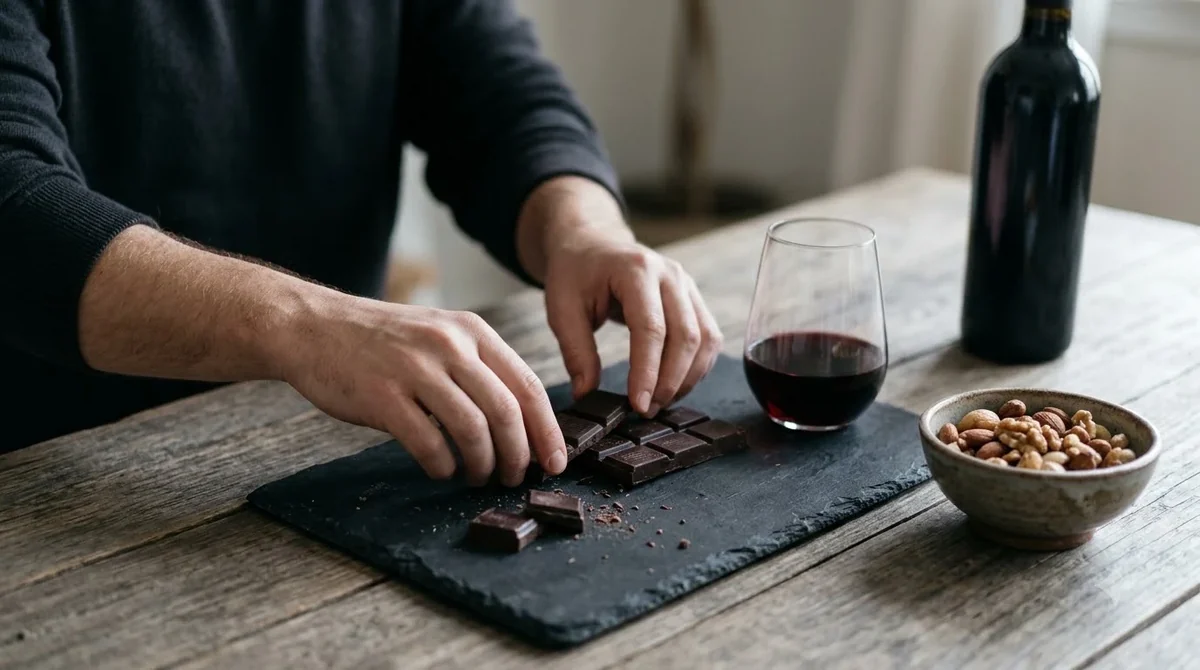
Rombauer’s tasting description points to yellow peach, guava, honeysuckle, warm spice, nutmeg, toasted oak, and creamy vanilla. The 2024 Carneros page describes yellow peach, ripe melon, citrus, vanilla, and buttery nuances, while Wine Enthusiast’s 2024 review mentions roasted apple, buttered popcorn, candied lemon, white flowers, quince, ginger, lemon peel, and nectarine. Those details explain why the wine can seem generous and rounded without being a sweet wine.
Oak aging can contribute aromas and texture that drinkers associate with vanilla, toast, spice, or creaminess. It does not directly add alcohol to the finished wine. Rombauer says the grapes are gently whole-cluster pressed, the juice is cold-settled overnight, and fermentation takes place in barrel, including malolactic fermentation. The winery also reports stirring the lees every seven to ten days, a cellar practice that can add texture and savory complexity as the wine develops.
Alcohol contributes warmth and body near 14.6% ABV, while bright acidity provides a counterweight. Rombauer and Wine Enthusiast both emphasize that freshness in the 2024 wine, which helps its ripe fruit and creamy midpalate finish with lift. For shoppers using “buttery Chardonnay” as a style cue, the site’s butter chardonnay alcohol content guide is a useful comparison: butteriness is a sensory description, not an ABV category, and wines at the same percentage can taste quite different.
Serving Temperature and Storage Keep the Wine Balanced
Serve Rombauer Carneros Chardonnay cool, not ice-cold, so that its citrus, peach, vanilla, and oak aromas remain easy to notice. Rombauer recommends 50–55°F for its Chardonnay, a range that gives a full white wine enough chill to feel composed without muting its detail.
If the bottle has been in a colder refrigerator, take it out a few minutes before pouring. The wine will warm in the glass and release more aroma. Very cold Chardonnay can seem muted, while a much warmer glass can make alcohol feel more prominent and freshness less distinct; serving temperature can affect balance more than the 0.1-point difference between 14.5% and 14.6% ABV.
For unopened bottles, Rombauer recommends a cool, dark storage place and a sideways position, with its own page giving 57–62°F as its preferred storage range. The winery says the Carneros wine can continue to develop for up to five years from the vintage date. A stable environment matters more than a quick temperature swing; avoid a sunny counter, a warm kitchen shelf, or a spot beside an oven where the bottle may experience repeated heat.
Tip: Chill the bottle to about 50–55°F, pour a measured five ounces, and let the wine sit in the glass for a few minutes. That simple routine makes it easier to notice how the acidity, ripe fruit, oak, and alcohol fit together.
After opening, put the cork or closure back in place and refrigerate the remaining still wine. A practical window for opened still Chardonnay is about three to five days, with the fruit and fresh aromas generally becoming less vivid as air exposure continues. Keep the bottle upright in the refrigerator once it has been opened, and bring each new pour back toward 50–55°F rather than leaving it on the counter for an extended period.
Food Pairings That Match Its Weight and Freshness
Pair this Chardonnay with food that can meet its ripe fruit and creamy texture while leaving room for its acidity. Roast chicken, crab cakes, lobster rolls, rich fish dishes, and pasta with cream or butter sauces are natural directions; lemon, herbs, and a crisp vegetable side can keep the meal from feeling too heavy.
Rombauer specifically names crab cakes among its suggested pairings for Carneros Chardonnay, and its recipes also point to dishes such as toasted crab sandwiches and chicken pot pie. Those examples work because the wine’s body can stand alongside savory richness, while its citrus and bright acidity help refresh the palate between bites. Grilled shrimp with lemon, roast turkey with pan juices, or a mushroom tart can follow the same principle.
Consider the sauce as carefully as the main ingredient. Chicken with cream, browned butter, or a lightly cheesy sauce will better match a full-bodied Chardonnay than a plain grilled breast. Scallops, crab, lobster, or salmon with a buttery sauce are natural fits; very lean white fish with little seasoning may feel slight beside the wine. Lemon-forward dishes need a wine with equal or higher acidity, so use fresh lemon and herbs without letting the sauce overwhelm the Chardonnay. Very hot chile heat is a tougher match because alcohol can intensify the burn; choose mild spice and cooling ingredients such as yogurt, avocado, or mild cheese.
For a cheese course, try aged Gouda, young Gruyère, triple-cream cheese, or a mild blue served with plain crackers. A simple fruit plate with pear or apple can echo the wine’s orchard-fruit character. If dessert is planned, choose a dessert that is no sweeter than the wine only when the wine itself is sweet; the standard Carneros Chardonnay is dry, so a very sugary dessert may make it taste sharper and less generous. A lightly sweet apple tart is a safer bridge than syrup-heavy pastries.
Frequently Asked Questions
These answers cover common label and style questions that sit just beyond the headline ABV figure. The most important distinction is between the regular Carneros Chardonnay and Rombauer’s separate late-harvest bottling.
Did Decanter describe the 2022 and 2024 vintages the same way?
No. Decanter classifies the 2022 Carneros Chardonnay as medium-bodied and lightly oaked, while its 2024 entry calls the wine full-bodied and oaked. Both entries identify the wine as dry and made from 100% Chardonnay.
Is Rombauer Joy Late Harvest Chardonnay the same wine as Carneros Chardonnay?
No. Rombauer identifies Joy as a Sauternes-style dessert wine rather than the standard dry Carneros bottling. Its 2023 Joy Late Harvest Chardonnay is listed at 14.1% ABV, made from 100% Chardonnay harvested in November 2023, with an average 34.9 Brix and six months in American oak that was 100% new.
What is 14.6% ABV in proof?
In the United States, proof for distilled spirits is generally calculated as twice the ABV. By that arithmetic, 14.6% ABV equals 29.2 proof, although wine is normally described by ABV rather than by proof.
What does the Brix number on a winery specification mean?
Brix is a measure of soluble solids in grape juice, used by winemakers as an indicator of ripeness and potential sugar before fermentation. A reading of 23.4 Brix is not the finished wine’s sugar level and should not be read as a sweetness percentage on the palate.
What closure is listed for the 2022 Carneros Chardonnay?
Decanter lists the 2022 Carneros Chardonnay with a natural cork closure. Closure type is a packaging detail and does not change the 14.5% ABV figure recorded for that vintage.
Rombauer Carneros Chardonnay is best understood as a full, creamy white wine with a relatively high 14.5–14.6% ABV range, balanced by ripe fruit and bright acidity. Start with the vintage-specific number, serve it near 50–55°F, and pair it with savory dishes such as crab cakes, roast chicken, or lobster to make the wine’s weight and freshness work together.
More in Wine Brands
 Louis Latour Wine Price: Compare Bottles by Style and TierUpdated Nov 20, 2026
 Yellow Tail Moscato Price: What to Expect Before You BuyUpdated Nov 20, 2026
 Sutter Home Sweet Red Review: Find the Right Food PairingsUpdated Nov 20, 2026
 Franzia Chillable Red Review: Find the Right Serving StyleUpdated Nov 20, 2026
 Veuve Clicquot Rose Review: Flavor, Food Pairings and Buying AdviceUpdated Nov 20, 2026
 Rombauer Wine Price: Compare Bottles Before You BuyUpdated Nov 20, 2026