


We may earn a commission when you buy through links on this page, at no extra cost to you. Learn more.
Esk Valley wine brings together expressive Hawke’s Bay reds and fuller whites with bright Marlborough whites, offering a New Zealand range shaped by two distinct growing regions. The producer works with varieties including Merlot, Syrah, Chardonnay, Sauvignon Blanc, Riesling, and Pinot Noir. Its style also reflects traditional cellar practices such as wild vineyard yeast, extended lees aging, hand plunging, and concrete fermentation for selected reds.
For the producer’s own account of its cellar methods and grape sources, see the Esk Valley winery profile. Esk Valley is a useful name to know for drinkers who want more than one regional expression from a single producer. A bottle may emphasize the warmth and structure of Hawke’s Bay or the freshness associated with Marlborough, so the grape, origin, and wine range are good starting points when choosing a style.
What Defines the Esk Valley Range
Esk Valley is a New Zealand wine producer whose range draws on Hawke’s Bay and Marlborough, two regions with different climates and strengths. Its history reaches back to a Bay View winery established in 1933, while the Esk Valley name dates to the estate’s 1986 change of direction.

Its four named ranges are Estate, Artisanal Collection, Great Dirt Collection, and Heipipi The Terraces. These names describe different expressions of the producer’s work, not grape varieties, so the grape and region on an individual bottle remain the clearest clues to style.
The regional split is specific: Hawke’s Bay supplies Merlot, Cabernet Sauvignon, Malbec, Syrah, Chardonnay, Verdelho, and Pinot Gris; Marlborough supplies Sauvignon Blanc, Riesling, and Pinot Noir. The label therefore brings together grapes from two distinct parts of New Zealand.
For a wider overview of New Zealand producers and styles, see our guide to Wine Brands. With Esk Valley, start with region and grape, then consider the collection name and cellar methods.
How Hawke’s Bay Shapes the Reds and Fuller Whites
Hawke’s Bay gives Esk Valley a warm maritime setting for structured red wines and richer white styles. Long, hot summers and relatively low rainfall are moderated by cool coastal breezes, while the region’s geography includes river plains, hillsides, and coastal sites.
The winery identifies Hawke’s Bay as the source of its Merlot, Cabernet Sauvignon, Malbec, Syrah, Chardonnay, Verdelho, and Pinot Gris. Those varieties cover several useful styles: Bordeaux-influenced red blends, Syrah with a darker savory profile, and white wines that can carry more body than the region’s cooler-climate Sauvignon Blanc. The regional association describes Hawke’s Bay as especially well known for red blends and Chardonnay, while also pointing to aromatic whites, Syrah, and dessert styles.
Soil and site matter within the region. Hawke’s Bay Wine describes a landscape shaped by rivers, with free-draining alluvial plains as well as coastal and hillside sites. Bay View, in the northern part of the region near the Esk River Valley, is associated with gravelly soils and a maritime influence. The winery also highlights Gimblett Gravels, a distinctive Hawke’s Bay winegrowing area whose gravel-based soils suit a number of red varieties.
“Hawke’s Bay” on a label can signal several textures. Merlot generally has softer tannins than Cabernet Sauvignon, Syrah is firmer and often peppery, and Chardonnay gives a fuller white-wine option than crisp Sauvignon Blanc. The exact profile still depends on vineyard and cellar choices.
According to the regional association, Hawke’s Bay’s heat summations sit between Burgundy and Bordeaux. This is a climate comparison, not a promise that the wines taste like French counterparts; it helps explain the region’s ability to ripen Bordeaux varieties and fuller-bodied whites while retaining a coastal influence.
Why Marlborough Matters to the Range
Marlborough supplies the brighter, cooler-climate side of Esk Valley’s portfolio, particularly Sauvignon Blanc, Riesling, and Pinot Noir. The region lies at the northern end of New Zealand’s South Island, where cooler nights help preserve freshness and intensity in aromatic grapes.
Sauvignon Blanc is the easiest Marlborough reference point. It commonly shows citrus, fresh herbs, green fruit, or tropical notes, supported by lively acidity. Esk Valley identifies Marlborough as its source, and the winery points to cooler nights as part of the wines’ freshness.
Riesling brings high acidity and a range of sweetness, from dry to gently off-dry or sweet. It can match citrus, ginger, chile, or a sweet-savory sauce. Pinot Noir is lighter-bodied than Cabernet Sauvignon or Syrah, usually emphasizing red fruit, fine tannin, and acidity over sheer weight; it can work with salmon or roast chicken.
For a mixed tasting, compare Marlborough Sauvignon Blanc with Hawke’s Bay Chardonnay to explore freshness against body, then pour Pinot Noir before a more structured Hawke’s Bay red. The producer’s two regional sources make that side-by-side comparison revealing.
Grapes and Styles to Look For
Esk Valley’s grape list spans several familiar international varieties, but the regional source is a helpful clue to style. Hawke’s Bay is the first place to look for Merlot, Cabernet Sauvignon, Malbec, Syrah, Chardonnay, Verdelho, and Pinot Gris; Marlborough is the source for Sauvignon Blanc, Riesling, and Pinot Noir.
For red-wine drinkers, the main decision is often between a softer Merlot-led wine and a more structured blend built around Cabernet Sauvignon or Syrah. Merlot generally has medium, softer tannins, while Cabernet Sauvignon is high in tannin. Syrah is typically medium-plus to high in tannin. In a blend, proportions and cellar choices influence the balance, so the grape list provides a guide rather than a complete tasting note.
Esk Valley’s Artisanal Collection Red offers a concrete example of the Hawke’s Bay red style. Wine Enthusiast’s review classified the 2020 bottling as a Bordeaux-style red blend and gave it 93 points. The review described blueberry, raspberry, and black currant alongside black pepper, bay leaf, thyme, pencil lead, and dried violets, with savory tannins and a full-bodied palate. That profile suggests a wine suited to dishes with enough flavor and texture to meet its structure.
White-wine choices are varied too. Sauvignon Blanc and Riesling are high-acid grapes that suit citrus, vinegar, fresh herbs, and salt. Chardonnay usually has medium acidity and feels broader than a sharply acidic Sauvignon Blanc; Pinot Gris can range from crisp to rounded, while Verdelho offers another aromatic option.
| Reference | Published figure | How to use it |
|---|---|---|
| Esk Valley 2020 Artisanal Collection Red | 93 points | A specific Wine Enthusiast review score, not a rating for every Esk Valley wine |
| Same 2020 red bottling | 14% ABV | The listed alcohol level for that reviewed wine only |
| Reviewed bottle size | 750 ml | A standard bottle size, usually enough for about five 5-ounce pours |
| Typical serving pour | 5 oz | A practical measure for comparing servings and planning a meal |
The table is a snapshot of one reviewed wine, not a range-wide specification. Its 14% alcohol figure belongs to that 2020 red; another grape, vintage, or bottling can differ. Treat the review as one example rather than a universal description of Esk Valley reds.
Drinkers comparing Esk Valley’s fuller reds with other Cabernet- and Merlot-focused producers may also find our article on Baron Philippe de Rothschild wine useful for understanding the broader Bordeaux-style tradition. For a regional contrast from the United States, see our overview of Alexander Valley vineyards wine, where warm-climate Cabernet Sauvignon and other varieties form a different reference point.
Traditional Winemaking and the Collection Names
Esk Valley describes its approach as manual and traditional, with an emphasis on direct contact with the fruit and patient cellar work. Its stated practices include wild vineyard yeast, long-term lees aging, hand plunging and stirring, and concrete fermenters for red wines.
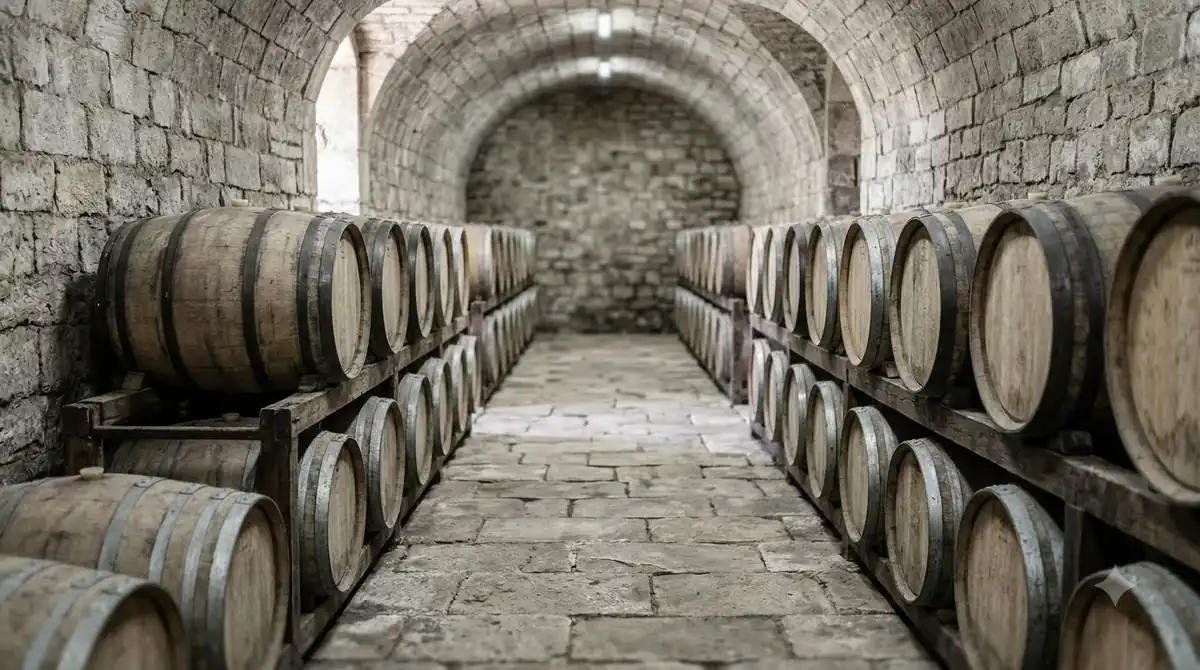
The winery says its red-wine concrete fermenters are replicas of tanks used at the original Bay View winery. Fermentation vessels, yeast choices, cap management, and time on lees all affect texture and aroma; concrete is a vessel rather than a flavoring ingredient like new oak.
Wild vineyard yeast relies on yeasts naturally present in the vineyard and winery, which calls for careful monitoring. Lees aging keeps wine in contact with spent yeast cells and can add texture, while hand plunging and stirring require direct attention during fermentation or maturation.
The estate’s history adds context to those techniques. The winery was first established in 1933 as Glenvale by Robert Bird, initially producing fortified wines. Villa Maria purchased the estate in 1986 and renamed it Esk Valley. The focus shifted toward wines that expressed Hawke’s Bay varieties and sites. Today, the producer’s own description links historic cellar practices with contemporary wine styles.
How the four ranges help you choose
The Estate range is positioned as a way to show the variety and vineyard in a direct, accessible style. Artisanal Collection highlights the winemaker’s creative approach. Great Dirt Collection puts more emphasis on site and the character of particular vineyard ground, while Heipipi The Terraces is presented as the producer’s most iconic wine from the Heipipi Vineyard. These descriptions tell you how the winery frames each tier, though they do not replace the specific grape, vintage, or wine description.
For a first purchase, Estate can introduce a grape or region. Artisanal Collection highlights cellar choices, while Great Dirt and Heipipi The Terraces point toward more site-centered expressions. Choose by style and occasion rather than by collection name alone.
Serving, Food Pairing, and Cellaring
Serve Esk Valley wines according to their structure rather than treating every red as a room-temperature wine or every white as an ice-cold one. Temperature changes how acidity, alcohol, tannin, and aroma are perceived, so a little attention before pouring can make the wine easier to assess.
For a Marlborough Sauvignon Blanc or Riesling, aim for 45–50°F; serve a fuller Chardonnay closer to 50–55°F. Pinot Noir is best slightly cool at 55–60°F, while a fuller Hawke’s Bay red blend can be served around 60–65°F. If the bottle is too cold, aromatic detail can seem muted; if it is too warm, alcohol can feel more prominent and the wine may seem heavy.
Pair high-acid whites with foods that have similar freshness. Sauvignon Blanc works with oysters, goat cheese, green vegetables, or fish with lemon; Riesling’s acidity can stand up to chile and ginger. Its sweetness should match or exceed a sweet sauce or dessert. Pinot Gris can suit roast chicken, pork, or fruit-topped salads.
Chardonnay pairs with roast chicken, grilled halibut, creamy pasta, or richer vegetables. Its medium acidity can seem flat beside a sharply acidic vinaigrette, so consider lemon, vinegar, and tomatoes in the sauce as well as the main ingredient.
For reds, match tannin with protein and texture. Merlot can suit roast pork, burgers, or mushrooms; Cabernet Sauvignon and Syrah can handle grilled beef, lamb, or slow-cooked meat. Salt and fat soften tannin, while oily fish can clash with tannic reds, making Pinot Noir a safer choice for salmon than a firm Cabernet-based blend.
Young, full-bodied red wines can benefit from 30–60 minutes in a decanter. This gives the wine time to open and can help separate sediment in older bottles, though not every wine needs extensive aeration. For storage, keep bottles on their side in a cool, dark place near 55°F, away from sharp temperature changes and direct sunlight.
Tip: If you are serving both a Marlborough white and a Hawke’s Bay red, start with the white at 45–50°F and bring the red toward 60–65°F. Pour about 5 ounces per guest, then allow a young, full-bodied red 30–60 minutes in a decanter if it seems tight on opening.
After opening, refrigerate still wine and aim to finish it within 3–5 days; bring red wine back toward serving temperature before pouring. Sparkling wine usually lasts 1–3 days, while fortified wine can last several weeks. These are guidelines, since closure and storage conditions affect freshness.
Frequently Asked Questions
These answers clarify the estate’s 1933 origins, its two regional sources, and how to read the 93-point, 14% ABV example discussed above. Each point applies to a particular bottle or review, not automatically to the full range.
What does a 93-point wine score mean?
Wine Enthusiast places scores from 90 to 93 in its “Excellent” category and describes them as highly recommended. The number is an editorial assessment of the particular wine reviewed, not a guarantee that every bottle from the same producer will receive the same score.
Was the 2020 Artisanal Collection Red tasted blind?
Wine Enthusiast says its Buying Guide tastings are conducted blind, typically in peer-group flights of 5–8 samples. Reviewers may know general information about a flight, such as vintage or variety, but they are not told the producer’s identity during the tasting.
What does ABV measure?
ABV expresses alcohol as a proportion of the wine’s total volume. A figure of 14% means about 14 out of every 100 volume units are alcohol; it does not describe residual sugar, acidity, or tannin.
What does the vintage year on an Esk Valley label mean?
The vintage identifies the year the grapes were harvested, not the year the wine was reviewed or necessarily the year it was bottled. A vintage can influence ripeness, acidity, and tannin, so the same named wine may differ from one harvest to another.
How long could the reviewed 2020 Artisanal Collection Red be cellared?
Wine Enthusiast’s review suggested drinking it with a decanter or cellaring it until around 2030. That is a recommendation for the specific 2020 bottle, not a universal aging rule for all Esk Valley reds; storage conditions and the wine’s provenance also affect how well a bottle develops.
Esk Valley is best understood as a producer with two regional voices: Hawke’s Bay for structured reds and fuller whites, and Marlborough for vibrant Sauvignon Blanc, Riesling, and Pinot Noir. Start with the grape and origin that suit your meal, then use the collection name and vintage to explore the producer’s different expressions.
More in Wine Brands
 Louis Latour Wine Price: Compare Bottles by Style and TierUpdated Nov 20, 2026
 Yellow Tail Moscato Price: What to Expect Before You BuyUpdated Nov 20, 2026
 Sutter Home Sweet Red Review: Find the Right Food PairingsUpdated Nov 20, 2026
 Franzia Chillable Red Review: Find the Right Serving StyleUpdated Nov 20, 2026
 Veuve Clicquot Rose Review: Flavor, Food Pairings and Buying AdviceUpdated Nov 20, 2026
 Rombauer Wine Price: Compare Bottles Before You BuyUpdated Nov 20, 2026