

We may earn a commission when you buy through links on this page, at no extra cost to you. Learn more.
The phrase what is tannat refers to a dry, full-bodied red wine made from a dark-skinned grape native to southwest France. Tannat is known for its deep color, firm tannins, and flavors of black fruit, spice, and sometimes herbs. Uruguay has made the grape its signature red, while Madiran in France remains its historic home. The style can be intense and structured, but careful growing and winemaking can make the tannins feel more polished.
Tannat is a good choice for drinkers who enjoy Cabernet Sauvignon, Syrah, or other substantial reds and want a wine with a distinct personality. Its most important differences are easy to understand: where the grapes grow, how the wine is made, and what you serve alongside it all affect the balance between dark fruit, acidity, and tannin.
What Kind of Wine Is Tannat?
Tannat is a red wine grape variety that usually produces dry, deeply colored wines with a full body and a pronounced tannin structure. Expect a dark-fruited profile and a firm finish rather than the softer feel of Pinot Noir or many easy-drinking Merlot-based reds.
The grape itself has thick, dark skins and a reputation for producing wines with substantial color and grip. In the glass, a typical Tannat can look opaque ruby, purple-red, or almost black at the center. The name is often associated with tannin, the compounds that create a drying, puckering sensation along the gums and cheeks. That texture is part of the variety’s identity, not automatically a sign of a fault.
Most Tannat is made as a still red wine, but the grape is not limited to a single format. It can appear on its own as a varietal bottling or be blended with other red grapes, especially in southwest France. The grape can also be used for rosé and, in unusual examples, sparkling wine. Those alternatives are worth knowing about, but a dry, still red remains the style most drinkers will encounter.
Tannat’s intensity does not mean every bottle tastes equally tough. A wine with ripe fruit, balanced acidity, and well-managed tannins can feel generous and composed; a more traditional, highly structured example may need food or time in a decanter to show its best side. For a quick comparison with other grapes and styles, browse the site’s guide to Wine by Type.
Tannat’s Origins in Madiran and Uruguay
Tannat originated in southwest France, with Madiran and Irouléguy among the places most closely associated with its history. It later took root in Uruguay, where it developed into the country’s best-known red grape and a distinct expression of the variety.
In France, Madiran is the classic reference point. The region lies in the foothills of the Pyrenees, and its traditional Tannat wines are often dense, firmly structured, and built around dark fruit. They may be made entirely from Tannat or blended with Cabernet Sauvignon and Cabernet Franc. Blending can help shape the wine’s balance, while vineyard choices and cellar decisions influence how forcefully the tannins come across.
Uruguay’s connection began in the late nineteenth century. Uruguay Wine, the country’s wine-promotion organization, traces the grape’s introduction to Basque immigrants around 1870 and names Pascual Harriague as a central figure in its arrival. The grape adapted to local growing conditions and became a national emblem. Uruguay’s official wine information describes its modern Tannats as having mature, softer tannins and a velvety structure, a useful reminder that the grape’s reputation for toughness is not the whole story.
There is no single Uruguayan taste profile. Decanter describes Canelones wines as more austere and structured, with clay and chalk soils contributing to a different impression from the more overtly fruity examples found in Maldonado. Coastal influence, vineyard site, harvest decisions, and cellar handling all contribute to variation. For more regional context, the Uruguay Wine profile of Tannat outlines the grape’s place in the country’s wine identity.
Tannat Flavor, Color, and Tannin Structure
The usual flavor markers are black cherry, blackberry, plum, and black currant, often layered with spice, licorice, herbs, or earthy notes. Tannat’s defining structural feature is high tannin, while its acidity can help keep the wine from feeling heavy when the fruit is ripe and the wine is well balanced.
On the nose, look for dark rather than delicate fruit. Riper examples can suggest blackberry preserves, black plum, or cassis; cooler or more restrained styles may lean toward tart black cherry, dried herbs, pepper, or a savory edge. Oak aging can add impressions such as vanilla, toast, cocoa, or baking spice, but oak is a winemaking choice rather than an unavoidable flavor of the grape.
On the palate, Tannat often feels broad and substantial. Its tannins may seem chalky, grippy, or drying, especially in youth, and can make the finish linger. Acidity is important because it provides freshness beneath the wine’s weight. A balanced example should have fruit and acidity to meet the tannins, instead of leaving the mouth feeling only dry or rough. Decanter notes that Tannat tannins range from bold to fine-grained and supple, depending partly on vineyard and cellar decisions.
Temperature and serving conditions can change how the wine feels. A bottle served too warm may emphasize alcohol and make the structure seem heavier; a bottle served too cold can mute its aromas and make the tannins seem harder. To identify the details in a particular bottle, compare its fruit, acidity, oak, and finish with the site’s Tannat tasting notes. That vocabulary helps distinguish ripe, plush fruit from a more savory, tightly wound style.
How Climate, Blending, and Winemaking Shape Tannat
Place and technique explain why Tannat from Madiran may feel more rugged than a modern Uruguayan bottle or a young U.S. example. The grape has enough natural color and tannin to give winemakers a strong framework, but growing conditions and cellar choices determine how that framework is expressed.
In Madiran, Tannat has traditionally been used in blends with Cabernet Sauvignon or Cabernet Franc as well as bottled on its own. A blend can add a different aromatic profile or adjust the overall shape of the wine, although the exact result depends on the proportions and the character of each lot. Decanter highlights producers’ efforts to manage tannin so the wine remains harmonious rather than simply powerful. The variety therefore has a long tradition of structured wines, but not a rule that every bottle must be massive.
In Uruguay, improved vineyard management and more measured oak use have helped producers make wines with a softer impression while retaining Tannat’s dark fruit and structure. The national profile emphasizes the variety’s adaptation to local soils and climate. Within the country, Canelones and Maldonado can produce different styles, so the region name is a meaningful clue rather than a guarantee of one fixed flavor.
American producers are also exploring what the grape can do outside its historic regions. Wine Enthusiast points to examples from Oregon’s Applegate Valley and California’s Central Coast, noting that California bottlings can be approachable relatively soon after release. Decanter has also covered a 100% Tannat pét-nat from Oregon, a reminder that the grape is not confined to traditional still reds. These are developing interpretations, so the producer and region matter more than assuming a universal Tannat style. A young, fruit-forward U.S. bottle may need little air, while a structured Madiran can benefit from more time after opening. For examples from France, Uruguay, and beyond, see the Decanter guide to Tannat’s flavors and regional styles.
Food Pairings for Tannat’s Firm Tannins
Tannat generally works best with rich, savory food that can stand up to its body and soften the impression of its tannins. Grilled beef, barbecue, lamb, braised short ribs, and hearty stews are natural matches because their protein, fat, and deep flavors meet the wine’s structure.
Start with grilled or roasted meats. A rib-eye steak, beef brisket, lamb shoulder, or slow-cooked beef cheek gives Tannat enough flavor to avoid being overwhelmed. Fat and protein soften the perception of tannin, while browned surfaces, smoke, and savory sauces echo the wine’s dark fruit and spice. Salt also reduces the impression of astringency, which is why a well-seasoned steak can make a firm red seem more generous.
Slow-cooked dishes are equally useful. Beef stew, short ribs, cassoulet, and sausage with white beans provide a mix of protein, fat, and concentrated savory flavor. For a meat-free meal, try grilled portobello mushrooms, charred eggplant, lentils with smoked paprika, or roasted vegetables with a rich mushroom sauce. These dishes bring enough umami and texture to sit comfortably beside a full-bodied red, especially when the recipe includes olive oil or other savory elements.
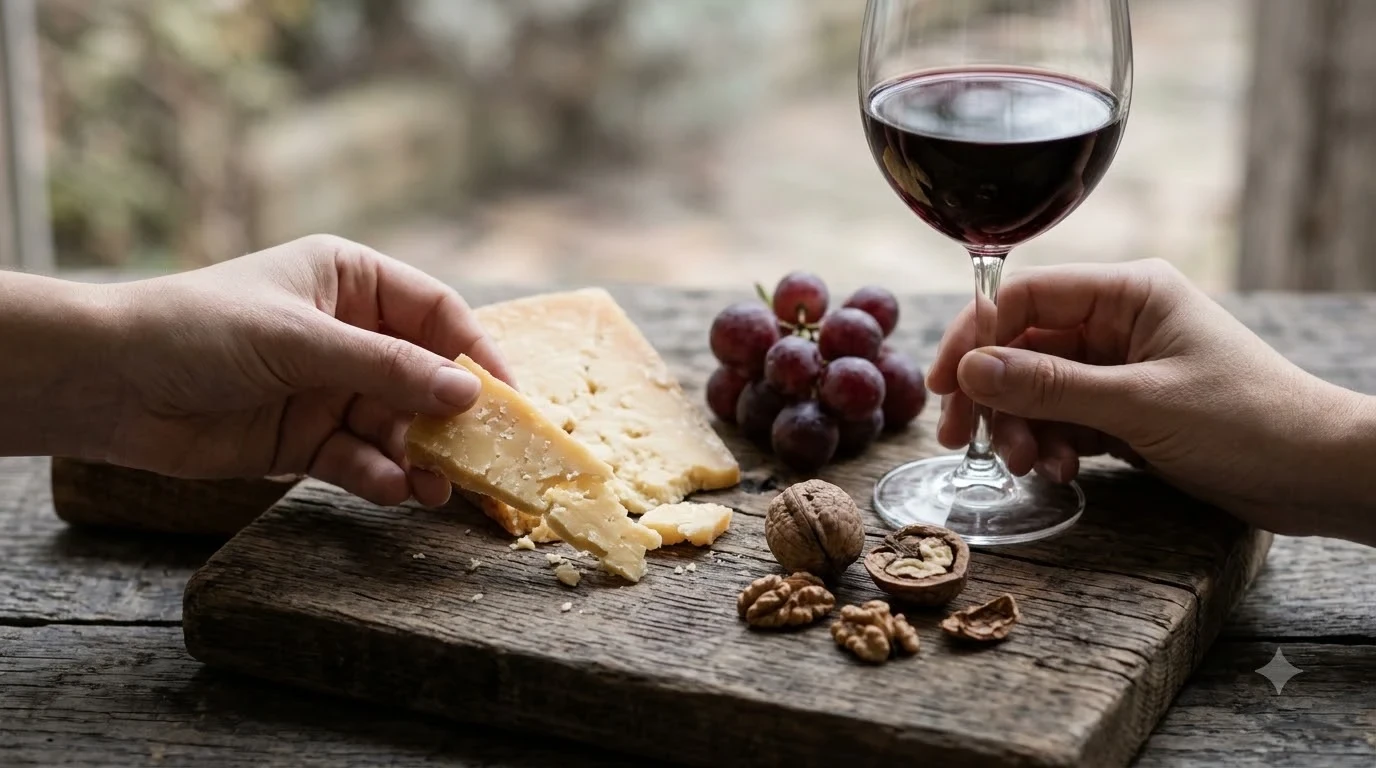
Cheese can work, too. Choose aged or firm cheeses such as aged cheddar, Manchego, or a mature sheep’s-milk cheese rather than relying on a very delicate fresh cheese. The wine’s tannins can feel more pronounced beside lean, salty foods with little fat, so include bread, olive oil, or a richer main course to keep the pairing balanced. For dish-by-dish combinations, see the guide to Tannat food pairing. Be cautious with very hot chili dishes: alcohol and tannin can amplify the burn, making a powerful Tannat feel hotter and harsher. Choose a softer, fruit-forward style for spicy barbecue, and balance sharp vinegar or lemon sauces with enough richness.
How to Choose, Serve, and Store Tannat
Choose a bottle by deciding whether you want the classic structure of Madiran, the more polished profile often associated with Uruguay, or a newer regional interpretation from the United States. Then serve it slightly below ordinary room temperature, give young structured examples some air, and store leftovers carefully to preserve their fruit.
For a first bottle, Uruguay is a useful starting point if you want Tannat’s dark-fruit character with a softer tannin impression. Look for Madiran if you enjoy dense, savory reds with a more assertive frame, and consider Oregon or California if you want to explore how newer growing regions interpret the grape. A producer’s tasting description can help: words such as structured, firm, or built for aging point toward a more imposing style, while fresh, supple, or fruit-forward suggest an easier early-drinking profile.
Serving temperatures and opening time
Serve a full-bodied Tannat at about 60–65°F. This range keeps the wine cool enough to retain freshness while allowing its dark-fruit aromas and texture to show. If the room is warm, chill the bottle briefly before serving rather than pouring it at a high room temperature. Use a large red-wine glass so the wine has room to open, and pour a standard 5-ounce serving.
Young, full-bodied red wines often benefit from 30–60 minutes in a decanter. That interval gives a tight Tannat time to release aromas and can make its tannins feel less severe at the table. Older bottles are a different case: open them carefully and taste before deciding to decant, since extended air can diminish delicate aromas. If the wine initially seems closed, give it time in the glass and revisit it rather than assuming the bottle is flawed.
| Serving detail | Practical guideline | Why it helps |
|---|---|---|
| Serving temperature | 60–65°F | Preserves freshness while allowing aromas to show |
| Decanting a young, full red | 30–60 minutes | Allows a firm wine to open before the meal |
| Standard pour | 5 ounces | Leaves room in the glass for swirling |
| Typical bottle size | 750 ml | Provides about 5 standard pours |
| Opened still wine | 3–5 days refrigerated | Slows oxidation and helps preserve the remaining wine |
Tip: If a young Tannat tastes especially firm, serve it with a fatty, well-seasoned dish and allow 30–60 minutes of air before the main course. Food and a little time can make the wine feel more balanced without masking its character.
Storage and leftovers
Store unopened bottles on their side in a cool, dark place near 55°F, away from sunlight and temperature swings. Consistent storage conditions matter more than a special display rack. If you plan to keep a structured bottle for several years, avoid warm cupboards, kitchen counters, and locations near appliances that generate heat.
After opening, close the bottle firmly and refrigerate it, even if it is red. Most still wines keep their best qualities for roughly 3–5 days under refrigeration; bring the remaining Tannat back toward serving temperature before pouring. A smaller leftover volume in a tightly sealed container has less air in contact with it, which can help slow the loss of fresh fruit character.
Frequently Asked Questions
Why is Tannat Day celebrated on April 14?
Uruguay’s National Institute of Viticulture established Tannat Day in 2016. The date honors Pascual Harriague, a key figure in the grape’s introduction to Uruguay, who died on April 14, 1894, in Bayonne, France.
Can Tannat be made as a sparkling wine?
Yes. Decanter has reported on a 100% Tannat pét-nat from Oregon, made in a naturally sparkling style. That example was described as lively, fresh, and delicate, a very different presentation from the grape’s more familiar structured still reds.
Where is Tannat grown in Uruguay?
Uruguay Wine says the grape is grown mainly in the country’s southern region. It is also cultivated along the coast and in northern and eastern parts of the country, showing that the variety has spread beyond its earliest strongholds.
Is Tannat grown in South Africa?
Yes. Decanter has covered a 100% Tannat from Lowerland Wines in Prieska, in South Africa’s Northern Cape. The example discussed had spent 10 months aging in older oak, which helped produce a softer, supple texture.
Can Tannat be blended with grapes other than Cabernet?
Yes. A Uruguayan wine profiled by Decanter, Bouza’s Monte Vide Eu, included 50% Tannat, 30% Merlot, and 20% Tempranillo in the cited vintage. The wine has been produced since 2005, illustrating how the grape can contribute structure within a multi-variety blend.
Tannat is a distinctive red for anyone who enjoys deep color, dark fruit, and a firm tannin structure. Start with Uruguay for a more polished introduction or Madiran for a traditional, more structured expression, then match the bottle to rich, savory food and serve it cool enough to keep its freshness in focus.
More in Wine Types & Grapes
 What Does Mourvèdre Taste Like? Flavor Profile, Regions, and PairingsUpdated Nov 20, 2026
 What Does Marsanne Taste Like? Flavors, Styles, and Food PairingsUpdated Nov 20, 2026
 What Does Malvasia Taste Like? Styles, Flavors, and Food PairingsUpdated Nov 20, 2026
 What Does Grenache Blanc Taste Like? Flavor Profile, Styles, and PairingsUpdated Nov 20, 2026
 What Does Garnacha Taste Like? Key Flavors, Styles, and Pairing TipsUpdated Nov 20, 2026
 What Does Fruit Wine Taste Like? A Complete Flavor and Style BreakdownUpdated Nov 20, 2026