
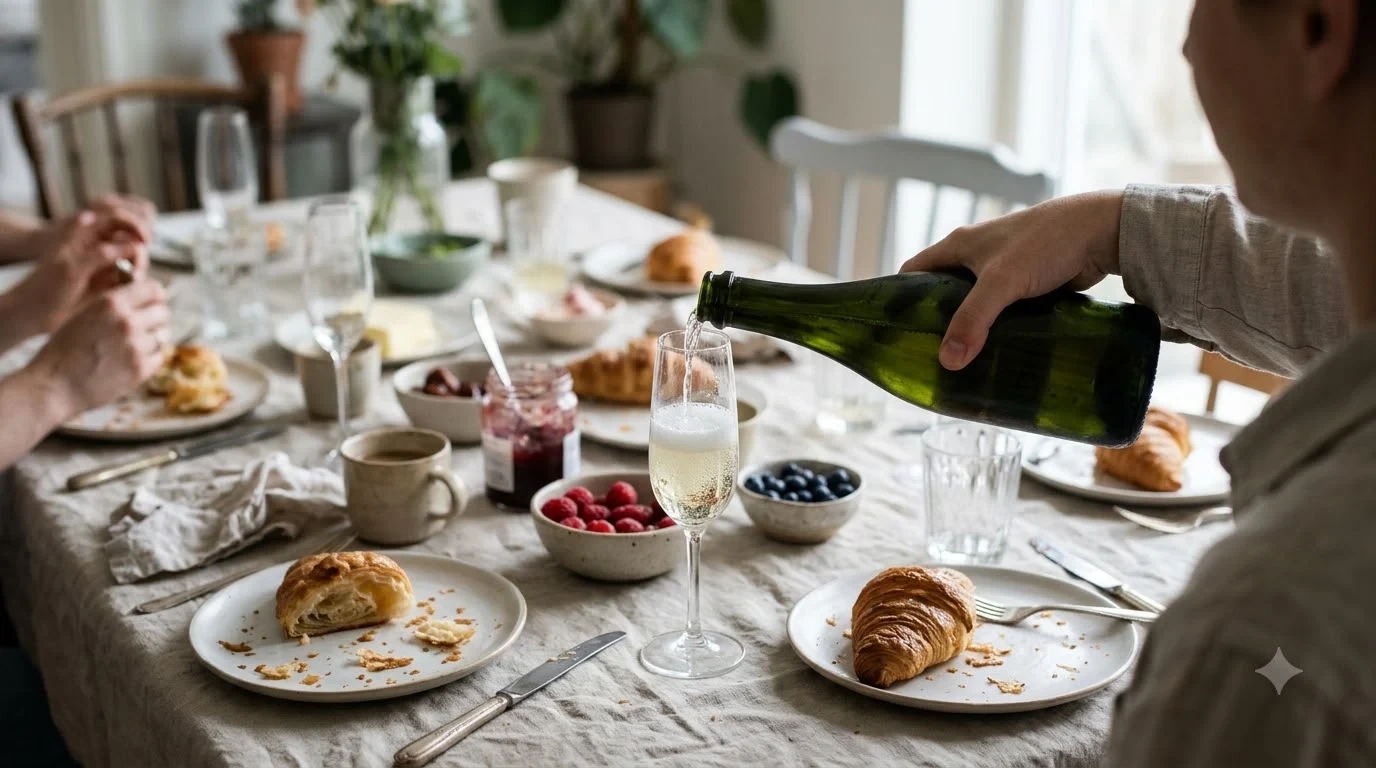

We may earn a commission when you buy through links on this page, at no extra cost to you. Learn more.
The phrase what is extra brut describes a sparkling-wine category with 0 to 6 grams of sugar per liter. It is drier than brut, but it is not necessarily sugar-free or sharper in every respect. The term describes the wine’s sweetness classification, not its grape variety, color, or production method.
Extra Brut is a useful label to recognize when you prefer sparkling wine with restrained sweetness and a clean, lively finish. The category appears on Champagne and Cava, among other traditional-method bottlings, and a little context makes it easier to choose a bottle that fits the meal and the moment.
What the Label Tells You
Extra Brut identifies a sparkling wine with no more than 6 grams of sugar per liter, placing it among the driest commonly labeled styles. In Champagne and Cava, the category sits between Brut Nature and Brut, so it gives shoppers a more specific idea of sweetness than the word “dry” alone.

On a Champagne label, Extra Brut is a regulated sweetness term: the Comité Champagne places it in the 0-to-6-g/L range, while Brut is below 12 g/L. The Cava Regulatory Council also sets Extra Brut at 0 to 6 g/L. These ranges are close across the two regions, which means the phrase gives a useful point of comparison even though the wines may differ in grapes, growing conditions, aging, and winemaking choices.
The name can be misleading to anyone who reads “extra” as “extra sweet.” In sparkling-wine terminology, Extra Brut actually means drier than Brut. The category is also not a promise that the wine will taste austere, sour, or neutral. A bottle can have ripe fruit aromas, a creamy texture, or a rounded middle while remaining within the Extra Brut sugar range.
It helps to separate three questions when reading a bottle: where the wine comes from, how it was made, and how sweet it is. “Champagne” identifies a protected wine region in France; “Cava” identifies a Spanish sparkling-wine appellation; “Extra Brut” describes the sweetness level. For more background on extra brut wine, start with the dosage category, then consider origin and producer style.
How Dosage Shapes the Wine
Dosage is the finishing addition that helps set the sweetness of many traditional-method sparkling wines. It usually happens after the second fermentation in the bottle, when the yeast sediment has been collected and removed, and it gives the winemaker a final opportunity to balance the wine.
During bottle fermentation, yeast consumes sugar and produces alcohol and carbon dioxide. After the wine has aged on its lees, the bottles are riddled so the sediment gathers in the neck. Disgorgement removes that sediment; the small amount of wine lost is replaced before sealing with liqueur d’expédition, a mixture of wine and dissolved sugar.
A measured finishing step
The Comité Champagne explains the process in its overview of Champagne dosage: around 1 centiliter of dosage liqueur is generally added to a 75-centiliter bottle. The producer considers the base wine’s acidity, structure, fruit, and overall balance before deciding how much sweetness it needs. A small addition can soften acidity and make fruit seem more complete, while too much can make a delicate wine feel heavy.
Extra Brut does not mean that the producer skipped dosage: a wine may receive a measured addition and still finish between 0 and 6 g/L of sugar. In Decanter’s account of trials at Rathfinny Wine Estate, winemakers compared samples in half-gram-per-liter steps and found that a change of just 0.5 g/L could alter the wine’s balance. “No dosage,” “zero dosage,” and “Brut Nature” refer to a more specific production choice, not simply a general impression of dryness.
Extra Brut vs. Brut and Other Sweetness Levels
The main difference between Extra Brut and Brut is the amount of sugar in the finished sparkling wine: Extra Brut has 0 to 6 g/L, while Brut is below 12 g/L. Both are dry styles, but Extra Brut has a tighter upper limit, making it a helpful choice when you want less sweetness than a standard Brut bottling.
| Label term | Sugar level | How it generally comes across |
|---|---|---|
| Brut Nature / Zero Dosage | Under 3 g/L; no added dosage | Very dry, with little or no dosage sweetness |
| Extra Brut | 0–6 g/L | Very dry, with a little more room for balance |
| Brut | Under 12 g/L | Dry; often a versatile middle ground |
| Extra Dry | 12–17 g/L | Noticeably softer and sweeter than Brut |
| Sec / Dry | 17–32 g/L | Medium-sweet compared with Brut styles |
| Demi-Sec | 32–50 g/L | Sweet enough for many desserts |
| Doux | More than 50 g/L | The sweetest category in this scale |
The scale can be counterintuitive because Extra Dry is sweeter than Brut, not drier. A useful way to remember the order is to move from the driest end—Brut Nature, Extra Brut, Brut—toward the sweeter categories: Extra Dry, Sec, Demi-Sec, and Doux. The official Champagne explanation sets Extra Brut at 0 to 6 g/L and Extra Dry at 12 to 17 g/L, leaving a meaningful gap between those two label terms.
Brut Nature deserves a closer look because its range overlaps the lower end of Extra Brut. Under the Champagne definition, Brut Nature, also called Pas Dosé or Dosage Zéro, contains less than 3 g/L and has no dosage liqueur added. Extra Brut can also be very low in sugar, but its label does not make the same no-added-dosage statement. A wine with a little natural residual sugar can still taste very dry, so the production detail is not identical to the sugar figure.
For readers comparing the broader category, Brut Champagne wine is often the familiar reference point. The practical question is whether you prefer the roomier Brut range or the narrower Extra Brut range; neither term guarantees a particular aroma, level of acidity, or aging style.
Why Two Extra Brut Bottles Can Taste Different
The sugar range gives a useful starting point, but it does not dictate the full flavor of a sparkling wine. Grape variety, climate, harvest conditions, lees aging, blending, and the producer’s dosage decision all help explain why two Extra Brut bottles can feel quite different in the glass.
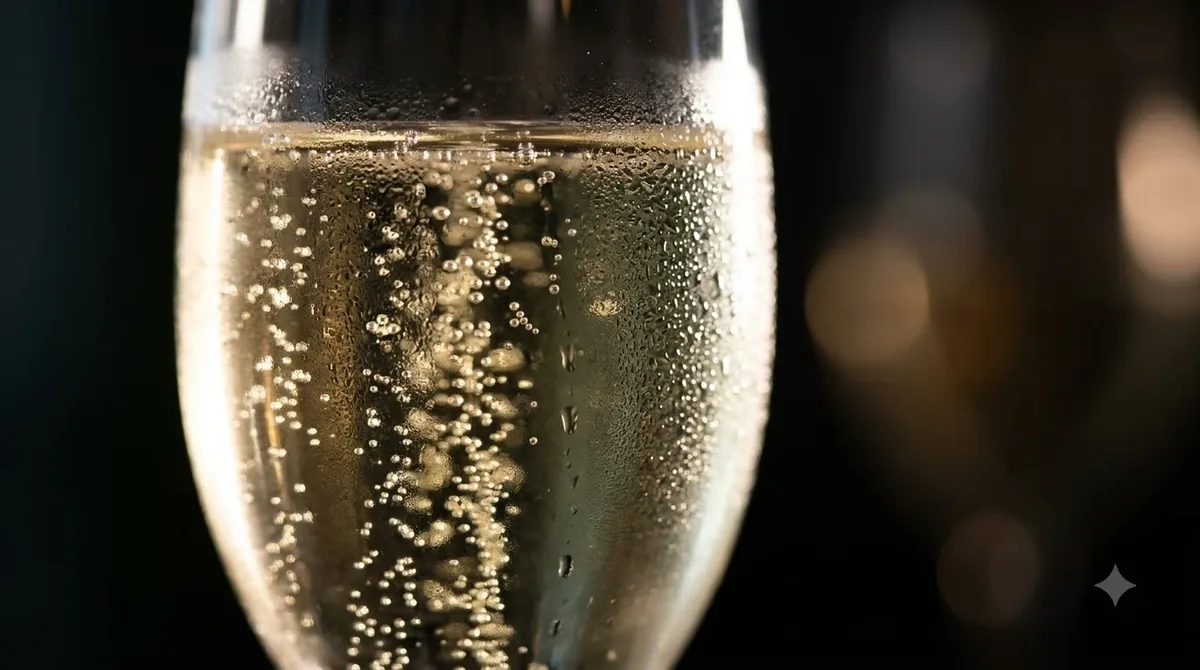
In Champagne, Chardonnay is associated with liveliness, finesse, citrus, and white-flower notes; Pinot Noir tends to contribute structure, intensity, and red-fruit character; Meunier often brings fruitiness and roundness. Producers blend these grapes in different proportions and may combine wines from several harvests; the Champagne appellation also contains 319 crus, or village-level growing areas. Acidity, ripeness, and texture matter just as much: the same Extra Brut sugar range can feel taut in a lean wine or more rounded in a fruitier one.
Lees aging and bottle development can add bread, pastry, and nut-like notes, while fruit character may shift over time. Extra Brut does not tell you how long a wine aged on its lees, whether reserve wines were used, or whether a producer favors a citrus-driven or richer style. Decanter’s report from Rathfinny describes winemakers comparing Blanc de Blancs samples from 0 to 6 g/L and choosing 3 g/L for one cuvée, while the estate’s Blanc de Noirs selection was 3.5 g/L. The half-gram difference did not change the category, but it did affect the final balance.
Food Pairings for a Dry, High-Acid Sparkler
Extra Brut is especially effective with salty, delicate, or lightly rich foods because its dry profile and lively acidity can refresh the palate. Think oysters, shrimp, scallops, fried calamari, salted almonds, or appetizers with a clean citrus finish rather than dishes built around heavy sweetness.
Seafood is a natural starting point. The Champagne education site recommends Extra Brut with fish and seafood, noting that its low sugar content leaves lively acidity suited to delicate and iodine-rich flavors. Oysters with lemon, shrimp toast, crab salad, and simply grilled white fish can all work well when the preparation is not dominated by sweet sauces. For Cava, the regulatory body’s Extra Brut category description highlights appetizers, acidic or slightly bitter dishes, and foods with an oily texture, making fried calamari, potato chips, tempura vegetables, or croquettes practical options.
Keep the sauce in mind as much as the main ingredient. A lemony vinaigrette or sharp pickled garnish needs a wine with equal or higher acidity, otherwise the wine can taste flat beside the food. Extra Brut often has enough freshness for bright seafood preparations, but a very sharp vinegar dressing can overwhelm it. In a pairing where the dish is sweet, such as glazed pork or fruit tart, choose a sparkling wine at least as sweet as the food; a dry Extra Brut may taste bitter by comparison.
For a broader explanation of how sweetness affects Champagne at the table, see whether Brut Champagne is sweet or dry. Extra Brut is a better match for savory courses than sugary desserts, and it is generally wise to keep intense chili heat in check because alcohol can make spicy dishes feel hotter.
Serving, Storing, and Choosing a Bottle
Serve Extra Brut cold enough to keep its bubbles lively but not so cold that its aromas disappear. A temperature of 40–50°F works well for sparkling wine, and a standard 750-milliliter bottle provides about five 5-ounce pours. Chill the bottle in advance rather than leaving it in the freezer; once opened, sparkling wine generally keeps for 1–3 days in the refrigerator with a proper sparkling-wine stopper, although the bubbles gradually fade. Pour gently and use a tulip-shaped sparkling glass or a small white-wine glass to give citrus, orchard-fruit, and lees-derived aromas room to show.
What to look for on the shelf
Start with the region and producer, then use Extra Brut as a sweetness filter. In Champagne and Cava, the term signals a dry style within the 0-to-6-g/L range. Next, decide whether you want a Chardonnay-led wine with citrus and lift, a Pinot Noir-led blend with more structure, or a Cava whose grape blend and aging category offer a different profile. Wine by Type can help place sparkling wines alongside still whites, reds, and rosés.
Look for cues that tell you more than dosage alone. Blanc de Blancs means a Champagne made from white grapes, usually Chardonnay, while Blanc de Noirs indicates a wine made from dark-skinned varieties such as Pinot Noir and/or Meunier. A rosé label signals a color and style choice, while a vintage year tells you something about the harvest; none changes the Extra Brut sugar category. For a first comparison, try an Extra Brut and a standard Brut from the same producer to notice how dosage affects roundness. Store unopened bottles on their side in a cool, dark place near 55°F, away from repeated temperature swings.
Tip: Compare producer and region first, then use the Extra Brut label to set your sweetness expectation. A published dosage figure is useful, but it does not replace tasting notes about acidity, fruit, and texture.
Frequently Asked Questions
These quick answers clarify how the dosage label relates to Champagne’s harvest year and Cava’s aging rules, as well as to color and alcohol content.
Can Extra Brut Champagne be vintage?
Yes. A vintage Champagne is made exclusively from wines harvested in the year printed on the bottle and does not include reserve wines from other harvests. The Extra Brut designation still describes its sugar category, so vintage status and dosage are separate pieces of information.
Can Extra Brut be rosé?
Yes. Extra Brut describes sweetness, while rosé describes the wine’s color and style. Champagne rosé can be made by macerating black grapes or by blending red Champagne wine into the blend.
Does Extra Brut mean lower alcohol?
No. The sweetness term and alcohol by volume are separate label details. Champagne is generally around 12% alcohol by volume, with some variation, regardless of whether the bottle is Brut or Extra Brut.
What does Gran Reserva mean on Extra Brut Cava?
For Cava, Gran Reserva is an aging designation, not a sweetness level. It is restricted to Brut Nature, Extra Brut, and Brut Cava aged for at least 30 months, with the full aging period taking place at the same winery.
Is Cava made using the same method as Champagne?
Cava is made by the traditional method, with the second fermentation taking place in the bottle. That production requirement applies to Cava generally, while its Extra Brut label separately identifies the sugar category.
Extra Brut is a clear, practical clue for shoppers seeking dry sparkling wine: look for the 0-to-6-g/L range, then choose the region and producer whose style suits the food and occasion. A well-balanced bottle should feel fresh rather than simply austere, with enough fruit and texture to make the dryness inviting.
More in Wine Types & Grapes
 What Does Mourvèdre Taste Like? Flavor Profile, Regions, and PairingsUpdated Nov 20, 2026
 What Does Marsanne Taste Like? Flavors, Styles, and Food PairingsUpdated Nov 20, 2026
 What Does Malvasia Taste Like? Styles, Flavors, and Food PairingsUpdated Nov 20, 2026
 What Does Grenache Blanc Taste Like? Flavor Profile, Styles, and PairingsUpdated Nov 20, 2026
 What Does Garnacha Taste Like? Key Flavors, Styles, and Pairing TipsUpdated Nov 20, 2026
 What Does Fruit Wine Taste Like? A Complete Flavor and Style BreakdownUpdated Nov 20, 2026