

We may earn a commission when you buy through links on this page, at no extra cost to you. Learn more.
For a 5-ounce pour, sweet red wine carbs usually range from about 2 to 8 grams, although very sweet styles can contain more. The amount depends mainly on residual sugar, the grape sugar left after fermentation, and on how much wine is in the glass. A dry-tasting red can contain very little sugar, while sweet Lambrusco or Brachetto may deliver several grams in the same serving.
Red wine color does not determine its carbohydrate content. The useful clues are the wine’s sweetness, the producer’s residual-sugar figure and the size of the pour. The estimates below show how to turn a technical figure in grams per liter into a practical per-glass number.
How Many Carbs Are in a Glass of Sweet Red Wine?
A standard 5-ounce (148-milliliter) serving can range from under 1 gram of carbohydrate in a dry red to well over 10 grams in a very sweet red. For many off-dry and medium-sweet styles, a few grams per glass is a more realistic starting point than the near-zero figure associated with dry Cabernet Sauvignon or Pinot Noir.

Most of the difference comes from residual sugar. Yeast converts grape sugars into alcohol and carbon dioxide during fermentation; the sugar that remains contributes to the wine’s sweetness and carbohydrate total. Wine Folly describes a broad 0-to-4-gram range for a 5-ounce glass with up to 20 grams per liter of residual sugar, while sweeter bottles can go beyond that range. The calculation is straightforward: multiply the residual sugar in grams per liter by 0.148 to estimate the grams of residual sugar in a 5-ounce pour.
The following examples apply that calculation to published wine figures. Decanter reports 12–15 g/L for Lambrusco Grasparossa secco and 40–50 g/L for amabile. Borgo Fulvia lists 65 g/L for its Lambrusco Rosso Dolce, while Gancia lists 105 g/L for its Brachetto d’Acqui. These figures estimate the sugar contribution from residual sugar, which is a useful guide to carbs but is not a laboratory measurement of the wine’s full total-carbohydrate content.
| Wine or style example | Residual sugar | Estimated sugar in 5 oz |
|---|---|---|
| Typical dry red range | 0.5–2 g/L | 0.1–0.3 g |
| Lambrusco Grasparossa Secco | 12–15 g/L | 1.8–2.2 g |
| Lambrusco Grasparossa Amabile | 40–50 g/L | 5.9–7.4 g |
| Borgo Fulvia Lambrusco Rosso Dolce | 65 g/L | 9.6 g |
| Gancia Brachetto d’Acqui | 105 g/L | 15.5 g |
The range is wide because sweet red wine is a family of styles, not a single recipe. A light, gently sweet red may add only a couple of grams from residual sugar, while a dessert-style sparkling red can contain several times as much. The examples are specific producer or style references, not guaranteed averages for every bottle carrying the same name.
Residual Sugar Explains Most of the Difference
Residual sugar is the most useful starting point for estimating sweet red wine carbs because it measures the grape sugars that remain after fermentation. It is reported in grams per liter, so it can be converted to the amount in a glass once the pour size is known.
As Decanter’s explanation of residual sugar notes, the term refers to sugar left unfermented in finished wine. In the European still-wine framework described there, up to 4 grams per liter is dry, 4 to 12 grams per liter is medium-dry, 12 to 45 grams per liter is medium or medium-sweet, and more than 45 grams per liter is sweet. These are useful reference points, not a universal system printed on every American bottle.
Acidity can make the same residual-sugar level seem less sweet. A bright, high-acid wine can taste fresh and balanced even when it contains a noticeable amount of sugar, while a wine with softer acidity may seem sweeter at a lower reading. Fruit aromas, vanilla-like oak notes, alcohol and serving temperature can also influence perception, so sweetness on the palate is not a precise carb test.
There is also a difference between a wine that tastes fruity and a wine that contains much sugar. A dry Merlot can smell of ripe plum, cherry jam or vanilla without holding much residual sugar. Wine Enthusiast places typical dry Cabernet Sauvignon, Merlot, Grenache, Zinfandel, Malbec and Pinot Noir around 0.5 to 2 grams per liter of residual sugar; that is only about 0.1 to 0.3 grams in a 5-ounce glass. The aroma may suggest sweetness, but the carbohydrate contribution remains small.
How Winemakers Create Sweet Red Wines
Sweetness can remain in red wine because fermentation ends before all the grape sugar is consumed, or because the grapes begin with so much concentrated sugar that fermentation cannot use it all. Producers make those choices in different ways, and the method helps explain why two sweet reds can have different alcohol levels, textures and carb estimates.
One route is to stop fermentation deliberately. Cooling the ferment and filtering out yeast can preserve natural grape sugar; fortification takes another path by adding grape spirit during fermentation, raising alcohol and stopping yeast activity. Port, made in Portugal’s Douro Valley, is a familiar example of fortified sweet red wine. Wine Enthusiast notes that Port commonly reaches 19 to 22 percent alcohol by volume, and that Ruby and Tawny are its best-known styles. Ruby Port is often aged for two to three years, while Tawny styles spend time in smaller barrels and can carry age indications.
A second route is to concentrate the grapes before fermentation. In the appassimento method used for Recioto della Valpolicella in northern Italy, selected grapes dry after harvest, traditionally on flat shelves called fruttai. As the fruit loses water, its sugars, flavors, acids and tannins become more concentrated. Fermentation then leaves some sugar behind, producing a sweet wine with dried-fruit character rather than the profile of a lightly sweet, fresh red.
Other producers work with late-harvest fruit or, in a small number of cases, grapes affected by Botrytis cinerea, often called noble rot. The fungus shrivels grapes and concentrates their juice; most botrytized wines are white, but red examples exist. These approaches do not create a standard carb number. The final figure depends on grape concentration, fermentation choices and the amount of sugar remaining in the finished bottle.
Carb Estimates for Popular Sweet Red Styles
Sweet red wines differ in sweetness, bubbles, alcohol and serving tradition, so style names are useful for choosing a flavor profile but cannot replace a residual-sugar figure. Lambrusco, Brachetto d’Acqui, Recioto della Valpolicella and Port are four very different examples.
Lambrusco comes from Emilia-Romagna in northern Italy and can be dry or sweet, lightly sparkling or more vigorously fizzy. Its sweetness terms move from secco through semi-secco and amabile to dolce. Decanter gives Lambrusco Grasparossa secco a residual-sugar range of about 12 to 15 grams per liter, or roughly 1.8 to 2.2 grams in a 5-ounce glass. Its amabile examples are around 40 to 50 grams per liter, equal to about 5.9 to 7.4 grams of residual sugar in the same pour. A bottle marked dolce generally signals a sweeter style, but the exact number still depends on the producer.
Brachetto d’Acqui is a fragrant, often gently sparkling red from Piedmont, made from the Brachetto grape. It commonly brings floral, rose and ripe-fruit aromas, and it can pair with chocolate, fruit tarts or dry pastries. A dessert-style Brachetto can be substantially sweeter than an amabile Lambrusco; one producer’s technical specification lists 105 grams per liter of residual sugar, which works out to about 15.5 grams per 5-ounce pour. That is a bottle-specific example, not a required figure for every Brachetto d’Acqui.
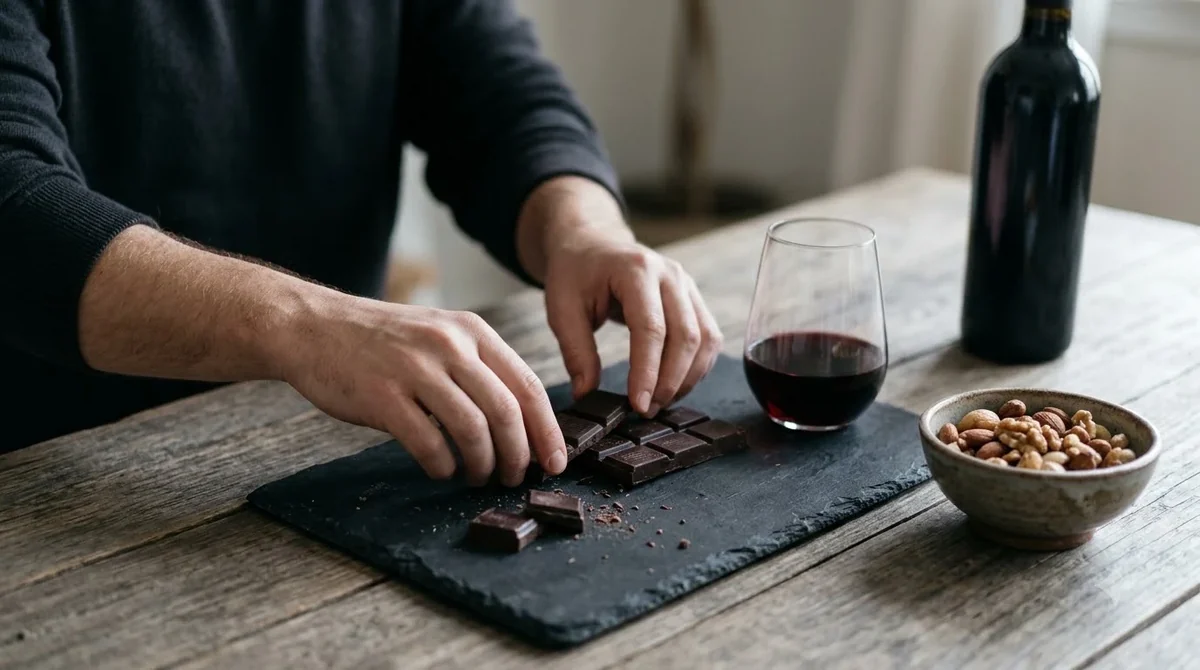
Recioto della Valpolicella gains sweetness through dried grapes, while Port gains it through fortification. Port also has a much higher alcohol level than many lightly sparkling sweet reds, so a small after-dinner serving is common. A 2- to 3-ounce pour of Port contains less total wine than a 5-ounce glass, but the carb count still depends on the residual sugar in that particular bottling. For help comparing styles beyond red wine, see Wine by Type.
Pour Size, Alcohol and the Whole Bottle
Carbohydrate estimates only make sense when the serving size is clear. A 5-ounce glass is a practical standard for still wine, but sweet sparkling reds may be poured in smaller glasses, and fortified Port is often served in a smaller after-dinner measure. The grams in a glass rise or fall in direct proportion to the amount poured.
For example, a wine with 50 grams per liter of residual sugar supplies about 7.4 grams from residual sugar in 5 ounces, about 4.4 grams in 3 ounces and about 2.2 grams in 1.5 ounces. Those are conversions from the same wine, not changes in its composition. A generous pour can therefore contain twice the carbs of a tasting pour even though the bottle is identical.
Alcohol and carbohydrate are separate contributors to a wine’s nutrition figures. A wine can be relatively low in alcohol yet retain considerable sugar if fermentation was stopped early, as in some sweet sparkling reds. Fortified Port is the reverse example: it combines residual sweetness with higher alcohol. Alcohol level alone cannot tell you the carb count, and a wine’s red color does not tell you either.
A 750-milliliter bottle holds just over five 5-ounce pours. If a bottle is shared across four larger glasses rather than five standard ones, each glass contains a larger share of the bottle’s residual sugar. This simple serving-size check is particularly helpful with dessert wines, which can be rich enough that drinkers naturally choose smaller portions than they would for a dry dinner red. For a closer look at the energy side of the same question, compare these estimates with the guide to calories in sweet red wine. Calories and carbs are related but not interchangeable: alcohol contributes calories without being a carbohydrate, while residual sugar contributes both carbohydrate grams and calories.
How to Check a Bottle Before Pouring
The most reliable way to estimate carbs is to find the wine’s residual-sugar analysis or a full nutrition statement for that exact bottling. A producer’s technical sheet may list RS in grams per liter even when the retail label does not. If the number is available, multiply it by 0.148 for a 5-ounce pour, or by the pour size in liters for a different serving.
In the United States, nutrition information is not required on every alcohol label. The TTB’s wine-labeling guidance explains that nutrient statements may be used voluntarily, subject to rules about truthful and complete declarations. A bottle may therefore show alcohol by volume without listing total carbohydrates or sugar. When a nutrition panel is present, use its stated serving size rather than assuming it covers the entire bottle.
If no gram figure appears, use the style description as a broad clue, not as a precise calculation. Secco generally points toward a drier Lambrusco; amabile signals a noticeable sweetness; dolce indicates a sweet version. Dessert-style Brachetto and Recioto are usually sweeter than dry table reds, while Port adds the complication of fortification. For adjacent questions about sweetness in other wines, the guide to whether Moscato is sweet or dry explains why a grape name alone does not fix the final sugar level. Keep the comparison like-for-like: use the same pour size, compare residual-sugar figures rather than sweetness adjectives, and distinguish unfortified sparkling reds from Port. That approach gives a more useful answer than assuming every bottle labeled sweet red has the same carbohydrate count. It also helps explain why a dry red with ripe-fruit aromas may have less sugar than a wine that tastes noticeably sweet.
Tip: When a producer lists residual sugar in g/L, multiply that number by 0.148 to estimate the grams of residual sugar in a 5-ounce glass. For instance, 35 g/L × 0.148 is about 5.2 grams; treat that as a sugar-based carb estimate, not a substitute for a laboratory total-carbohydrate value.
Frequently Asked Questions
Does adding ice remove carbohydrates from sweet red wine?
No. Ice dilutes the wine as it melts, but it does not remove the sugar already present in the liquid. The total grams in the original pour stay the same, even though the drink becomes less concentrated by volume.
Does carbonation add carbs to sweet sparkling red wine?
No. The bubbles are carbon dioxide produced during fermentation or retained under pressure, not carbohydrate. The sugar left in the finished wine, rather than the presence of bubbles, determines its residual-sugar contribution.
Can a wine labeled dry still contain residual sugar?
Yes. Fermentation does not always consume every trace of grape sugar, and some dry-wine classifications allow a small residual-sugar amount. Decanter notes that it is unusual for wine to fall below 1 gram per liter because some sugars cannot be consumed by yeast.
Does decanting change the carbohydrate count?
No meaningful reduction occurs through decanting. Air exposure can change how aromas and tannins seem in the glass, but it does not remove the dissolved sugar in the serving. A 5-ounce pour has essentially the same carbohydrate content before and after aeration.
Are sugar grams and total carbohydrate grams identical?
No. Sugar is one part of total carbohydrate, while a nutrition analysis can also count other carbohydrate compounds. Residual sugar is a practical estimate for comparing many wines, but a measured total-carbohydrate value is the better figure when a producer provides one.
Sweet red wine carbs are best estimated from residual sugar and the amount poured, not from color or fruitiness alone. A 5-ounce glass may contribute only a few grams in a lightly sweet Lambrusco, while a concentrated dessert red can contain much more. Look for a producer’s gram-per-liter figure when precision matters, and compare bottles using the same serving size.
More in Wine Types & Grapes
 What Does Mourvèdre Taste Like? Flavor Profile, Regions, and PairingsUpdated Nov 20, 2026
 What Does Marsanne Taste Like? Flavors, Styles, and Food PairingsUpdated Nov 20, 2026
 What Does Malvasia Taste Like? Styles, Flavors, and Food PairingsUpdated Nov 20, 2026
 What Does Grenache Blanc Taste Like? Flavor Profile, Styles, and PairingsUpdated Nov 20, 2026
 What Does Garnacha Taste Like? Key Flavors, Styles, and Pairing TipsUpdated Nov 20, 2026
 What Does Fruit Wine Taste Like? A Complete Flavor and Style BreakdownUpdated Nov 20, 2026