

We may earn a commission when you buy through links on this page, at no extra cost to you. Learn more.
A typical 5-ounce pour of dry Chianti contains about 3 grams of carbohydrates, so chianti carbs are usually in the same range as other dry red wines. A practical estimate is 1 to 4 grams per glass, with the exact amount depending on the wine and the method used to calculate its nutrition. Most of the calories in a glass come from alcohol rather than sugar, so carbohydrate grams alone do not tell the whole nutrition story.
Chianti is a dry red wine from Tuscany built mainly around Sangiovese. That grape gives the wine its familiar cherry flavors, fresh acidity, and moderate tannin, while fermentation usually leaves little residual sugar. The figures below use a standard 5-ounce pour and explain how to estimate a glass, a larger serving, or a full bottle without treating an average as a guaranteed value for every producer.
How Many Carbs Are in Chianti?
For a normal glass, use about 3 grams of total carbohydrates as a working estimate for dry Chianti. A 5-ounce serving of dry red wine is commonly listed in the 1-to-4-gram range, and a representative 13.5% red-wine serving is listed at 3 grams of carbohydrates and 0.3 grams of sugar.
That estimate is a guide, not a laboratory result for every bottle labeled Chianti. Wine.com’s nutrition guide uses 3 grams for a typical 5-ounce dry red and explains that its figures are rounded style averages; a particular wine can differ with alcohol level, fermentation choices, and residual sugar. A basic Chianti, a Chianti Riserva, and a bottle from a different subzone may have distinct profiles even though they share the same broad appellation family.
It also helps to separate total carbohydrates from residual sugar. Residual sugar means grape sugar left after fermentation and is commonly reported in grams per liter. A dry wine can have very little residual sugar but still show a higher total-carbohydrate estimate in a nutrition database, so the two numbers should not be swapped or treated as identical units. For everyday tracking, record one standard glass as approximately 3 grams, then keep the estimate consistent across similar dry reds. Avoid assigning every Chianti an exact number such as 2.7 or 3.2 grams unless the producer supplies an analysis for that specific bottling; that level of precision suggests a measurement that a general style estimate cannot provide.
What Makes Chianti a Dry Red Wine?
Chianti is normally dry because its fermentation converts most grape sugar into alcohol, leaving little sweetness in the finished wine. Sangiovese is the central grape, and the official Chianti consortium says the DOCG blend must contain at least 70% Sangiovese; the wine may be made with up to 100% of the variety.
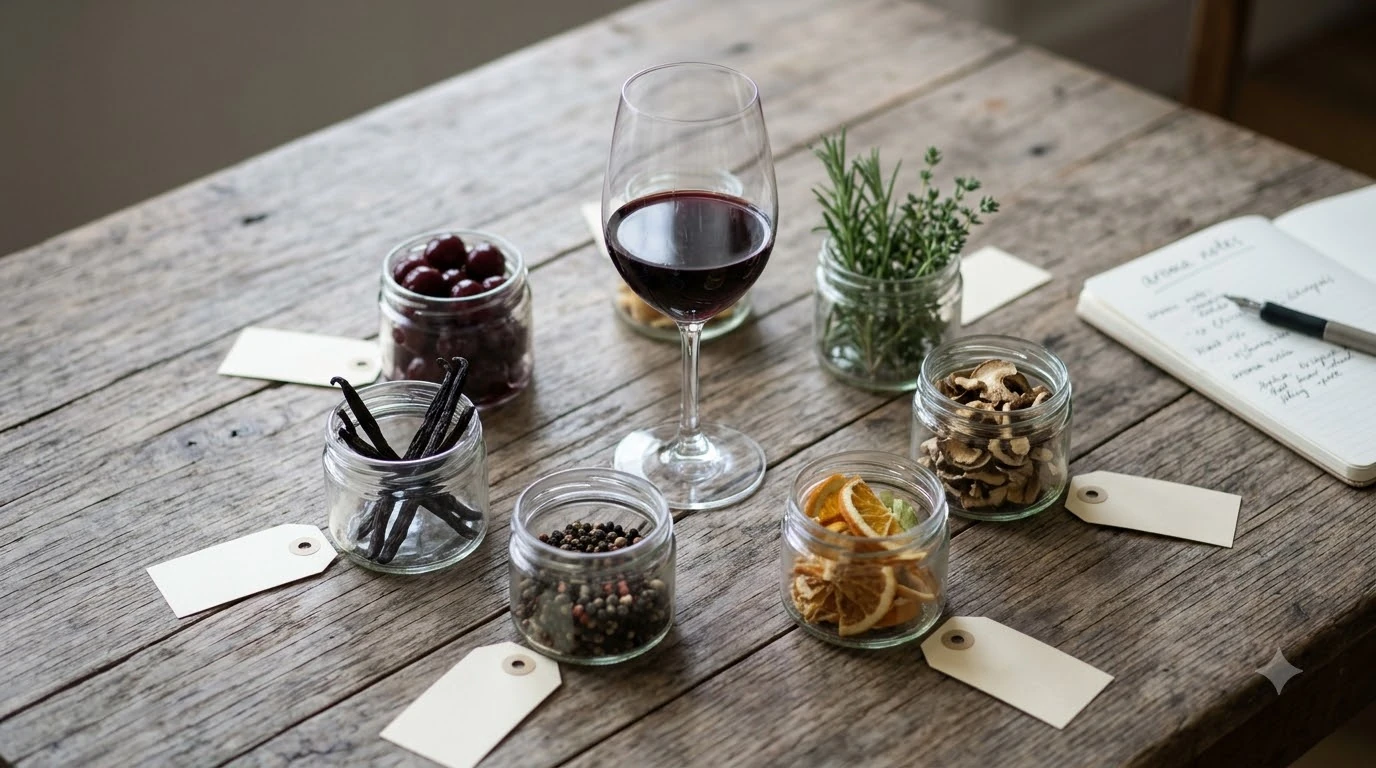
The grape’s character reinforces the impression of dryness. Wine Enthusiast describes Chianti’s Sangiovese profile through lively acidity, red and black cherry, violet, herbs, spice, and earth, with moderate tannins and a body that generally ranges from light to medium. Those flavors can make a wine seem bright, savory, or tart, but fruit aromas do not mean that the wine contains a matching amount of sugar.
The wider Chianti DOCG rules permit some blending grapes, so two bottles do not have to taste alike. According to Consorzio Vino Chianti’s grape rules, other Tuscan-suitable grapes may account for up to 30% of the blend; white varieties are limited to 10%, while Cabernet Franc and Cabernet Sauvignon together may account for no more than 15%. These rules describe permitted grape composition, not a direct carbohydrate count.
How Alcohol and Residual Sugar Affect the Estimate
Carbohydrates are only one part of wine nutrition. Alcohol contributes about 7 calories per gram, compared with about 4 calories per gram from carbohydrate, which is why a higher-alcohol dry red can contain more calories even when it has very little residual sugar.
Wine Enthusiast notes that many wines fall around 11% to 13% alcohol by volume, although the range is wider, and identifies alcohol level and residual sugar as the main variables affecting wine calories. Wine.com estimates that each additional percentage point of alcohol adds about 8 calories to a 5-ounce glass. For this reason, a Chianti at 14% ABV may contribute more calories than a lighter-bodied wine at 12% even if both are dry and their carbohydrate estimates are similar.
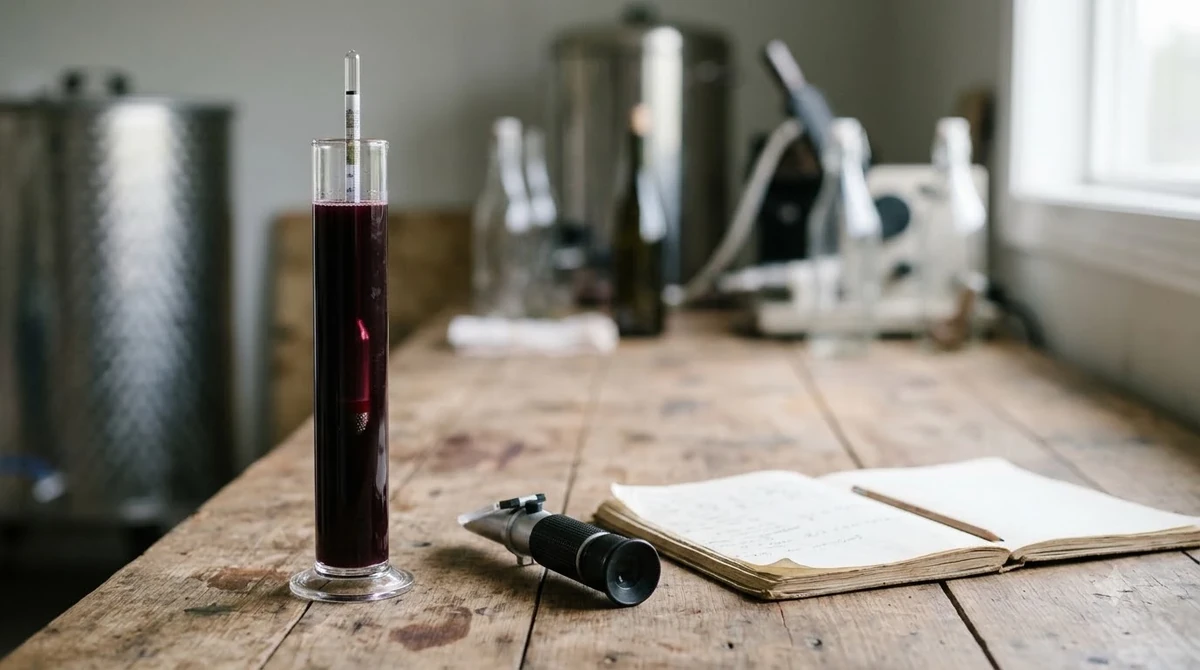
Residual sugar is a separate clue. It is the grape sugar remaining after fermentation, measured in grams per liter rather than grams per serving. Wine.com’s guide places dry wine at roughly 1 to 4 grams of residual sugar per liter, off-dry wine at 4 to 12 grams per liter, and sweet wine above 45 grams per liter. Those categories describe sweetness and residual sugar, not every possible way a nutrition source may report total carbohydrates.
| Measure | Typical reference | What it tells you |
|---|---|---|
| Dry red wine, 5 oz | About 3 g carbohydrates | A useful total-carb estimate for a standard glass |
| Dry wine residual sugar | About 1–4 g/L | Grape sugar left after fermentation |
| Off-dry wine residual sugar | About 4–12 g/L | A small but more noticeable amount of sweetness |
| Sweet wine residual sugar | Above 45 g/L | A clearly sweet style, often with more sugar per pour |
| Alcohol energy | About 7 calories per gram | A major source of wine calories independent of sugar |
The table compares two different measurements, so use the units carefully. A figure in grams per liter cannot be read as the grams in a 5-ounce glass without converting it to the serving volume. Even after conversion, residual sugar is not necessarily the same figure as total carbohydrate in a nutrition estimate.
How Serving Size Changes the Carb Count
The most reliable way to estimate carbohydrates is to measure the amount poured. A standard wine serving is 5 ounces, and a 750-milliliter bottle contains just over 25 fluid ounces, or approximately five standard glasses when poured evenly.
If a typical 5-ounce glass of dry Chianti is estimated at 3 grams of carbohydrates, a 2.5-ounce half-glass would be about 1.5 grams, while a 7.5-ounce pour would be about 4.5 grams. These are proportional estimates, not new laboratory measurements: the same wine is simply being divided into a smaller or larger serving.
Use the following calculation for a measured pour: divide the amount served in ounces by 5, then multiply by 3 grams. For a 6-ounce glass, the calculation is 6 divided by 5, multiplied by 3, giving about 3.6 grams. For a 750-milliliter bottle, use about five standard servings, or approximately 15 grams for the bottle if the wine matches the 3-gram estimate.
Tip: Measure your usual pour once with a kitchen measuring cup or a marked wine glass. A 7- or 8-ounce home pour can look like one glass but represents about 1.4 to 1.6 standard 5-ounce servings, so multiplying the per-glass estimate by the actual serving ratio gives a more useful number.
Restaurant servings can also be larger than the standard measure, and free-poured wine at home can vary from one evening to the next. The bottle size does not determine the amount in your glass; the pour does. For a consistent estimate, count standard 5-ounce servings rather than assuming that every refill equals one serving.
How Chianti Compares With Other Wine Styles
Dry Chianti generally sits alongside other dry red wines rather than sweet wines in a carbohydrate comparison. The standard 3-gram estimate for a 5-ounce dry red is close to the typical range used for dry Cabernet Sauvignon or Pinot Noir, while sweet styles can contain several times as much carbohydrate.
Wine.com’s approximate comparison lists 3 grams of carbohydrates for a 5-ounce dry red and 19 grams for a 5-ounce Moscato d’Asti, with about 16 grams of sugar in the Moscato example. The difference comes mainly from sweetness and fermentation style, not from the fact that one wine is red and the other is white. A dry white wine can also fall in the 1-to-4-gram range, while an off-dry Riesling or sweet sparkling wine can be higher.
For a broader comparison of red-wine styles, the guide to dry red wine carbs explains why different grapes and alcohol levels affect the estimate. Readers comparing a sweeter bottle can also review Moscato carbs. A general overview of grapes and styles is available in Wine by Type; neither grape color nor the word “fruit-forward” is a reliable substitute for a wine’s actual sweetness and alcohol level.
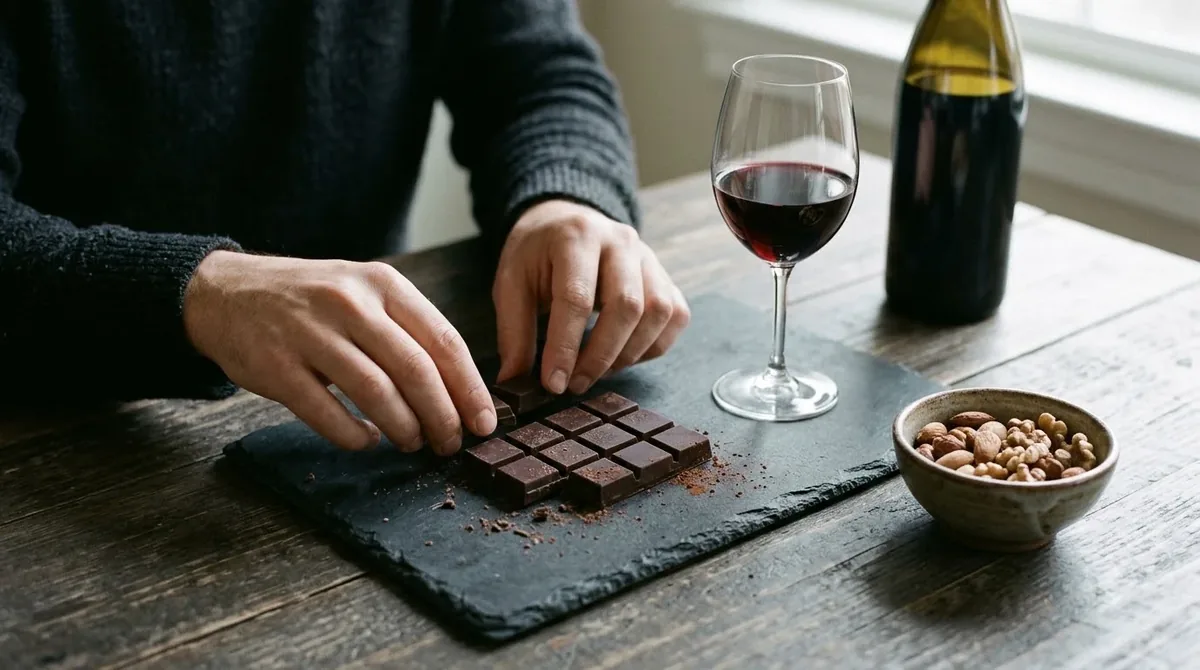
Wine type also affects how a wine tastes alongside food, but food pairings do not change the number of carbohydrates in the glass. Chianti’s acidity works well with tomato-based dishes, roasted vegetables, and foods with enough fat or salt to soften its tannin. A sweet dessert wine should generally be at least as sweet as the dessert, whereas a dry Chianti will taste sharper beside a very sweet dish.
How to Choose a Drier Chianti Bottle
Start with the words that describe the style, not the color of the wine or its fruit aromas. Chianti is traditionally a dry red, and Sangiovese’s cherry and herbal notes can smell ripe while the wine itself remains dry. A label’s alcohol percentage gives a second practical clue about calories, although it does not provide an exact carbohydrate value.
Chianti and Chianti Classico are related but separate DOCG designations. Wine Enthusiast explains that Chianti Classico became its own DOCG in 1996; the Chianti Classico consortium says its wine must contain at least 80% Sangiovese and may include up to 20% other red grape varieties. The Black Rooster trademark appears on Chianti Classico bottles, while the broader Chianti DOCG includes subzones such as Colli Senesi, Rufina, and Colli Fiorentini.
Those distinctions matter for origin, grape rules, and flavor expectations, but they do not create a fixed carbohydrate number. Producers have some room within the appellation requirements, and vintage conditions can influence grape ripeness and final alcohol. A bottle with a higher ABV may have more calories, while the residual sugar remains low in a dry style. For tasting context and the familiar Sangiovese profile, see these Chianti tasting notes. For a simple choice, look for a conventional dry Chianti or Chianti Classico, note the alcohol percentage, and use about 3 grams per standard glass as a starting estimate. Be cautious about claims that a specific appellation automatically means “zero carb” or a precise number. An appellation regulates where and how a wine is made; it is not a nutritional guarantee for every finished bottle.
Frequently Asked Questions
These quick answers cover common serving and label questions, including the 5-ounce glass, the 750-milliliter bottle, and the difference between Chianti and Chianti Classico. They add useful context beyond the basic estimate.
Does Chianti Classico have fewer carbs than regular Chianti?
Not automatically; the designation does not guarantee a separate carbohydrate figure. Chianti Classico has three aging tiers: Annata requires at least 12 months, Riserva 24 months, and Gran Selezione 30 months before release.
Does aging Chianti increase its carbohydrate content?
No; bottle aging does not add grape sugar to a finished dry wine. Chianti Riserva requires at least two years of aging before release, while Colli Senesi Riserva must spend at least eight months in wood followed by at least four months in bottle.
Does every Chianti label show its harvest year?
Yes. The Chianti production rules require the grape harvest year to appear on bottles and other containers bearing the Chianti designation. That vintage identifies the harvest, not the bottling year or a nutrition value.
Why does one Chianti bottle have a higher alcohol percentage?
Grape ripeness, growing conditions, harvest timing, and winemaking decisions can produce different alcohol levels. The Chianti rules set minimum alcohol levels that vary by category and subzone; for example, the general Chianti DOCG minimum is 11.5% ABV, while some subzones have a 12% minimum. The alcohol percentage is more useful for estimating calorie differences than for calculating exact carbohydrates.
What temperature should Chianti be served at?
A lighter Chianti is best served slightly cool, around 55 to 60 degrees Fahrenheit. A fuller-bodied red is generally served closer to 60 to 65 degrees, so the style in the glass can guide the final temperature.
For most readers, the practical number is simple: estimate about 3 grams of carbohydrates in a standard 5-ounce glass of dry Chianti, then adjust for the actual pour size. Treat that figure as a style-based average, not a guaranteed value for an individual bottle, and remember that alcohol level has a larger effect on calories than small differences in residual sugar.
More in Wine Types & Grapes
 Zinfandel Sugar Content: Dry Red vs. White Zinfandel GramsUpdated Nov 21, 2026
 Best Zinfandel Substitute Options for Sipping and CookingUpdated Nov 21, 2026
 Zweigelt Food Pairing: Best Dishes, Cheeses, and Serving TipsUpdated Nov 21, 2026
 Zinfandel Tannins Explained: How Structure Shapes Every BottleUpdated Nov 21, 2026
 Zinfandel Sweetness Level: Dry Red vs. Sweet White Zin ExplainedUpdated Nov 21, 2026
 Xinomavro Food Pairing: Best Dishes, Styles, and Serving TipsUpdated Nov 21, 2026