

We may earn a commission when you buy through links on this page, at no extra cost to you. Learn more.
For a typical 5-ounce pour, sparkling wine carbs depend most on the sweetness level: a Brut usually has about 1–2 grams of sugar, while a Demi-Sec can have roughly 5–7 grams. Total carbohydrate can be higher than sugar alone, and alcohol adds calories without counting as carbohydrate. The sweetness term on the bottle is a useful first clue, but it is not a substitute for a bottle-specific nutrition panel.
Sparkling wine covers a broad range, from bone-dry Brut Nature to dessert-style Doux. The most useful way to compare bottles is to understand residual sugar, translate the label’s grams per liter into a realistic glass estimate, and separate sugar from total carbohydrate.
How Many Carbs Are in a Glass of Sparkling Wine?
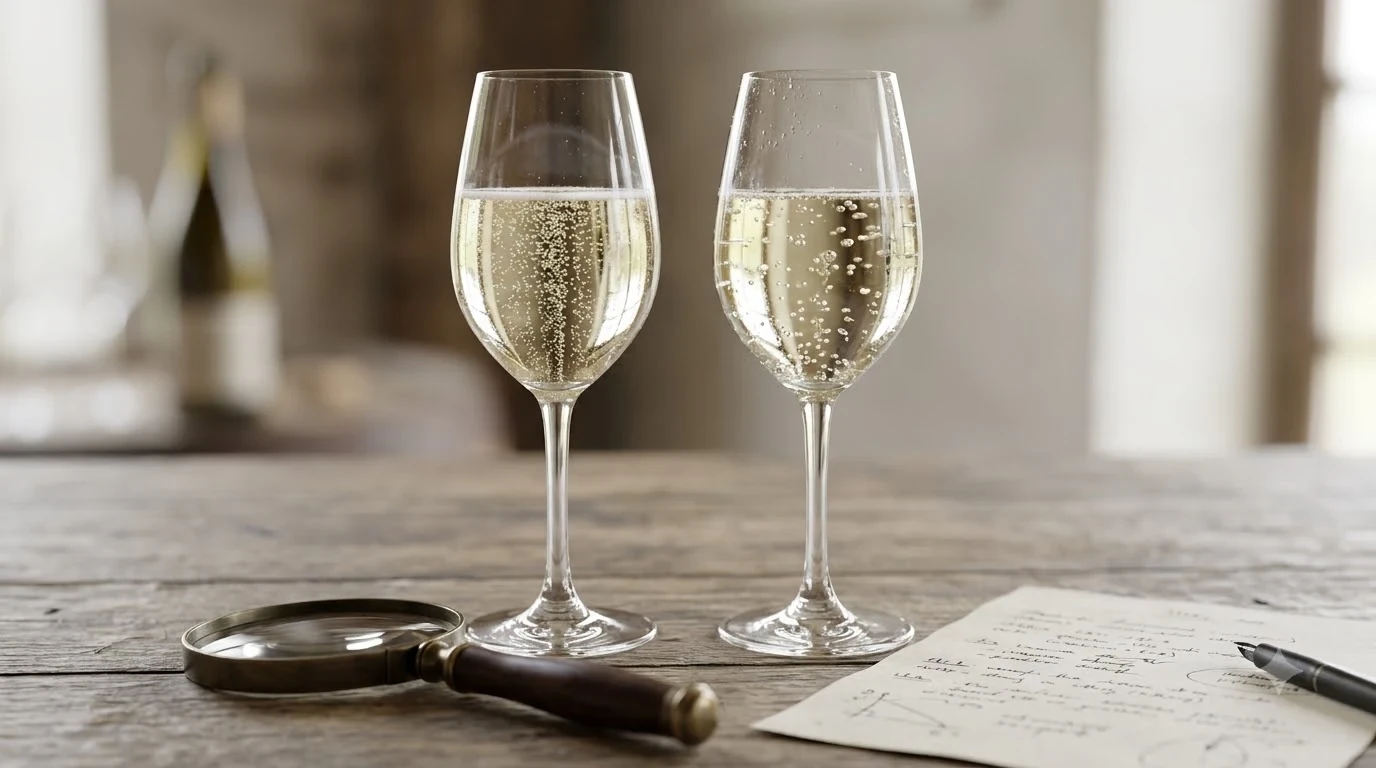
A 5-ounce serving of dry sparkling wine is usually low in sugar, while sweeter styles can contain several grams more. As practical examples, Wine.com lists about 3 grams of total carbohydrate and less than 1 gram of sugar for a 5-ounce Brut Nature Champagne, 4 grams of carbohydrate and 1 gram of sugar for Brut Champagne, and 9 grams of carbohydrate with 6 grams of sugar for Demi-Sec Champagne.
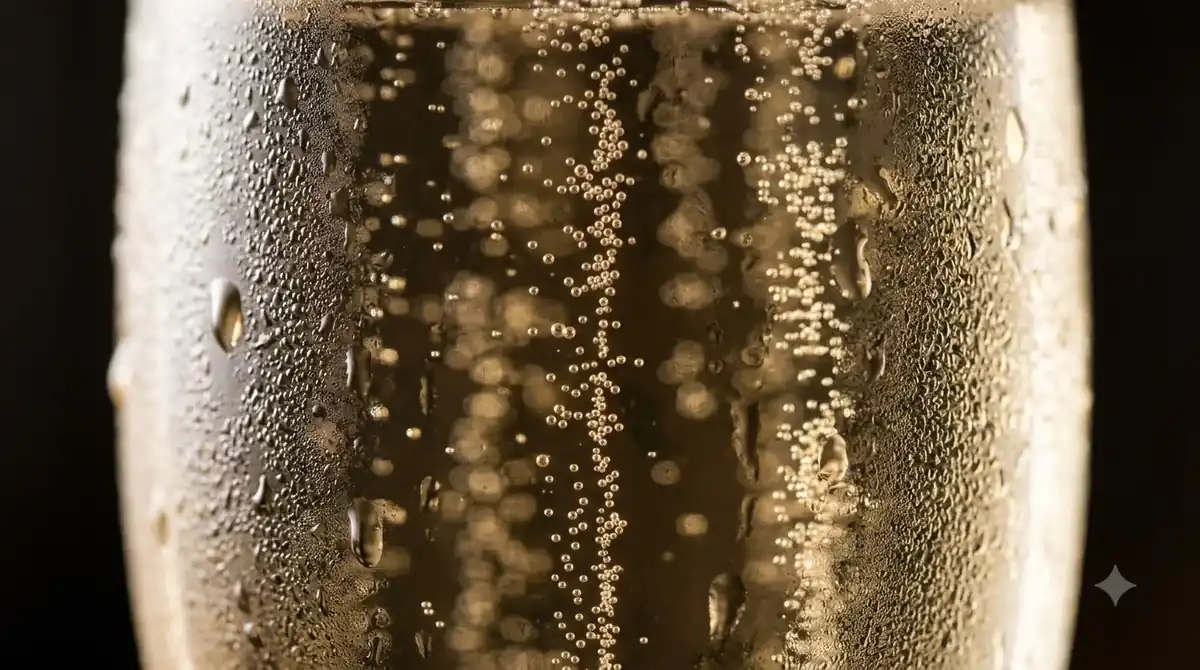
Those examples show why it helps to look at both numbers. Sugar is the measure most directly tied to residual sweetness, but total carbohydrate may be higher. These are representative reference values, not a promise that every bottle in the category will have the same analysis.
For a quick comparison, Brut is a better starting point than Demi-Sec for lower residual sugar. At the top of its 12-gram-per-liter limit, a 5-ounce Brut contains about 1.8 grams of residual sugar; a Demi-Sec at 32 to 50 grams per liter contains about 4.7 to 7.4 grams. The category gives a range, not an exact nutrition result.
Serving size matters, too. A 5-ounce pour is about 148 milliliters, and a 750-milliliter bottle yields about five such glasses. A larger restaurant pour contains more sugar than the table’s 5-ounce estimate.
What Sparkling Wine Sweetness Labels Mean
Most sparkling-wine labels use a seven-step scale, from Brut Nature at the driest end to Doux at the sweetest. The terms describe residual sugar in grams per liter, so they can be converted into a rough estimate for a 5-ounce glass.
The table below uses widely recognized Champagne and European sparkling-wine thresholds. Glass estimates are calculated from 5 ounces, or approximately 0.148 liter; bottle estimates use 750 milliliters. They represent residual sugar, not a laboratory measurement of total carbohydrate.
| Label term | Residual sugar guideline | Estimated sugar per 5 oz | Estimated sugar per 750 mL bottle |
|---|---|---|---|
| Brut Nature / Zero Dosage | Up to 3 g/L | Up to 0.44 g | Up to 2.25 g |
| Extra Brut | Up to 6 g/L | Up to 0.89 g | Up to 4.5 g |
| Brut | Up to 12 g/L | Up to 1.78 g | Up to 9 g |
| Extra Dry / Extra Sec | 12–17 g/L | 1.78–2.52 g | 9–12.75 g |
| Dry / Sec | 17–32 g/L | 2.52–4.74 g | 12.75–24 g |
| Demi-Sec | 32–50 g/L | 4.74–7.4 g | 24–37.5 g |
| Doux | More than 50 g/L | More than 7.4 g | More than 37.5 g |
The driest categories overlap: a wine with 2 grams per liter may fit more than one of the first three limits. The table shows upper thresholds for Brut Nature, Extra Brut and Brut, not a claim that every bottle starts at zero.
Extra Dry is sweeter than Brut, and Dry is sweeter than Extra Dry. The word “dry” does not mean unsweetened on this scale. Wine Enthusiast explains the terms and dosage in its guide to sparkling-wine sweetness levels.
Perceived sweetness is not determined by sugar alone. Champagne’s naturally high acidity can make a wine with several grams per liter taste brisk, while a softer sparkling wine at a similar sugar level may seem rounder. Temperature also changes perception: served at 40 to 50 degrees Fahrenheit, the wine feels crisp, and sweetness may seem less pronounced than it does as the glass warms.
Tip: When choosing a lower-sugar bottle, look first for Brut Nature, Extra Brut or Brut. Do not assume that Extra Dry is drier than Brut; its permitted residual-sugar range is higher.
How Dosage and Fermentation Affect Sugar
Residual sugar is the grape sugar left after fermentation, while dosage is a small addition made during the finishing stage of many traditional-method sparkling wines. Fermentation and the amount of dosage both influence the final sweetness, so two bottles with similar aromas can have different sugar levels.
For Champagne and other traditional-method wines, the wine undergoes a second fermentation in the bottle. Yeast uses the added fermentation sugar to produce alcohol and carbon dioxide; after the yeast is removed during disgorgement, the producer may add a mixture of wine and sugar called dosage before corking. The dosage helps set the final balance between acidity and sweetness. The Comité Champagne describes the addition as the final touch before corking and notes that a Brut Champagne bottle may receive approximately 1 centiliter of dosage mixture in a 750-milliliter bottle.
Dosage liquid itself can be concentrated. Wine Enthusiast notes that the liqueur d’expédition may contain 500 to 700 grams of sugar per liter, but only a small amount goes into the wine. The concentration in the dosage mixture is not the sugar concentration in the finished bottle. The glass estimate depends on the finished wine’s residual sugar.
Some traditional-method wines are made without added dosage. Brut Nature, also called zero dosage, signals that no sugar has been added in that final step and that the wine sits at the very dry end of the scale. This does not automatically mean every molecule of grape sugar has disappeared; a small amount may remain from fermentation. Producers can adjust dosage to suit the base wine: sharper acidity in one year may call for a different finishing choice than riper fruit in another. Decanter’s explanation of how sparkling-wine dosage works describes how even small changes can affect a finished wine’s balance.
Champagne, Prosecco and Cava: Does the Style Matter?
The name of the region or method does not give a reliable carb count by itself; the sweetness term is the better first guide. Champagne and Cava generally use bottle fermentation, while Prosecco is commonly made by the tank method, but each can be produced at different sweetness levels.

Champagne is made in France’s Champagne region, and its sweetness terms include Brut Nature, Extra Brut, Brut, Extra Dry, Sec, Demi-Sec and Doux. A Brut Champagne is under 12 grams of residual sugar per liter, while Demi-Sec is 32 to 50 grams per liter. The bottle’s category therefore tells more about sugar than the word Champagne alone.
Prosecco is made primarily from the Glera grape and is commonly produced using the tank method, which captures the second fermentation in a pressurized tank rather than in each bottle. Typical Prosecco is around 11 to 12 percent alcohol by volume, but alcohol strength is not a direct measure of residual sugar. The familiar Prosecco labels Brut, Extra Dry and Dry follow the same general progression: Brut is driest, Extra Dry is softer and sweeter, and Dry is sweeter still. Cava from Spain is made by the traditional method, with its second fermentation in the bottle. Brut Cava and Demi-Sec Cava can have very different sugar levels, just as sparkling wines from California, Oregon or England can vary.
Sparkling rosé does not automatically have more carbs than a white sparkling wine: it can be Brut or Demi-Sec, and color does not set residual sugar. Moscato-based sparkling wines can be noticeably sweeter than Brut styles. The moscato carbs breakdown puts those sweeter styles in context. For a broader introduction to Champagne, Prosecco, Cava and still wines, see Wine by Type.
How to Estimate Sugar From a Bottle Label
If the producer gives residual sugar in grams per liter, converting it to a glass estimate is straightforward. Multiply the grams-per-liter figure by 0.148 for a 5-ounce pour, or by 0.75 for the full 750-milliliter bottle. For example, a sparkling wine with 8 grams of residual sugar per liter contains about 1.18 grams of sugar in a 5-ounce glass: 8 multiplied by 0.148. The 750-milliliter bottle contains 6 grams of residual sugar in total: 8 multiplied by 0.75. These are arithmetic estimates, rounded to two decimal places for the glass and to a whole gram for the bottle. The same math works for other pours: at 8 grams per liter, a 4-ounce glass has about 0.94 gram of residual sugar and a 6-ounce glass about 1.42 grams. Concentration stays constant; volume changes the amount in the glass.
A sweetness category is not an exact number: a Brut at 4 grams per liter has less residual sugar than one at 11 grams per liter. Use a measured winery figure when available; if a nutrition panel lists total carbohydrate per serving, use that total rather than treating residual sugar as the full carb count.
A dry red wine comparison can be useful, but keep the serving and measurement consistent. Our guide to dry red wine carbs covers a different wine category; compare its total carbohydrate to total carbohydrate here, not one wine’s sugar to another wine’s total carbs. A producer’s nutrition information is the better source when exact bottle-specific figures are available. Read the serving-size line before comparing panels: one label may give values per 100 milliliters, another per 5 ounces, and another for the whole bottle. Convert both products to the same volume first. A per-100-milliliter figure can be multiplied by 1.48 to estimate a 148-milliliter glass, while a bottle total can be divided by about five for five measured pours.
Serving Size, Food Pairings and Sparkling Cocktails
A measured pour is the simplest way to keep an estimate useful. Five ounces is a common serving reference, and a 750-milliliter bottle contains about five such glasses; sparkling wine is usually served well chilled, around 40 to 50 degrees Fahrenheit. Glass shape can disguise volume: a narrow flute may hold 4 ounces, while a broad coupe can make a 6-ounce pour seem ordinary. Measure a pour once or twice to calibrate the eye.
Food pairing can change how sweet a wine seems, but it does not change its sugar content. High-acid sparkling wine suits salty foods such as oysters and fried seafood. Demi-Sec can match fruit desserts because wine should be at least as sweet as the dessert; alcohol can make chili heat feel stronger. For a simple glass, match the sweetness to the occasion and keep the pour consistent. Brut Nature, Extra Brut and Brut suit a dry aperitif; Extra Dry and Dry offer a rounder impression; Demi-Sec and Doux pair better with sweeter foods. These are taste choices as well as sugar choices, and the label provides a useful guide before the bottle is opened.
Mixed drinks need a separate calculation. A Mimosa adds orange juice, while other sparkling cocktails may include fruit purée, liqueur or simple syrup. A Brut base does not make the finished drink low in sugar. Sangria illustrates the same issue: sangria carbs also depend on juice and other additions, not only the wine base.
Frequently Asked Questions
These answers cover five common sources of confusion: bubbles, fruit aromas, vintage dates, bottle size and alcohol strength.
Does carbonation itself add carbohydrates?
No. The bubbles are carbon dioxide gas dissolved in the wine, and carbon dioxide is not a carbohydrate. Carbonation changes texture and the sensation of acidity, but it does not add sugar grams to the drink.
Does a peach or apple aroma mean the wine has more sugar?
No. Aroma compounds can suggest ripe pear, peach or apple even in a dry Brut Nature wine. Smell and sweetness are related to perception, but the fruit-like aroma does not measure residual sugar in grams per liter.
Does a vintage date tell you whether Champagne is dry?
No. A vintage date identifies the harvest year used for the wine, while Brut Nature, Brut and Demi-Sec describe sweetness. A vintage Champagne can therefore be made in a dry or sweeter style; the year alone does not provide a carb estimate.
Does a magnum contain more carbohydrates than a regular bottle?
A 1.5-liter magnum contains twice the wine of a 750-milliliter bottle, so it contains twice the total sugar if both bottles have the same grams-per-liter level. A 5-ounce pour from either bottle has the same estimate because the sugar concentration is unchanged.
Can two sparkling wines with the same alcohol percentage have different carbs?
Yes. Alcohol percentage measures ethanol by volume, not the amount of sugar left in the finished wine. Two bottles at 12 percent ABV can have different residual-sugar levels because their grape must, fermentation and finishing dosage can differ.
For the lowest residual-sugar estimate, start with Brut Nature, Extra Brut or Brut and use a 5-ounce pour as your comparison point. For a more exact figure, rely on measured sugar or the bottle’s nutrition declaration, since sweetness terms provide useful ranges rather than an exact carb count.
More in Wine Types & Grapes
 Zinfandel Sugar Content: Dry Red vs. White Zinfandel GramsUpdated Nov 21, 2026
 Best Zinfandel Substitute Options for Sipping and CookingUpdated Nov 21, 2026
 Zweigelt Food Pairing: Best Dishes, Cheeses, and Serving TipsUpdated Nov 21, 2026
 Zinfandel Tannins Explained: How Structure Shapes Every BottleUpdated Nov 21, 2026
 Zinfandel Sweetness Level: Dry Red vs. Sweet White Zin ExplainedUpdated Nov 21, 2026
 Xinomavro Food Pairing: Best Dishes, Styles, and Serving TipsUpdated Nov 21, 2026