

We may earn a commission when you buy through links on this page, at no extra cost to you. Learn more.
The term vin blanc wine means white wine, using the French expression for a broad category rather than a single grape or fixed flavor profile. A bottle may be bone-dry and mineral, aromatic and off-dry, rich and oak-aged, sweet enough for dessert, or sparkling. The grape variety, growing region, harvest decisions, fermentation, and remaining grape sugar all help determine what ends up in the glass. Knowing those clues makes it easier to choose a bottle for a meal or a preferred taste.
French wine labels often lead with a place name rather than a grape, so a little regional vocabulary can make shopping easier. Use this guide to understand the main styles, recognize familiar grapes, and serve white wine at a temperature that lets its aromas show.
What Vin Blanc Wine Means and Why Color Can Mislead
Vin blanc is the French term for white wine, and it describes a wine category rather than a particular recipe. The term does not tell you whether the wine is crisp or creamy, still or sparkling, dry or sweet; it simply identifies the broad white-wine family.
Most white wines are made from grapes with pale skins and juice, including Chardonnay, Sauvignon Blanc, Riesling, and Chenin Blanc. However, grape skin color and wine color are not the same thing. Many dark-skinned grapes have nearly clear juice inside, so a winemaker can make a white wine from a red variety by pressing the grapes promptly and keeping the juice away from the skins. In Champagne, for example, Pinot Noir and Pinot Meunier can be used to make a white sparkling wine when the juice is pressed before the skins impart color. The French wine reference La Revue du vin de France explains that white wine can come from white or black grapes when the winemaking process keeps the juice pale.
For a fuller explanation of the term and its use, see what is vin blanc.
Dry, Off-Dry, Sweet, and Sparkling Styles
White wine is available across a wide range of sweetness, from bone-dry to dessert-sweet. Start with residual sugar left after fermentation, not how fruity the wine smells.
During fermentation, yeast converts grape sugar into alcohol and carbon dioxide. When fermentation uses nearly all the available sugar, the wine tastes dry. A wine with a small amount of sugar remaining can taste off-dry, while a wine with more residual sugar may be noticeably sweet. A peach-scented Riesling can still be dry, while a less aromatic wine can have a sweeter finish. Look for a sweetness description or ask about the producer’s style.
Sweetness is not a measure of quality. A dry Muscadet is built around freshness and a clean finish, while a late-harvest Chenin Blanc or a concentrated dessert wine may balance sweetness with firm acidity. Sparkling white wines have their own sweetness terms. From driest to sweetest, the common order is Brut Nature, Extra Brut, Brut, Extra Dry, Dry, Demi-Sec, and Doux. The label term Extra Dry can surprise shoppers because it is sweeter than Brut, not drier. Champagne and Cava gain their bubbles through a second fermentation in the bottle, while Prosecco is commonly made from Glera using the tank method and is often around 11–12% alcohol by volume.
White Grapes and Their Flavor Profiles
Grape variety is one of the quickest ways to predict a white wine’s acidity, aroma, and weight. Chardonnay tends to be more adaptable and textural, while Sauvignon Blanc and Riesling are known for pronounced freshness.
Chardonnay can range from lean and citrusy to broad, creamy, and marked by oak. Cool-climate examples may suggest green apple, lemon, and wet stone; barrel-fermented or barrel-aged versions can show toast, vanilla, butter, or hazelnut. Sauvignon Blanc usually gives a more direct aromatic profile, with citrus, gooseberry, fresh herbs, grass, or blackcurrant leaf. Its naturally high acidity makes it a reliable choice for people who like a brisk, refreshing white. For a separate look at ingredients and production, read is sauvignon blanc gluten free.
Riesling is another high-acid grape, often showing lime, green apple, stone fruit, and floral notes. It can be made bone-dry, gently off-dry, or sweet, and its acidity helps keep sweeter examples lively. Chenin Blanc is equally versatile: Loire Valley examples can be dry, sparkling, off-dry, or sweet, with apple, quince, and honeyed notes depending on ripeness and style. Viognier is typically more perfumed, with peach, apricot, and flowers, and often a fuller texture. Gewürztraminer is especially aromatic, with rose, lychee, and spice. Pinot Gris, Melon de Bourgogne, Picpoul, and Aligoté offer still more options, from smoky and rounded to lean, saline, and lemony.
French Regions and the White Wines They Are Known For
French white wine is closely tied to regional names, local grapes, and appellation rules. Learning a handful of place-and-grape pairings will make a French label much easier to decode.
Burgundy is a leading home for Chardonnay, with Chablis known for a leaner, more taut style and parts of the Côte de Beaune associated with broader, more textured examples. The same grape can taste very different according to climate, soil, harvest ripeness, and cellar choices. France’s official tourism site describes terroir as the combined influence of soil, climate, and terrain, a useful way to understand why a village name can matter as much as the grape.
The Loire Valley is a key region for Sauvignon Blanc, especially in Sancerre and Pouilly-Fumé, and for Chenin Blanc in areas such as Vouvray, Anjou, and Savennières. Further west, Muscadet is made from Melon de Bourgogne and is often dry, light, and suited to shellfish. In Alsace, Riesling, Gewürztraminer, and Pinot Gris are important white grapes; the wines can be aromatic and range from dry to sweet. Bordeaux makes dry white blends that often combine Sauvignon Blanc and Sémillon, while Sauternes is known for sweet wines. In the Rhône Valley, Viognier, Marsanne, and Roussanne contribute fuller, floral, or honeyed white styles.
French labels frequently emphasize the appellation or place rather than printing the grape name prominently. Appellation rules may specify permitted varieties and production methods. France.fr’s introductory overview of French wines lists Chardonnay with Burgundy, Sauvignon Blanc with the Loire and Bordeaux, Chenin Blanc with the Loire, and Riesling and Gewürztraminer with Alsace. Those patterns are useful starting points, although local rules and blends can vary. Explore more in Wine by Type when you want to compare white wine with other categories.
How White Wine Is Made
White winemaking generally separates juice from grape skins before fermentation, which limits color and tannin extraction. After pressing, the juice is clarified, fermented, matured, and prepared for bottling; choices at each stage change the wine’s texture and aroma.
Harvest timing matters because grapes picked earlier tend to retain more acidity, while riper fruit can bring fuller body, higher potential alcohol, and flavors that lean toward peach or tropical fruit. Winemakers often pick white grapes in the cool of the morning and move them to the winery quickly. Wine Enthusiast’s account of white winemaking notes that grapes may be pressed within hours of harvest, then settled in a chilled tank for at least a few hours before fermentation.
Yeast turns the sugar in grape juice into alcohol. Most white wine ferments in stainless-steel tanks, which help preserve fresh fruit and floral aromas; some Chardonnay is fermented or aged in oak barrels to gain texture and flavors such as toast or vanilla. A second process called malolactic fermentation is optional. It changes sharper malic acid, often associated with green apple, into softer lactic acid, which can give a Chardonnay or Viognier a rounder, buttery impression. Winemakers commonly avoid or limit this conversion in crisp Sauvignon Blanc so the wine keeps its lively edge.
After fermentation, a wine may mature in a tank or barrel, with or without contact with lees—the spent yeast cells that settle after fermentation. Lees contact can contribute a bready aroma and a fuller, silkier mouthfeel, especially when the lees are stirred periodically. A fresh white intended for early drinking may mature for only a few months, while a structured white Burgundy or other ageworthy wine can spend two years or more in maturation. Filtration and bottling then help prepare the finished wine for transport and storage.
Serving and Storing White Wine
White wine usually shows best when cool, but not every style should be served straight from the coldest part of the refrigerator. Lighter whites need a colder pour than full-bodied, oak-aged wines, and sweet whites are often served slightly colder still.
Use the following ranges as practical starting points. A bottle that is too cold can seem muted, while one that is too warm may feel heavy and reveal more alcohol than fruit. If a chilled bottle seems closed, let it warm gradually in the glass rather than leaving it in direct sun or near a heat source. For a variety-specific example, see how to serve sauvignon blanc.
| White wine style | Serving temperature | Good examples |
|---|---|---|
| Light, crisp whites | 45–50°F | Muscadet, Sauvignon Blanc, dry Riesling |
| Full-bodied whites | 50–55°F | Oaked Chardonnay, Viognier, white Rhône blends |
| Sweet whites | 43–50°F | Sweet Chenin Blanc, late-harvest Riesling |
A standard pour is about 5 ounces, so a 750-milliliter bottle yields roughly five glasses. A tulip-shaped glass suits most whites; fuller Chardonnay benefits from a slightly wider bowl.
Tip: Take a full-bodied Chardonnay out of the refrigerator for about 10 minutes before serving if it feels too cold. That small adjustment can reveal its texture.
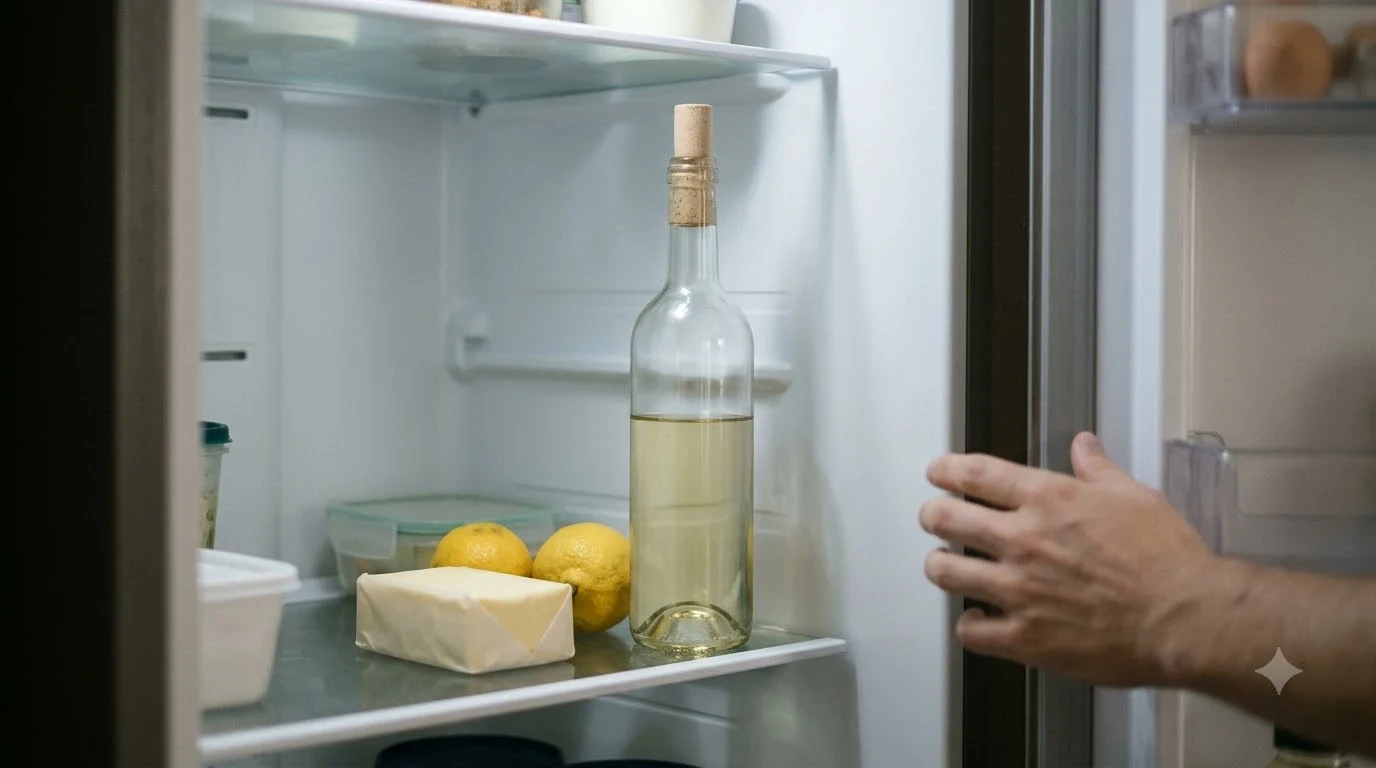
Store unopened bottles in a dark, stable place near 55°F, away from vibration and large temperature swings. Bottles sealed with natural cork are generally stored on their sides so the cork does not dry out. After opening, replace the closure and refrigerate still white wines; most keep their best freshness for about 3–5 days.
Pairing Vin Blanc with Food
The best pairing usually matches the wine’s acidity, body, and sweetness with the weight and flavor of the dish. Bright whites suit salty seafood and tangy sauces, while fuller whites can stand up to cream, butter, and richer poultry dishes.
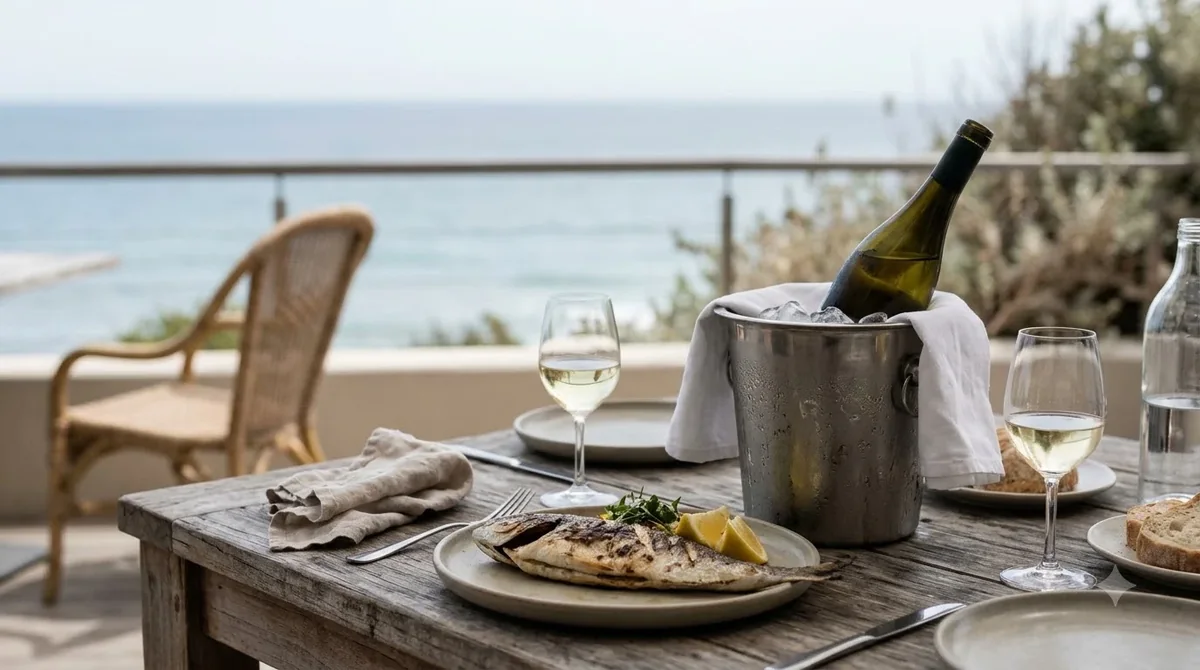
For oysters, mussels, shrimp, and simply prepared white fish, try a crisp Sauvignon Blanc, Muscadet, Picpoul, or dry Riesling. These wines bring enough acidity to refresh the palate and complement the clean, briny character of shellfish. A squeeze of lemon or a vinegar-based dressing also favors a wine with lively acidity. Sauvignon Blanc is especially useful with fresh goat cheese, a classic match in parts of the Loire Valley.
For roast chicken, creamy pasta, lobster with butter, or fish served in a cream sauce, choose a fuller Chardonnay or a white Rhône blend based on Roussanne or Marsanne. The richer texture can meet the dish without seeming thin. Viognier and Gewürztraminer are worth considering with fragrant spices, ginger, and dishes with aromatic herbs, while a dry or off-dry Riesling can work with food that has a little sweetness or heat. Be careful with chili: high alcohol and tannin can intensify the burn, so an aromatic white with modest alcohol and a touch of residual sugar is often more comfortable than a high-alcohol, heavily oaked bottle.
Sweetness needs a clear balance. A dessert wine should be at least as sweet as the dessert; otherwise, the wine can taste sharp or sour beside the food. Sweet Chenin Blanc or Riesling can work with fruit tarts, while a richer late-harvest style can pair with honeyed desserts or blue cheese. White wine pairings are usually more about acidity, texture, and sweetness. Match a sharp vinaigrette with a lively white, and let a buttery dish meet a wine with enough body.
Frequently Asked Questions
These quick answers cover label terms and regional details that can be useful once you know the basic styles and grapes.
What does AOC mean on a French white wine label?
AOC stands for Appellation d’Origine Contrôlée, a French designation linking a product to a defined origin and its production rules. The related European wording is AOP, Appellation d’Origine Protégée; both terms point to protected geographical identity rather than a grape or sweetness level.
What does “sur lie” mean on a Muscadet label?
Sur lie means the wine was matured on its lees, the yeast sediment left after fermentation. In Muscadet, this practice can add a rounder texture and subtle bread or yeast notes while retaining the region’s brisk, seafood-friendly character. It describes a maturation choice, not a sweetness level.
What is the difference between blanc de blancs and blanc de noirs?
Both terms are used for white sparkling wine, especially in Champagne. Blanc de blancs means white wine made from white grapes, while blanc de noirs means white wine made from dark-skinned grapes such as Pinot Noir or Pinot Meunier. The distinction describes the grapes used, not whether the finished wine is sweet or dry.
Can a white wine improve with age?
Yes. High-acid Riesling and Chenin Blanc, well-made white Burgundy, and some Sémillon-based wines can develop over a decade or longer in suitable storage. With age, some gain notes of honey, wax, toasted nuts, or dried fruit, although many light whites are designed to be enjoyed young.
What does “Grand Cru” tell me about a white wine?
In regions such as Burgundy and Alsace, Grand Cru identifies a recognized high-ranking vineyard or site within the local classification system. It is not a universal guarantee of a particular flavor, body, or sweetness, and the meaning of the term differs by region. Reading the full appellation and producer information gives a more useful picture of the bottle.
Vin blanc covers far more than one familiar French white: it includes brisk seafood wines, aromatic bottles, textured Chardonnays, sweet dessert styles, and sparkling choices. Start with the grape or region that fits your taste, then use serving temperature and food pairing to bring the bottle into its best balance.
More in Wine Types & Grapes
 Zinfandel Sugar Content: Dry Red vs. White Zinfandel GramsUpdated Nov 21, 2026
 Best Zinfandel Substitute Options for Sipping and CookingUpdated Nov 21, 2026
 Zweigelt Food Pairing: Best Dishes, Cheeses, and Serving TipsUpdated Nov 21, 2026
 Zinfandel Tannins Explained: How Structure Shapes Every BottleUpdated Nov 21, 2026
 Zinfandel Sweetness Level: Dry Red vs. Sweet White Zin ExplainedUpdated Nov 21, 2026
 Xinomavro Food Pairing: Best Dishes, Styles, and Serving TipsUpdated Nov 21, 2026