

We may earn a commission when you buy through links on this page, at no extra cost to you. Learn more.
The pennsylvania wine trail is a network of regional wine routes rather than one continuous road, so the best place to start depends on which part of the state you want to explore. Lake Erie offers a concentrated grape-growing landscape in the northwest, while Brandywine Valley and Bucks County make convenient tasting-country options near Philadelphia. Central Pennsylvania adds the Susquehanna Heartland route and other clusters, giving visitors several ways to build a trip around local wineries, scenery, and regional food.
Think of Pennsylvania wine country as regional destinations connected by local roads, not one itinerary with a start and finish. Five American Viticultural Areas (AVAs) define grape-growing regions; wine trails group wineries into visitor routes. The systems overlap, but a trail is not the same thing as an AVA.
What the Pennsylvania Wine Trail Actually Covers
Pennsylvania’s wine trail network is made up of regional groups, each with its own landscape, winery mix, and event calendar. The Pennsylvania Winery Association highlights five principal trails—Berks County, Brandywine Valley, Bucks County, Lake Erie Wine Country, and Susquehanna Heartland—while the state tourism office also lists routes such as Lehigh Valley, Hershey Harrisburg, Pocono Mountains, and Mason-Dixon.
The distinction matters before you plan a drive. Lake Erie Wine Country is in the far northwest near Erie and North East; Brandywine Valley and Bucks County are in the southeast near Philadelphia; Susquehanna Heartland follows the Susquehanna River through central Pennsylvania. These are separate outings, not stops on one short loop, and driving between regions can take several hours.
Use the Pennsylvania Winery Association’s wine-trail directory as a starting point, then move from the directory to the individual trail’s own site. The association’s current overview describes 11 member wineries on the Berks County Wine Trail, seven wineries on Brandywine Valley, seven wineries and a cidery on Bucks County, 16 Pennsylvania wineries in Lake Erie Wine Country, and 17 wineries on Susquehanna Heartland. Trail membership and visitor access can change, so the local group is the right place to confirm participating tasting rooms and event details.
You do not need to visit every region to understand Pennsylvania wine. A focused weekend in one area gives a clearer sense of local grapes and styles than a hurried cross-state drive. Pick a base first, then add wineries that fit your preferences and pace.
How to Choose a Regional Route
Choose a Pennsylvania route by matching travel time, scenery, and wine preferences, not simply the winery count. The five trail groups offer a starting point for either a two-stop day trip or a weekend with an overnight stay.
For a first visit from Philadelphia, compare Brandywine Valley, Bucks County, and Berks County. Brandywine Valley is described by the Pennsylvania Winery Association as countryside between Philadelphia and Lancaster, and its seven-winery group makes it a natural choice for a short trip into Chester County. Bucks County also has seven wineries plus a cidery, which gives visitors another southeast option with a slightly different mix of stops. Berks County offers 11 member wineries and five trail-wide events a year, including two ticketed events, according to the association.
Visitors based near Harrisburg or farther west can consider the Susquehanna Heartland Wine Trail, which has 17 wineries along the Susquehanna River and more than 20 tasting rooms across the route, according to its association listing. The Lehigh Valley and Hershey Harrisburg routes are also named by the state tourism office. For a comparison with other regional wine destinations outside Pennsylvania, see the traverse city wine trail and the charlottesville wine trail; their geography and grape choices offer a useful contrast with Pennsylvania’s cooler-climate mix.
Two or three appointments in a day usually leave time for a meal and a conversation with winery staff. Check distances, tasting policies, and reservation rules, especially for groups and weekends. A trail listing does not mean every member is open for walk-in tastings on the same day.
Lake Erie Wine Country in the Northwest
Lake Erie is the clearest choice for visitors who want to see Pennsylvania’s largest grape-growing concentration. The Pennsylvania Winery Association lists 16 Pennsylvania wineries on Lake Erie Wine Country, among glacial ridges and shoreline vineyards.
The region’s significance extends beyond the trail. The Lake Erie AVA is a broad grape-growing area, and the association says the region accounts for about 90 percent of Pennsylvania’s grapes. Wine Enthusiast’s Pennsylvania region overview describes its soils as glacial material, limestone, and loam. Together with the lake’s influence, these conditions support both familiar and regional varieties.
North East, on the lakeshore east of Erie, is a useful reference point for planning. The state tourism office’s wine guidance points to Mazza Vineyards in North East for Cabernet Franc and Merlot, while the Pennsylvania Winery Association’s grape guide notes that Northwest Riesling often shows sweet peach character alongside crisp acidity. Niagara and Catawba are also associated with the region; they can lean fruity or off-dry, offering a different experience from a dry European-style white.
Allow enough time to compare producers. Taste Riesling at more than one sweetness level, then try a dry white such as Vidal Blanc or Seyval Blanc. For red wine, compare Cabernet Franc with Merlot. The lakeside setting also suits visitors who want scenery along with tasting-room stops.
Brandywine Valley, Bucks County, and Berks County
Southeastern Pennsylvania has three distinct trail choices within reach of Philadelphia: Brandywine Valley, Bucks County, and Berks County. Each has its own winery membership and character.
Brandywine Valley suits a countryside excursion in southern Chester County. The association lists seven wineries in the broader PA Wine Land Southeast region, between Philadelphia and Lancaster. Wine Enthusiast identifies Penns Woods Winery in Chadds Ford as a local tasting-room option. Use the trail map to connect visits with nearby historic properties, gardens, and towns.
Bucks County has seven wineries and one cidery, a useful mix for groups with different preferences. It can work as a Philadelphia-area day trip without the longer drive to Lake Erie. Pair a dry white with local cheese or choose a fruit-forward rosé for an outdoor stop.
Berks County has 11 member wineries and five trail events each year, including two ticketed events. Its calendar can help visitors plan a coordinated tasting weekend. The association says the trail promotes Pennsylvania wines and Lehigh Valley AVA wines, although the trail and AVA are different designations.
Central Pennsylvania and the Susquehanna Heartland
Central Pennsylvania offers a river-valley route with multiple tasting rooms. The Susquehanna Heartland Wine Trail has 17 wineries along the Susquehanna River, almost 200 vineyard acres, and more than 20 tasting rooms.
Choose a cluster of tasting rooms near your overnight base rather than driving across the state. The state tourism office also lists Hershey Harrisburg Wine Country, with communities including Hershey, Harrisburg, Halifax, Elizabethville, Duncannon, and Middletown. Its description features family-owned wineries and white, red, and blush wines; consult the trail site for current participants.
Two AVAs help describe south-central Pennsylvania’s agricultural landscape: Cumberland Valley, established in 1985, and Lancaster Valley, established in 1982. The association reports 400 planted acres in Lancaster Valley, one of the state’s fertile agricultural districts. These are broad appellation boundaries, not the size of a single winery vineyard.
For a multi-town trip, stay near the wineries you plan to visit. The Susquehanna route is too spread out to treat every tasting room as a quick walk-in stop, so use a current map and allow time between appointments.
Grapes and Wine Styles to Look For
Pennsylvania grows European vinifera grapes, native varieties, and French-American hybrids. Tastings can range from crisp dry whites to sweet and sparkling styles; useful names to recognize include Riesling, Cabernet Franc, Chardonnay, Vidal Blanc, and Chambourcin.
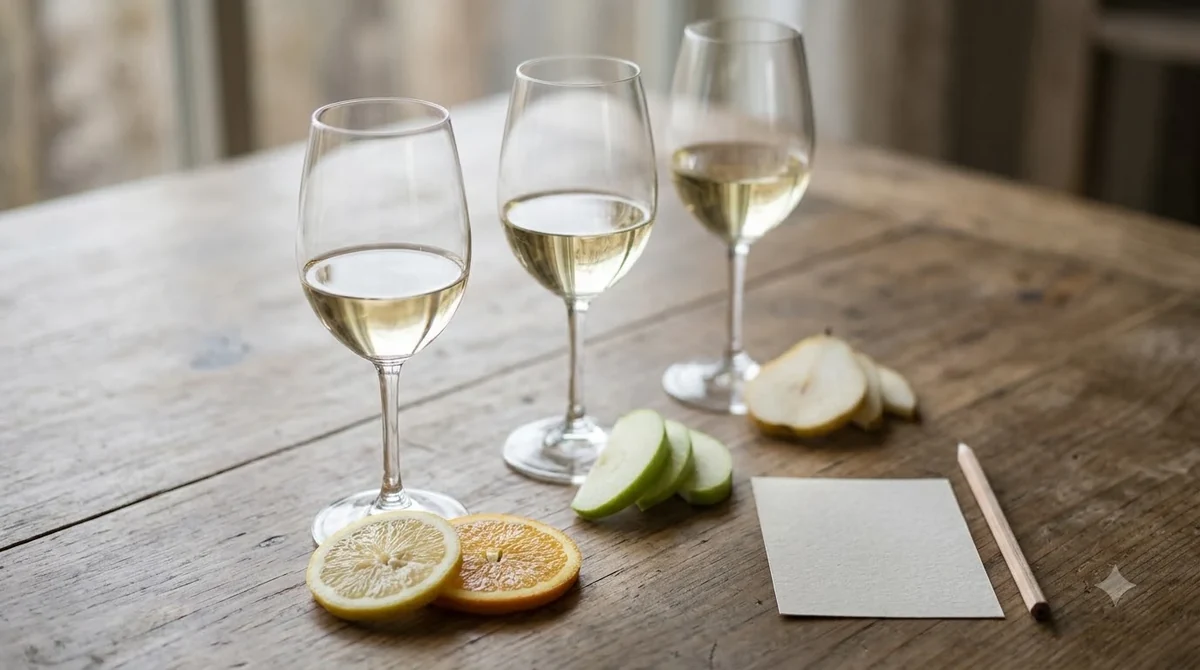
Riesling is a useful grape to compare because it ranges from dry to sweet. The association describes Northwest Riesling as peachy with crisp tartness, while South Central examples can show citrus and floral notes. Acidity can keep a wine lively even when it has residual sugar. Also look for Traminette, which can be spicy and floral, or dry Grüner Veltliner with grassy and green-bean notes.
Vidal Blanc has tropical-fruit notes and can be made dry, semi-dry, as dessert wine, or as ice wine. The association describes Northwest examples as bright and crisp and South Central versions as more floral. Cold-hardy Cayuga and Seyval Blanc may appear as still or sparkling wines, adding to the state’s mix beyond familiar international grapes.
For reds, try Cabernet Franc and Chambourcin, a French-American hybrid highlighted by Wine Enthusiast. Pinot Noir can show cherry, raspberry, and lively acidity, while Merlot is usually softer. Chardonnay ranges from fruit-forward unoaked styles to barrel-aged wines with vanilla or caramel notes. Sweet-wine fans can also look for Niagara, which ranges from sweet to off-dry, Catawba in still or sparkling styles, and aromatic Vignoles for dessert or ice wine. Compare sweetness with acidity: a sweet wine with bright acidity can feel refreshing rather than heavy. Our Wine Regions resource explains how geography shapes regional styles.
Plan a Tasting Day That Works
A good wine-trail day leaves room for travel, tasting, food, and flexibility. Plan two or three wineries in one cluster, allow time between appointments, and arrange a designated driver before the first pour.
Use these published winery counts as planning anchors, not as a guarantee that every location is open on your visit. Participants, hours, and event schedules can change.
| Regional wine trail | Wineries listed | Useful planning detail |
|---|---|---|
| Berks County | 11 | Five trail events annually; two are ticketed |
| Brandywine Valley | 7 | In the countryside between Philadelphia and Lancaster |
| Bucks County | 7 | Also includes one cidery |
| Lake Erie Wine Country | 16 Pennsylvania wineries | Region accounts for about 90 percent of Pennsylvania grapes |
| Susquehanna Heartland | 17 | Almost 200 vineyard acres and more than 20 tasting rooms |
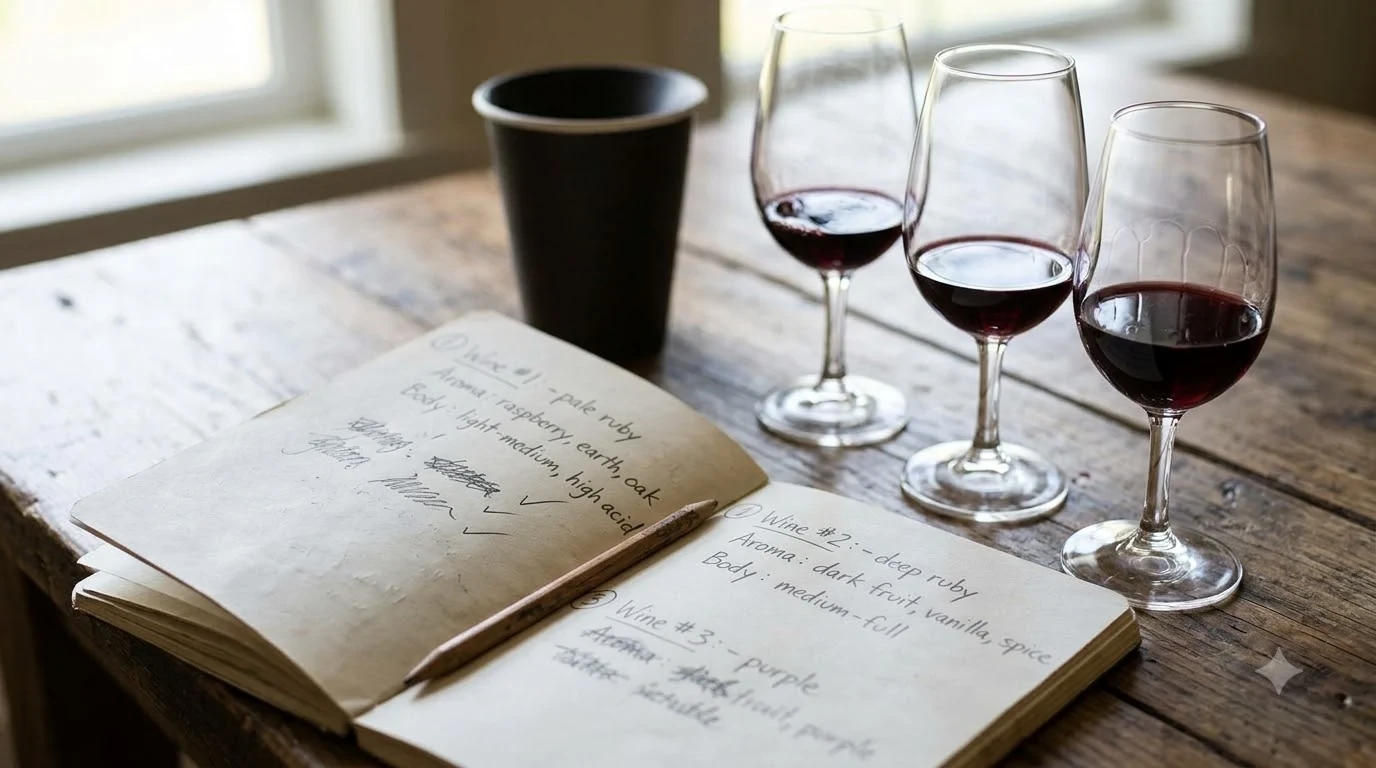
At each tasting room, note the grape, sweetness, acidity, body, and finish. A standard pour is 5 ounces, and a 750-milliliter bottle holds about five glasses; tasting pours are often smaller. Drink water, eat between stops, and pace the day. Serving temperature matters too: sparkling wines suit 40 to 50 F, light whites and rosé 45 to 50 F, fuller whites 50 to 55 F, light reds 55 to 60 F, and full reds 60 to 65 F. Sweet whites are refreshing at 43 to 50 F.
Tip: Plan one substantial meal during the route, and match food to the wine rather than the other way around. Acidic dishes work best with wines of equal or higher acidity; salt and fat soften tannin, while chili heat can seem stronger with alcoholic or tannic wines. Avoid pairing oily fish with a tannic red, and choose a wine at least as sweet as dessert.
Keep bottles cool in transit, especially in warm weather. At home, store them on their side near 55 F. Refrigerate opened still wine and finish it within three to five days; sparkling wine generally keeps for one to three days with a suitable stopper.
Frequently Asked Questions
These answers add historical and regional context to the route-planning details above.
When did wine growing begin in Pennsylvania?
William Penn planted European grapevines near present-day Philadelphia in 1682, in the area now known as Fairmount Park. That early planting is often cited as a starting point for the state’s recorded wine-growing history.
What is Pennsylvania’s oldest licensed winery?
Penn Shore Winery and Vineyards is identified by the state tourism office as Pennsylvania’s oldest licensed winery. It is on the Lake Erie shoreline and received one of the first two limited winery licenses issued by the state in 1968.
Is October associated with Pennsylvania wine events?
Yes. The state tourism office promotes October as PA Wine Month, with winery visits and trail events among the suggested ways to take part. Specific festival dates and ticket requirements vary by organizer, so use the trail’s event calendar before making travel plans.
Can Pennsylvania wineries make wine from fruit other than grapes?
Yes. The state tourism office describes a wide selection of fruit wines alongside grape wines, and individual producers may offer specialty or fortified styles. Ask which fruit is used and whether the wine is dry, sweet, or sparkling, since the category covers very different flavors.
What is unusual about Pennsylvania’s regional trail names?
State tourism listings have included names such as the Groundhog Wine Trail and PA Great Outdoors, reflecting the state’s local communities and tourism areas. These names are useful discovery terms, but they do not imply that every trail has the same membership model or a single shared reservation system.
The best Pennsylvania wine trip is the one built around a region rather than a race across the map. Choose Lake Erie for its broad grape-growing landscape, southeastern trails for convenient day trips, or Susquehanna Heartland for a central Pennsylvania weekend, then leave enough time to enjoy each stop.
More in Wine Regions
 Willcox Wine Trail: Discover Arizona’s High-Elevation Wine CountryUpdated Nov 20, 2026
 Yakima Valley Wine Region: Find the Best Styles to TryUpdated Nov 20, 2026
 Vosne Romanee Wine Tasting: Identify Aromas and Choose Better PairingsUpdated Nov 20, 2026
 Yakima Valley Wine Festival: Find the Best Seasonal Wine EventsUpdated Nov 20, 2026
 Wales Vineyards: Discover Cool-Climate Wines and Where to VisitUpdated Nov 20, 2026
 Yountville Wine Festival: Discover Napa Wines and Local FoodUpdated Nov 20, 2026