

We may earn a commission when you buy through links on this page, at no extra cost to you. Learn more.
If you are wondering is cabernet franc full bodied, the short answer is no: it is typically a medium-bodied red wine, though warm-climate versions can reach medium-full weight. Compared to its famous offspring Cabernet Sauvignon, Cabernet Franc has lighter tannins, higher natural acidity, and slightly lower alcohol levels. Cool-climate bottles from the Loire Valley feel brisk and agile on the palate, while sun-drenched examples from California, Tuscany, or Argentina show riper fruit and a noticeably fuller texture.
Understanding where a red wine sits on the body spectrum makes ordering at a restaurant or browsing a wine shop much easier. Cabernet Franc occupies a versatile middle ground among major wine types, offering enough savory grip to stand up to hearty dishes without overwhelming delicate flavors.
What it is
Cabernet Franc is an ancient black-skinned wine grape native to southwestern France and best known as one of the parent varieties of Cabernet Sauvignon, Merlot, and Carménère. DNA profiling conducted at the University of California, Davis in 1997 proved that Cabernet Franc crossed naturally with Sauvignon Blanc in the seventeenth century to create Cabernet Sauvignon.
Because it buds and ripens at least a week earlier than Cabernet Sauvignon, growers have relied on Cabernet Franc for centuries as an insurance policy against cold or rainy autumn weather. In Bordeaux, where rainy harvests can prevent late-ripening grapes from reaching full maturity, Cabernet Franc provides aromatic lift, violet florals, and bright red fruit to the classic blend. Winemakers on the Right Bank, particularly in Saint-Émilion and Pomerol, often make it the backbone of their wines alongside Merlot.
Structurally, the grape sits neatly in the medium-bodied category. Its berries are relatively small with thin to medium skins, which translates into moderate levels of color, tannin, and extract compared to thicker-skinned varieties. While some tasters assume any grape with “Cabernet” in the name will be massive and heavy, anyone asking is cabernet sauvignon full bodied will find a much denser, more tannic wine than Cabernet Franc ever aims to be.
Flavor and styles
Cabernet Franc is famous for its expressive, savory-meets-fruity aromatic profile that combines tart red berries with distinct herbal notes. According to Wine Folly, classic tasting notes include strawberry, raspberry, red plum, roasted red pepper, crushed gravel, and dried herbs.
Those signature savory aromas—often described as bell pepper, jalapeño, tobacco leaf, or pencil shavings—come from natural organic compounds called methoxypyrazines. When the grapes ripen in cooler weather or receive less direct sunlight, methoxypyrazines stay more pronounced, giving the wine an earthy, herbal edge. In warmer climates with longer sunshine hours, those green compounds break down further, shifting the flavor profile toward ripe blackberry, black cherry, cocoa, and sweet baking spices.
Winemaking choices also steer the final weight and texture of the wine. Producers aiming for a fresh, everyday style ferment the grapes in stainless steel or neutral concrete vats, preserving crunchy fruit and a light-to-medium frame. Winemakers crafting age-worthy reserve bottlings often mature the wine in French oak barrels, which softens the tannins, adds notes of vanilla or cedar, and rounds out the mid-palate into a plush, medium-full experience.
| Characteristic | Cool-Climate Cabernet Franc | Warm-Climate Cabernet Franc | Cabernet Sauvignon |
|---|---|---|---|
| Typical Body | Light-medium to medium | Medium to medium-full | Full |
| Tannin Level | Medium, fine-grained | Medium to medium-high | High, firm |
| Acidity | High, mouthwatering | Medium-high | Medium to medium-high |
| Core Flavors | Red currant, raspberry, bell pepper, graphite | Blackberry, black cherry, cocoa, sweet tobacco | Cassis, black plum, cedar, vanilla |
| Typical ABV | 12% to 13.5% | 13.5% to 14.5% | 13.5% to 15% |
Where it grows
While Cabernet Franc is planted in wine regions around the globe, its character shifts dramatically depending on local temperature and soil type. France remains the benchmark, accounting for roughly two-thirds of the world’s plantings, though the grape has earned a devoted following across North and South America as well as Italy.
In France’s Loire Valley, particularly in appellations like Chinon, Bourgueil, and Saumur-Champigny, Cabernet Franc is bottled as a single-varietal wine. Grown on limestone tuffeau and gravel soils along the river, Loire Valley Cabernet Franc is brisk, aromatic, and unmistakably medium-bodied, showing tart raspberry, violet, and damp earth. Further south in Bordeaux, it serves primarily as a blending partner that adds perfume and freshness to Merlot-dominant wines.
Outside France, warmer growing regions coax riper fruit and broader shoulders out of the grape. In California’s Napa Valley and Sonoma County, alongside Washington’s Columbia Valley, winemakers produce plush single-varietal Cabernet Francs with dark cherry fruit and velvety tannins. Reviewers at Decanter also point out that Argentina’s Uco Valley has become a major hub for high-altitude Cabernet Franc, where intense sunlight and cool mountain nights yield concentrated, spicy wines that rival Malbec in richness. Meanwhile, coastal Tuscany uses the grape in Super Tuscan blends, and cooler North American regions like Ontario’s Niagara Peninsula and New York’s Finger Lakes excel at vibrant, food-friendly styles.
How to serve
Serving Cabernet Franc at the proper temperature keeps its bright acidity and delicate floral aromatics in balance with its alcohol and tannins. Because it is lighter than Cabernet Sauvignon, serving it too warm can make the alcohol stand out and flatten the fruit.
Aim for a cellar temperature between 55°F and 60°F (13°C to 15°C). If you store your bottles in a standard kitchen pantry or room-temperature rack, placing the bottle in the refrigerator for about 20 to 30 minutes before opening brings it right into the sweet spot. Lighter, unoaked Loire Valley styles even benefit from a slightly cooler pour around 55°F, which accentuates their refreshing crunch.
Glassware and aeration also play a helpful role. A standard large-bowled Bordeaux glass gives the wine plenty of surface area to release its violet, berry, and herbal aromas. Young, structured bottles from warm climates or reserve vineyards benefit from 30 to 45 minutes in a decanter to soften the tannins, while lighter, everyday bottlings are ready to enjoy as soon as you pull the cork.
Tip: If a bottle of Loire Valley Cabernet Franc tastes slightly sharp or overly herbal right after opening, give it 20 minutes in the glass to warm up a couple of degrees and breathe—the red berry fruit will quickly step forward.
Food pairing
High acidity and moderate tannins make Cabernet Franc one of the most food-friendly red wines you can bring to the table. Rather than coating the palate like a heavy steakhouse red, its bright acidity cuts through richness while its savory herbal notes echo fresh culinary herbs.
Classic pairings lean into roasted meats, poultry, and earthy vegetables. Herb-crusted pork tenderloin, roast chicken with rosemary and thyme, lamb chops, and duck breast all match the wine’s medium frame without clashing. Because Cabernet Franc naturally carries subtle bell pepper and green herb notes, it handles tricky vegetable dishes—such as roasted peppers, wild mushrooms, eggplant parmesan, and lentil stews—far better than heavier reds.
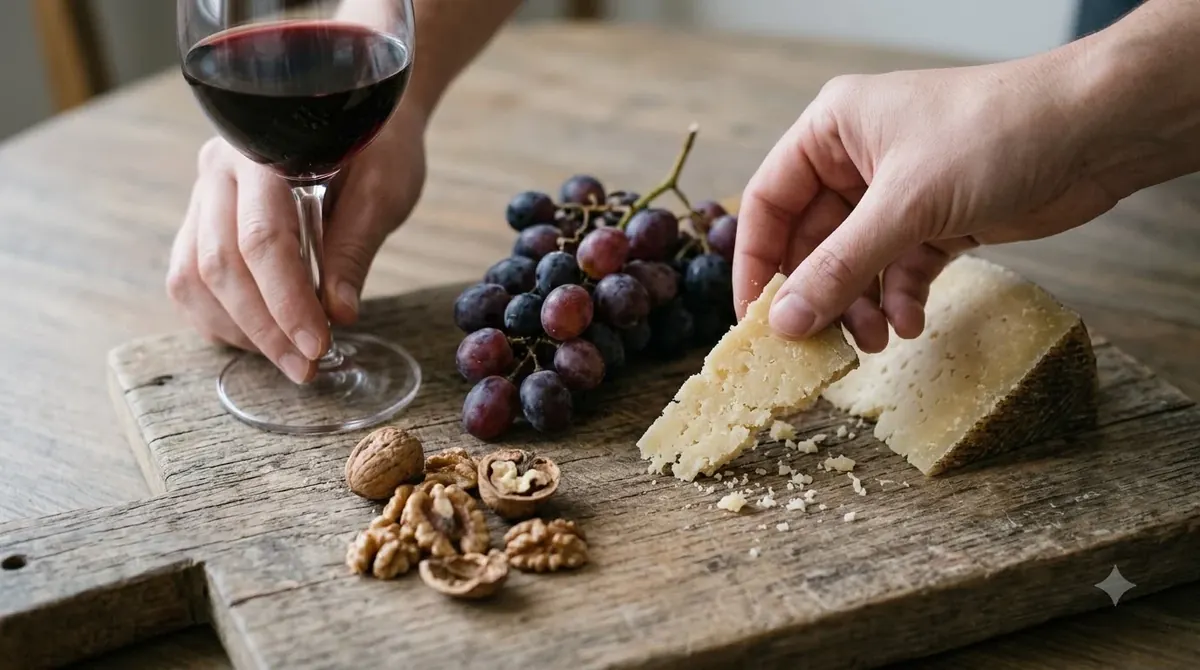
Cheese boards are another natural match. Aged goat cheese from the Loire Valley, Comté, Camembert, and nutty Gruyère pair effortlessly with the wine’s crisp acidity and red fruit. If you usually reach for Pinot Noir with salmon or mushroom risotto, or if you have ever wondered is pinot noir full bodied when planning a dinner menu, Cabernet Franc offers a slightly grippier, more savory alternative that works with many of the same dishes.
How to choose a bottle
Finding the right bottle of Cabernet Franc comes down to checking the region and the alcohol by volume (ABV) printed on the front label. Because climate dictates whether the wine leans light-medium or medium-full, origin is your most reliable clue.
If you want a crisp, refreshing, savory red with prominent red berry and herbal character, look for bottles from the Loire Valley—specifically Chinon, Bourgueil, or Saumur-Champigny—or cooler North American regions like the Finger Lakes and Niagara. These wines usually list an ABV between 12% and 13.5% and feel lively and medium-bodied.
If you prefer a richer, darker, fuller-feeling red with softer herbal notes and more oak spice, look for single-varietal bottlings from Napa Valley, Paso Robles, Washington State, or Mendoza’s Uco Valley. Labels showing 14% ABV or higher indicate riper grapes, fuller body, and denser dark fruit—closer in weight to what drinkers expect when asking is malbec full bodied.
Frequently Asked Questions
Is Cabernet Franc heavier than Pinot Noir?
Yes, Cabernet Franc is generally slightly fuller and more structured than Pinot Noir. While Pinot Noir is typically light-to-medium bodied with very soft tannins, Cabernet Franc sits squarely in the medium-bodied range and brings noticeably firmer tannins and more savory herbal notes.
Is Cabernet Franc sweeter than Cabernet Sauvignon?
No, Cabernet Franc is almost always made in a dry style with virtually no residual sugar, just like Cabernet Sauvignon. However, warm-climate Cabernet Franc can sometimes taste fruitier on the mid-palate because its tannins are softer and less astringent than those of Cabernet Sauvignon.
Why does Cabernet Franc sometimes smell like green bell pepper?
That signature aroma comes from natural compounds in the grape skins called methoxypyrazines. Grapes grown in cooler climates or shaded canopies retain higher levels of these compounds, producing pleasant notes of bell pepper, fresh herbs, and crushed leaves alongside red berry fruit.
Can you age Cabernet Franc?
Yes, well-made Cabernet Franc ages gracefully thanks to its high natural acidity and supportive tannin structure. Everyday Loire Valley and New World bottles drink best within three to five years of the vintage, while top single-vineyard Chinon or reserve California bottlings can evolve for 10 to 20 years.
So while Cabernet Franc is rarely a true heavyweight, its medium-bodied balance of bright acidity, supple tannins, and savory-fruit complexity gives it remarkable range. Whether you pour a brisk, cellar-chilled bottle from the Loire Valley or a plush, sun-ripened expression from California or Argentina, it bridges the gap between delicate reds and full-bodied powerhouses with ease.
More in Wine Types & Grapes
 Zinfandel Sugar Content: Dry Red vs. White Zinfandel GramsUpdated Nov 21, 2026
 Best Zinfandel Substitute Options for Sipping and CookingUpdated Nov 21, 2026
 Zweigelt Food Pairing: Best Dishes, Cheeses, and Serving TipsUpdated Nov 21, 2026
 Zinfandel Tannins Explained: How Structure Shapes Every BottleUpdated Nov 21, 2026
 Zinfandel Sweetness Level: Dry Red vs. Sweet White Zin ExplainedUpdated Nov 21, 2026
 Xinomavro Food Pairing: Best Dishes, Styles, and Serving TipsUpdated Nov 21, 2026