

We may earn a commission when you buy through links on this page, at no extra cost to you. Learn more.
Andre wine is a sparkling wine brand from Gallo, sold in a range of sweet and dry styles that are light, easy to drink, and mostly built for casual occasions. The lineup includes Brut, Extra Dry, Cold Duck, blush, and fruit-flavored sparklers. Gallo introduced the brand in 1966, and it grew into one of the best-selling sparkling wine brands in the United States.
Andre shows up often on grocery and liquor store shelves, and many people know the name before they know anything about how the wine tastes. This guide explains where the brand comes from, what the different bottles are like, why the label says Champagne, and how to serve and pair it so you get the most from a glass.
What Andre is and where it comes from
Andre is a product of Gallo, the large California winery. According to the Gallo company site, the brand arrived in 1966, when the company added sparkling wines to its portfolio alongside Eden Roc. From that starting point, Andre became the largest-selling sparkling wine brand in the country, a position that made it a familiar name to American drinkers well before fine sparkling wine became common at home.
Because the brand has been around for decades, people often expect a single taste. In practice, Andre is better understood as a family of sparkling wines. The sweetness level and the flavor additions change from bottle to bottle, so reading the label matters more than the name alone.
The Andre lineup and its styles
Andre sells several varietals and styles at once, and each one aims at a slightly different palate. The table below sums up the main types you are most likely to see, with a note on how each one usually tastes.
| Style | Typical taste | Good with |
|---|---|---|
| Brut | Driest of the group, with a clean finish and lively bubbles | Salty snacks, fried foods |
| Extra Dry | Noticeably sweeter than Brut, with soft fruit | Light desserts, fresh fruit |
| Cold Duck | Sweet and easy, a style with a long history in American sparkling wine | Dessert, casual toasts |
| Blush | Pink in color, sweeter and fruitier on the palate | Brunch, mild cheeses |
| Strawberry and peach | Flavored sparklers with bright fruit and a sweet finish | Fruit salads, cake |
The lineup is a reminder that a bottle labeled Andre can taste very different from another. A shopper who wants something crisp will look toward Brut, while a shopper who wants a soft, sweet glass for a party may prefer Extra Dry or a fruit style. Checking the wording on the front label is a quick way to choose.
Why the bottle says Champagne
Many Andre bottles are labeled as California Champagne, which can confuse buyers who know that true Champagne comes only from the French region. Wikipedia notes that the Andre California Champagne is bulk-fermented, a method in which the second fermentation takes place in large tanks rather than in individual bottles as in the traditional method.
The name is allowed for a historical reason. A 2006 wine labeling agreement between the United States and the European Union let producers that already used the term keep it on their labels under a grandfather clause. Andre is one of the brands that continues to use the word, so the name on the label reflects an older rule rather than a claim of French origin.
How Andre tastes
Most Andre bottles share a light, sweet, and fruity character that makes them easy to drink without much thought. One champagne expert quoted on Wikipedia described the style as similar to ginger ale: pale yellow in color, lemony and on the sweet side, with perhaps an apple note and low bubbles. That description fits the sweeter bottles in the range, and it helps explain why many drinkers see Andre as a relaxed party wine. Drinkers who like a sweet, fruit-forward bottle may also compare it with Stella Rosa Red, which takes a similar approach to sweetness.
The dry styles behave differently. Brut is cleaner and crisper, with a finish that does not linger on sugar. Bubbles are gentler than in premium Champagne, so the wine feels soft rather than sharp, which some drinkers prefer with snacks and casual meals.
How to serve Andre
Andre is normally served cold, straight from the refrigerator or a bucket of ice, since chilling keeps the sweet styles from tasting heavy and helps the bubbles hold up. Keep the bottle chilled until pouring, and pour a small amount first so the foam settles before you fill the glass.
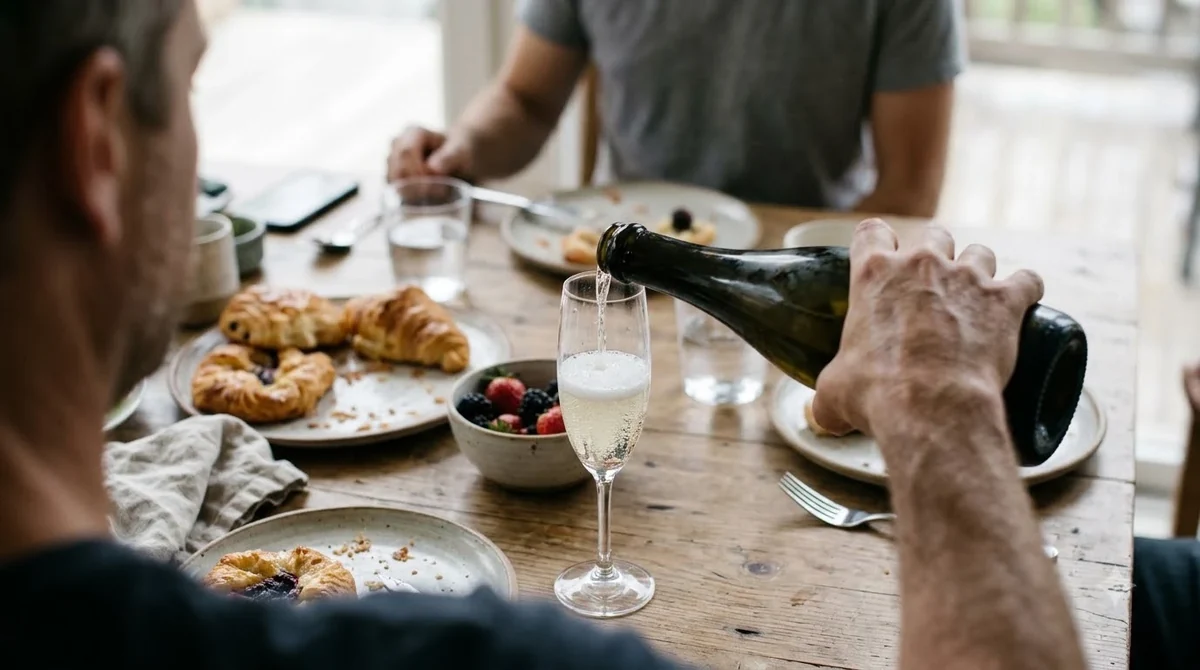
Glassware matters less than with premium sparkling wine, but a flute or a standard white wine glass works well. A flute keeps the bubbles visible and the aromas more concentrated. Once opened, sparkling wine loses its fizz within a day or two, so a partly used bottle should be sealed with a stopper and stored cold.
Tip: Serve sweeter Andre styles with dessert or fruit rather than as a meal wine. The sugar is easier to enjoy when the food also has sweetness.
Food pairing with Andre
Pairing Andre is simpler once you match its sweetness to the food. The rule is that a sweet wine should be at least as sweet as the dish, otherwise the food tastes sour or flat next to it. Wine pairing guides, including the general principles summarized on Wikipedia, also note that acidity can cut through rich food, which is why a drier Brut can handle salty or fried snacks.
For the sweeter styles, fresh fruit, strawberry shortcake, and lemon desserts are natural matches. Blush and fruit-flavored bottles work with brunch dishes, soft cheeses, and light salads. A plate of cheese and crackers is an easy choice for an Extra Dry bottle when guests arrive.
If you are planning a larger menu, a sparkling wine like Andre can serve as an opener while a still wine takes over for the main course. Many shoppers who enjoy Andre later try a sparkling wine from a smaller producer, and the comparison helps them decide which sweetness level they prefer. For a broader view of brands, the wine brands guide explains how producers position different lines.
How to choose the right bottle
Start with the sweetness you want. Read the front label for the style word, then decide whether the bottle is for dinner, a party, or dessert. Brut suits shoppers who want a dry sparkling wine, while Extra Dry and blush suit people who enjoy soft fruit. If you are serving a group with mixed tastes, two bottles, one dry and one sweet, cover most preferences without much planning.
The back label is also worth a quick read, since it often describes how the producer intends the bottle to taste. Keep the bottle cool and out of direct light until the day you plan to serve it, and buy only as much as the table needs, because opened sparkling wine loses its fizz within a day or two.
Frequently Asked Questions
Is Andre wine sweet?
Many Andre bottles are sweet, especially the Extra Dry, Cold Duck, blush, and fruit styles. The Brut bottles are drier, so checking the style name on the label tells you what to expect.
Is Andre real Champagne?
No. Andre California Champagne is made in California, and it is not from the French region of Champagne. The name is allowed on the label under a grandfather clause in a 2006 US and EU labeling agreement.
What does Andre taste like?
Most bottles are light, lemony, and sweet with low bubbles. The Brut style is drier and crisper, and fruit styles add strawberry or peach flavor.
How should Andre be served?
Serve it cold and pour a small amount first so the foam settles. Sweeter styles work best with dessert or fruit, while Brut suits snacks.
Andre is a practical choice when you want an easygoing sparkling wine for a casual table. Pick the style that matches the food, serve it cold, and you will get the bright, sweet character that has made the brand so familiar.
More in Wine Brands
 Underwood Wine Price: Compare Bottles, Cans, and Pack SizesUpdated Nov 21, 2026
 Zenato Wine Price: Compare Styles and Choose the Right BottleUpdated Nov 21, 2026
 Zuccardi Wine Price: Compare Bottles and Find the Right RangeUpdated Nov 21, 2026
 Yellow Tail Moscato Review: Taste, Sweetness and Serving TipsUpdated Nov 21, 2026
 Wolf Blass Yellow Label Review: Choose Your Best StyleUpdated Nov 21, 2026
 Wolffer Estate Rose Review: Choose the Right Bottle for Your TableUpdated Nov 21, 2026