

We may earn a commission when you buy through links on this page, at no extra cost to you. Learn more.
Golan Heights wine is shaped by a high volcanic plateau, cool nights, and a wide range of elevations that support both structured reds and fresh, aromatic whites. Cabernet Sauvignon, Merlot, Syrah, Chardonnay, and Pinot Noir are among the region’s established grapes. Northern vineyards near Mount Hermon tend to be cooler and higher, while southern sites are lower and warmer, so wines from the same broad area can differ substantially. The most useful way to understand a bottle is to consider its vineyard, grape, and producer as well as its regional name.
The Golan Heights has become one of the most recognizable names in Israeli wine because its volcanic soils and mountain-influenced climate differ from warmer coastal growing areas. This guide explains how the landscape affects the wines, which producers and varieties to look for, and how to serve the bottles well.
Where the Golan Heights Wine Region Sits
The Golan Heights wine region occupies a volcanic plateau in the northeastern Levant, with vineyards spread across northern, central, eastern, and southern areas. Regional references describe growing sites from roughly 400 to 1,200 meters, so the region is not one uniform block of vineyards or one consistent climate.
The plateau’s position near Mount Hermon is important, but a bottle labeled Golan Heights does not necessarily come from the highest or coldest part of the area. Northern sites such as El Rom and Odem sit near Mount Hermonit at approximately 1,050 and 1,100 meters, respectively. Other vineyards in the east and south are much lower, changing the pace of ripening and the varieties best suited to each site.
Regional terminology can vary with the labeling framework. Older wine writing and trade descriptions often place the Golan Heights within the broader Galilee region, while Israel’s government announced a newer map that identifies the Golan as one of eight major wine regions and divides it into Northern and Southern Golan. A regional label is useful information, but not a complete description of a wine’s style or quality. For more on how geographical names organize wine, see our guide to Wine Regions.
Altitude, Basalt, and Climate Across North and South
Elevation and soil are the clearest starting points for understanding Golan Heights wine. The northern plateau is generally cooler and higher, while the southern Golan is lower and warmer; basalt and volcanic tuff are common, although soil depth, stone content, and water-holding behavior vary by vineyard.
At high sites, cooler nights slow the loss of acidity as grapes ripen. This can help preserve freshness in Chardonnay and aromatic whites, while giving red grapes time to develop ripe tannins and flavor. Odem Vineyard, near Mount Hermonit, sits at about 1,100 meters. Golan Heights Winery describes cold, rainy winters, occasional snow, mild dry summers, and cold nights there, alongside well-drained basaltic soil containing weathered volcanic tuff.
Basalt is a dark volcanic rock, while tuff forms from consolidated volcanic ash and fragments. These materials influence drainage, soil depth, and water available to vine roots; they do not automatically make wine taste like stone. Soil works with slope, exposure, rainfall, vine age, and vineyard management to influence ripening. Conditions become warmer in the southern Golan: Geshur Vineyard sits at about 400 meters, with clay-based volcanic soil and approximately 400 millimeters of annual precipitation, compared with Odem’s 1,100 meters and roughly 800 millimeters. The figures below are individual vineyard descriptions, not regional averages.
| Vineyard example | Area | Elevation | Annual rainfall | Site detail |
|---|---|---|---|---|
| Odem | Northern Golan | About 1,100 m | About 800 mm | Basalt and weathered tuff; well-drained |
| El Rom | Northern Golan | About 1,050 m | About 800 mm | Deep basaltic soil with high tuff content |
| Ortal | Northern Golan | 880–900 m | About 680 mm | Basaltic-tuff soil with medium stone content |
| Allone Habashan | Eastern Golan | About 600 m | Not stated in profile | Basaltic soil with about 40% clay |
| Geshur | Southern Golan | About 400 m | About 400 mm | Clay-based volcanic soil |
These site differences help explain why northern Chardonnay and southern red blends can have distinct ripening profiles.
Grapes That Define the Region
Golan Heights vineyards support a mix of international grapes, with Cabernet Sauvignon, Merlot, Syrah, Chardonnay, and Pinot Noir among the varieties most closely associated with the area. Sauvignon Blanc, Riesling, Gewürztraminer, and several blending grapes add further range.
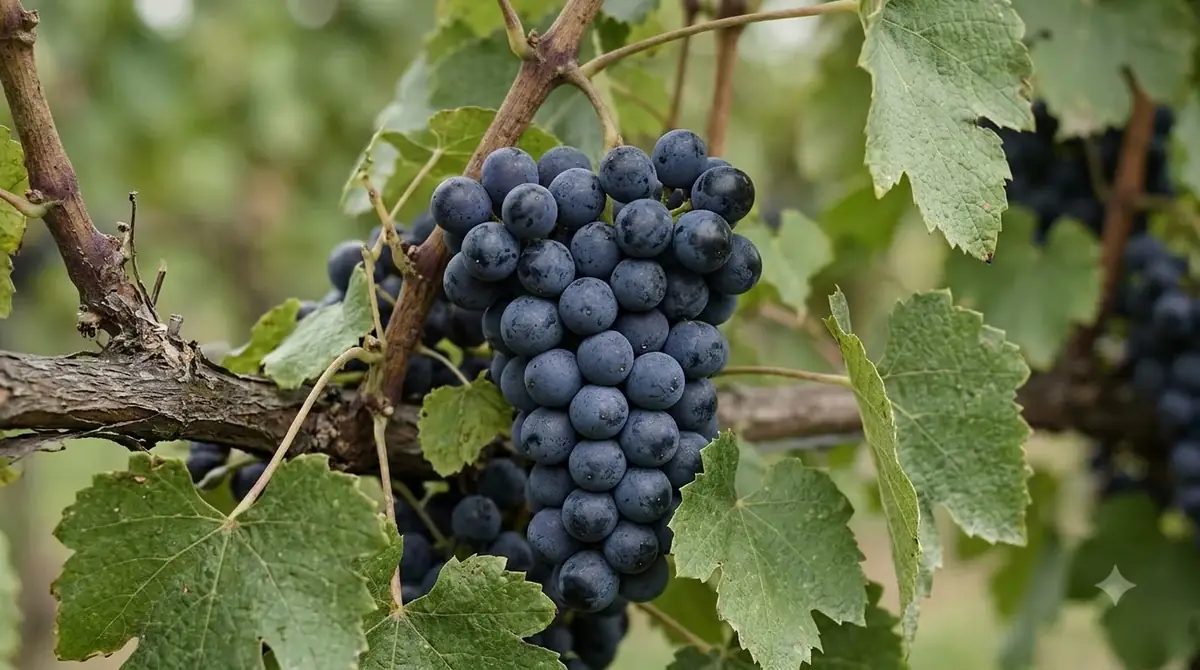
Cabernet Sauvignon is a useful reference point for the region’s structured reds. It typically brings firm tannin and dark-fruit character, suiting grilled beef, lamb, and slow-cooked dishes. Merlot has softer tannins and often shows plum or cherry, so it can soften a Cabernet blend. Syrah contributes dark fruit and savory spice; Golan Heights Winery describes a Gamla Syrah aged for a year in French oak and a Yarden Syrah aged for 18 months.
Chardonnay is an important white grape, particularly at high northern sites. The winery’s Odem Vineyard Chardonnay comes from a site at approximately 1,100 meters and is fermented and aged sur lie for seven months in French oak barrels. Lees aging can add texture, while oak may contribute spice or toast; neither requires the wine to be heavy. Mountain conditions can help balance that texture with freshness.
Pinot Noir, Sauvignon Blanc, Riesling, and Gewürztraminer broaden the range. Pinot Noir generally has lower-to-medium tannin and higher acidity than Cabernet, making it a more delicate red option. Sauvignon Blanc and Riesling are high-acid grapes suited to crisp, aromatic styles, while Gewürztraminer is prized for floral aromas; Golan Heights Winery also makes a sweet dessert wine from this grape in the cool northern Golan. Blending is common, too: a single-vineyard Allone Habashan wine listed by the winery combines 34% Cabernet Sauvignon, 33% Syrah, 19% Merlot, 9% Petit Verdot, and 5% Cabernet Franc, bringing several grape profiles together while retaining one vineyard origin.
Wineries and Vineyards to Know
Golan Heights Winery is the best-known regional reference, but it is not the only producer associated with the plateau. The Israeli Wine regional guide also names Bazelet HaGolan and Odem Mountain, while vineyard-designated bottlings help show the differences between individual sites.
Golan Heights Winery traces its first harvest to 1983 and says its first released wine was Yarden Sauvignon Blanc from that vintage. It was established at a temporary location at Golan Fruit by eight local communities and kibbutzim: Ortal, Allone Habashan, El Rom, Geshur, Yonatan, Ein Zivan, Ramat Magshimim, and Ramot Naftali. The winery introduced its first Riesling vintage in 1987 and its first Chardonnay in 1988. Its history and vineyard profiles offer further details on named sites and bottlings.
Yarden is the winery’s label and includes varietal and vineyard-designated wines; Gamla and Mount Hermon are other labels in its portfolio. El Rom and Odem are two northern vineyard names worth recognizing. El Rom’s plantings began in 1983 at approximately 1,050 meters, while Odem’s first plot was planted in 1989 at about 1,100 meters. By contrast, Allone Habashan in the eastern Golan sits around 600 meters, and Geshur in the south is about 400 meters.
When researching a bottle, distinguish the producer, brand, and vineyard. One company may release wines under several labels, and a single label may include wines from different grapes or sites. “Single vineyard” generally means the grapes come from one named vineyard, while a regional blend can draw on several sites. Our page on Golan Heights vineyards is a useful companion when comparing specific place names.
Styles, Labels, and How to Choose a Bottle
Golan Heights wine is not one flavor profile: the region produces structured reds, fresher mountain whites, rosé, sparkling wine, and sweet bottlings. Grape variety, vineyard elevation, blend, oak treatment, and vintage are more useful buying clues than a broad regional name by itself.
For a first red, choose Cabernet Sauvignon if you prefer firmer tannin and a fuller frame, Merlot for a softer texture, or Syrah for dark fruit with savory spice. A blend can be a good middle ground, especially when it combines Cabernet with Merlot or Syrah. For whites, Chardonnay is flexible: an unoaked style can emphasize citrus and orchard fruit, while barrel fermentation or lees aging can add body and a creamier texture. Sauvignon Blanc and Riesling suit drinkers who prioritize lively acidity and aromatic lift; Gewürztraminer is a good option for floral aromas or a touch of sweetness.
Read the label for the producer, grape, vintage, and vineyard designation. A place name alone does not tell you whether the wine is dry, sweet, oak-aged, or intended for early drinking. Wine Enthusiast has described the Golan as a Galilee subregion, while Israel’s newer official map treats it as a major region with Northern and Southern Golan subdivisions. That difference reflects classification language, not a single regional flavor.
Kosher status is separate from grape variety or regional identity. Wine Enthusiast explains that kosher production involves specific handling rules from grape reception through bottling and excludes animal-based additives; not every Israeli wine is kosher, so look for a certification mark when that matters. The Israeli government also states that geographic origin on a wine label is optional and, when a region is named, at least 85% of the grapes must come from that region. Treat both certification and origin as specific label information, not as a score or quality guarantee. For more context, read Wine Enthusiast’s overview of Israeli winemaking.
Tip: When choosing between two Golan bottles, compare the grape and vineyard first, then check the vintage and oak treatment. A high-elevation Odem Chardonnay and a warmer-site red blend are likely to suit different tastes and meals even though both come from the Golan Heights.
Serving and Pairing Golan Heights Wines
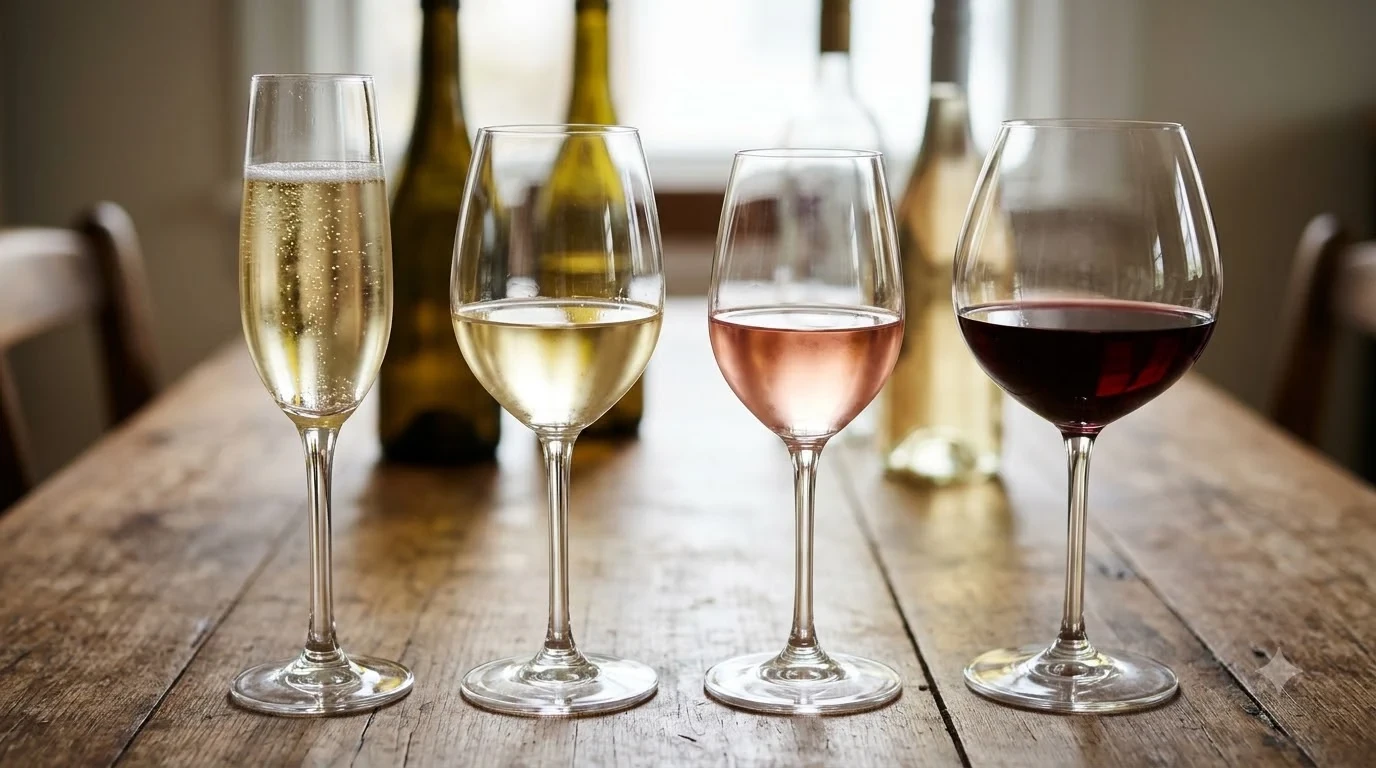
Serve Golan Heights wines according to their style rather than their region alone. A crisp Sauvignon Blanc and a structured Cabernet need different temperatures and food partners, even if both wines were grown on the same plateau.
Chill Sauvignon Blanc and Riesling to about 45–50°F, and serve fuller-bodied or oak-influenced Chardonnay closer to 50–55°F. A light red or Pinot Noir is usually more expressive around 55–60°F, while a full-bodied Cabernet or Syrah is better around 60–65°F. These ranges are more useful than serving every red at warm room temperature, which can make alcohol seem more prominent and mute freshness.
Match structure to the meal. Cabernet Sauvignon’s high tannin works with grilled steak, lamb chops, or braised short ribs; salt and fat soften tannin. Merlot’s softer profile suits roast chicken or mushroom dishes, while Syrah pairs with grilled lamb and black pepper. Avoid pairing tannic reds with oily fish. For whites, Sauvignon Blanc’s high acidity suits lemony fish, goat cheese, and herbs; Chardonnay works with roast chicken or buttery pasta. Riesling can balance spicy food through acidity and residual sweetness, while high alcohol and tannin can make chili feel hotter. Choose a dessert no sweeter than the wine; dry rosé suits grilled vegetables, while sweet Muscat is better with fruit pastries.
Open a young, full-bodied Cabernet or Syrah 30–60 minutes before serving if it tastes tight or especially tannic. A standard 750-milliliter bottle yields about five 5-ounce servings. Store remaining still wine in the refrigerator and aim to finish it within 3–5 days. Keep unopened bottles away from heat and direct light, ideally around 55°F, and store cork-finished bottles on their sides for longer aging.
Frequently Asked Questions
These answers explain regional terminology, label designations, kosher status, aging, and the region’s sweeter styles.
Is Golan Heights wine the same as Galilee wine?
Not exactly. Some older classifications group the Golan within Galilee, while Israel’s newer official map names the Golan as a major region. The map is a geographic framework for origin descriptions, not an appellation of origin or protected geographical indication.
Are Golan Heights wines always kosher?
No. A Golan vineyard’s location does not determine kosher status, and Israeli producers make both kosher and non-kosher wine. For buyers who need a particular standard, the certifying authority printed on the bottle matters as much as the general kosher symbol.
Can Golan Heights wine age in the bottle?
Some structured Cabernet Sauvignon, Syrah, and Bordeaux-style blends can develop with bottle age when they have firm tannin, balanced acidity, and concentrated fruit. A useful example of the region’s age-worthy red category is Yarden Cabernet Sauvignon, which appeared among the Israeli entries on Decanter’s Platinum list. Lighter Sauvignon Blanc and rosé are generally better enjoyed earlier.
What does a single-vineyard Golan wine mean?
It means the grapes come from one named vineyard rather than a blend of multiple sites. A named vineyard can still contain several grape varieties and multiple blocks, so the term does not necessarily mean a single grape or a single small parcel. It is an origin statement, not a quality rating.
Does the Golan Heights produce dessert wine?
Yes. Golan Heights Winery describes Mount Hermon Moscato as a sweet, lightly sparkling wine made from Muscat Canelli. The winery says cold fermentation is stopped early to retain sweetness and gentle sparkle, a different production approach from its dry Cabernet and Chardonnay bottlings.
Golan Heights wine rewards attention to details behind the regional name: altitude, vineyard, grape, and producer all matter. Start with a Cabernet or Syrah for a structured red, or choose Chardonnay, Sauvignon Blanc, or Riesling to explore the cooler side of the plateau. Comparing bottles from different parts of the region is one of the clearest ways to understand how varied its wines can be.
More in Wine Regions
 Willcox Wine Trail: Discover Arizona’s High-Elevation Wine CountryUpdated Nov 20, 2026
 Yakima Valley Wine Region: Find the Best Styles to TryUpdated Nov 20, 2026
 Vosne Romanee Wine Tasting: Identify Aromas and Choose Better PairingsUpdated Nov 20, 2026
 Yakima Valley Wine Festival: Find the Best Seasonal Wine EventsUpdated Nov 20, 2026
 Wales Vineyards: Discover Cool-Climate Wines and Where to VisitUpdated Nov 20, 2026
 Yountville Wine Festival: Discover Napa Wines and Local FoodUpdated Nov 20, 2026