

We may earn a commission when you buy through links on this page, at no extra cost to you. Learn more.
France wine comes from a large number of regions, from cool Champagne in the north to sunny Provence on the Mediterranean, and it covers reds, whites, rosés, sparkling wines, and sweet styles. Each region has its own grapes, rules, and house style. Bordeaux is known for blended reds, Burgundy for Pinot Noir and Chardonnay, the Loire for white wines, and Champagne for sparkling wine.
Few countries shape the way people think about wine as much as France. The names on French labels can look complicated at first, yet a few basic ideas make the whole system easier to read. This guide walks through the main regions, the grapes that define them, how red and white production compares, and how to choose a bottle without needing to know every appellation.
How France organizes its wine regions
French wine is organized by region and by appellation, which is a legal area with rules about where grapes can be grown and how the wine is made. Many regions are famous for a single style, while others produce a wide mix. The Wikipedia entry on French wine lists a long roster of regions, from the northern vineyards of Champagne and Alsace to the Rhône, Languedoc-Roussillon, and Provence in the south.
Some names on that list are no longer official wine regions, including Île-de-France, Normandy, and Picardy, where small vineyards have been revived in recent decades. That detail matters less to a shopper than the core idea: a region name on the label tells you roughly what style to expect, and the appellation rules narrow it further.
The main regions at a glance
Each region has a clear identity, and a quick map helps you match a bottle to a meal. The table below gives the most useful short description for each major area, based on the characteristics that the Wikipedia article describes.
| Region | What it is known for |
|---|---|
| Alsace | Mainly white wine from vineyards near the German border, with some red, rosé, and sparkling |
| Beaujolais | Fruity red wines from the Gamay grape, often enjoyed young |
| Bordeaux | Blended red wines on the Atlantic coast, and sweet whites from Sauternes |
| Burgundy | Red and white wines with a strong focus on terroir and many named appellations |
| Champagne | Northeastern region, the coldest major French wine area, home of Champagne |
| Jura | Mountain wines near Switzerland, including vin jaune and vin de paille |
| Languedoc-Roussillon | The largest region by vineyard area and output, known for everyday wines |
| Loire | A mainly white-wine valley, with styles that change by sub-region |
| Rhône | Mainly red wine along the river, with northern and southern styles that differ |
| Provence | Warm southeastern region producing mainly rosé and red, with Bandol as a flagship |
Red and white: the balance of French production
Red wine dominates French vineyards. The Wikipedia figures for 2007 show a total vineyard area of about 861,075 hectares, of which roughly 70% was planted to red, pink, or grey grapes and about 30% to white. The article also gives a general production range of 50 to 60 million hectolitres a year, which works out to roughly 7 to 8 billion bottles.
The balance is not the same in every region. The Loire, Alsace, and Savoy lean toward white, while the Rhône, Bordeaux, and much of the south produce mainly reds. Shoppers who prefer whites should look at regional names first, since the grapes and climate are usually the strongest guide to the style in the glass.
The grapes behind French wine
A small group of grapes accounts for much of French vineyard area. The 2007 figures cited by Wikipedia put Merlot at the top of the red list, with Grenache, Syrah, Carignan, and Cabernet Sauvignon close behind. On the white side, Ugni Blanc leads by area, followed by Chardonnay, Sauvignon Blanc, Melon de Bourgogne, and Sémillon.
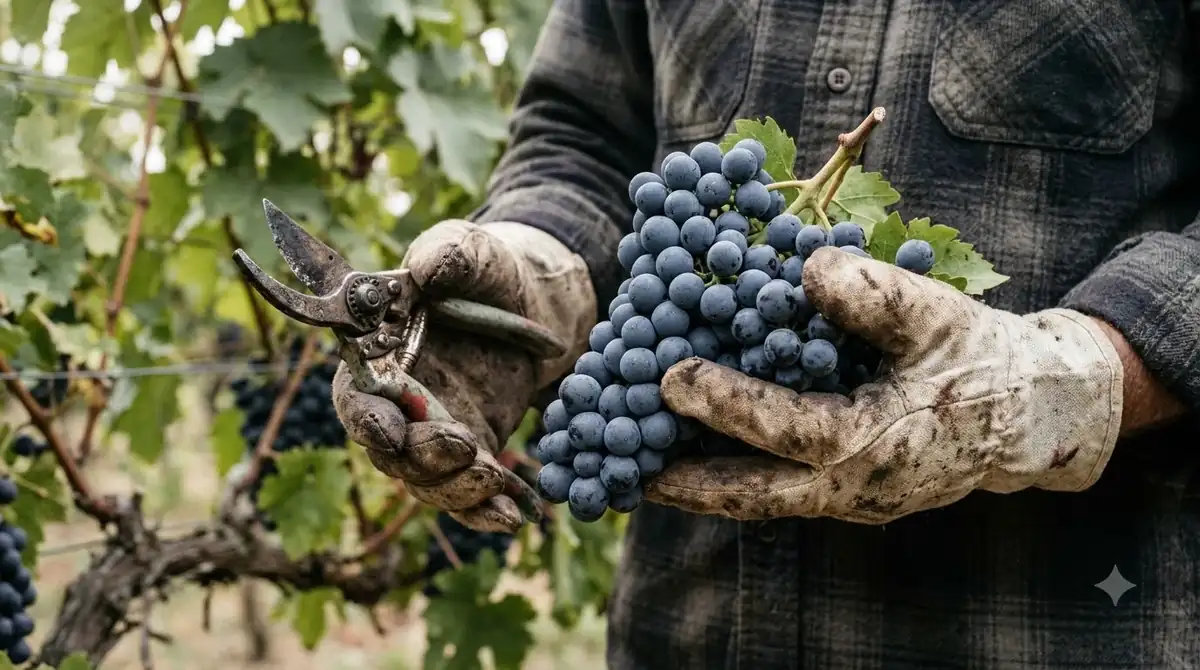
These numbers explain why a single grape name can mean different things across regions. Merlot forms the backbone of many Bordeaux blends, while Syrah defines much of the northern Rhône. Chardonnay appears in both Burgundy and Champagne, and it tastes different in each place because the soil, climate, and winemaking change. If you know one grape you like, following it across regions is often a better way to explore French wine than trying to memorize every appellation.
Tip: When a bottle lists only a region, such as Loire or Bordeaux, the style is more predictable than when it lists a grape. Use the region to set your expectations, then check the grape for the finer detail.
Bordeaux, Burgundy, and the sparkling regions
Bordeaux is the most famous name on the list, a large region on the Atlantic coast whose reds are usually blends. Its sweet whites, from the Sauternes area, are often recognized as a dessert style. For a shopper, the simplest way into Bordeaux is through a Bordeaux wine guide, which explains how the blends are built and what they taste like.
Burgundy takes the opposite approach. Its many appellations focus on the specific site where a wine is grown, so a single village can produce a distinct style. The official Bourgogne wine site describes the region’s Climats, plots with distinct geological and geographical traits, as the basis of its identity, and names Pinot Noir and Chardonnay as the two noble grape varieties of the region. Champagne sits in the cold north and is the home of the sparkling wine that carries its name. Its cool climate helps keep acidity high, which suits the bubbles and makes it a natural choice for celebrations and food pairing alike.
How to choose a French bottle
Start with the region, then the style. If you want something light and fresh, a Loire white or an Alsace wine is a dependable choice. If you like bold reds, look at Bordeaux or the Rhône. For a crisp sparkling option, Champagne is the reference point, though French sparkling wines from other regions can offer good value for everyday drinking.
Look at the appellation tier as well. The most tightly controlled appellations usually sit at the top of the regional system, and their labels tell you exactly where the grapes were grown, even when the producer is unfamiliar. A bottle from a broader regional appellation is often a sensible everyday choice, and it teaches you what a region tastes like before you spend more on a single-vineyard wine.
Read the label for the appellation, the vintage, and the producer. Many French bottles also name the vineyard or village, which tells you more about the style than the broad region alone. If you find a producer you enjoy, look for other bottles from the same house, since the winemaking approach often carries across a range.
Frequently Asked Questions
What is the most famous French wine region?
Bordeaux and Burgundy are the most widely recognized, along with Champagne for sparkling wine. Each is famous for a different style: Bordeaux for blended reds, Burgundy for single-site Pinot Noir and Chardonnay, and Champagne for sparkling.
Does France make more red or white wine?
Red wine dominates. The Wikipedia figures for 2007 show roughly 70% of the vineyard area planted to red, pink, or grey grapes, with about 30% to white.
What is the largest French wine region by area?
Languedoc-Roussillon is described as the largest region by vineyard area and output, and it is associated mostly with everyday wines rather than the best-known prestige labels.
How do I start exploring French wine?
Pick a region that matches the style you like, such as Loire for white or Bordeaux for red, and try two or three bottles from different producers. Comparing them side by side teaches you more than reading about every appellation.
French wine rewards curiosity, and a little structure goes a long way. Use the region to set your expectations, the grape for the detail, and the producer for the final style. For a wider look at the countries and regions behind the bottles you see, the Wine Regions guide places France alongside the other major producers, and a Sancerre winery guide shows how one Loire appellation puts those ideas into practice.
More in Wine Regions
 Willcox Wine Trail: Discover Arizona’s High-Elevation Wine CountryUpdated Nov 20, 2026
 Yakima Valley Wine Region: Find the Best Styles to TryUpdated Nov 20, 2026
 Vosne Romanee Wine Tasting: Identify Aromas and Choose Better PairingsUpdated Nov 20, 2026
 Yakima Valley Wine Festival: Find the Best Seasonal Wine EventsUpdated Nov 20, 2026
 Wales Vineyards: Discover Cool-Climate Wines and Where to VisitUpdated Nov 20, 2026
 Yountville Wine Festival: Discover Napa Wines and Local FoodUpdated Nov 20, 2026