

We may earn a commission when you buy through links on this page, at no extra cost to you. Learn more.
The best wine pairing with pork chops depends on how they are cooked, but a medium-bodied red with soft tannin or an off-dry white with bright acidity works for most cuts. Pinot Noir suits grilled or roasted chops with herbs, while Riesling suits chops glazed with apple, mustard, or sweet spices. Lean chops are forgiving, so the sauce usually decides the final choice.
Pork chops sit between poultry and beef in flavor, and they vary widely from thin, lean loin chops to thick, marbled rib chops. The right bottle depends on the cut and the seasoning. This guide explains which styles work best, how to match the sauce, and how to serve the wine properly.
Best Wine With Pork Chops
Pork is a flexible meat, which makes pork chops one of the easier dishes to pair. The main goal is balance: the wine should be light enough to sit beside the meat without drowning its flavor, yet bright enough to cut the fat. Medium-bodied reds and aromatic whites both meet that standard.
Off-dry Riesling is a strong white choice. Wine Folly notes that off-dry Riesling pairs well with pork and bacon, and its high acidity keeps the richer bites from feeling heavy. It also handles fruit glazes and mustard sauces, which many pork chop recipes use. Choose a style labeled off-dry or semi-sweet rather than bone-dry.
Pinot Noir is the most versatile red for pork. Its medium-high acidity and low tannin make it easy to drink with roasted or grilled chops, and its cherry and earthy notes complement herbs like sage and thyme. A bottle with 12 to 14 percent alcohol keeps the pairing light and balanced.
What Wine Goes With Pork Chops
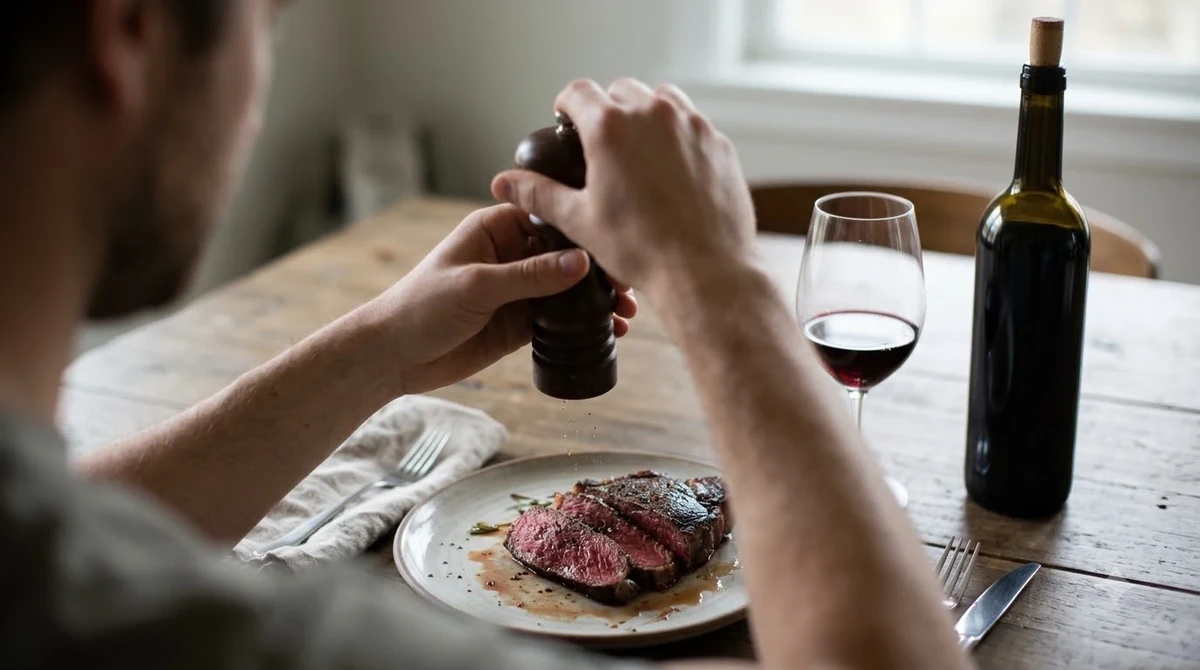
Start with the cooking method. Grilled chops carry smoky char, which pairs with a red that has some fruit and a touch of spice. Pan-seared chops with pan juices lean toward a medium-bodied red or a white with some texture. Braised or slow-cooked chops are softer and work with fuller, rounder wines.
Think about the sauce as well. Apple or pear sauces tend to suit Riesling, since the fruit echoes the wine. Mustard or peppercorn sauces pair with a structured red. Rosemary, garlic, and olive oil flatter a Pinot Noir or a light Grenache. Sweet barbecue glazes are harder to match, and an off-dry Riesling or a fruit-forward red usually stands up better than a dry, oaky wine.
Red or White Wine With Pork Chops
Both colors work, so the choice comes down to the plate. A red is the better default for thick, seared chops with browned edges, because the wine’s body and tannin match the savory crust. A white is the better choice for lean, poached, or lightly sauced chops, where the wine’s acidity and aromatics keep the dish fresh.
Rosé is another useful option when the table is split. A dry rosé with red-berry fruit and crisp acidity handles grilled chops and herb marinades, and it sits comfortably between a white and a red. It is also an easy bottle to serve chilled with a summer dinner.
If you are serving a mixed table, a light red such as Pinot Noir is the safest bottle because it stands up to the meat while still working with vegetables and sides. Pair it with roasted potatoes, apples, or green beans for a balanced meal.
| Chop style | Red choice | White choice |
|---|---|---|
| Grilled, smoky char | Pinot Noir or light Grenache | Off-dry Riesling |
| Pan-seared with herbs | Pinot Noir | Unoaked Chardonnay |
| Apple or pear sauce | Light Pinot Noir | Off-dry Riesling |
| Mustard or peppercorn sauce | Medium-bodied red | Dry Riesling |
| Sweet barbecue glaze | Fruit-forward red | Off-dry Riesling |
Tip: Riesling is best served chilled, around 38 to 45°F (3 to 7°C). Pinot Noir is better slightly cool, near 55 to 60°F (12 to 15°C), so it does not taste flabby.
How Chop Thickness Changes the Pairing
The cut you buy changes the wine more than most cooks expect. Thin loin chops cook quickly and taste delicate, so they lean toward a light Pinot Noir or a chilled, dry Riesling. Their mild flavor can be overwhelmed by a big red, and a bolder wine often hides the sweetness of the meat instead of showing it off.
Thick bone-in rib chops are juicier and carry more fat, which gives them a richer, more savory profile. They pair better with a medium-bodied red that has enough fruit and structure to match the browned crust. An off-dry Riesling still works here if the chop is glazed, because the sweetness and acidity cut through the fat on each bite.
Brined or marinated chops need a second look. Salt and sugar in a brine can make the meat taste sweeter, so a wine with a touch of fruit, such as a fruit-forward Pinot Noir or an off-dry white, suits the seasoning better than a dry, austere bottle.
Tips for Serving Wine With Pork Chops
Match the wine to the thickest, richest part of the meal. Thick rib chops with a crisp, browned edge need a red with enough body to stand up to the char, while thin loin chops are better with a lighter Pinot Noir or a chilled Riesling so the meat does not get lost. For a simple weeknight dinner, a glass of Pinot Noir with the chops and a side of greens is a reliable pairing. For a more formal dinner, serve a dry or off-dry Riesling as the first glass, then a red with the main course if the sauce calls for it.
Leftovers are a good test. Cold pork chops with a pan sauce often taste better with the same wine the next day, since the flavors have settled. If the sauce was built on wine, a bottle from the same family makes the match feel intentional.
Avoid very tannic reds such as young Cabernet Sauvignon. The tannin can feel dry against lean pork, and the bitter edge can clash with caramelized sauces. Heavily oaked whites can also taste heavy next to a light, delicate cut.
Frequently Asked Questions
What is the best red wine with pork chops?
Pinot Noir is the most dependable choice. Its medium-high acidity and low tannin suit roasted, grilled, or pan-seared pork without overpowering the meat.
Is white wine better than red with pork chops?
Neither is better in every case. Off-dry Riesling works well with fruit or mustard sauces, while a red suits seared, savory chops. Choose based on the sauce and the cooking method.
What wine goes with pork chops and apples?
Off-dry Riesling is the natural match, because the wine’s fruit and acidity echo the apple. A light Pinot Noir also works if you prefer a red.
Can I cook with wine when making pork chops?
Yes. A splash of dry white wine or a light red can deglaze the pan and build a sauce. Use the same wine you plan to serve, and drink responsibly, since the alcohol cooks off only partly.
Pork chops are one of the most flexible main courses, and the best bottle usually follows the sauce. For more on how pork fits into a wider meal plan, see wine pairing with pork. If you are building a charcuterie spread alongside the chops, the notes on wine pairing with ham and wine pairing with cheese cover similar styles. The general principles are in the wine pairing guide.
For the white option in more detail, read the Wine Folly Riesling guide, which covers sweetness levels and pork pairings. The red choice pairs well with the Wine Folly Pinot Noir guide notes on acidity and food.
More in Food & Wine Pairing
 Risotto With White Wine Recipe: Make a Creamy Dinner at HomeUpdated Nov 20, 2026
 Wassail With Wine Recipe for a Festive Spiced Holiday DrinkUpdated Nov 20, 2026
 Spritz Veneziano Recipe: Make a Classic Venetian Aperitivo at HomeUpdated Nov 20, 2026
 Summer Wine Punch Recipe for Easy Homemade EntertainingUpdated Nov 20, 2026
 Bishop Recipe: How to Make a Bright, Citrus-Forward Red Wine CocktailUpdated Nov 20, 2026
 Wine Cupcakes Recipe: Bake Rich Chocolate Cupcakes at HomeUpdated Nov 20, 2026