


We may earn a commission when you buy through links on this page, at no extra cost to you. Learn more.
The best wine pairing with duck is usually a red with high acidity and low tannin, such as Pinot Noir, because its freshness cuts through the bird’s rich fat. Off-dry white wines like Riesling also work well, especially when the duck is glazed with fruit or spiced. The sauce often decides the match, so pick a wine that echoes the cherry, orange, or spice in the dish.
Duck has more fat and a deeper flavor than chicken, and it is lighter than beef, which is why the wine choice matters so much. This guide covers the styles that work best, how to match the sauce, which wines to skip, and how to serve them at the right temperature.
What Wine Goes With Duck
Duck pairs best with wines that have enough acidity to cut through its fat without overpowering the meat. Think of the wine as a palate cleanser between rich bites. Wine Folly describes Pinot Noir as a classic partner for duck, noting that its acidity helps it match the richness of the dish while its low tannin stays out of the way.
Because duck sits between poultry and red meat in weight, medium-bodied wines usually fit it best. Heavily oaked, big-bodied reds can taste harsh next to the meat, and very tannic wines leave a dry, grippy finish on the fat. Aim for wines that feel lively on the palate rather than heavy. A useful test is to taste the wine with a plain bite of duck and a bit of the fat. If the wine tastes sharper and fruitier afterward, the match works. If it tastes thin or bitter, try a rounder style with softer acidity, or a wine with a touch more fruit to carry the richness.
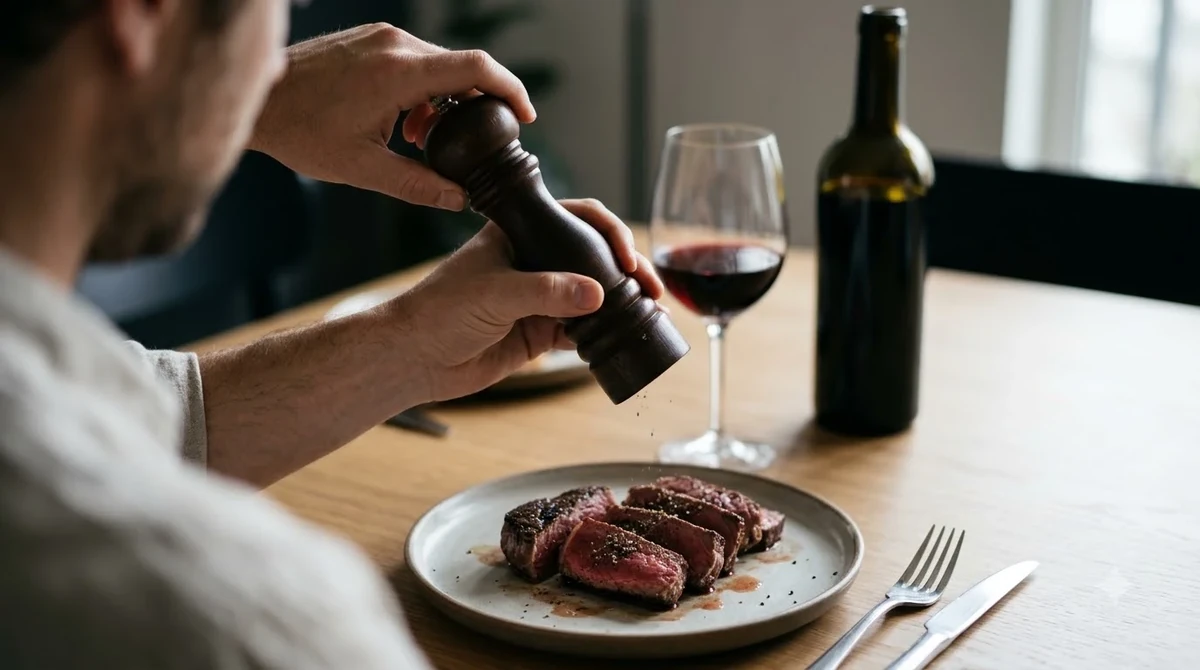
Best Wine With Duck
Pinot Noir is the most widely recommended red for duck. Its typical flavors of cherry, raspberry, and mushroom echo the savory notes of roasted duck, and its alcohol usually sits between 12 and 14 percent, which keeps it balanced rather than hot. Wine Folly notes that spicing the duck will bring out the nuanced flavors in Pinot Noir, so a herb rub or a few warm spices can make the pairing feel more connected.
Off-dry Riesling is the strongest white choice. According to Wine Folly, off-dry Riesling works well with duck, pork, bacon, shrimp, and crab, and its high acidity keeps the fat from feeling heavy. Look for a bottle labeled off-dry or semi-sweet, since bone-dry Riesling can feel sharp next to rich meat.
Some cooks reach for Gamay, Chianti, or a lighter Grenache when they want a red with bright fruit and gentle tannin. These are good backups when you cannot find Pinot Noir, though each brings its own character, so taste the wine with a small bite of duck before serving it to a table.
Red or White Wine With Duck
The right color depends on how the duck is cooked and what goes on the plate. A simply roasted duck breast with salt and pepper suits either style. A glazed or sauced duck leans toward the sweeter, fruitier wine, while a crisp-skinned duck with a savory jus pairs well with a red that has earthy notes.
Red wine is the more common choice for duck because the meat has enough richness to stand up to tannin and body. White wine works when the sauce is bright or sweet. Orange glaze, apricot, or a honey-soy finish all pull toward Riesling, and a cherry or berry sauce works with either a Pinot Noir or a light, fruity red.
Matching the Sauce to the Wine
Sauce is the bridge between the plate and the glass. The safest rule is to match the dominant flavor in the sauce to a note in the wine. Cherry sauce and Pinot Noir share red fruit. Orange and Riesling share citrus and a touch of sweetness. Fig or port reduction calls for a wine with ripe fruit and softer structure, so the sauce does not dominate.
The doneness of the duck also changes the match. A breast cooked medium-rare is pink, juicy, and fairly firm, which suits a lively red with fruit and gentle tannin. A breast cooked well done loses some of its juiciness and can taste drier, so a wine with a little more fruit and roundness helps keep the bite enjoyable. Duck skin is the richest part, and crisp skin tends to feel lighter with a wine that has good acidity, which is why a bright red or a fruity Riesling works well with a crackling finish.
Avoid pairing duck with a sharply tannic red such as a young Cabernet Sauvignon, which can taste metallic next to fatty meat. Very dry, lean whites are also a poor fit, since they lack the fruit to balance the richness of the dish.
| Duck preparation | Red option | White option |
|---|---|---|
| Simple roasted breast | Pinot Noir | Off-dry Riesling |
| Cherry or berry sauce | Light, fruity Pinot Noir | Off-dry Riesling |
| Orange or apricot glaze | Lighter Grenache | Off-dry Riesling |
| Earthy jus, mushrooms | Pinot Noir with age | Less ideal |
| Crispy duck confit | Gamay or Chianti | Medium-dry Riesling |
Tip: Serve Pinot Noir slightly cool, around 55 to 60°F (12 to 15°C), rather than at room temperature. A short time in the fridge before dinner is enough to bring out its fruit.
How to Serve Wine With Duck
Serve the red in a wide glass so the aromas open up, and pour a small amount first to check how the wine tastes with the meat. Riesling should be served cooler, about 38 to 45°F (3 to 7°C), and it does not need decanting. Pinot Noir usually benefits from ten to fifteen minutes in the glass before the first sip, but it does not need a long decant.
If the meal is a multi-course dinner, put the white or lighter red first and move to the richer wine with the duck. This order keeps the palate fresh and stops the first bottle from tasting flat by comparison.
Frequently Asked Questions
Is Pinot Noir always the best wine with duck?
It is the most reliable red choice because its acidity and low tannin suit the fat and texture of duck. A bolder or heavily oaked wine can overwhelm the meat, so Pinot Noir is a good starting point rather than a strict rule.
Can I serve white wine with duck?
Yes. Off-dry Riesling is the standout white because its sweetness and high acidity balance the richness. Dry, lean whites usually feel thin next to the bird, so choose a fruity style.
What wine goes with duck breast versus duck confit?
Duck breast is leaner and pairs well with Pinot Noir or off-dry Riesling. Duck confit is richer and crisper, so a lively red such as Gamay or Chianti, or a medium-dry Riesling, can handle the extra fat without feeling heavy.
Should I decant wine before serving it with duck?
Most Pinot Noir does not need decanting. A young, light bottle is usually fine when opened about fifteen minutes before dinner. Riesling does not need decanting at all.
Duck rewards a thoughtful bottle, and the best match is usually the one that complements the sauce. If you want more guidance on building a meal around a wine, the wine pairing guide covers the principles behind these choices. For a different main course, see the notes on wine pairing with lamb or a lighter plate with wine pairing with cheese, where acidity and fat play a similar role.
Read more on how these styles behave on the palate in the Wine Folly Pinot Noir guide, and compare the white option in the Wine Folly Riesling guide before you choose a bottle for your next dinner.
More in Food & Wine Pairing
 Risotto With White Wine Recipe: Make a Creamy Dinner at HomeUpdated Nov 20, 2026
 Wassail With Wine Recipe for a Festive Spiced Holiday DrinkUpdated Nov 20, 2026
 Spritz Veneziano Recipe: Make a Classic Venetian Aperitivo at HomeUpdated Nov 20, 2026
 Summer Wine Punch Recipe for Easy Homemade EntertainingUpdated Nov 20, 2026
 Bishop Recipe: How to Make a Bright, Citrus-Forward Red Wine CocktailUpdated Nov 20, 2026
 Wine Cupcakes Recipe: Bake Rich Chocolate Cupcakes at HomeUpdated Nov 20, 2026