

We may earn a commission when you buy through links on this page, at no extra cost to you. Learn more.
Dry Sauvignon Blanc is a crisp white wine with little or no residual sugar, high acidity, and bright flavors that range from lime and gooseberry to grapefruit and fresh herbs. Most Sauvignon Blanc is made dry, so the style on the glass matters more than the single word on the label. This guide explains what dry Sauvignon Blanc tastes like, how it differs by region, how to serve it, and which foods work best with it.
Sauvignon Blanc is one of the most recognizable white grapes, and its dry style is the version most people mean when they ask for a crisp white. Once you know the main flavor markers, it becomes much easier to choose a bottle you will enjoy.
What “Dry” Means in Sauvignon Blanc
In wine, dry means the fermentation has turned nearly all of the grape sugar into alcohol, so the wine tastes crisp rather than sweet. Dry Sauvignon Blanc is the default style for the grape, and the bright acidity is what gives it the snap that many drinkers look for on a warm day.
Because the grape is naturally high in acidity, a dry wine can taste lively and fresh without any sugar at all. That is why Sauvignon Blanc is often described as racy. If you prefer a softer white, look for a wine labeled with a fuller style or a Sauvignon Blanc blended with Sémillon, which tends to feel rounder.
Flavor Profiles by Region
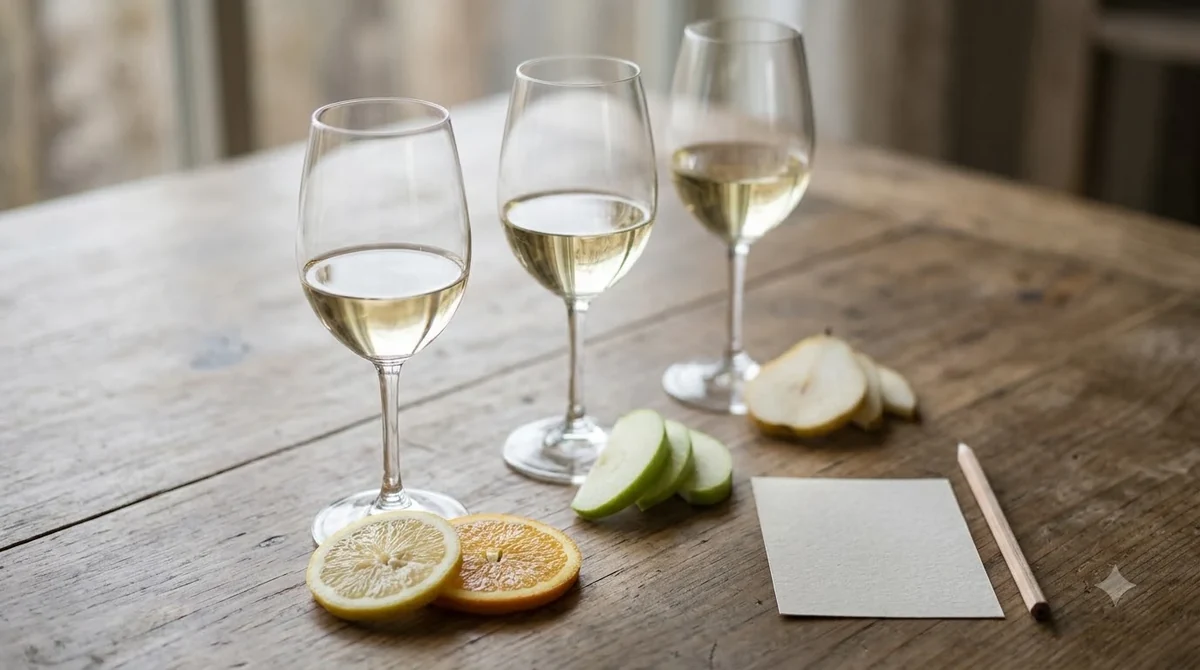
Before comparing bottles, it helps to sort the aromas into three families. Green notes such as cut grass, bell pepper, and pea shoot point to a cooler site or a cooler vintage. Citrus notes such as lime and grapefruit are the most common middle ground. Tropical and stone-fruit notes such as passionfruit, peach, and ripe pear usually come from warmer ripening or a riper picking date.
Wine Folly’s Sauvignon Blanc guide shows how the same grape changes with its surroundings. Cool-climate Loire Valley wines lean toward lime, gooseberry, grapefruit, flint, and smoke. Hotter vintages in that region shift toward stone fruit.
New Zealand’s Marlborough region is the best-known modern style. Wine Folly lists passionfruit, lime, gooseberry, pea shoot, and ripe pear, with bell pepper and freshly cut grass. Marlborough is also the country’s largest wine region, with almost 31,000 hectares of vines, according to New Zealand Winegrowers’ Marlborough page. Its climate is cool, sunny, and dry, which helps the grape keep its aromatic punch.
| Region | Typical flavors | Style notes |
|---|---|---|
| Loire Valley, France | Lime, gooseberry, grapefruit, flint | Cool climate, mineral and crisp |
| Marlborough, New Zealand | Passionfruit, lime, pea shoot, bell pepper | Aromatic, vivid, pungent |
| Bordeaux, France | Honeysuckle, white peach, lemongrass | Saline, sometimes blended with Sémillon |
| South Africa | Grapefruit, grassy, zesty | Fresh and direct |
How Oak and Winemaking Change the Wine
Winemakers can also shape texture through lees contact, which means leaving the wine in contact with spent yeast for a period after fermentation. That process adds weight and a slightly creamy feel without changing the basic fruit profile. Together with oak, it explains why two dry Sauvignon Blancs can taste very different even when they come from the same country.
Most dry Sauvignon Blanc sees little or no oak, which keeps the wine light and fruit-forward. Oak aging is occasional, and when it happens it gives a rounder, richer style with creamy or waxy aromas and a more oily texture. Bordeaux producers sometimes combine barrel aging with lees contact for a fuller feel.
New Zealand producers generally use oak with restraint so that the fruit stays in front. If you want the purest expression of the grape, choose a bottle that describes itself as unoaked or fresh. Those are usually the crispest choices on the shelf.
How to Serve Dry Sauvignon Blanc
Wine Folly suggests serving Sauvignon Blanc between 45 and 55°F (7 and 12°C) in a white wine glass. Because the wine is aromatic, a glass with a moderate bowl lets the scents develop without losing their lift. Decanting is not needed, and it would only blunt the fresh fruit.
Keep the bottle cold until you pour. The wine loses its snap as it warms, so a short time in the refrigerator before serving makes a noticeable difference, especially on a hot afternoon. Dry Sauvignon Blanc also keeps well for a few days once opened when it is sealed and refrigerated.
Tip: Chill the bottle for about two hours before serving. If the room is warm, set the bottle in an ice bucket so the wine stays crisp for the whole meal.
Food Pairings That Match the Acidity
A useful test is to ask whether the food has some acid, herb, or salt of its own. Dishes with those qualities usually show Sauvignon Blanc at its best, because the wine’s acidity stays in balance rather than making the food taste sharp.
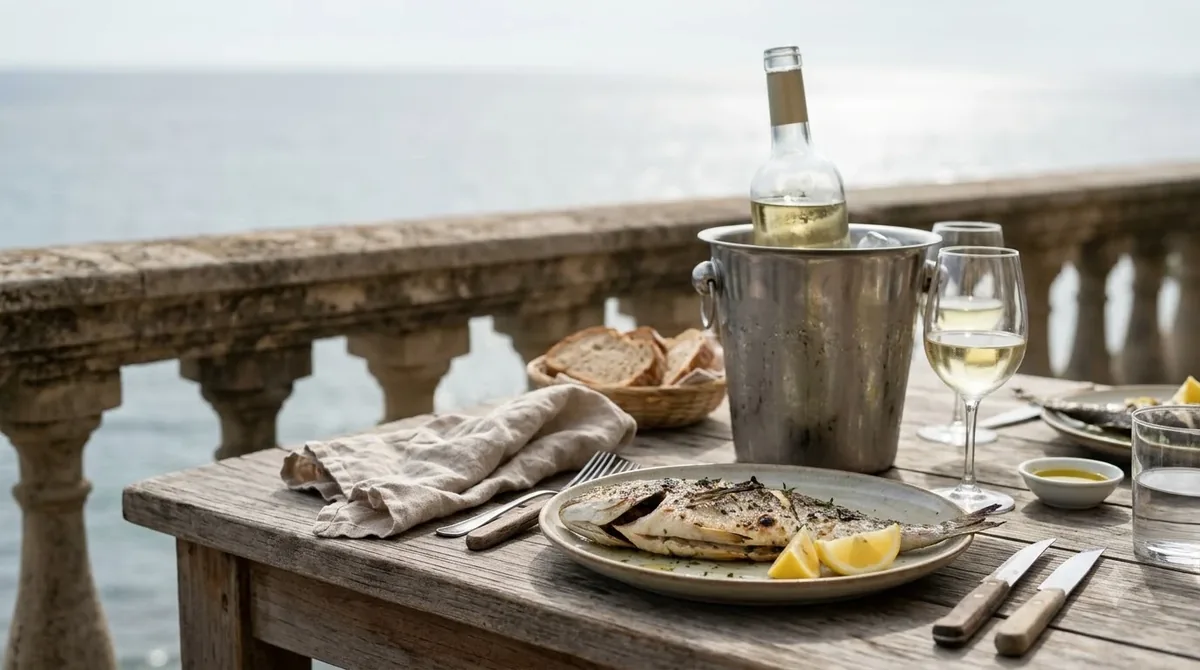
Acidity makes dry Sauvignon Blanc one of the most food-friendly whites. Wine Folly points to herb-driven sauces over chicken, tofu, or fish, along with goat cheese, feta, and fresh herbs such as dill, basil, mint, and chive. The grape also works with Thai and Vietnamese dishes, where its citrus and herbal notes match the bright flavors.
For a simple dinner, try grilled fish with lemon, a green salad with goat cheese, or a chicken dish with a herb sauce. Soft cheeses such as burrata and mozzarella di bufala are a natural match because the wine’s acidity cuts through their richness.
Who Dry Sauvignon Blanc Suits
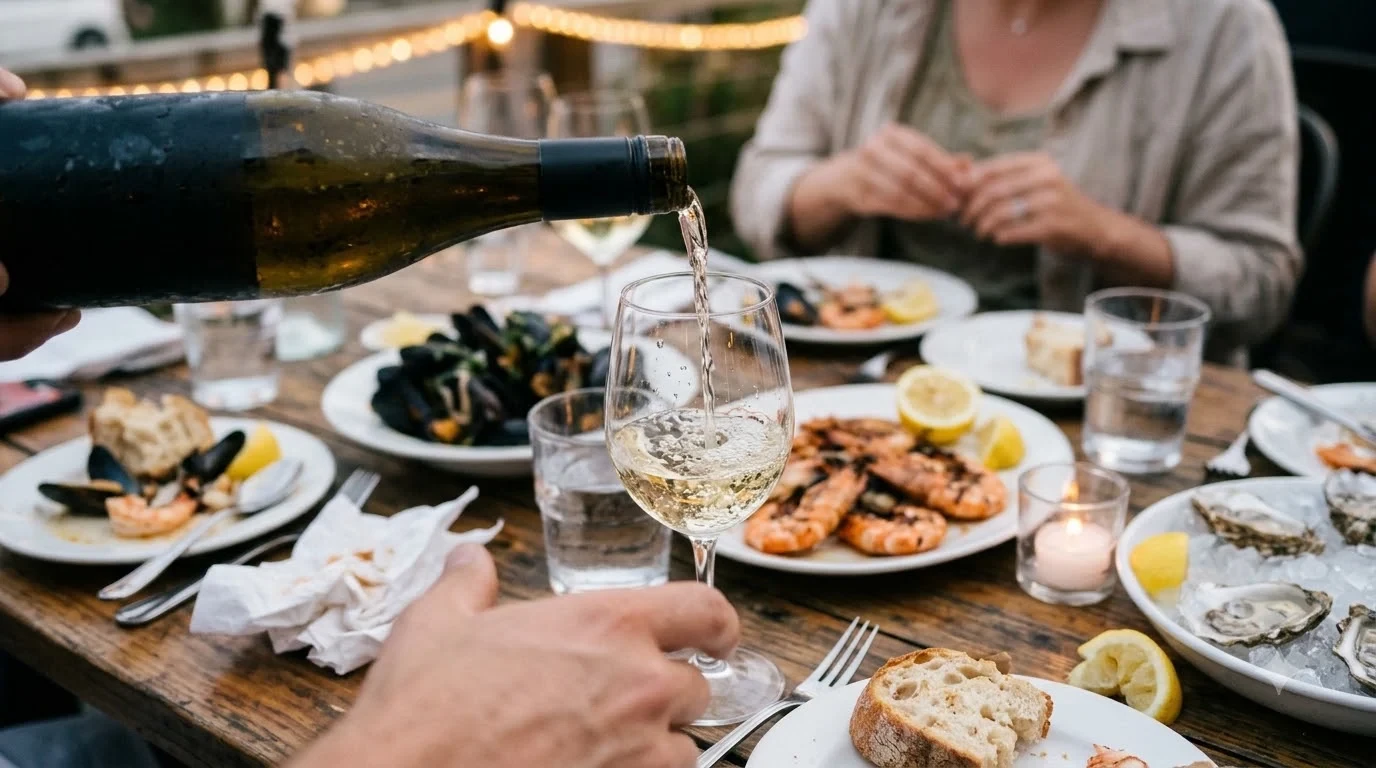
Dry Sauvignon Blanc suits people who want a white with clear, vivid fruit and little sweetness. It also works well for guests who find heavier whites tiring, since the acidity keeps each sip feeling clean. It is a good choice for seafood, salads, and herbal dishes, and it is a reliable pick when you want something that is not too heavy for a summer meal.
If you are comparing styles, it helps to know that dry sparkling wines and dry Riesling also fill this space. The dry Champagne guide covers the sparkling side, and the dry Riesling guide explains a white with a different balance of fruit and acidity.
Frequently Asked Questions
Is dry Sauvignon Blanc sweet at all?
No. Dry Sauvignon Blanc has almost no residual sugar, so it tastes crisp and tart rather than sweet. Some producers make off-dry or fuller styles, but the label usually makes that clear.
How strong is dry Sauvignon Blanc?
Wine Folly lists typical alcohol for Sauvignon Blanc at 11.5 to 13.5 percent ABV. That is lighter than many reds, which is one reason the wine feels refreshing on a warm day.
What is the difference between Sauvignon Blanc and Pinot Grigio?
Sauvignon Blanc usually shows more herbal, grassy, and tropical character, with higher aromatic intensity. Pinot Grigio tends to be lighter and more neutral in flavor, so it is often a softer choice for people who want less aroma.
Should dry Sauvignon Blanc be oaked?
Most dry Sauvignon Blanc is unoaked or lightly treated, which keeps the fruit and acidity in front. Oaked versions are richer and rounder, so choose them if you prefer a fuller white with creamy notes.
Dry Sauvignon Blanc is a crisp, aromatic white that works with a wide range of fresh food. Chill it well, pick a bottle that matches the style you like, and pair it with herbs, seafood, or soft cheese. A bottle opened on a warm evening still tastes fresh if you return it to the refrigerator between glasses. For more guidance on choosing wines by style and region, see the wine buying guides.
More in Wine Buying Guides
 Riesling Gift: Choose a Bottle They’ll LoveUpdated Nov 21, 2026
 Sweet Red Wine Gift: Choose a Bottle They’ll LoveUpdated Nov 21, 2026
 Malbec Gift: How to Choose a Memorable Bottle for Any OccasionUpdated Nov 21, 2026
 Sherry Gift Ideas That Match Every Wine LoverUpdated Nov 21, 2026
 Moscato Gift: How to Choose a Sweet Wine They’ll LoveUpdated Nov 21, 2026
 Merlot Gift: How to Choose a Bottle They’ll AppreciateUpdated Nov 21, 2026