

We may earn a commission when you buy through links on this page, at no extra cost to you. Learn more.
19 crimes wine alcohol content is commonly 13.5% ABV for the classic Australian Red Blend and Cabernet Sauvignon, while other 19 Crimes bottles can be lower or higher depending on the wine and bottling. The important distinction is that 19 Crimes is a range, not one wine with one fixed alcohol percentage. Its U.S. Cali Red bottling, for example, appears with more than one figure in online product information, while the brand’s global pages list 13.5% for two classic Australian reds. Use the number printed on the specific bottle in front of you when comparing strength.
Alcohol percentage is useful when choosing a bottle, planning a pour, or comparing a rich red blend with a lighter white wine. The figures below separate the brand’s published specifications from retailer listings and explain what the number means in a standard glass.
What Alcohol Percentage Does 19 Crimes Usually Have?
The clearest baseline is 13.5% ABV: the official 19 Crimes Global pages list that figure for both its Australian Red Blend and Cabernet Sauvignon. Both wines are identified with South Eastern Australia as their region, so 13.5% is a useful starting point for the classic red styles rather than a universal figure for every bottle carrying the brand name.
The producer describes the Red Blend as Merlot, Shiraz, and Cabernet Sauvignon, with vanilla, chocolate, spice, and dark berry notes. Its Cabernet Sauvignon page lists red currant, vanilla, and dark cherry and describes the wine as full-bodied, with slow-cooked meats as a suggested pairing. Those details place both in a fuller, fruit-forward red category, but tasting notes do not determine ABV.
Other 19 Crimes wines are separate products. The range includes white wines and California bottlings as well as Australian reds. A U.S. retailer’s 14-product assortment filter showed alcohol figures from 12.0% to 15.0%, with entries at 12.5%, 13.5%, 13.7%, 13.8%, 14.1%, and 14.5% too. This is an assortment-level range, not a bottle-by-bottle specification. Remember 13.5% for the producer’s classic Australian Red Blend and Cabernet Sauvignon; for Cali Red, Hard Chard, or Sauvignon Block, identify the exact wine before using an alcohol figure.
How Popular 19 Crimes Bottles Compare
The official product specifications give a firm comparison for two Australian reds, while the U.S. Cali Red listing illustrates why product name and bottling details matter. The table keeps producer-published figures separate from retailer-reported figures and shows the limits of each comparison.
| Wine or reference | Alcohol figure | What the figure represents |
|---|---|---|
| 19 Crimes Australian Red Blend | 13.5% ABV | Producer’s global product page; Merlot, Shiraz, and Cabernet Sauvignon blend |
| 19 Crimes Australian Cabernet Sauvignon | 13.5% ABV | Producer’s global product page; South Eastern Australia |
| 19 Crimes Snoop Dogg Cali Red Blend | 14.1% on Target’s product listing | Retail listing for a 750 mL California red; a customer review on the same page reported a received bottle marked 13.5% |
| 19 Crimes assortment shown by a U.S. retailer | 12.0%–15.0% | Range of alcohol-percentage filter entries across 14 listed products, not a specification for one wine |
| One 5 oz pour at 13.5% ABV | About 0.675 fl oz of alcohol | Volume calculation: 5 fl oz multiplied by 0.135 |
| One 750 mL bottle | About five 5 oz pours | Approximate serving count; actual pours depend on how much is poured |
The first two rows are the most stable examples because they come directly from the producer’s pages. The Red Blend combines three named grapes, while the Cabernet Sauvignon is a single-variety wine; both list the same 13.5% alcohol level. For additional producer detail, see the official 19 Crimes Red Blend specification, which names the wine’s origin, grape blend, flavor profile, and ABV.
The Cali Red row needs more care. Target’s product information identifies a 750 mL California red blend at 14.1%, but a customer review on that same product page says the bottle received was marked 13.5%. That does not prove every Cali Red bottle has either figure; it shows that a retailer’s catalog entry and the physical bottle received may not match. For the product-specific discussion, see 19 Crimes Cali Red alcohol content.
The assortment range in the fourth row is also deliberately broad. The retailer displays 12.0%, 12.5%, 13.5%, 13.7%, 13.8%, 14.1%, 14.5%, and 15.0% as filter options across its 19 Crimes selection. The filter does not map every percentage to an individual bottle in the page view, so it should not be used to claim that a specific named wine has one of those values. Treat it as evidence that the brand’s catalog is not limited to 13.5%.
What ABV Means in a 5-Ounce Glass
ABV means alcohol by volume: the percentage of the wine’s total volume represented by ethanol. A wine listed at 13.5% ABV contains about 13.5 volume units of alcohol in every 100 volume units of wine, so a larger pour contains more alcohol even though the percentage stays the same.
For a simple serving calculation, multiply the pour size by the ABV expressed as a decimal. A 5-ounce glass at 13.5% contains approximately 0.675 fluid ounces of pure alcohol by volume: 5 multiplied by 0.135. This is a volume calculation, not a statement about the wine’s taste, sweetness, or how any individual will feel after drinking it.
A standard 750 mL bottle holds about 25.4 U.S. fluid ounces. Dividing that volume into 5-ounce pours gives just over five glasses, which is why retailers commonly describe a 750 mL wine bottle as approximately five servings. Larger home pours reduce the number of glasses: six ounces produces roughly four full pours from the same bottle, while a small tasting pour produces more. The ABV remains the same for each pour from a consistently bottled wine.
For comparisons, use both percentage and pour size. A 13.5% wine poured at 6 ounces delivers more alcohol than the same wine poured at 5 ounces, while a 14.1% wine in a 5-ounce glass contains more alcohol than a 13.5% wine in an equal-size glass. Bottle size works the same way: a 1.5 L magnum holds twice as much wine as a 750 mL bottle, but it does not double the concentration. Equal-size glasses from either bottle have the same ABV.
Why Alcohol Figures Can Differ Between Bottles
Several things can explain a mismatch between a 19 Crimes bottle and an online figure: different products carry different ABVs, grapes and growing conditions vary, and U.S. labeling rules allow a margin between the declared percentage and measured content. The Alcohol and Tobacco Tax and Trade Bureau (TTB) requires a numerical alcohol statement for wine above 14% ABV. For wine from 7% through 14%, the statement can be optional when the label uses the permitted “table wine” or “light wine” designation.
The TTB tolerance is plus or minus 1.5 percentage points for wine at or below 14% ABV, and plus or minus 1 percentage point above 14%. Its example is a wine labeled 12% that may fall between 10.5% and 13.5%. Decanter also explains that fermentation, blending, sampling, testing methods, and the timing of label preparation can affect the number declared. Those are industry-wide reasons for variation, not proof that a particular 19 Crimes bottling has changed.
When online pages disagree, compare the exact wine name, country, bottle volume, vintage or lot details, and listing date. A retailer may carry old catalog data or group more than one vintage under a single listing. Read the ABV printed on the specific bottle in hand; this is the practical reference for that bottle. The TTB’s wine alcohol-content labeling guidance explains the federal rule and its permitted tolerance.
How to Read the Bottle and Choose a Style
Start with the full product name, country of origin, and wine style: Australia or California, red blend or Cabernet Sauvignon, Chardonnay or another varietal. The 13.5% figure for the classic Australian Red Blend does not automatically apply to Snoop Dogg’s California red, a white wine, or a limited release. The TTB says an alcohol statement may appear on any label panel, so look at both front and back when locating it.
Use the percentage as one part of a style decision, not as a quality score. A 13.5% red blend may taste rounded because of ripe fruit, oak, and residual sugar; a wine at the same percentage may feel firmer if its grapes, acidity, and tannin differ. The producer lists vanilla, chocolate, spice, and dark berries for the Red Blend, while its Cabernet page mentions red currant, vanilla, and dark cherry. Those notes distinguish the wines more directly than their identical ABV. U.S. label wording uses “alcohol” or “alc.” and “vol.”; retail pages often use the abbreviation ABV.
For the California Snoop Dogg range, “Cali” alone does not identify a bottle: Cali Red, Cali Rosé, and Cali Gold are separate wines, and limited releases may have their own listings. Use the complete product name when comparing a specific bottle with 19 Crimes Cali Red sugar content. Sugar and alcohol are different measurements; sweetness cannot substitute for ABV. The Wine Brands section offers broader context for reading brand families, but each named wine should still be treated as its own product entry.
Serving and Pairing Fuller 19 Crimes Reds
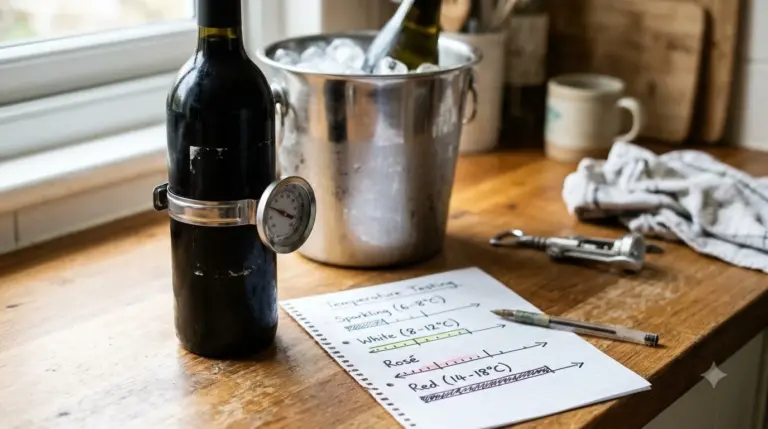
The Red Blend and Cabernet Sauvignon are described in fuller, fruit-driven terms, so serve them cooler than a warm kitchen. Full-bodied reds are usually served at 60–65°F, while lighter reds suit 55–60°F. A short chill can make a red feel fresher when the room is warm. The temperature does not change the ABV, but it can change how warm the alcohol seems in the glass.
Salt and fat soften the impression of tannin, which helps explain why Cabernet Sauvignon and bold red blends can work with grilled beef, slow-cooked lamb, barbecue, or rich sauces. The producer suggests slow-cooked meats with its Cabernet and cured meats with its Red Blend. Match acidity as well as weight: sharply acidic tomato sauce or vinaigrette generally needs a wine with equal or higher acidity, while a fruit-forward red may seem less lively beside a very tart dish.
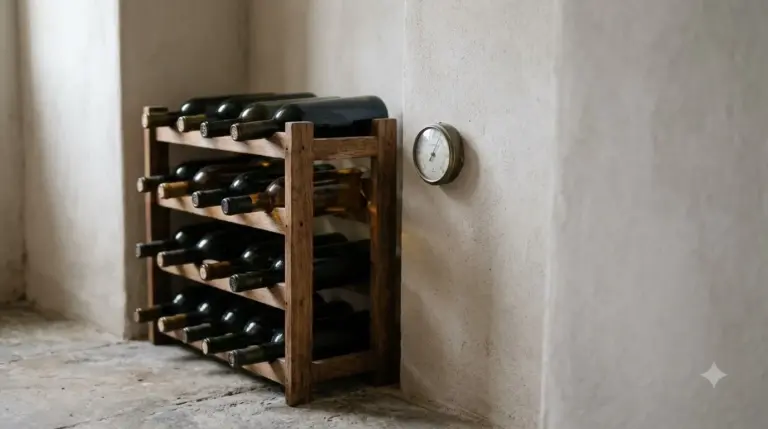
Chili heat can make alcohol and tannin feel stronger, so a fuller red at 13.5% or above may seem warmer beside hot pepper sauce than with roast meat. Oily fish is also a difficult match for tannic reds; a crisp white or rosé is usually a better direction. A 5-ounce pour gives a consistent comparison, and a 750 mL bottle provides about five such servings. After opening, refrigerate still wine and aim to finish it within three to five days; young full-bodied reds can benefit from 30–60 minutes of decanting, and unopened bottles store well on their sides near 55°F.
Tip: For the classic 13.5% Cabernet or Red Blend, try a 5-ounce pour with slow-cooked beef and serve it at 60–65°F. A moderate pour and a slightly cool serving temperature make it easier to assess the wine’s fruit, tannin, and alcohol warmth.
Frequently Asked Questions
These answers clarify details beyond the core 13.5% examples and the 750 mL serving calculation. They focus on common points of confusion when comparing a brand’s wines, labels, and tasting impressions.
What flavors does the official Cali Red page describe?
The 19 Crimes U.S. product page describes ripe black fruit with smoky American oak aromas, vanilla, and hazelnut. These are the producer’s listed aroma and flavor cues for Cali Red, rather than a guarantee that every vintage will smell identical.
How large must the alcohol statement be on a U.S. wine bottle?
For containers of 5 liters or less, the TTB specifies a type size between 1 mm and 3 mm for the alcohol statement. The wording must also be readily legible under ordinary conditions and printed against a contrasting background.
Can a wine label show ABV as a range instead of one number?
Yes. Under TTB rules, the allowed range cannot exceed 3 percentage points for wines at or below 14% ABV, or 2 percentage points for wines above 14%. A range is therefore possible, but it still has to comply with the wine’s regulatory category.
Why do U.S. alcohol measurements use a different temperature reference?
Decanter reports that U.S. alcohol measurement uses 60°F, while the international reference discussed in its article is 20°C, or about 68°F. The difference in reference temperature can change the reported alcohol figure by up to 0.3 percentage points.
Does the entire 19 Crimes selection come in 750 mL bottles?
No. One U.S. retailer’s 14-product assortment displayed 13 bottles at 750 mL and one at 1.5 L. That is a snapshot of that store’s range, not a statement that every market stocks the same packaging.
The most dependable starting point for 19 Crimes is 13.5% ABV in the producer’s classic Australian Red Blend and Cabernet Sauvignon, with other expressions varying by product and bottling. Compare the exact wine name and the percentage on the bottle rather than assuming the whole brand shares one alcohol level. That small distinction makes product comparisons, serving calculations, and food pairings much more useful.
More in Wine Brands
 Masi Costasera Wine Price: What to Expect Before You BuyUpdated Nov 21, 2026
 McGuigan Wine Price: Compare Bottles and Find the Right ValueUpdated Nov 21, 2026
 Matua Wine Review: Find the Right New Zealand Wine for Your TasteUpdated Nov 21, 2026
 Meerlust Wine Price: Compare Bottles and Find Your FitUpdated Nov 21, 2026
 Macari Wine Price: Compare Bottles by Style and TierUpdated Nov 21, 2026
 Marchesi Di Barolo Wine Review: Find The Right Piedmont BottleUpdated Nov 21, 2026