

We may earn a commission when you buy through links on this page, at no extra cost to you. Learn more.
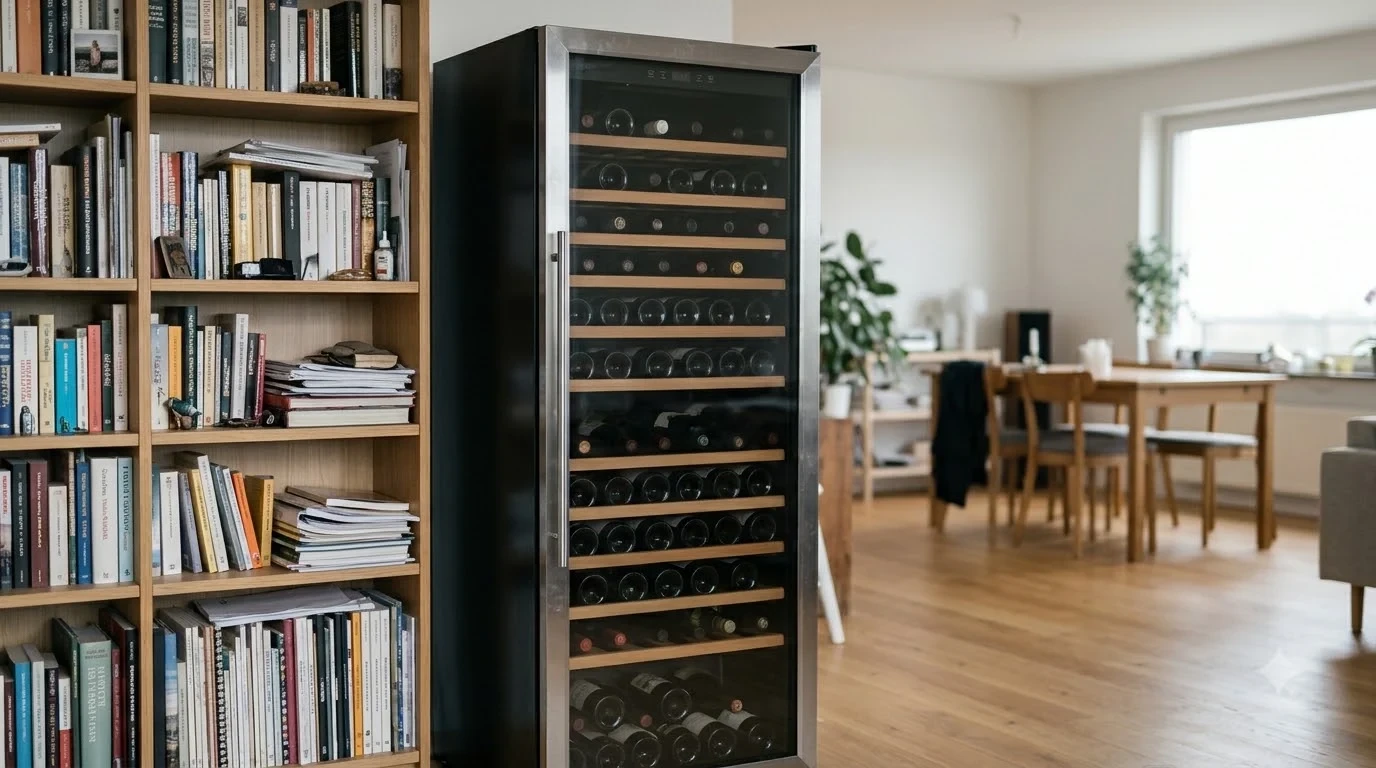
The best 100 bottle wine fridge depends on what you do with the wine: a single-zone cabinet held near 55°F suits long-term aging, while a dual-zone model suits people who pour both whites and reds from the same unit. Capacity numbers assume standard 750 mL Bordeaux bottles, so wider Burgundy or Champagne shapes will fill fewer racks. Match the ventilation style and footprint to your room before you compare bottle counts.
A 100-bottle cabinet sits between a small countertop unit and a full wine room. It holds enough for a few months of everyday drinking, a stock of wines for dinner parties, or a modest cellar of bottles you plan to keep for several years. The choice comes down to three things: how you store the wine, how the cabinet vents, and whether the room it sits in stays at a steady temperature.
Quick Comparison
The main cabinet styles differ less in bottle count than in how they hold temperature and where they can be installed. The table below compares the common types by the questions buyers usually ask first.
| Cabinet Type | Temperature Setup | Ventilation | Best Use | Main Tradeoff |
|---|---|---|---|---|
| Single-zone freestanding | One steady temperature, usually set for aging | Rear or side | Long-term storage | Whites need time to chill before serving |
| Dual-zone freestanding | Two temperature sections | Rear or side | Mixed reds and whites | The divider leaves slightly less room for bottles |
| Built-in front-venting | One or two zones | Front grille | Kitchen or bar cabinetry | Needs a matching cabinet opening |
| Glass-door display | One or two zones | Rear or side | Entertaining and display | Glass lets more light reach the bottles |
| Climate-rated | Works in cooler or unheated spaces | Rear or side | Garages and basements | Usually heavier and pricier to buy |
Best for Long-Term Aging: Single-Zone Cabinets
A single-zone cabinet keeps the whole interior at one temperature, which is what most aging guides ask for. According to the Wikipedia entry on wine cellars, 13°C (about 55°F) is treated as ideal for both short-term storage and long-term aging, and wine ages normally between about 50°F and 57°F. Large swings matter more than the exact setting, because frequent temperature changes push the wine to expand and contract through the cork.
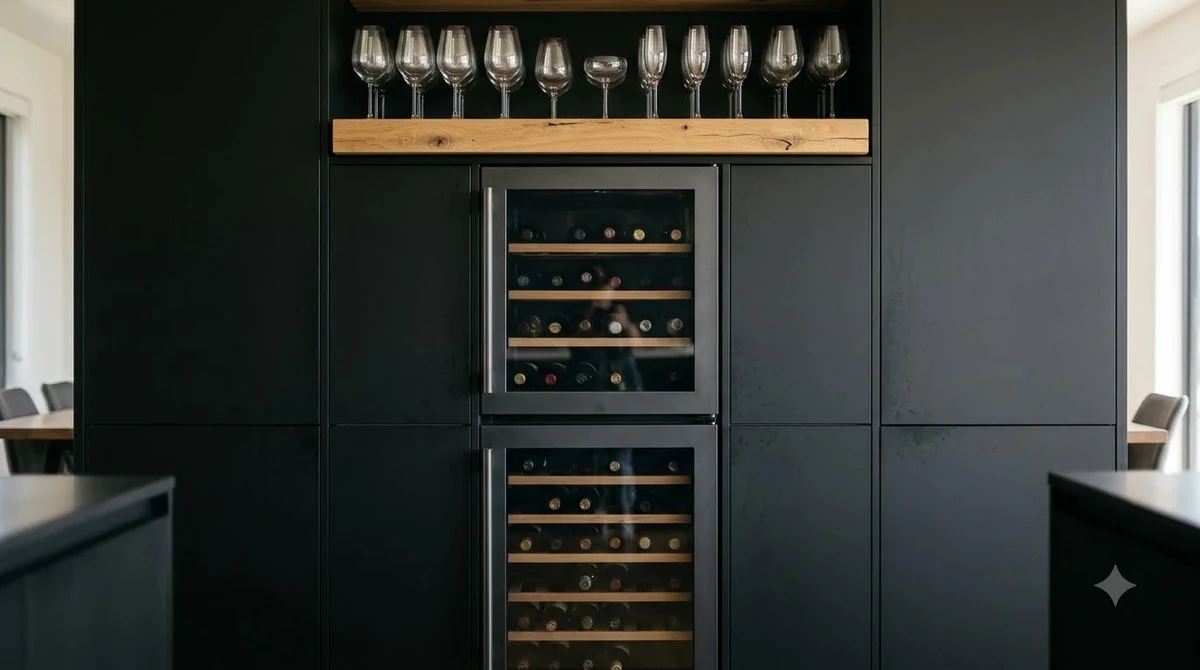
Why it stands out: With no divider taking up interior space, a single-zone unit gives the full cabinet to bottles and keeps the temperature even from the top shelf to the bottom. That consistency is the reason most collectors buy this style for wine they plan to hold for years rather than weeks.
Keep in mind: Whites and sparkling wines pulled from a cellar setting will need time in an ice bucket or the kitchen refrigerator before serving. A single-zone unit works best as a storage cabinet, not as a serving station.
Best for: Collectors who buy by the case and want one setting for every bottle in the cabinet.

- Capacity
- 100 bottles
- Zone
- Single temperature
- Cooling
- Compressor, fan-forced
- Shelves
- 12 wooden slide-out
For collectors holding bottles over the long term, one precisely held temperature is the point here. The 100-bottle cabinet pairs a compressor with fan-forced circulation, an activated carbon filter, and a double-pane UV-protected glass door that keeps light off labels and corks. Twelve removable beechwood shelves hold bottles steady, and a cylinder lock plus touchscreen controls complete it.
Pros & ConsView
- UV-protected double-pane glass door
- Even fan-forced cooling with carbon filter
- Key lock and touchscreen control
- Single zone cannot store reds and whites apart
- Large cabinet needs dedicated floor space
Best for Mixed Serving: Dual-Zone Cabinets
A dual-zone cabinet divides the interior into a cooler section and a warmer section, so whites and sparkling wines can be served cold while reds stay at a slightly higher temperature. For a household that pours both colors on the same night, this removes the step of moving bottles between a cooler and a rack.
Why it stands out: Each section has its own temperature control, so the bottles you plan to open tonight can be set to the right serving range without a second appliance. The divider usually sits partway down the cabinet, which leaves a clear split between the chilled and warmer halves.
Keep in mind: The divider and the extra fans take up space, so a dual-zone unit usually holds a few fewer bottles than a single-zone unit of the same outside size. Check the bottle layout, not only the advertised count.
Best for: Households that entertain often and want reds and whites ready at different temperatures in one cabinet.

- Capacity
- 180 bottles
- Upper Zone
- 40-55°F
- Lower Zone
- 55-65°F
- Shelves
- 14 beech wood
The practical choice for mixed serving, where champagne and whites sit cold above and reds rest warmer below. Two independent zones share one tall cabinet with fourteen beech wood shelves, and the bottom shelf takes larger bottles. A fan spreads cold air to prevent big gaps between top and bottom shelves, while temperature memory restores the last settings after a power cut.
Pros & ConsView
- Separate upper and lower temperature zones
- Bottom shelf holds larger bottles
- Temperature memory after power loss
- Needs 24 hours to rest before startup
- Tall cabinet requires ample floor space
Best for Kitchen and Bar Integration: Built-In Front-Venting Units
Built-in front-venting cabinets release compressor heat through a grille at the front or bottom, so they can sit flush inside cabinetry without a gap at the back and sides. They suit kitchens, butler’s pantries, and bars where the wine should look like part of the room.
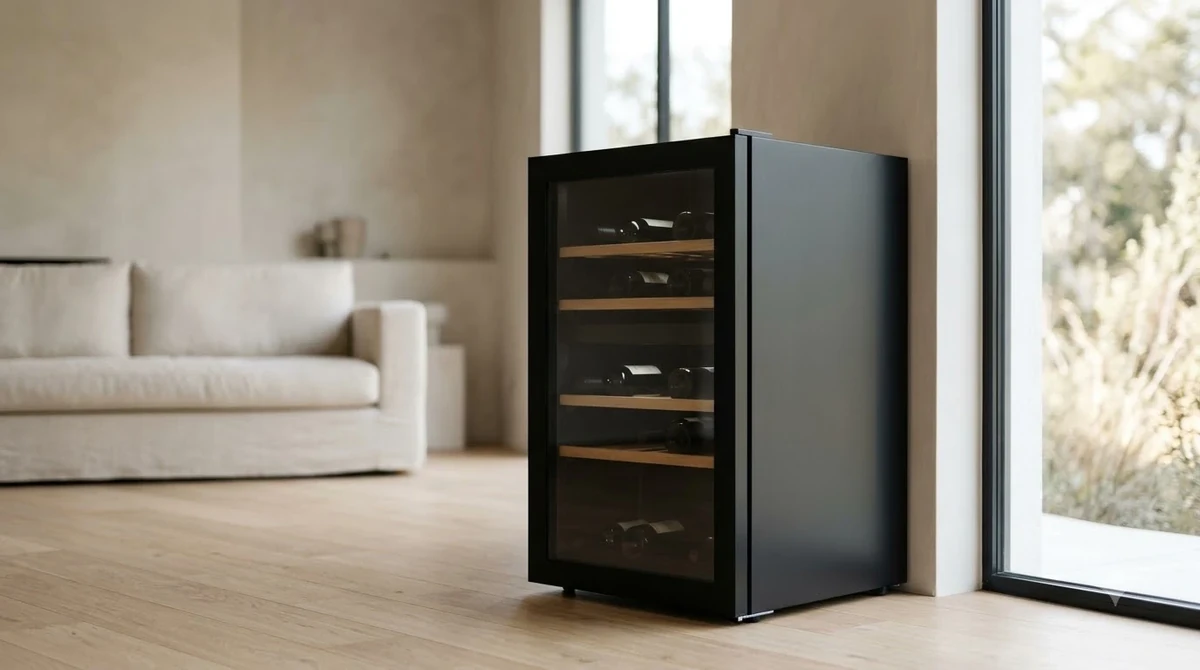
Why it stands out: A front-venting design lets the cabinet sit against a back wall or inside a cabinet run, which saves the open space that freestanding units need. It keeps the finished look of the room and avoids leaving a visible gap.
Keep in mind: Built-in units need an opening sized to the manufacturer’s specification and a clear airflow path at the grille. Measure the opening, the door swing, and the grille location before ordering, because a mismatch is hard to fix after installation.
Best for: Homeowners who are remodeling a kitchen or bar and want the cabinet to be a fixed feature.
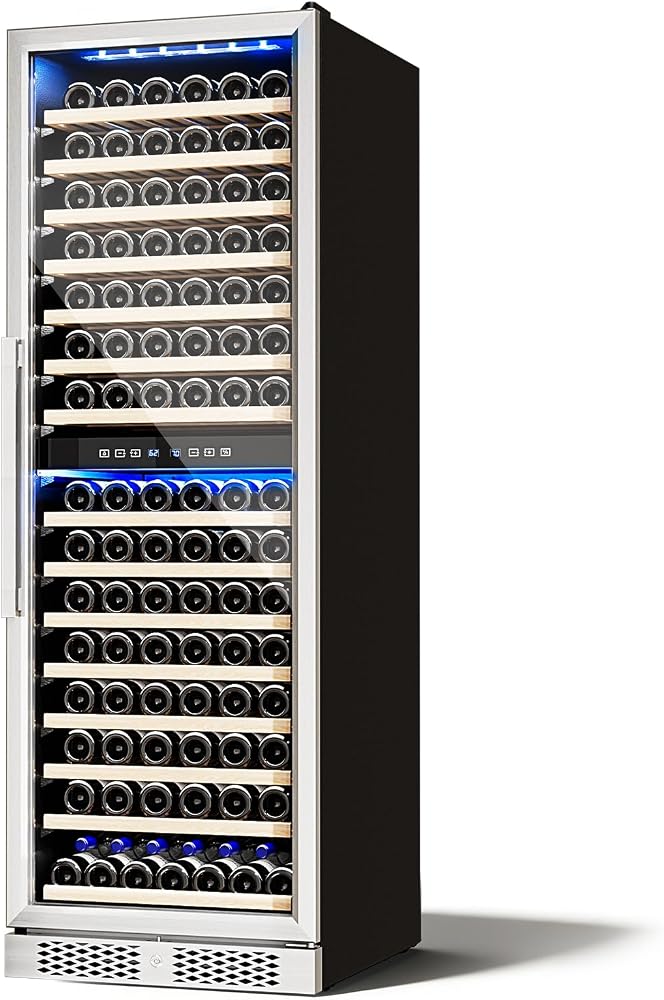
- Capacity
- 160 bottles, 15.9 cu ft
- Zones
- 40-50°F / 50-66°F
- Install
- Built-in or freestanding
- Size D x W x H
- 26.8 x 23.4 x 69.5 in
For kitchen and bar integration, this full-height 24-inch cabinet is listed for built-in use and suits home bars as well as restaurants. A stainless steel frame, tempered glass door and interior touch panel give it a finished look. Two zones cover 40 to 50°F and 50 to 66°F, and fan-forced cooling, a carbon filter and a security lock handle the rest.
Pros & ConsView
- Dual zones: 40-50°F and 50-66°F
- Listed for built-in or freestanding use
- Carbon filter and security lock included
- Nearly 70 inches tall, needs a tall opening
- Capacity drops with larger bottle sizes
Best for Garages and Unheated Spaces: Climate-Rated Cabinets
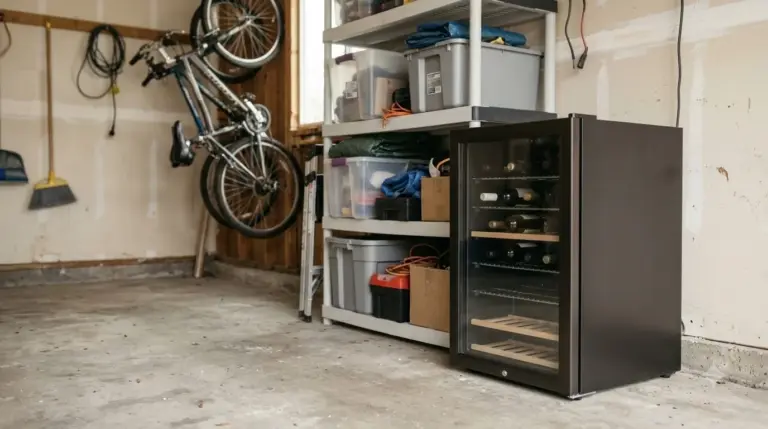
Standard wine coolers are designed for indoor rooms. A climate-rated cabinet is built to keep its setting in a garage, basement, or utility room where the air temperature can fall or rise well beyond a living room’s range. These units usually include extra insulation and heating or cooling elements matched to the ambient conditions.
Why it stands out: In a room that goes cold in winter, a climate-rated cabinet protects the wine from the cold-to-warm swings that a standard cooler struggles with. The stable setting is the main reason to choose this style over a regular unit.
Keep in mind: Check the rated ambient range printed in the specifications. A unit rated for indoor use will not perform as expected in an unheated garage, and a climate-rated unit usually costs more and weighs more than a standard cabinet.
Best for: Anyone who wants a 100-bottle cabinet in a space that is not climate controlled.
Best for Display and Entertaining: Glass-Door Cabinets
Glass-door cabinets make the collection visible, which is the reason many buyers choose them for a dining room or lounge. Look for a model with wide shelves if the collection includes Burgundy, Rhône, or Champagne bottles, since those shapes need more room than a standard Bordeaux bottle.
Why it stands out: The glass door lets guests see the labels and makes the cabinet a focal point in a room. Wide shelves reduce label damage from bottles rubbing against each other.
Keep in mind: Glass lets more light reach the bottles. Wine references commonly advise keeping bottles out of strong light, so a glass-door model is better placed in a room with indirect lighting and kept away from a sunny window.
Best for: Hosts who want the wine on display and collectors with a mixed range of bottle shapes.

- Capacity
- Up to 179 bottles
- Range
- 40-65°F
- Shelves
- 14 removable wood
- Lighting
- Blue LED, smart control
A large 24-inch cabinet for hosts who want a wine collection on show. Blue protective lighting and a smart LED control panel set the scene, while a low-vibration compressor and sturdy door seal keep the cold in. Fourteen removable wood shelves adjust to fit different bottle sizes, and a safety lock protects the contents when guests are around. Capacity varies with bottle shape.
Pros & ConsView
- Holds up to 179 bottles
- Blue light and smart LED control
- Safety lock and removable shelves
- One 40-65°F range, no dual zone listed
- Capacity depends on bottle size
How to Choose the Right 100-Bottle Cabinet
Start with the job the cabinet has to do. The questions below help narrow the list before you look at individual models.
| Question | If the answer is yes | If the answer is no |
|---|---|---|
| Will the wine be held for years? | Single-zone, set near 55°F | Dual-zone or glass-door for serving |
| Do you pour both whites and reds on the same night? | Dual-zone | Single-zone |
| Is there a cabinet opening to fill? | Built-in front-venting | Freestanding |
| Will it sit in a garage or unheated room? | Climate-rated | Standard indoor cabinet |
Pay attention to the bottle layout as well as the count. Wider bottles take up more room, so a cabinet that advertises 100 bottles of standard Bordeaux may hold fewer Champagne or Burgundy bottles in practice.
Frequently Asked Questions
How many bottles does a 100 bottle wine fridge really hold?
The advertised number assumes standard 750 mL Bordeaux bottles stored on racks. Wider bottles, such as Burgundy or Champagne, take more space, so the real count is often lower. A dual-zone divider can also reduce the total slightly.
What temperature should a 100 bottle wine fridge be set to?
For aging, a single steady setting near 55°F is the common choice. For serving, many people set a dual-zone cabinet to a cooler white section and a warmer red section. Keep the temperature steady, because large swings matter more than the exact number.
Can a 100 bottle wine fridge go in a garage?
A standard indoor cabinet is not built for an unheated garage. A climate-rated model is designed for wider ambient ranges, so check the rated range in the specifications before you buy.
Is a built-in or freestanding cabinet better?
Built-in units suit kitchens and bars where the cabinet should look like a fixed feature. Freestanding units are easier to move and do not need a custom opening, which makes them the simpler choice for most homes.
A 100-bottle cabinet is a practical size for most households that keep a steady supply of wine. If your collection is smaller, the 12 bottle wine fridge guide covers countertop options, and the by bottle count page lists the other sizes in this range.
More in By Bottle Count
 Best 52 Bottle Wine Fridge Options for Every Kitchen and CollectionUpdated Nov 18, 2026
 Best 15 Bottle Wine Fridge Options for Quiet Storage and Ready-to-Pour ServingUpdated Nov 18, 2026
 Best 34 Bottle Wine Cooler Types for Kitchens, Bars, and Home CellarsUpdated Nov 18, 2026
 Best 166 Bottle Wine Cooler Types for Serious Collectors and HostsUpdated Nov 18, 2026
 Best 54 Bottle Wine Fridge Types for Undercounter and Home CellarsUpdated Nov 18, 2026
 Best 46 Bottle Dual Zone Wine Cooler for Built-In Kitchens and Home BarsUpdated Nov 19, 2026