

We may earn a commission when you buy through links on this page, at no extra cost to you. Learn more.
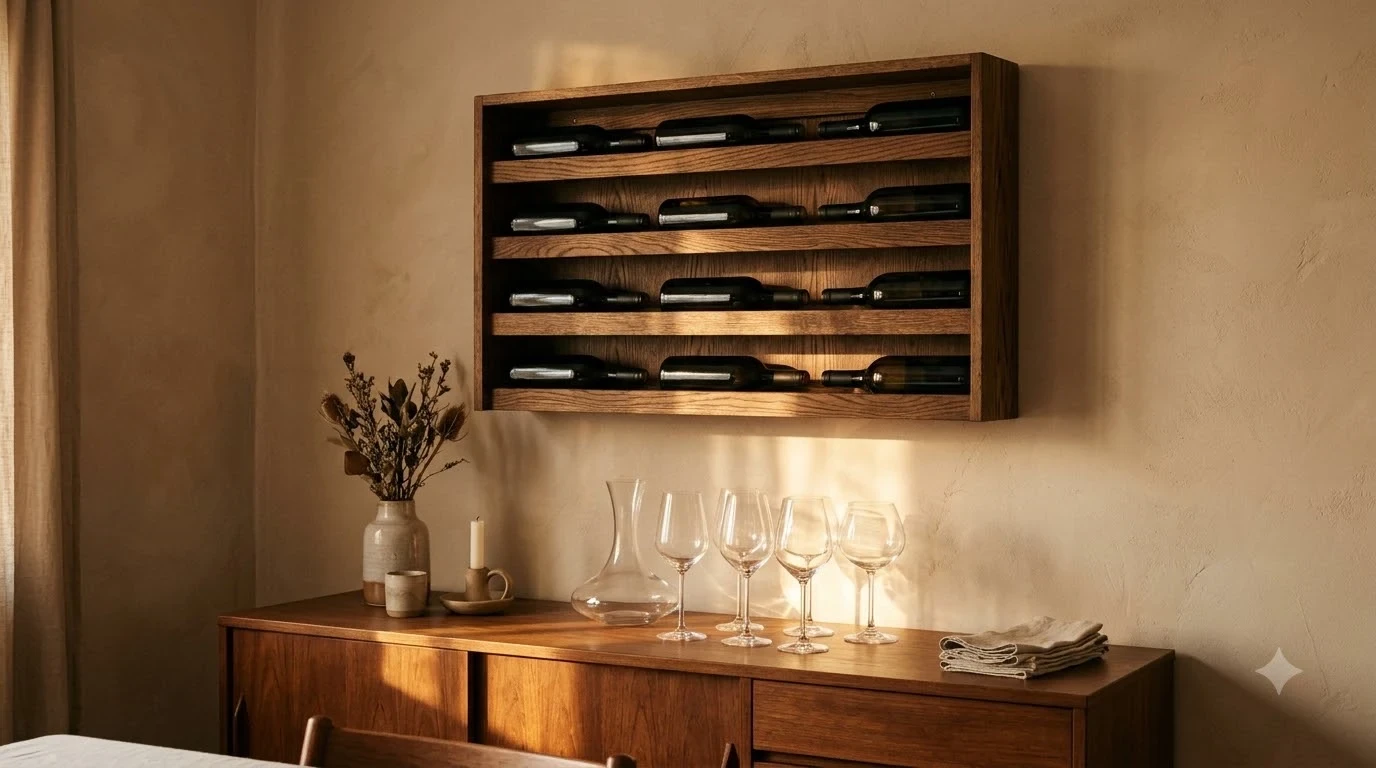
The best wine wall art depends on the room it will hang in: framed prints suit dining rooms, canvas vineyard scenes suit open living areas, and metal or wood signs suit a home bar. The main decisions are the format, the size relative to the wall, and whether the style matches the furniture already in the room.
Wine decor is one of the easiest ways to bring a wine theme into a home without buying a full set of glassware or racks. A single piece can anchor a kitchen wall, and a small group can turn a plain hallway into a tasting corner. This guide groups the options by the kind of room and the look you want, so you can narrow the choice before you compare sizes and finishes.
Quick Comparison of Wine Wall Art Formats
The table below compares the common formats by look, material feel and where each works best. Use it to decide the format first, then read the sections that follow for the style that fits your space.
| Format | Typical look | Best room | Main trade-off |
|---|---|---|---|
| Framed prints | Vintage labels, botanical grape drawings | Dining rooms and hallways | Glass can reflect light in bright rooms |
| Canvas vineyard scenes | Landscape photos or painted rows of vines | Open living areas | Large sizes need a clear wall |
| Metal wine signs | Bold shapes, bottle silhouettes, short phrases | Home bars and kitchens | Heavier, so use proper hardware |
| Wood wine signs | Carved or printed wood with a warm finish | Rustic and farmhouse spaces | Can look dated in a modern room |
| Gallery sets | Three or more matching pieces | Long walls and stairways | Takes planning to hang evenly |
Best for Classic Dining Rooms
Framed prints are the traditional choice for a dining room. Vintage-style wine labels and botanical drawings of grape clusters sit well beside a wood table and upholstered chairs, and they tend to look right in a room that already has a settled style.
Why it stands out: A framed print adds color and detail without taking up floor space. Matting around the image gives the piece room to breathe, and a classic frame can be swapped later without changing the wall layout.
Keep in mind: Glass can catch glare from a window or overhead light, so hang the piece away from direct reflection. Check that the print is on acid-free paper if you plan to keep it for years.
Best for: Dining rooms and hallways where the goal is a calm, traditional look.
Best for Modern Minimal Kitchens
Simple line drawings and bottle silhouettes suit a modern kitchen with clean lines and light surfaces. The image is reduced to a few strokes, which keeps the wall calm while still signaling a wine theme.
Why it stands out: Minimal art fits almost any color palette, so it is easy to move between rooms. It also works in a small space where a busy print would feel crowded.
Keep in mind: A very sparse design can look unfinished if it is the only item on a large wall. Pair it with a shelf or a second piece of similar scale to give the eye a place to rest.
Best for: Compact kitchens, apartments and anyone who prefers a restrained look.
Best for Open Living Areas
Canvas prints of vineyard landscapes give a large room a focal point. A wide image of rows of vines or a hillside at dusk can carry a whole wall, and the texture of the canvas softens hard surfaces such as tile or stone.
Why it stands out: A canvas needs no glass, so glare is not an issue, and the image reads clearly from across a room. Many canvas pieces are sold ready to hang, which simplifies installation.
Keep in mind: Scale matters. A small canvas on a large wall looks lost, so measure the wall first and leave clear space around the piece. Check the wrap depth if you plan to hang it without a frame.
Best for: Open-plan living spaces where one large image should set the mood.
Best for Home Bars and Game Rooms
Metal wine signs are bold, durable and suited to a bar corner or a game room. Bottle silhouettes, short phrases and cutout shapes read well from a distance and hold up to the wear of a busy space.
Why it stands out: Metal reads as deliberate and adds a bit of personality to a wall that might otherwise feel plain. The finish can be painted or powder-coated, so the color can match the rest of the room.
Keep in mind: Metal is heavier than paper or canvas, so use hardware rated for the weight and a stud where possible. Check the edges for sharpness if the sign will hang at child height.
Best for: Home bars, game rooms and kitchens with a casual, social feel.
Best for Rustic and Farmhouse Walls
Wood wine signs bring warmth to a farmhouse kitchen or a cabin-style room. Carved or printed panels with a worn or stained finish pair well with exposed beams, barn-style doors and natural fabrics.
Why it stands out: Wood adds texture that paper and metal cannot match, and a sign can be hung by a single hook or a short wire, which keeps installation simple.
Keep in mind: Wood can look out of place in a sleek, modern room, and a heavy finish may clash with white cabinets. Look for a finish that matches the other wood in the room, not just the color on the box.
Best for: Farmhouse and rustic spaces that already use natural materials.
How to Choose the Right Piece
Start with the wall. Measure its width and height, then decide whether one large piece or a small group will fill the space best. A single piece usually works above a sideboard or a bar cart, while a group suits a stairway or a long hallway. Before you buy, tape a paper template of the piece to the wall and look at it for a day, since the same size can feel large in one room and small in another depending on the light and the furniture below it.
The list below covers the points that most often decide a purchase.
- Size: Aim for a piece that covers about two-thirds of the width of the furniture beneath it.
- Style: Match the finish to the hardware and frames already in the room.
- Glare: Glass needs a spot away from direct light; canvas and wood avoid the issue.
- Weight: Heavier pieces need proper anchors, especially in drywall.
- Theme: Choose an image or phrase you will still like after a few years.
Wine decor is a decorative category more than a functional one. According to the Wikipedia overview of wine accessories, racks and similar pieces often double as decorative objects in many homes, which is a useful reminder that wall art can serve the same purpose with less floor space.
Frequently Asked Questions
What size wine wall art works best above a sofa or sideboard?
A good rule is a piece about two-thirds the width of the furniture below it. Leave a gap of a few inches between the top of the furniture and the bottom of the art so the two read as one group.
Is canvas or framed print better for a kitchen?
Framed prints under glass need protection from steam and grease, so a canvas or a sealed wood sign often holds up better near the stove. Check the finish before you hang it above a cooktop.
How do I hang heavy metal wine signs safely?
Use hardware rated for the piece’s weight and fix it into a stud where possible. For drywall without a stud nearby, use anchors sized for the load.
Can wine wall art match a farmhouse or modern style?
Yes. Wood and distressed finishes suit farmhouse rooms, while thin metal and minimal line art suit modern spaces. Matching the frame or finish to the rest of the room matters more than the wine image itself.
Wine wall art is one of the simplest ways to add a theme without clutter. Choose the format that fits the room, measure the wall, and keep the finish consistent with the furniture. For more ideas on a wine-themed corner, see our guide to a bar cart, or check how many servings a bottle holds in how many glasses in a bottle of wine before you plan a tasting setup. For other accessories, the Accessories Library is a good next stop, and a wine bottle rack wall pairs well with a single framed piece.
More in Wine Accessories
 Coravin Vs Vacu Vin: Choose the Right Wine Saver for Your BottlesUpdated Nov 21, 2026
 Zwilling Wine Stopper Review: Preserve Open Bottles LongerUpdated Nov 21, 2026
 Wine Enthusiast Wine Preserver Review: Features, Benefits and LimitationsUpdated Nov 21, 2026
 Wine Enthusiast Wine Stopper: An Easier Way to Reseal Open BottlesUpdated Nov 21, 2026
 Vintorio Wine Opener: Two-Step Cork RemovalUpdated Nov 21, 2026
 Zwilling Wine Aerator Review: Aerate, Pour, and Seal With One ToolUpdated Nov 21, 2026